
How to Pollinate Plants in a Greenhouse
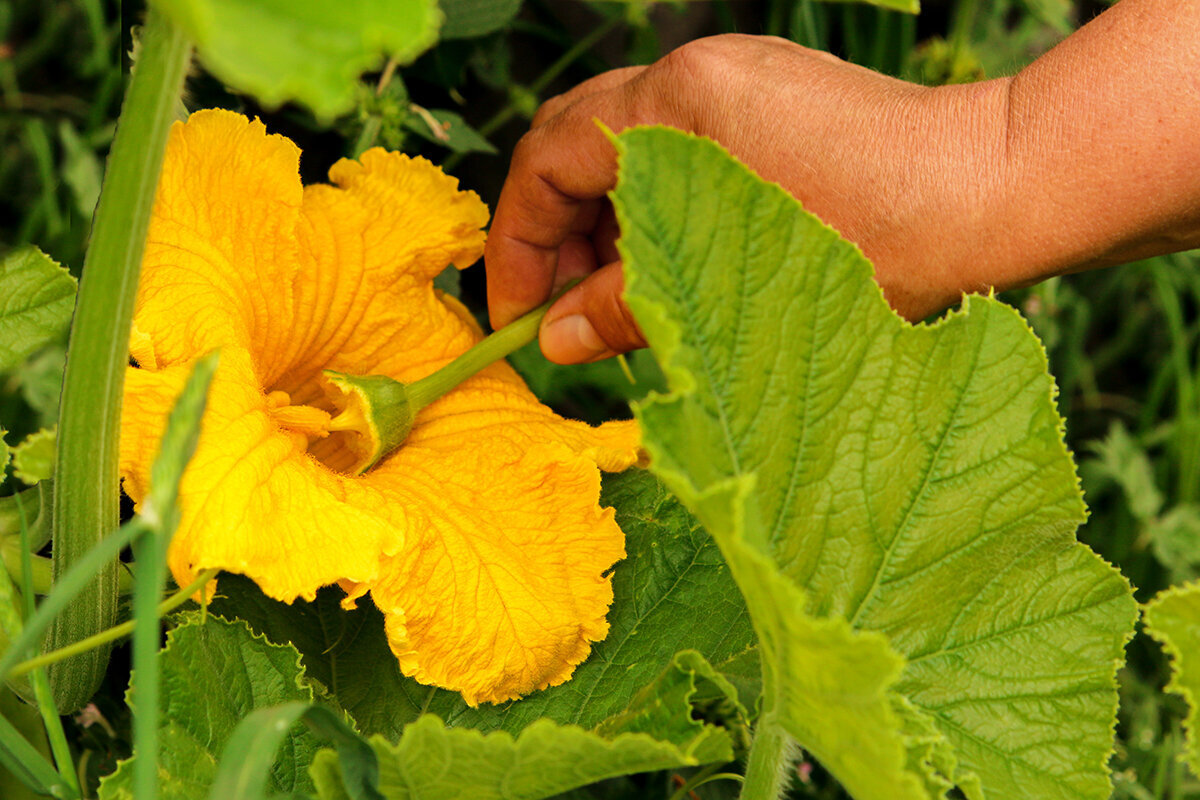
Greenhouse growing · pollen transfer
How to Pollinate Plants in a Greenhouse
A greenhouse shelters flowers, but removes some of the wind, vibration and insect activity that carries pollen. Restore only the movement each crop actually needs.
Outside, a flower occupies a moving world: wind flexes stems, insects arrive and depart, and pollen travels through brief, repeated encounters. Under glass, that choreography becomes quieter. Sometimes the grower must provide the missing current.
That does not mean every greenhouse crop needs a brush, battery tool or hive. Pollination is crop-specific. A tomato carries pollen-bearing anthers and a stigma within the same flower, so gentle movement is usually the useful intervention. Courgettes, squash and many seeded cucumbers have separate male and female flowers, requiring pollen to cross a visible gap. Strawberries are self-fertile, but full, even development benefits from pollen reaching the many individual pistils across each flower.
Begin with climate and access before adding labour. Roof vents, sensible shading and an orderly planting plan are not decorative extras during flowering. They moderate humidity and heat, help preserve useful pollen conditions and make close inspection easier. A considered structure such as the Classic Aluminium Greenhouse provides an accessible, well-proportioned setting in which ventilation, clear paths and crop care can work together. Further product details are available on the Classic Aluminium Greenhouse and its Classic Aluminium Greenhouse.
The sequence that matters
Pollination, fertilisation and fruit set are not the same event.
They happen in sequence. Keeping them separate prevents a common greenhouse mistake: repeating hand pollination when the real problem is heat, low light, poor water balance, nutrition, plant stress or an unsuitable variety.
01
Release
Viable pollen leaves the anthers02
Transfer
Pollen reaches a receptive stigma03
Reception
A pollen tube begins growing04
Set
The ovary begins to swellRelease
Anthers must mature and shed viable pollen. Cool nights, intense daytime heat, persistently damp air and wider plant stress can disrupt this first stage before any pollen has moved.
Transfer
Wind, vibration, an insect, a soft brush or direct flower-to-flower contact places pollen on a receptive stigma. The suitable mechanism depends entirely on the crop’s flower structure.
Reception
Once pollen lands, it germinates and grows a pollen tube towards the ovules. This unseen process bridges pollination and fertilisation, and unsuitable temperature or plant stress may still interrupt it.
Set
After fertilisation, fruit development begins and the ovary enlarges. The plant must then retain and support that young fruit through subsequent changes in heat, light and water availability.
Use the flower as your first diagnostic tool. A flower that drops without swelling may indicate failed pollination, but it can also reflect excessive heat, cold nights, abrupt water stress, poor light or excessive nitrogen. Even successful pollen transfer does not guarantee that a fruit will reach maturity.
Identify the flower before intervening
One greenhouse, several flower architectures.
The appropriate method follows flower biology, not simply the crop name. Tomatoes, peppers and aubergines are self-fertile, but their pollen benefits from movement. Courgettes, squash and many melons require transfer between separate male and female flowers. A strawberry flower has many individual pistils, which is why incomplete pollen distribution can later appear as an uneven berry.
There is an important exception among cucumbers. Most cultivars bred for protected greenhouse growing are all-female and parthenocarpic. They set fruit without fertilisation, and pollination can result in bitter fruit. Check the seed packet or plant label before moving pollen or encouraging access specifically for that crop.
Transfer pathways
Parts together
→
Tomato family: vibrate gently
Separate male and female flowers
→
Cucurbits: transfer directly
Many individual pistils
→
Strawberries: repeated visits
Fruit sets without pollen
→
Parthenocarpic: manage climate
Tomatoes, peppers and aubergines: the anthers and stigma are held within the same flower. A little controlled movement helps release pollen, so gentle vibration or modest air circulation is normally more useful than brushing every individual bloom.
Courgettes, squash, melons and seeded cucumbers: fresh pollen must travel from a newly opened male flower to a receptive female flower. Their relatively brief opening period makes careful observation and timely action more important than force.
Strawberries: each flower carries many pistils requiring pollen. Repeated, delicate insect contact can distribute it broadly across the centre, supporting complete fertilisation and a more evenly developed berry.
Parthenocarpic crops: these varieties change the task completely. Rather than creating pollen movement, concentrate on root-zone watering, plant health, air circulation, temperature and the cultivar instructions supplied on the packet or label.
Self-fertile structure
Tomato-type flower
Anther cone surrounding the central stigma.
Separated structure
Cucurbit flower
Male pollen reaches a female stigma.
Multiple-point structure
Strawberry flower
Many fertilised points form one berry.
Tomato pollen is comparatively heavy and benefits from movement. Tapping the supporting cane or string, or briefly vibrating the flower-truss stem, can release it without handling individual flowers.
In cucurbits, the miniature fruit directly behind the female flower is the clearest visual clue. For successful manual transfer, both a fresh male flower and receptive female flower must be open.
In strawberries, misshapen fruit may suggest incomplete pollination, but cool damp conditions, blossom damage, disease, crowding, pests and root-zone stress can produce similar symptoms.
Hands-on method laboratory
Make the smallest effective intervention.
Clean tools, dry hands and a light touch protect delicate flowers. Work deliberately rather than aggressively: bruised blossoms, broken trusses and repeatedly disturbed blooms will not improve the eventual crop.
≈
Tomatoes, peppers and aubergines: vibration
These crops can usually pollinate within the same flower, but a still greenhouse may provide too little movement. Once heavy morning condensation has cleared, lightly tap the support cane, string or flower-truss stem. A purpose-made battery pollinator can also be applied briefly to the truss stem. A clean electric toothbrush may work cautiously, but it should never be pushed into individual flowers or developing fruit.
- Target newly open flowers, not closed buds or tiny swelling fruits.
- Brief, restrained movement is enough; rough shaking can bruise stems and dislodge flowers.
- A faint release of yellow pollen may be visible when conditions are favourable, but a dramatic cloud is unnecessary.
- Maintain gentle air circulation without directing a forceful, continuous draught at flowers or tender foliage.
↔
Courgettes, squash, melons and seeded cucumbers: direct transfer
Choose a newly opened male flower carrying fresh, visible pollen. Peel back its petals, or collect pollen with a clean, soft artist’s brush, then touch the pollen-bearing surface gently to the receptive centre of a newly opened female flower. The small immature fruit immediately behind a female bloom makes identification relatively straightforward.
- Work early in the day while both flowers are fully open and pollen remains fresh.
- One male flower may serve several females, but only while a generous coating of fresh pollen remains.
- Mark a hand-pollinated flower with a loose label if you want to compare subsequent fruit set.
- Never hand-pollinate a cucumber labelled all-female or parthenocarpic.
✦
Strawberries: distribute, do not merely touch
A strawberry is not pollinated at a single point. Each flower has many pistils, and incomplete pollen coverage may produce a small or misshapen berry. Where weather and greenhouse access permit, repeated insect visits are generally more effective than trying to brush a large crop flower by flower.
- Allow daytime insect access only when weather, pests and temperature management make it practical.
- Avoid spraying open flowers with products that may harm pollinators; always follow the product label.
- Reserve gentle hand brushing for a few plants, controlled crosses or temporary periods of limited insect activity.
- Inspect distorted berries for pests, blossom damage, disease and plant stress as well as poor pollination.
○
Herbs and seed crops: define the harvest
Basil, coriander, dill and many other herbs do not require flower pollination when the intended harvest is leafy growth. If the objective is seed, flowers and pollinating insects become relevant. Keep flowering specimens separate from the principal production bed where you want plants to direct their energy towards leaves rather than seed formation.
- When saving seed, first establish whether the plant self-pollinates or crosses readily with related plants.
- Use isolation, mesh or deliberate hand transfer where a controlled cross or true seed line is required.
- Do not interpret flowering in leafy herbs as pollination failure; it is commonly a sign of bolting.
For a crop-focused greenhouse setting, review the Classic Aluminium Greenhouse and consider how its access, ventilation and growing space can support training, watering and close flower inspection.
A timing gradient, not a fixed hour
Use the morning window, then read the crop and the weather.
Fresh cucurbit flowers offer a short daily opportunity, normally early in the day soon after opening. Tomatoes are often easier to work from late morning into early afternoon, after overnight humidity has fallen and pollen releases more readily. No clock replaces observation, however: a condensation-heavy May morning, an overcast July day and a hot August afternoon behave very differently under glass.
DawnInspect new cucurbit flowers.
MorningTransfer fresh cucurbit pollen.
Late morningVibrate tomato-family flower trusses.
AfternoonVent, shade and monitor heat.
EveningReview water and temperature.
Cucurbit flowers are generally most practical to pollinate soon after they open. Tomato-family trusses can often be vibrated later in the morning, once condensation has cleared and pollen is less likely to be held by damp air. If flowers remain wet, foliage looks heat-stressed or the house feels stagnant, correct the environment first rather than applying a stronger or longer treatment.
- Humidity Very damp air can make pollen clump instead of shedding freely. Do not respond by misting flowers. Improve air exchange, clear condensation where practical and direct irrigation to the root zone rather than wetting blossoms.
- Heat Excessive greenhouse heat can impair pollen viability, germination and fruit retention. Open roof vents and doors, and apply suitable shading before temperatures become damaging. Vigorous vibration cannot compensate for flowers already stressed by an overheated house.
- Cold nights Cool British nights can slow flower function and disrupt tomato pollen development. Close the greenhouse before temperatures fall sharply, but continue to balance crop protection with the need to release humidity and condensation the following morning.
- Water balance Evenly moist growing media supports steady plant function. Alternating drought and saturation can contribute to flower drop, weak growth and later fruit disorders even when the original transfer of pollen was entirely successful.
A composed climate strategy is the better long-term investment. Explore the Classic Aluminium Greenhouse to assess how roof ventilation, door access and an orderly growing layout can support flowering crops through changeable British summers.
Read the evidence
Fruit-set forensics: not every imperfect fruit began with pollen.
The flower is a moment; the developing fruit is a record. Observe whether the bloom fell cleanly, whether the ovary began to swell, whether distortion appears on one fruit or throughout the crop, and whether the pattern follows a period of heat, low light, drought, saturation, pests or an abrupt change in feeding.
Healthy transferThe ovary enlarges steadily.
Clean flower dropReview climate and pollen movement.
Uneven fruit shapeCheck pollination, pests and stress.
Young fruit abortsLook for stress after fertilisation.
How to read the sequence: Fading petals followed by steady ovary enlargement are encouraging, but they are not the end of crop care. A flower dropping cleanly can indicate poor transfer, unsuitable temperatures or plant stress. A distorted strawberry or cucurbit may reflect incomplete pollination, although pest feeding, disease and physical damage deserve inspection too. Initial swelling followed by abortion points more strongly towards later heat, irregular irrigation, weak light or excessive vegetative growth.
When insects are part of the answer
Invite access thoughtfully; manage it with care.
Bumblebees can provide effective vibration for tomatoes, while repeated insect visits are particularly valuable for strawberries and suitable cucurbits. In a small domestic greenhouse, opening doors and vents during favourable weather may allow naturally occurring insects to visit. This simple measure is often proportionate, provided it does not chill plants, create serious pest pressure or allow the house to overheat later.
Managed bumblebee colonies are a specialist commercial decision, not an automatic home-garden upgrade. In England, releases of certain non-native bumblebees are regulated, so professional growers must follow current GOV.UK requirements and supplier guidance. For most home greenhouses, rely on naturally visiting insects or crop-specific hand methods. Never collect or relocate wild colonies. With any crop-protection treatment, follow the label precisely and consider pollinators before applying products to open flowers or during active foraging.
Useful access begins outside the greenhouse. Nectar-rich herbs and seasonal flowers near a sunny entrance can support visiting insects without turning the interior into a hive habitat. Inside, retain a clear path and use openings sensibly while crops flower. The Classic Aluminium Greenhouse provides an elegant protected-growing format with practical access, while its Classic Aluminium Greenhouse sets out the structure and options to consider when planning ventilation and everyday flowering-season care.
A repeatable flowering routine
Ten quiet minutes, three times a week.
For a mixed British greenhouse, consistency is more useful than heroic intervention. Give each crop the transfer its flower requires, then return your attention to ventilation and whole-plant health.
- Walk during the useful window. Identify crops with newly opened flowers. Cucurbits are usually checked early; tomato-family trusses often respond well later in the morning once condensation has cleared.
- Identify the flower mode. Is it a self-fertile flower, separate male and female blooms, a strawberry flower with many pistils, or a parthenocarpic cultivar that needs no transfer at all?
- Perform the correct action. Tap or vibrate tomato-family trusses lightly. Transfer suitable cucurbits directly, encourage practical insect access for strawberries and leave parthenocarpic greenhouse cucumbers unpollinated.
- Check climate before leaving. Read the thermometer, inspect condensation, feel the growing medium and adjust ventilation appropriately. Pollination cannot be separated from the temperature and humidity conditions that keep flowers functional.
- Review fruit several days later. Look for enlarging ovaries, persistent flower drop and repeated patterns of distortion. Change the routine only when the crop provides useful evidence.
Frequently asked questions
Greenhouse pollination, clarified.
Can I pollinate every greenhouse crop with a paintbrush?
No. A soft brush can transfer pollen between separate male and female cucurbit flowers and help with a small number of strawberry flowers. It is less suitable for tomatoes, peppers and aubergines, where restrained vibration of the truss is normally more effective. It is also the wrong approach for all-female, parthenocarpic greenhouse cucumbers, which produce fruit without pollination.
How often should I vibrate tomato flowers?
A modest routine while fresh flowers are opening is sufficient. For a small home crop, check trusses every couple of days during favourable conditions and apply only brief, gentle movement. Greater force or constant handling does not guarantee more fruit. If set remains poor, review temperature, humidity, light, irrigation, feeding and general plant stress.
Should I mist flowers to improve pollination?
Usually not. Added moisture can cause tomato pollen to clump and may increase disease pressure around flowers and foliage. If the greenhouse is humid, improve ventilation and avoid wetting blooms. Irrigate the root zone consistently, preferably early enough for damp surfaces and condensation to clear.
Why do my greenhouse cucumbers flower without producing fruit?
First establish whether the cultivar is a seeded type or an all-female, parthenocarpic greenhouse cucumber. Seeded types require pollen to move between male and female flowers. Parthenocarpic cultivars should fruit without fertilisation, so weak results point instead towards temperature, light, root-zone conditions, watering, plant stress or general crop health.
Can the greenhouse remain closed while plants are flowering?
It can, provided each crop receives an appropriate alternative transfer method, but a closed house still requires effective temperature and humidity control. Tomatoes can be vibrated manually and suitable cucurbits can be hand-pollinated. If strawberries or other crops depend on insect visits, safe daytime access must be available when weather permits.
Sources and further reading
Research behind the transfer.
More from Bloomcabin: greenhouse layout, planting and care · Plan ventilation, shade and growing space as one greenhouse system · aluminium greenhouse FAQ
- Royal Horticultural Society — guidance on encouraging fruit set in indoor tomato flowers:Fast tomatoes: experts’ growing tips
- Royal Horticultural Society — protected cucumber cultivation and guidance for all-female cultivars:How to grow cucumbers successfully
- Royal Horticultural Society — seasonal advice, including hand-pollinating strawberry flowers under glass:March grow-your-own gardening advice
- Royal Horticultural Society — identifying cucurbit flowers and transferring pollen beneath cover:Courgette, marrow, pumpkin and squash problems
- Agriculture and Horticulture Development Board — UK tomato-production pollination surveys and greenhouse observations:Pollination surveys of UK tomato production sites
- GOV.UK — England-specific licensing information concerning non-native bumblebees used for pollination:Bumblebee release licence for pollination
- UConn Extension — tomato flower biology, vibration, humidity and greenhouse pollination technique:Pollination of greenhouse tomatoes
Complete the transfer
Let the greenhouse protect each flower, then provide only the movement it needs.
Identify the flower type, choose the lightest effective transfer and inspect developing fruit before changing course. That calm, repeatable rhythm supports more reliable greenhouse harvests without unnecessary handling.
01
Identify the flower
Identify the flower
02
Choose the transfer
Choose the transfer
03
Check the developing fruit
Check the developing fruit
