
What Happens to a Motorised Pergola During a Power Cut?
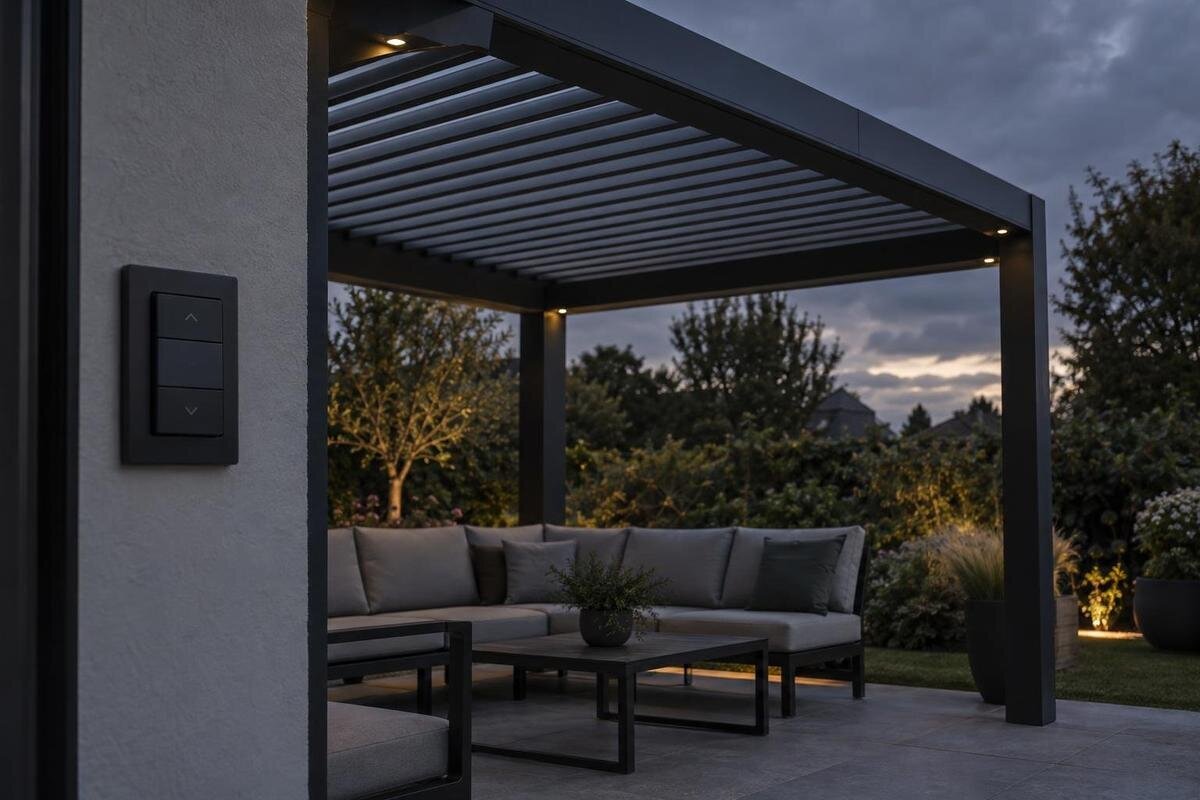
Pergola controls
A motorised pergola does not have one standard response to a power cut. The motor may stop with the roof part-way through its movement, the drive may hold it in that position, or an approved reserve supply or manual method may be available. None of these outcomes should be assumed from the word ‘motorised’. The result depends on the roof mechanism, motor, controller and accessories fitted. Whether you own a pergola or are comparing options, check documents for the exact configuration before relying on a particular roof position or trying to move it by hand. This guide explains what to confirm with the seller or installer.
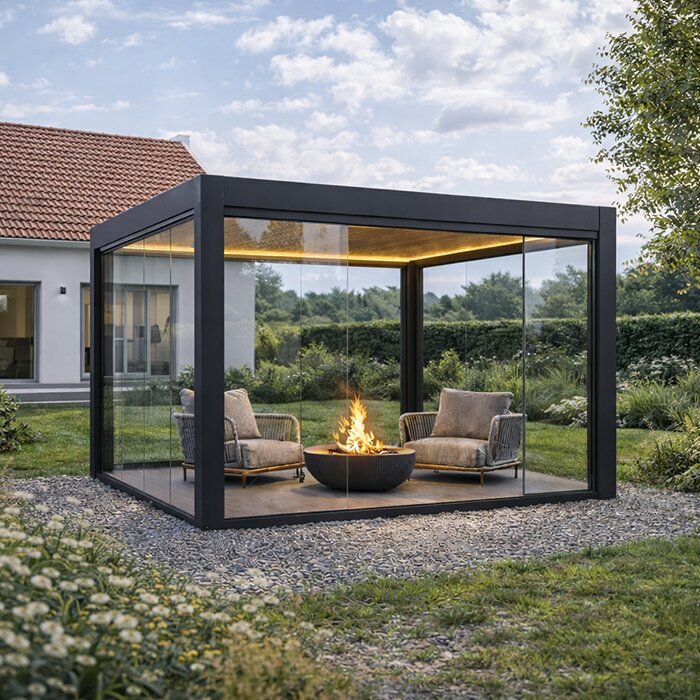
The roof may stop part-way through its movement
A power cut does not dictate one fixed roof position. Where the interruption affects the roof drive and no functioning independent supply is available, powered movement may no longer be possible. If the motor was running, whether the roof stops immediately or behaves differently depends on the drive and controller. The practical assumption is that normal electric commands may be unavailable until the approved supply returns. That does not establish that the roof will close, open, drop, release or stay exactly where it was. Any position specified for power failure must be confirmed in the documentation, not inferred from appearance. Ask separately what happens while the roof is moving and when it has already reached the end of its travel; the answers may differ.
First identify what is motorised. On one pergola, the motor may tilt roof louvres; on another, it may retract a cover, move a side screen or operate an accessory. The roof and screen can have separate drives and supplies, so one component might stop while another remains usable. Note which component stopped, its approximate position, whether it was moving and which control was in use. A lit display or charged handset does not prove that the actuator itself has power. Do not repeatedly test switches to see what still works before checking whether the manual permits it; a second component may have a separate supply and control.
Identify the exact roof, motor and controller
Start with the exact model and configuration, not a general product category. Record whether the roof rotates or retracts, which components have motors, the motor or actuator identifier, the controller, the control type and any sensor or reserve-power option. A product manual may cover the frame and roof, while separate motor documentation explains the drive; installation records can show which options were actually fitted. Ask for documents that match the installed unit, because a similar-looking model or older brochure may describe a different control arrangement. If identifiers are not in your paperwork, ask the installer to identify them rather than opening electrical covers or guessing from a remote.
The Bloomcabin Lean-To Pergola page identifies a wall-mounted product, but the model name alone does not establish that a particular pergola is motorised or specify its roof movement, controls or backup. Treat the page as a reference for identifying the structure. If a motorised configuration is being considered or is already installed, request its separate parts list and model-specific instructions. A quote that says only ‘electric roof’ leaves important questions open: ask which components move, how they are controlled and which documents explain their behaviour when power is lost. Check these details against the final configuration, not just the initial quote.
Will the drive hold the roof without power?
A common question is whether the roof simply stays where it was when the supply disappears. That depends on how the motor, gearbox, any brake or latch and roof mechanism are designed to work together, as well as the roof’s position and permitted loads. A motor that moves a roof during normal use does not, by itself, show whether the unpowered drive holds it securely. Ask whether it is designed to remain stationary without power, whether movement is possible and whether the manufacturer permits it to be left between end positions. Do not try to find out by pushing slats, pulling fabric or testing a joint.
When discussing the Bloomcabin Pergola product page with a supplier, separate two questions: whether the proposed configuration has a powered roof, and how that particular drive holds the roof without power. Look for terms such as ‘power failure’, ‘manual operation’, ‘holding’ or ‘emergency release’ in the relevant instructions. Ask the supplier to distinguish a position in which the mechanism can stop from one in which it is permitted to remain. If the instructions cover only fully open and fully closed positions, request clarification about interrupted travel. A clear answer should identify any conditions or restrictions, rather than simply saying that the motor locks the roof.
Power returning does not guarantee automatic movement
Restored supply does not guarantee that the roof will resume exactly as before. Depending on the controller, it may wait for a fresh command, retain a previous command, require a documented reset or return to a defined end position. Some systems may also re-enable timed or sensor-driven actions. These are possibilities to verify, not features to expect on every pergola. Check what happens if power returns while the roof is part-way through travel, if the supply flickers briefly several times, or if a button or app command was active at the interruption. Ask whether the procedure differs after a short interruption and a longer one.
Ask whether restoration can start movement automatically and how users can tell that the system is ready. Confirm whether someone should first check for obstructions or complete a documented reset, and whether settings need attention after a cut. Follow only the stated start-up procedure: do not disconnect parts, press unknown button combinations or try to recalibrate from guesswork. If the roof behaves differently from the manual after the supply returns, stop using the powered controls and ask the installer or manufacturer to identify the issue before further operation. Get the instructions in writing and make sure they refer to the controller actually fitted, rather than a generic controller family.
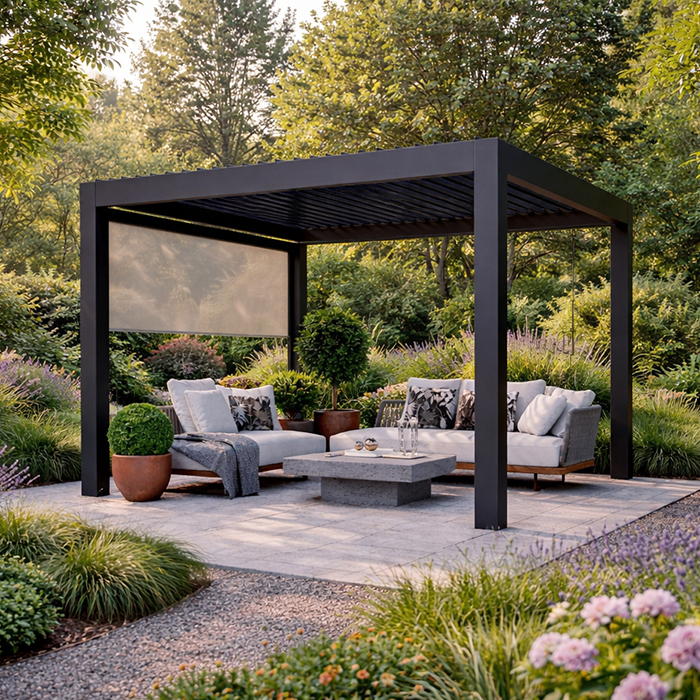
A manual override must be approved for that model
A manual override is not implied by motorisation. Depending on the system, the manufacturer might specify a hand crank, a mechanical release or a service-only procedure; it may provide no user-operated alternative. A compatible reserve supply is a separate possibility: it powers the system rather than converting it to manual operation. These arrangements are not interchangeable, and a mechanical release may be intended only for trained personnel. Ask whether an alternative operating method exists for the roof itself, whether it is included with the chosen configuration and whether it is permitted during a power cut. Establish whether it is intended for emergencies only or also for ordinary use.
For an enquiry about the Bloomcabin Bioclimatic Aluminum Pergola, ask first whether the proposed configuration includes a powered roof; the product name does not confirm a motor or backup function. If it does, request the instructions covering any alternative operation, including the specified equipment and who may use it. For an approved reserve supply, ask which components it supports and what operating capacity the manufacturer documents. Does it allow a complete roof movement, or only a more limited action? Also establish how its readiness is checked and who maintains it. An unspecified ‘battery backup’ is not enough information to plan around, and a generic power pack is not a substitute for approved equipment.
Do not force an unpowered roof
A roof that has stopped during a power cut has not become a manually operated roof. Pushing, pulling or levering it can apply force to a drive train, track, linkage or fabric-tensioning system in ways that are not covered by normal operation. A mechanism may have a release, but using it in the wrong order or without the maker’s instructions can create a hazard or cause damage. Without model-specific guidance, do not turn a motor shaft, disengage a mechanism, remove a panel or use an improvised crank. Stop when the approved controls no longer work, and do not open control enclosures or handle wiring to investigate a supply fault.
For any motorised configuration offered with the Lean-To Pergola listing, ask about access for an approved override before deciding where furniture and accessories will go. A procedure is of little practical use if its access point cannot be reached as intended. At handover, ask the installer to demonstrate the permitted method and explain when it must not be used. Clarify whether routine access requires a supplied tool, whether any covers are user-accessible and whether the task is reserved for a technician. Do not assume a demonstration on another roof applies to yours. Electrical diagnosis remains a job for a suitably qualified professional, not part of a user override.
Remote controls and sensors may depend on separate supplies
A mobile app or radio remote does not necessarily supply power to the motor. The handset, hub, receiver, controller and actuator may each depend on different things, such as a battery, mains supply, home network or cloud service. A remote can light up yet be unable to reach an unpowered controller; a wall switch may also be unavailable if its circuit is affected. Check the control diagram or ask the installer which components stop during a cut. Do not treat a smart-home connection as backup unless the manufacturer specifically confirms that it can operate the roof independently.
For a configuration discussed through the regular pergola listing, request a simple record of the controls actually included, rather than assuming automation is supplied. Ask the installer to distinguish loss of mains power from loss of internet access: these are different faults and may affect different functions. If a sensor is fitted, establish how it is powered and what the controller does when readings are unavailable. If an app or timer is included, ask whether an outstanding command is discarded or can run after recovery. Include side screens and accessories in this record so that users know which controls belong to which moving components.
Weather protection cannot be assumed during an outage
An interruption can occur with louvres or a retractable roof part-way through travel, so the question is not only how to restore electricity. Look in the manual or ask the supplier to identify permitted positions and operating limits for the actual roof and accessories, including how an unpowered, mid-travel mechanism should be handled. Do not decide that fully open, closed or part-way is universally safest: the manufacturer’s guidance is needed for the particular system. Nor should you assume a rain sensor will close the roof during a cut, because the sensor, controller or motor may also rely on the affected supply. Detection and movement are separate functions.
When comparing options on the bioclimatic pergola listing, ask for weather guidance that addresses an interrupted roof movement, if a motorised configuration is proposed. A rain-response feature, where documented, is not the same as confirmed protection during an outage. Establish whether its stated operation depends on mains power and whether any independent supply supports both detection and roof movement. Consider what you intend to keep beneath the pergola: furniture or belongings that depend on the roof closing need an alternative protection plan. If worsening conditions leave no approved user action, avoid attempting an improvised closure. Keep people clear of the mechanism, including when power returns.
Questions to settle before you buy
Before buying or accepting an installation, request written answers to practical questions. What happens if power fails while the roof is moving? Does the drive hold position? Is there a manufacturer-approved override or reserve supply? Can restored power start movement automatically? What guidance applies in adverse weather? Which motor and controller are included, and where are their instructions? Ask for answers tied to the selected roof and accessories, not just the brand or pergola family. If the seller cannot confirm a detail, record it as unresolved rather than choosing the most convenient assumption. Also ask who to contact if the manual and the observed behaviour do not match.
Use the wall-mounted pergola listing to identify the structure in your enquiry, then ask for any proposed powered components to be itemised separately. The quotation should distinguish equipment included in the price from optional equipment and features that are not offered. Where an override or reserve supply is proposed, its name and relevant instructions should be identifiable rather than buried in a general description of automation. Agree who will provide the final operating documents and explain them at handover. If the installer substitutes a motor or controller, request updated answers about outage behaviour before accepting paperwork based on the original selection.
Keep a practical outage plan with the manuals
An outage plan need not involve electrical work. Keep the exact manual, installer details, product and motor identifiers, and any approved override tool together where they can be found quickly. Save a copy of the instructions that does not depend on internet access, particularly if the household normally uses an app. During an interruption, note which component stopped, its approximate position, the control in use and any warning displayed. Record observations without trying to reproduce the fault. These details help a supplier distinguish a supply interruption from a possible controller or drive problem. Make sure other terrace users know where the instructions are and who is authorised to operate the system.
Save the Bloomcabin Pergola page as a product reference alongside, rather than instead of, the documents for an installed unit. Keep a short outage note with separate entries for loss of power and restoration: the approved action, any restrictions and the relevant manual page. Include the service contact and the information they are likely to need. This is more useful than copying a lengthy manual into a second document that may become outdated. Date the note and revise it whenever the roof, motor, controller or accessories change. Keep any approved tool in its designated place, and ensure a new user can find the correct instructions without relying on someone’s memory.
Frequently asked questions
Will a motorised pergola close automatically during a power cut?
Do not assume so. If the cut affects the roof drive and there is no documented independent supply or mechanism designed to act without power, the roof may be unable to close. A rain sensor does not guarantee closure. Check the instructions for the exact roof, motor and controller.
Will the roof stay where it stopped?
That depends on the motor, drive and roof mechanism. Ask whether the system is designed to hold its position without power and whether it may be left part-way through its movement. Do not test this by pushing or pulling the roof.
Can I move the roof by hand?
Only if the manufacturer provides an approved method for the exact model and configuration. It may require a specified tool or a service visit. Do not force the roof or use an improvised crank, drill or power pack.
Will the pergola move when electricity returns?
There is no universal behaviour. The controller may wait for a new command, retain an earlier one, require a documented reset or allow a scheduled action to run. Find out what applies before an interruption, and follow the model-specific restart instructions.
Can a rain sensor protect the roof during a power cut?
Not necessarily. The sensor, controller and motor may depend on the affected supply, and detecting rain is separate from being able to move the roof. Ask whether the exact system has an independent supply and what it does during and after a cut.
There is no single default answer for every motorised pergola: the roof’s position during a cut, the availability of an override and the response when power returns all depend on the fitted system. Confirm those details for the exact roof, motor and controller, and keep the instructions accessible. Then you know whether users should wait, follow an approved procedure or leave the issue to the installer, rather than relying on an assumption about what the pergola will do.
