
Pergola Noise During Rain and Wind: What to Expect

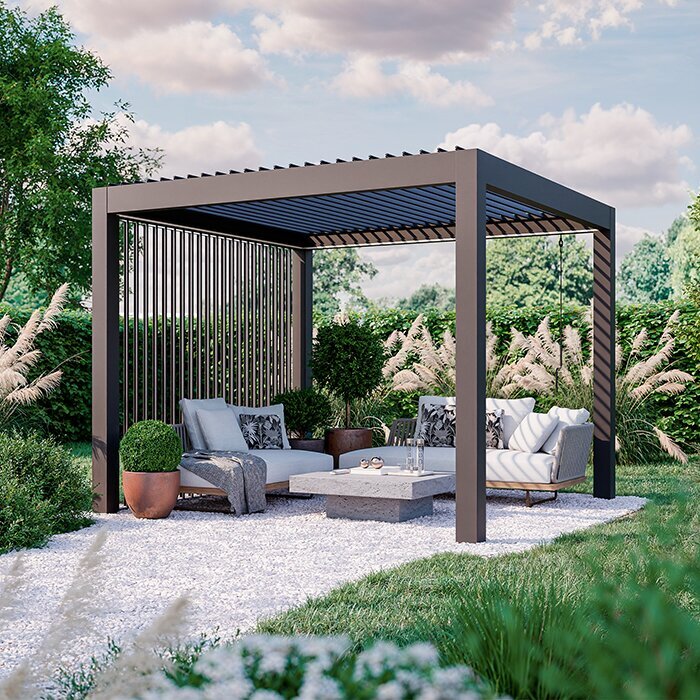
An aluminium pergola will not make rain and wind disappear, but a well-considered design should not add needless rattles, drumming or vibration. Understanding where sounds originate helps you compare options intelligently and ask the right questions before ordering.
Rain changes the soundscape of a garden. Drops strike hard surfaces, water travels through channels and gusts find edges, screens and loose objects. On a sheltered patio, those sounds may feel pleasantly present; in an exposed garden, they can become more noticeable. The useful question is not whether a pergola is silent, but whether its likely sounds suit the way you plan to use the space.
Pergola noise in rain and wind depends on the roof type, the size and openness of the structure, surrounding buildings and planting, and the care taken during installation. A moving-louvre roof has different potential sound sources from a fixed-roof design. Neither is automatically quiet in every condition, so it is worth matching the system to the site rather than relying on broad claims.
For British homeowners, practical observation matters. Think about prevailing winds, the room nearest the terrace, where runoff will land and whether the pergola will be used for morning coffee, evening meals or occasional shelter. A clear conversation about components, fixings, drainage and operation is more valuable than an unsupported promise of acoustic comfort.
Setting expectations · 01
Quiet means controlled, not silent
It is reasonable to expect a quality pergola to have a composed feel when it is correctly installed and used as intended. It is less realistic to expect silence when rain hits a roof or wind moves through an open garden. Sound is shaped by weather intensity and by the surfaces nearby, including paving, glazing, fences and walls that may reflect it back towards the house.
The most helpful way to judge acoustic comfort is to separate ordinary weather sound from signs that deserve attention. A light patter during rain or a changing air sound in a breeze can be normal. Persistent clattering, repeated metallic knocking or a new rattle in calm conditions merits a closer look at fittings, accessories and the surrounding area.
- Listen for whether the sound appears only in particular wind directions, as this points towards site exposure rather than a general structural issue.
- Consider the adjoining room: large glazed doors and hard floors can make outdoor rain sound more noticeable indoors.
For adjustable roof elements and airflow control, explore a bioclimatic aluminium pergola suited to how you use the terrace.
Rain on the roof · 02
Why rainfall sounds different
Rainfall has no single soundtrack. Fine drizzle may barely register beneath a roof, while a sharp shower can create a lively, even calming, pattern across aluminium surfaces. The perceived volume changes with drop size, the roof profile, whether the area below is furnished, and whether there are reflective surfaces such as patio doors close by. Temperature and local wind can also alter how rain arrives.
Water does not stop making sound once it reaches the roof. It may travel into integrated channels, along downpipes or onto paving at an outlet. This is why drainage deserves as much attention as the roof itself. Ask where water is directed and consider whether its discharge point sits beside a bedroom window, a seating position or a surface that amplifies splashing.
- During a site visit, identify hard surfaces beneath outlets and consider a drainage route that avoids concentrating sound near seating.
- Ask how leaves, moss and seasonal debris will be managed, because clear drainage supports predictable water movement.
If you prefer a simple, fixed form for a covered outdoor area, consider a regular aluminium pergola alongside its drainage arrangement.
Moving roof parts · 03
Louvres can add changing sounds
An adjustable louvred roof introduces moving components, so its acoustic character can change between open, closed and intermediate positions. In rain, individual louvers receive the weather differently from a single flat plane. In wind, air passes through or over the roof according to its position. These are design realities to discuss, not evidence that a mechanism is inherently problematic.
Operation itself should be deliberate and smooth rather than accompanied by recurring scraping or impact. Small sounds at the start or end of movement may be perceptible, particularly in a quiet garden, but the important point is consistency. Ask what normal operation sounds like, whether routine checks are recommended, and whom to contact if a sound changes after installation.
- Think about which roof positions you will use most often during breezy weather, rather than judging the system only when fully closed.
- Keep the operating area free of loose leaves and objects that could interfere with moving elements or create incidental noise.
For a roof designed around adjustable louvres, view the bioclimatic pergola collection with your exposure and daily routine in mind.
Wind around the structure · 04
The garden can be louder than the frame
Wind rarely interacts with a pergola in isolation. It passes through hedges, around house corners, beneath eaves and across fences before it reaches the terrace. A garden that feels calm at ground level may still channel gusts at roof height. That movement can be heard at edges and openings, but nearby planters, furniture covers, gates and screening often create the more obvious flapping or tapping.
A pergola’s orientation deserves early consideration. Positioning can influence sun, privacy, views and exposure simultaneously. Observe the patio in different conditions before settling on a layout, especially if it sits at a corner of the house or in an open plot. An installer or supplier can discuss site information, but should not substitute assumptions for a proper assessment of your setting.
- Secure removable accessories and garden furniture before windy weather, as loose items can be mistaken for noise from the pergola.
- Check gates, fence panels and climbing plants nearby; each can create its own rhythmic sound in a gust.
For an uncomplicated sheltered dining zone, look at a traditional regular pergola in relation to the garden’s prevailing exposure.
Drainage and details · 05
Small interfaces deserve attention
Much unwanted noise begins at an interface rather than across the main structure: a cover not seated correctly, a gutter obstruction, a flashing detail near a wall, or an accessory touching a hard edge. These points need not be alarming, but they show why installation quality and subsequent inspection matter. Water should have a clear route, while adjoining elements need enough allowance to behave as intended in changing conditions.
The base matters too. A stable, level and suitable foundation supports accurate alignment and secure attachment. If a pergola is fitted onto an existing patio, the condition and construction of that surface should be discussed before work begins. Do not assume every slabbed area is ready without assessment. The correct approach depends on the product, ground conditions and installation requirements.
- Ask what site preparation is needed and who is responsible for confirming that the proposed base is suitable.
- After severe weather, visually check channels, covers and accessories without attempting adjustments beyond the provided guidance.
To compare louvred-roof details and integrated water management, consider a bioclimatic garden pergola as part of the wider patio design.
Installation quality · 06
A careful fit helps prevent rattles
A pergola installation is not merely an assembly exercise. Accurate measuring, level setting, secure anchoring and correct placement of each component all influence how the finished structure behaves. A frame that is properly aligned gives components the conditions they were designed for. Conversely, avoidable play or contact between parts can make a sound more apparent as weather changes, even if the source initially seems minor.
Before work starts, clarify the scope. Establish where the pergola will sit, how access will be managed, what the ground preparation includes and how rainwater will be considered. If the structure is close to the home, discuss adjacent doors, gutters, vents and opening windows. This practical conversation helps prevent last-minute compromises that can affect both use and perceived comfort.
- Request a clear explanation of the installation sequence, including checks for level, anchoring and final component alignment.
- Keep a note of unusual sounds, weather direction and roof position to make any follow-up discussion more precise.
Where a fixed-roof style suits the project, browse a regular patio pergola and discuss the intended base before proceeding.
Buying questions · 07
Ask for useful, specific answers
A confident buying decision starts with questions that are tied to your own garden rather than a generic specification sheet. Describe the site honestly: its exposure, nearby rooms, existing paving, drainage points and intended use. Then ask how the proposed configuration addresses those conditions. A helpful response should explain considerations and limitations clearly, without turning weather-dependent acoustic comfort into a blanket guarantee.
It is also sensible to ask what care is expected through the seasons. Leaves and debris, nearby trees, retractable accessories and regular use all influence how a pergola performs over time. Ask for applicable product information and operating guidance, then keep it accessible. If planning or insurance questions arise for your particular home, check with the relevant local authority or insurer rather than assuming a standard outcome.
- Ask which sounds are considered normal in rain, wind and roof operation, and how to report a persistent change.
- Request written details of care, use and exclusions so responsibilities are clear after the installation is complete.
For homeowners weighing adjustable shade and ventilation, the bioclimatic pergola range is a useful starting point for informed questions.
Living with weather · 08
Make the terrace feel calmer
The area beneath a pergola can be made more acoustically comfortable without treating it like an indoor room. Soft outdoor furnishings, planting and thoughtful placement of seating can reduce the sense of hard, reflective surfaces surrounding you. These choices will not remove the sound of a heavy shower, but they can make the terrace feel warmer and less stark when weather changes unexpectedly.
Use also shapes perception. A pergola beside a lively family kitchen may blend into everyday activity, while one outside a quiet study will be noticed more readily. Consider when the space is likely to be occupied and which sounds matter to you. A visit to a display or an existing installation can be useful, provided you regard it as one setting and not a promise of identical results at home.
- Place seating away from obvious water discharge points and avoid positioning lightweight décor where gusts can set it moving.
- Use planting and textured outdoor textiles to soften the setting, while keeping drainage routes and operating areas clear.
For a clean-lined outdoor structure with a familiar fixed format, explore a regular aluminium garden pergola for your proposed terrace layout.
Comparison
Likely sound sources at a glance
This comparison helps separate normal weather-related sound from details worth investigating. Actual experience will vary with the chosen configuration, exposure, installation and nearby surfaces, so use it to frame questions rather than predict an exact result.
| Situation | What you may hear | What influences it most |
|---|---|---|
| Fine rain | Light patter across roof surfaces | Roof form, nearby glazing, furnishings |
| Heavy shower | More pronounced rain and water travel | Rain intensity, drainage route, paving |
| Gusty conditions | Air movement, occasional accessory noise | Orientation, screens, loose garden items |
| Roof operation | Brief mechanical movement sounds | Roof position, maintenance, correct alignment |
| Persistent rattle | Repeated contact or vibration | Fixings, covers, accessories, site inspection |
Rainfall
Expect an audible patter on roof elements and occasional water movement through drainage, particularly during heavier showers or when runoff reaches another hard surface.
Wind exposure
Wind noise often comes from air passing around edges and accessories, or from unsecured nearby items, rather than the main frame alone.
Installation
Accurate levels, secure fixings and correctly seated components help avoid avoidable movement, rubbing and vibration after the structure has been fitted.
Plan for sound before you buy
A few observations before choosing a pergola can reveal more than broad assumptions about quietness. Build them into the early site discussion, while layout and configuration can still be considered.
01
Observe the patio
Spend time outside during light rain and breezy weather. Notice wind direction, reflected sound from walls and where water already gathers or splashes.
02
Map nearby surfaces
Mark doors, windows, fences, gutters, hard paving and seating. These influence both how sound travels and how close it feels to the house.
03
Choose the roof approach
Decide whether adjustable louvres or a regular roof format better fits your preferred use, maintenance expectations and tolerance for changing weather sound.
04
Discuss the base
Share details of existing paving and ground construction. Confirm what preparation, fixing approach and levels the proposed installation will require.
05
Agree aftercare questions
Keep operating and care information to hand. Ask what should be checked after severe weather and how to raise concerns about a new persistent noise.
Pergola noise buyer’s checklist
Take this list to a showroom visit, design appointment or installation discussion. It keeps the focus on real conditions at your home instead of vague claims about being quiet.
01. Describe prevailing winds, exposed corners and nearby taller buildings or trees that may redirect gusts across the terrace.
02. Ask where roof water will travel and where it will exit, including the surface beneath the outlet.
03. Clarify the roof’s normal sounds during rain and, where relevant, during opening and closing movements.
04. Confirm what base assessment and preparation are needed before installation begins on an existing patio or new area.
05. Identify loose furniture, covers, screens, gates and planting that may create noise independently of the frame.
06. Discuss rooms beside the proposed pergola, particularly bedrooms, studies or spaces with extensive glazing.
07. Request applicable care and operating guidance, including practical checks after leaf fall or particularly severe weather.
08. If permissions or insurance are relevant, seek guidance from your local authority or insurer for your property.

Frequently asked questions
Will an aluminium pergola be noisy in heavy rain?
Heavy rain is likely to be audible on any hard roof surface, including an aluminium pergola. How noticeable it feels depends on rainfall, roof design, the space around it and nearby reflective materials. Water moving through drainage may also be heard. Treat sound as a normal weather characteristic, not a fixed measure of product quality.
Can wind make a pergola rattle?
Wind can reveal movement in accessories, screens, covers or neighbouring garden items, and it can create sound as air moves around open edges. A repeated rattle should not simply be ignored. Note when it occurs, check obvious loose items safely, and seek advice if the sound persists or appears to come from installed components.
Are louvred pergolas louder than regular pergolas?
They have different sound considerations rather than a universal louder-or-quieter outcome. Adjustable louvres change how rain lands and how air passes through the roof, while a regular pergola has its own roof and edge details. Exposure, installation and surrounding surfaces can have as much influence as the roof category itself.
Does integrated drainage make a pergola quieter?
Integrated drainage can help direct water in a planned route, but it does not mean rain or flowing water will be inaudible. Ask where water is collected and discharged, then consider the outlet’s proximity to seating, glazing and hard surfaces. Keeping channels clear is also important for predictable water movement.
What installation questions should I ask about noise?
Ask how the base will be assessed, how level and alignment are checked, where water will drain and how accessories are secured. It is useful to ask what sounds are normal during operation and which changes warrant attention. Share details of your exposure and nearby rooms so the discussion is site-specific.
Should I worry about sound after a storm?
First, follow the product’s operating guidance and avoid unsafe inspection in poor conditions. Once it is safe, look for loose nearby items, visible debris and obvious obstruction around drainage. If a new sound continues, record its pattern and contact the appropriate supplier or installer with clear observations rather than making assumptions.
Plan your outdoor space
Choose for the whole setting, not silence
A pergola should enhance time outdoors, and a thoughtful choice can make rain and wind feel like part of the garden rather than an unwelcome disruption. Expect some weather sound, then focus on the things you can assess: roof type, drainage, exposure, nearby surfaces, accessories and the quality of the installation conversation.
For Bloomcabin buyers, the strongest next step is to describe your patio and priorities in detail before choosing a configuration. Ask specific questions, review the applicable guidance and plan the site carefully. That approach supports a more comfortable, better-integrated outdoor space in every season.
Explore pergola options with your garden’s weather exposure, drainage and everyday comfort in mind.
