
Powdery mildew in a greenhouse: protect the next leaf.
Crop health / greenhouse field guide
Powdery mildew in a greenhouse: protect the next leaf.
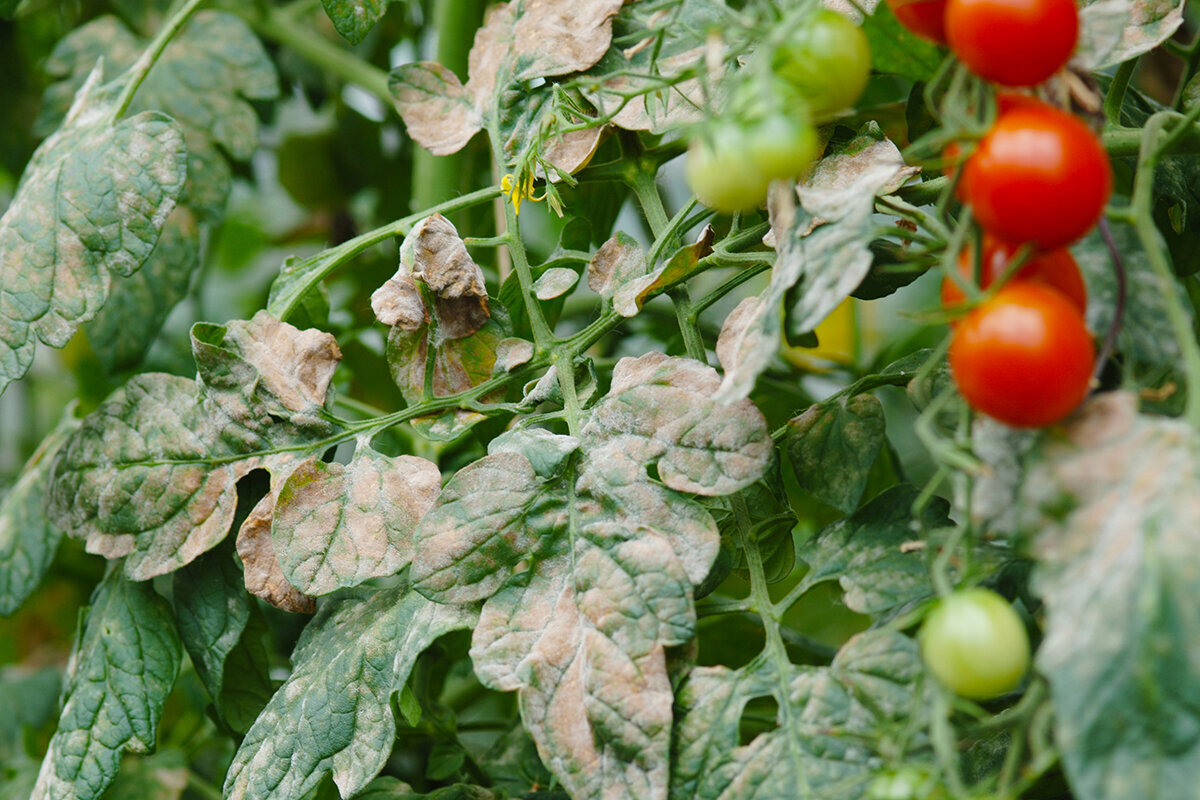
A pale, friable coating can look almost decorative from a distance. On living foliage, it is a reason to pause: identify the surface, interrupt spread and rebuild the climate around the next clean leaf.
+
Recognition note. Do not assume every white mark is mildew, or that wiping a colony away has cured the leaf. A reliable response combines diagnosis, separation, canopy correction and crop-approved intervention.
First response
Contain the question before you contain the crop.
Powdery mildew can appear abruptly in a British greenhouse, particularly during changeable spring and autumn weather when mild days give way to cool nights. Resist an immediate spray response. First, stop a potentially active colony becoming a house-wide problem while preserving enough evidence to identify it. Powdery mildews are a group of fungi living on host tissue, and their spores can move on air currents or through handling. A mildew affecting cucumber does not automatically explain a pale mark on a nearby rose, mint pot, tomato or dahlia.
That distinction matters in a mixed home greenhouse. Edible leaves may sit beside ornamentals, young plants beside established containers, and cultivars with very different sensitivities to crop-protection products. Foliar-feed residue, hard-water deposits and natural wax can also resemble disease. Begin with the plant, symptom distribution and local conditions—not a generic household remedy. If treatment becomes necessary, use only a currently authorised UK product whose label expressly covers the crop, setting and disease.
01
Pause movement. Stop moving suspect pots or brushing through the canopy. Isolate a pot only if this can be done without carrying it through healthy foliage, and mark its original bench position.
02
Inspect both leaf surfaces. Photograph the mark closely and record the whole plant. Examine new and older leaves, shaded growth, stems, buds and flowers in strong natural light; a 10× lens is useful.
03
Inspect nearby plants. Look at least one bench-width beyond the first colony, concentrating on the same crop and on crowded areas beside glazing, staging, walls or airflow obstructions.
04
Review recent conditions. Record watering time, warm days, cool nights, closed vents, shading and condensation. These details reveal more than a single whole-greenhouse humidity reading.
Lookalikes
Read the surface, not simply the colour.
Powdery mildew commonly appears as white-to-grey, talc-like patches that enlarge and merge. Dried spray, mineral residue from hard water, a plant’s natural bloom and other foliar diseases can also leave pale marks. Visual comparison is useful triage, not laboratory confirmation. Avoid rubbing repeatedly across the plant as a test: unnecessary handling may dislodge spores and damage tender tissue. Distribution and the leaf’s response matter as much as texture.
soft colony droplet ring natural bloom tissue injury
| Surface under review | Typical appearance | Distribution clue | Careful check | Limit of a quick check |
|---|---|---|---|---|
| Powdery mildew | Soft white, off-white or grey, talc-like colonies; separate islands can enlarge and merge into a diffuse haze. | Often found on leaf faces and young shoots, although the underside, stems, buds or flowers may be involved depending on the host and mildew. | Use a lens to look for fine fungal threads. Some surface growth may smear or lift, while the leaf beneath can yellow, curl, distort or age prematurely. | Removing visible powder does not remove the infection or fungal feeding structures associated with living tissue. |
| Spray residue | A droplet outline, repeated spotting, crust, streak or more uniform film; it can appear firmer or shinier than fungal growth. | It generally follows the application pattern across exposed leaf faces, drip lines or one recently treated group of plants. | Compare the marks with the application record, nozzle route and coverage. Examine untreated nearby foliage and sheltered leaf undersides as well. | Residue can coexist with disease, so a recent treatment does not rule out an active powdery mildew colony. |
| Mineral deposits | Chalky, crystalline spots or rings with defined edges where hard-water droplets have dried. | Common on upper leaf faces, pots and glazing after overhead irrigation, splashing or misting with mineral-rich water. | Look for matching marks on non-living surfaces and identify the irrigation source. Deposits often trace the evaporated droplet edge. | Water spotting can conceal early disease. Examine tissue response and revisit marked new growth rather than scrubbing the leaf. |
| Natural wax or bloom | An even, integral blue-white or silvery surface rather than separate, irregular fungal colonies. | Usually consistent across healthy leaves, stems or fruit of the same species or cultivar, rather than spreading patchily. | Compare it with a known healthy plant. Natural bloom appears built into the surface and causes no expanding lesion, yellow patch or curling. | Do not scrub it away. Natural bloom is part of the plant surface and can vary between cultivars and growing conditions. |
| Other foliar diseases | Symptoms may begin pale but develop into angular spots, grey mould, downy growth, water-soaked lesions, brown areas or dead tissue. | Distribution may follow persistent leaf wetness, splashing, wounds, leaf undersides or the susceptibility of one particular crop. | Look for necrotic centres, angular margins, coloured spores, stem lesions, rapidly collapsing tissue or growth unlike a dry chalky coating. | Do not diagnose by colour alone. Where symptoms are unusual or the crop is valuable, seek dependable local diagnostic advice. |
This comparison is for practical screening. Wipe behaviour is not proof, and powdery mildew appearance, symptom position and host range differ between crops and fungal species.
The hidden room around a leaf
Good greenhouse readings can conceal a still, crowded canopy.
Greenhouse weather is not the same as leaf weather. Air, heat and moisture gather around close foliage, behind pots, beneath staging and within shaded interior growth. This sheltered boundary layer can offer favourable conditions even when the main thermometer and humidity sensor appear reasonable. It is the smallest climate—and often the one that needs correction first.
Dense spacing narrows air routes.
Overlapping leaves do more than shade one another. They restrict the routes available to moving air, slow recovery after irrigation or night-time condensation, and conceal the first affected tissue. Space plants for their mature July width, not merely for the size of a spring transplant or its pot.
Cool nights concentrate stored moisture locally.
After a mild or warm day, moisture released by plants and growing media remains inside the greenhouse. As temperatures fall, relative humidity rises and condensation may appear first on cool glazing or within sheltered foliage. Timely ventilation can help release moisture when outdoor conditions permit. The correct balance must still respect the crop, prevailing British weather, temperature and energy use.
Shade changes climate as well as available light.
Overgrown interiors, permanently shaded staging and foliage pressed against a wall can remain cooler and less ventilated. Many powdery mildews prosper where light is low, humidity is elevated and air is still, although species differ. Free water is not universally required for infection, so simply keeping leaves dry is not a complete strategy.
Gentle exchange is different from a harsh draught.
A fan aimed directly at one plant can dry or stress that crop while leaving another bench untouched. Seek gentle movement through and around the complete canopy, together with a deliberate path for warm, stale air to leave and replacement air to enter. A fan is one element of an arrangement, not a cure in a box.
Host matters
One white symptom; several crop stories.
Powdery mildew fungi are often specialised to particular hosts or host groups. Symptom position, seasonal pressure and suitable management therefore vary with crop and pathogen. Use these crop groups to direct inspection, not to make an automatic diagnosis. When selecting seed or plants, consider documented resistance or lower susceptibility where it is available for the precise crop and cultivar you intend to grow.
I
Cucurbits
Cucumbers, courgettes, squash and pumpkins can develop conspicuous pale colonies that spread extensively across older leaves. Their rapid, sprawling growth quickly creates a shaded canopy when vines are trained too closely or allowed to interlock.
- Inspect older, lower and interior leaves.
- Keep trained growth orderly, accessible and open.
- Check resistance claims for the exact crop and cultivar.
II
Herbs and edible leaves
Mint, sage, rosemary and other herbs are not interchangeable hosts, but dense pots and repeated harvesting can create difficult-to-see pockets. If considering treatment on food crops, the current UK authorisation, named crop use and harvest restrictions are essential—not optional details.
- Never apply ornamental-only products to edible crops.
- Harvest using clean tools.
- Keep neighbouring pots from becoming one canopy.
III
Flowers and ornamentals
Roses, dahlias and other ornamentals can be susceptible, but their visible symptoms differ. Some hosts distort; others show sparse fungal growth over discoloured tissue. Dense displays and stock plants can conceal the earliest colonies.
- Examine buds, young shoots and lower foliage.
- Quarantine new purchases before introducing them.
- Retain cultivar and outbreak notes each season.
IV
Fruit and carryover plants
Grapes, soft fruit, overwintered plants and year-round stock require crop-specific attention. Natural bloom on fruit must be distinguished from disease, while retained living tissue can bridge seasons for some mildew-and-host combinations even when the greenhouse appears clean.
- Review carryovers before spring crowding begins.
- Remove lingering diseased tissue.
- Separate propagation from mature stock where practical.
A useful rule is to diagnose on the plant in front of you. Product labels, resistance information and cultural methods must match the actual crop—not merely the broad words “powdery mildew”. Keep weeds from providing a living bridge between batches, and inspect valuable or susceptible groups on their own schedule.
Airflow choreography
Give air a route, then give foliage room to receive it.
Ventilation is air exchange: warm, moisture-laden air leaves and replacement air enters. Circulation is movement within the greenhouse. Both matter, but neither performs well if staging is packed solid, tall pots obstruct low-level routes or a mature canopy has become a sealed curtain. Assess the greenhouse as it stands now—not as it looked when the plants were small.
Bloomcabin’s Classic Aluminium Greenhouse shows how a well-ordered structure can support roof ventilation, accessible cultivation and a coherent growing plan. Model dimensions and configurable features can be considered alongside the practical requirements of plant spacing and routine inspection in the Classic Aluminium Greenhouse.
High outlet
Rising air ↑
Roof outlet
Circulation fan
Open canopy
Sheltered pocket
Low inlet
Clear aisle →
Remove obstruction
Morning: Inspect foliage and condensation before daytime warmth disguises the previous night’s conditions. This is the clearest time to find wet glazing, touching leaves, cool corners and persistent pockets of still air. Water the root zone early enough for the atmosphere and any accidental splashes to recover before evening.
Midday: Use vents, doors, shading and gentle circulation to manage rising heat without allowing the crop interior to stagnate. Guide air along and through staging rather than creating a harsh blast across one plant. Check that expanding cucumbers, tomatoes and ornamentals have not blocked routes that were open earlier in the season.
Late day: Avoid carrying unnecessary moisture into a cool British night. Review late irrigation, close-up canopy conditions and the weather before adjusting ventilation. Ensure vents and circulation equipment remain unobstructed, while avoiding a sudden cold draught that stresses sensitive crops.
Ordered intervention
Treat the infection and the setting that invited it.
There is no rescue bottle that makes a crowded, humid and poorly exchanged canopy healthy. Conversely, cultural corrections alone may not contain colonies already expanding through a susceptible crop. A successful plan is ordered: remove obvious source material, correct the local conditions, sanitise the working route, choose only label-authorised tools when justified, and judge the result by clean growth rather than expecting damaged old leaves to become perfect.
Folio 01 / remove
Make a proportionate removal decision.
For a small, isolated outbreak, remove heavily colonised leaves, shoots or whole plants where this will meaningfully reduce the source of spores. Use clean secateurs, place material directly into a bag or covered container, and avoid carrying it through healthy foliage. Do not shake infected material across the house or leave it in a casual compost heap beside the greenhouse. If a plant is severely affected, expendable and close to valuable susceptible neighbours, complete removal may be the calmer choice.
Do not strip a plant so severely that you cause sudden stress, reduce its productive capacity or expose previously shaded fruit to scorch. The objective is sensible inoculum reduction and a more legible canopy—not instant cosmetic perfection.
Folio 02 / reset
Correct the cultural pressure.
Open the canopy through spacing, selective pruning, training and better staging organisation. Water the root zone in the morning so the greenhouse has time to recover, rather than routinely wetting leaves or adding moisture late in the day. The RHS notes that overhead watering can sometimes reduce powdery mildew in dry weather, but wet foliage may favour other diseases; targeted watering is the steadier default for a mixed greenhouse.
Wash hands, disinfect cutting tools between infected and clean crop groups, collect fallen leaves and remove weeds. Clean benches and staging between batches, particularly where plants are carried through winter. Then mark the original focus and inspect it every two to three days at first.
Folio 03 / select
Choose every product by crop and label.
Use cultural control first, especially at low disease pressure. If colonies continue to spread and treatment is justified, select an authorised UK product whose current label expressly covers your crop, its greenhouse setting and powdery mildew. Contact, biological or other fungicidal options may form part of an integrated programme, but availability, crop safety, timing and performance vary. Household mixtures are not a substitute for authorised, crop-specific directions.
Read the complete label before purchase and again before use. Check the named crop, setting, application interval, maximum number of treatments, protective equipment, ventilation, compatibility, disposal and harvest interval where relevant. If the label permits and cultivar sensitivity is uncertain, test an approved product on a small representative area first.
Folio 04 / rotate and review
Do not repeat one mode of action blindly.
Where a fungicide is used more than once, follow its label and current resistance-management guidance. Powdery mildew fungi have a history of developing resistance, and that problem is not solved by applying a product more frequently or above the authorised rate. Avoid routine repetition of the same mode of action. Record the product, active ingredient or group, crop, date, conditions, application interval and observed result.
Review after new growth appears. A leaf colonised before intervention may remain scarred, yellowed or distorted even when spread has slowed. The more useful questions are whether fresh foliage stays clear, nearby plants remain unmarked, and the corrected canopy continues to receive gentle air movement.
UK label threshold
In Great Britain, the authorisation of an active substance does not by itself mean that every product containing it is authorised for every crop. Use only a currently authorised product whose label explicitly permits the intended crop, disease and setting, and follow all directions. Edible crops, herbs, ornamentals and greenhouse tomatoes are not interchangeable uses; harvest restrictions, intervals, protective equipment and disposal requirements need a deliberate check.
Containment test
Judge recovery by the next leaf.
Old damage is an archive, not a verdict. Powdery mildew marks, yellowing and distortion may remain after active spread has been checked. Instead of asking whether every affected leaf has returned to beauty, look for a consistent change throughout the greenhouse: new tissue emerges clean, neighbouring plants remain clear, and the local microclimate does not return to a shaded, crowded and motionless state.
Set a defined observation period and maintain the crop record. This avoids mistaking an unchanged old lesion for treatment failure, or assuming that one clean-looking leaf proves an uninspected neighbouring plant is healthy. Rescout the original focus and likely host plants rather than waiting for obvious house-wide symptoms.
48 hours
Reinspect isolated plants and their nearest neighbours. Note whether colonies are expanding, whether removal has improved the air route, whether an approved application has caused injury, and whether the canopy now receives gentle, even movement.
7 days
Review new symptoms, fallen-leaf sanitation, watering time and the vent schedule. Follow any product-label interval exactly; do not improvise an early repeat treatment because old marks remain visible.
New growth
Date the first clean leaves in your crop notes. If fresh foliage becomes colonised, reconsider the diagnosis, coverage, host susceptibility, nearby sources and environmental correction before taking another action.
Old damage
Active colony
Treated tissue
Clean growth
- Old damage May remain visible after spread is contained; cosmetic reversal is not the objective.
- Active colony Fresh powder enlarges, reaches new tissue or appears on nearby host plants.
- Treated tissue Monitor crop response and possible phytotoxicity without judging the result prematurely.
- Clean growth The clearest evidence that containment, sanitation and climate correction are working.
FAQ
Questions worth asking before the next treatment.
Can powdery mildew spread while foliage is dry?
Yes. Powdery mildew differs from many foliar diseases because free water on the leaf is not universally required for infection. Spores can travel on air currents and through handling infected material. Disease may intensify where nights are humid, light is low and air is still. Water management nevertheless matters because condensation and persistently wet foliage can encourage other damaging greenhouse diseases.
Should I wipe or wash powdery mildew from leaves?
Do not regard wiping or rinsing as a universal cure. Wiping may help assess a small surface mark, but it can dislodge spores and cannot remove fungal feeding structures from living tissue. The RHS notes nuances around overhead watering in dry weather while warning that leaf wetness can favour other diseases. In a mixed greenhouse, accurate diagnosis, careful removal, spacing and balanced air exchange are calmer first priorities than indiscriminate washing.
Will a fan alone stop powdery mildew?
No. A fan may improve circulation, but it cannot remove established infection, replace sanitation, open a crowded canopy or provide fresh-air exchange by itself. Inspect dead zones behind pots, beneath staging, beside solid walls and within tall crops. Pair gentle circulation with deliberate ventilation, suitable watering times and enough space for air to pass without sandblasting leaves.
Can one mildew product treat vegetables and ornamentals?
Only if the current UK product label expressly authorises every intended crop, setting and disease use. A product approved for ornamentals is not automatically suitable for edible leaves, herbs or greenhouse vegetables. Check the named crop, maximum applications, interval, protective equipment and harvest restriction before use. Never infer permission from the active ingredient alone.
Is powdery mildew identical on every plant?
No. Powdery mildew is a broad term for a group of fungi, many adapted to particular hosts or host groups. Their host range, symptom position and management details can differ. Diagnose the crop in front of you rather than assuming mildew on a cucumber explains every pale mark on a nearby grape, rose, tomato or herb.
Sources and further reading
Continue with authoritative plant-health guidance.
These UK and international horticultural, university and regulatory resources informed the diagnostic, cultural-control and product-safety guidance in this article. Product authorisations and labels can change, so verify current status immediately before purchase or use. For an unusual symptom or valuable crop, seek advice appropriate to the plant and your locality.
More from Bloomcabin: Bloomcabin Journal / Plant Health · UK greenhouse setup, layout and care guide · Bloomcabin guide to aluminium greenhouses
Keep the next leaf unmarked
A healthier greenhouse follows small, visible and repeatable decisions.
Open the canopy.
Verify the diagnosis.
Protect new growth.
Thoughtful structure supports the routine: clear sightlines, accessible staging, manageable plant spacing and ventilation routes that remain useful as crops mature. For a premium growing space that brings these practical considerations into one coherent aluminium form, explore the Classic Aluminium Greenhouse and review the broader design and cultivation possibilities presented by the Classic Aluminium Greenhouse.
