
Buying a Glass Greenhouse on Black Friday: Which Specs Matter?
BLACK FRIDAY GREENHOUSE BUYING GUIDE
Black Friday can make a greenhouse purchase feel like a race between price tags, but the written specifications decide whether a glass structure fits your garden, growing plans and assembly arrangements. A headline offer says little about the glazing, usable dimensions, vents or what arrives in the boxes. Compare those details first, then judge the complete cost and terms of any seasonal offer. This guide focuses on the checks that help you distinguish a suitable option from a listing that simply looks appealing; it assumes no particular discount or model feature.

01
Set a specification baseline before comparing offers
Before opening multiple Black Friday pages, write down the growing jobs the greenhouse needs to support: starting seedlings, growing taller plants, overwintering pots or a combination. Those plans affect which measurements and openings matter, but they do not point to one universal best size or frame. Note the area available, the maximum footprint and height you can accommodate, and whether the greenhouse needs to stand away from a wall. Choose a few must-haves, such as a stated glass type or workable ventilation, and separate them from nice-to-haves. This gives you a practical filter before promotional wording starts to influence your shortlist.
Build a comparison sheet with a row for each candidate and columns for glazing, frame, outside dimensions, interior layout, vents, door, base, installation, warranty, inclusions and total cost. Copy figures and wording from the product information rather than filling gaps with guesses; mark missing details as “confirm”. Record the model or configuration and the date you checked it, since product information and offer terms can change. Keep measurement units consistent and compare the same package contents wherever possible. This simple record helps when several pages use broad names or similar photographs but describe different specifications.
Check the glass type and pane details
“Glass” is not a complete glazing specification. Look for the stated glass type, pane thickness, whether the panels are single-glazed, and how the manufacturer describes any safety treatment. Horticultural glass and tempered glass, also called toughened glass, are not interchangeable labels; tempered glass is processed to alter how it breaks, but it is not unbreakable. Do not infer a glazing type from a product title or assume every pane in a kit has the same treatment. If a listing says only “glass”, ask the seller or manufacturer to identify what is supplied for the exact model and configuration. If options are offered, confirm which one the quoted package includes.
Check whether the specifications give individual pane dimensions or only the overall greenhouse size, and look for details of the system that retains the glazing. Clips, glazing bars, seals or gaskets may be relevant to a particular design, so confirm what is included rather than assuming the parts shown in an image come with the kit. Ask how replacement panes are identified and whether spares can be ordered; a panel with an unusual shape may be harder to match than a standard one. Read the assembly information for the specified fittings and handling requirements. Warranty coverage may differ between glass and frame, so check the terms for breakage specifically. Follow the supplied handling instructions and arrange suitable help if needed.
02
Compare frame materials and connections
Compare the material stated for each frame component, not just the broad label at the top of a listing. A greenhouse may use different materials for posts, roof bars, base rails and fasteners. A name mentioning aluminum does not establish the material, grade, finish or thickness of every part. Check whether the product information identifies a coating or corrosion protection and whether it specifies maintenance. For timber or steel components, look for the stated finish and care requirements rather than assuming they need no attention. Frame material is only one part of the structure: profiles, connectors, joints and the way the glazing is retained also matter. Read the assembly documentation alongside the headline material.
When reviewing the limited-edition aluminum greenhouse listing, treat the name as a way to identify the page, not as a complete parts list. Find the materials stated for the frame members, connectors and base in the exact package. Apply the same check to every candidate: what are the main members and fasteners made from, and is the base a separate component? Look for any care requirements and information about replacement hardware. A feature list is useful only when it identifies what is supplied and applies to the model you are considering. If a key detail is missing, ask before treating a lower-priced package as equivalent to another frame.
Read the dimensions and plan usable space
Use the dimension drawing, not a model number or photograph, to judge size. Record the outside length, width and highest point, then note the eaves height and door opening if listed. A greenhouse can fit its footprint yet feel awkward if the entrance or headroom does not suit your use. Confirm whether the measurements describe the structure alone or include the base, projections or gutters. Check the units carefully: a listing may show metric or imperial measurements, so convert consistently and keep the original figure beside any conversion. A rounded number or catalogue name is not enough to plan a prepared base or confirm clearance around the structure.
Assess the usable interior as well as the outside rectangle. Sketch the intended beds, shelves, containers and walkway to see whether you can reach plants without crowding the route through the door. Check the stated door width and opening direction, plus the space needed for an open door and for working around the outside during assembly and cleaning. Staging and paths take up room, so the growing area may be smaller than the footprint suggests. Keep clearance from nearby doors, fences and eaves in mind. A name such as the Classic Plus 385 greenhouse listing is no substitute for a measured drawing; verify the dimensions on the current product information before planning the base.
03
Compare vent layouts and operation
Ventilation is more than a count of openings. Look for the number, type and position of vents, which roof or side panels open, and whether a door is being counted as an airflow opening. A drawing should help you see how air can enter and leave; openings at different heights are a different arrangement from openings on one side alone. Compare any stated opening dimensions and the method of operation, but do not treat a photograph as proof that every panel shown is operable. If the information is vague, request a vent layout or manual before assuming the greenhouse will suit the plants and tending routine you have in mind.
Confirm which ventilation parts are included. A manual vent, automatic opener, louvre, insect screen or extra opening may be included, optional or absent; check each item rather than pricing accessories from a photograph. Find out how controls are reached once benches or tall plants are in place, and whether the openings can be operated from a practical position. Note how each vent is secured and whether any operating equipment needs to be purchased separately. On the Oasis pyramid greenhouse listing, look for stated vent details and a layout; if they are not provided, ask rather than infer them from the title or image. Match documented ventilation to your routine, not to an assumed feature.
Confirm the base and installation requirements
Find the current assembly manual before buying, if it is available, and identify what the manufacturer requires for the exact model. Check whether a base frame is included, whether it is an optional accessory, and what kind of prepared surface or anchoring the instructions call for. A level, suitable support matters to assembly, but do not guess a foundation from a product photograph or borrow another model’s instructions. If the site, soil or existing patio raises questions about support, have a qualified installer or other appropriate professional advise you before ordering materials. The product information should make clear which preparations are yours to arrange and which parts are supplied.
Find out whether assembly service is included or arranged separately, and clarify who prepares the site, receives the kit and handles installation. Check the manual’s stated tool list and whether any special hardware or base parts are outside the package. Measure the delivery route, including gate openings and path turns, and ask for package dimensions or handling details if access is uncertain. A listing labelled Prestige greenhouse with metal base still needs an itemized inclusion check: the title alone does not settle what is included in the selected package or what surface it requires. Write down unresolved responsibilities so you can account for the parts and labour you will need.
04
Check site conditions and weather ratings
Check the documented conditions for the exact greenhouse and your site, especially where snow accumulation or wind exposure is relevant. Ask for manufacturer information tied to the model, dimensions, glazing, frame and specified base or anchoring configuration; a general claim that a greenhouse is sturdy does not provide a rated capacity. Do not assume a garden greenhouse is designed for every winter condition or that a particular roof panel handles a specific load. If the documentation does not address your site or you cannot interpret the conditions it covers, consult a qualified builder or installer. A calculation based on a photograph or an adjacent model is no substitute for model-specific guidance.
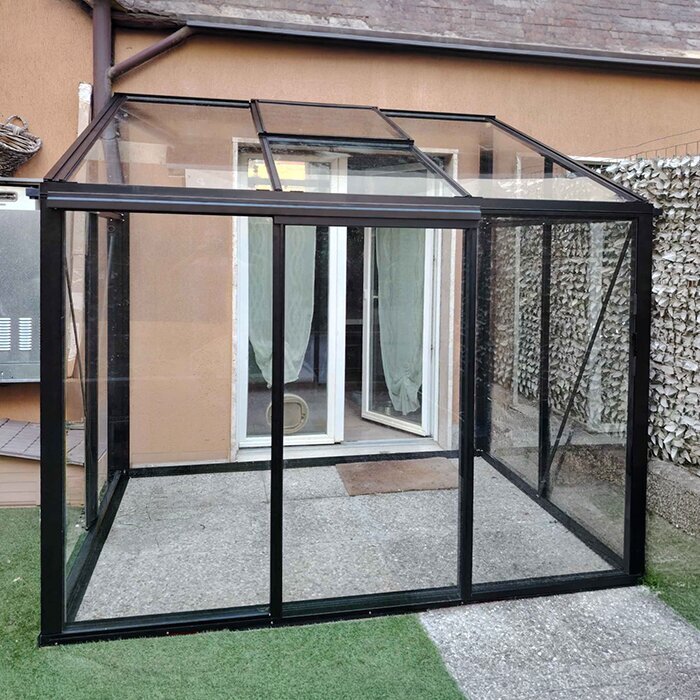
Assess the proposed location as well as the product. Consider how sunlight and shade move across it, whether rainwater drains away rather than pooling, whether nearby branches or falling debris are a concern, and whether there is room to reach the entrance and maintain the outside. If you are considering a lean-to format, check the exact wall and attachment requirements and make sure the site leaves vents and doors unobstructed; the word “lean-to” does not confirm that any wall will work. The aluminum lean-to greenhouse listing identifies a format, but its title does not confirm glass type, wall compatibility or weather capability. Compare the stated details with your measured site and the installation information.
Read warranty and replacement-part terms
Warranty terms can differ by component, so look for the stated coverage period and conditions for the frame, finish, glazing, hardware, vents and base. Read any exclusions concerning accidental glass damage, weather exposure, corrosion, assembly or other circumstances as written; do not assume a general “greenhouse warranty” covers every part or cause of damage. Check when coverage starts, whether registration or proof of purchase is required, and which installation or maintenance instructions must be followed. A return policy and a product warranty serve different purposes, so note both before deciding. If a page provides only a broad summary, request the complete terms for the exact item and configuration.
Useful support information includes how to identify a replacement pane or component, whom to contact and whether parts are ordered by model or part number. Do not assume a broken pane is covered just because the frame is; confirm the wording for glass and accidental damage. Check whether the warranty applies to the selected glazing and any optional base or opener, and keep the answer with the product details. For the T-model orangery greenhouse listing, review terms attached to that exact product instead of borrowing conditions from a similarly named greenhouse. Apply the same rule across your shortlist: compare written coverage, not the prominence of a badge or a short sentence on a category page.

05
Compare the full Black Friday purchase cost
For an offer comparison, use the price shown for the exact configuration and check the total at checkout rather than judging only a Black Friday banner or percentage. Add the base, anchoring kit, vents or openers, shelves, delivery, taxes and assembly where they apply; confirm which items are included and which have separate charges. A lower advertised figure is not like-for-like if it covers a different size, glazing option or bundle. Record the date and exact package you compared, since a seasonal price can change and accessories can alter the total. Do not assume a discount, saving or limited-time condition unless it is explicitly displayed for the item you are evaluating.
Read delivery and return conditions alongside the total. Confirm where delivery reaches, what happens if a large package cannot pass through your access route, whether unloading or carrying is included, and how a missing or damaged part should be reported. Check whether installation or return collection is included or remains your responsibility; do not treat a courier’s arrival as an assembly service. Add the Orangerie greenhouse listing to the same comparison sheet as any other candidate, but do not infer its price or package contents from its name. Use the current product and checkout information, and count only confirmed inclusions when deciding whether the total fits your budget.
Use a final checklist before ordering
Once you have two or three candidates, compare them line by line rather than relying on memory. Make essential checks pass or fail: glazing identified, frame materials described, dimensions and openings workable, vents specified, installation and base requirements understood, site conditions addressed, and warranty terms available. Then compare preferences such as layout, finish or optional accessories. Keep unanswered questions visible and seek a written answer from the retailer or manufacturer before treating a gap as a match. If a detail that affects installation or suitability cannot be verified, remove that option from the shortlist rather than filling in the blank with an assumption.
Before checkout, match the cart to the model and configuration you evaluated, including any glazing choice, base and ventilation accessories. Recheck the itemized amount, delivery details and return terms, then save the product information and offer conditions shown that day with the order confirmation. For the wall-mounted T-model orangery greenhouse listing, verify the exact installation notes rather than guessing about wall, base or attachment compatibility from the title. If the product information and instructions agree with your measured site and growing plans, you can judge the offer on documented details instead of urgency.
Frequently asked questions
Does a Black Friday offer automatically make a glass greenhouse better value?
No. Compare the price and checkout total for the exact greenhouse and configuration, including any base, vents, accessories, delivery and installation costs that apply. Check that competing packages have comparable glazing, dimensions and included parts. A percentage-off message alone cannot confirm a saving or show whether the greenhouse suits your plans.
Which type of glass should I choose?
There is no single choice for every garden. Confirm the exact glass type, pane thickness and any stated safety treatment for the model you are considering. If comparing horticultural and tempered glass, read what the manufacturer says about each option, then check pane replacement details and warranty coverage before deciding.
How can I tell whether a greenhouse will fit my garden?
Use the manufacturer’s measured drawing to check outside length, width and height, then plan the usable interior, door opening, nearby clearance and space needed for assembly. Confirm whether the measurements include the base or other projections, and compare figures in consistent units.
Is the greenhouse base included?
Do not assume that it is. Check the parts list for the exact model and selected package, and distinguish an included base from an optional accessory. Read the installation instructions to learn what surface and anchoring the manufacturer specifies.
Can I assume a glass greenhouse will handle snow and wind?
No. Check manufacturer documentation for the exact model, size, glazing and specified base or anchoring configuration. If the stated conditions are unclear or do not address your site, ask the manufacturer or consult a qualified professional. Do not estimate capacity from a product photograph or a similar model.
The strongest comparison is not the one with the biggest advertised percentage; it is the package whose glazing, frame, dimensions and ventilation meet your needs, with installation and support terms you understand. When the listing gives enough detail to verify that match and the full cost is acceptable, you can make a considered greenhouse purchase. Keep the model-specific information with your order so the details you relied on remain clear.
