
Buying a Greenhouse for Hot Climates: Ventilation and Shade
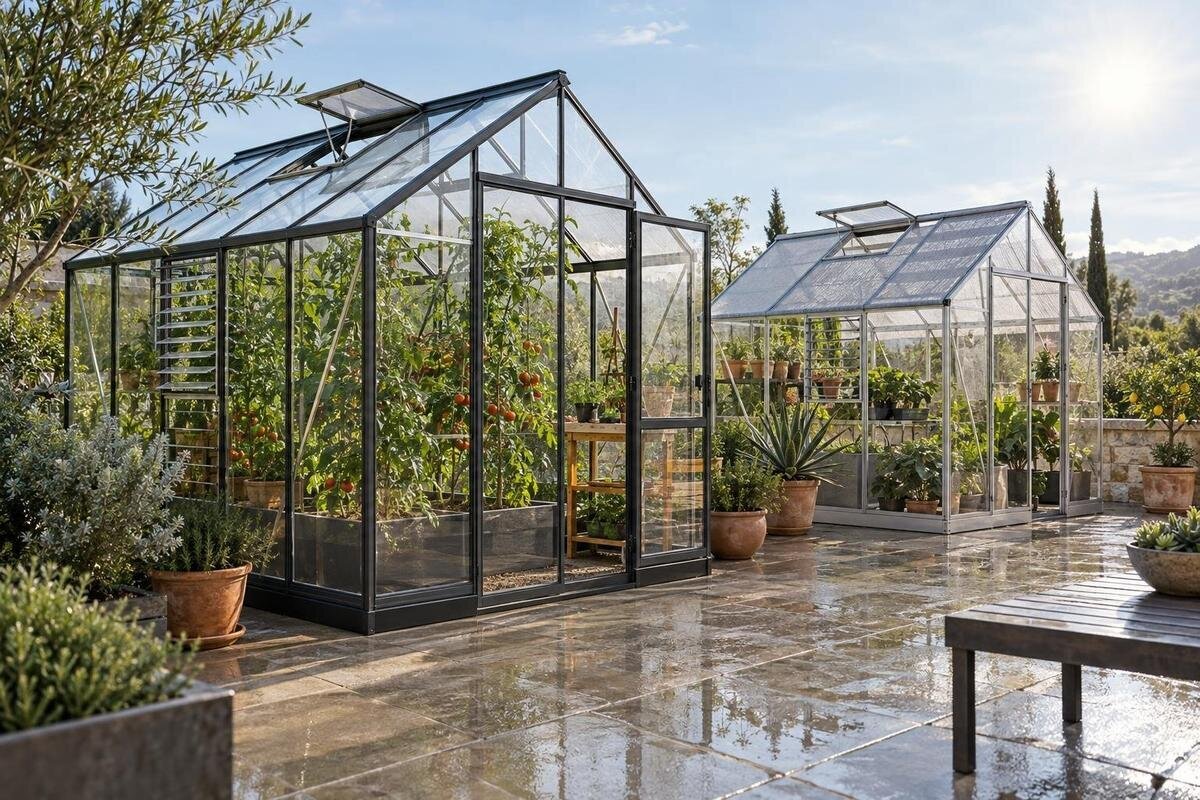
GREENHOUSE BUYING GUIDE
If you plan to buy a greenhouse for a hot climate, the key is not simply how much glazing or floor space it offers. A sunlit enclosure can collect heat quickly, so it needs a workable route for air to move and a practical way to limit incoming sunlight. Compare ventilation and shading together against your plants, site and daily routine. Product names and general shapes do not reveal which vents, shade equipment or controls are included; use current product details rather than assumptions to make the final comparison.

01
Define the growing conditions you need to manage
Begin with the plants and purpose, not the greenhouse shape. List what you plan to grow, the months you expect to use the structure, and whether you want to raise seedlings, extend a season, shelter crops from rain or keep growing through the hottest part of summer. These goals place different demands on light and temperature. A greenhouse can admit strong sunlight while restricting outside air movement when closed, so the enclosure may become hotter than the surrounding garden. It is not automatically a cool, shaded shelter. Be specific about which hot-weather conditions you need it to manage, and which you can tolerate.
For each priority crop, use reliable growing guidance or supplier information to note its useful light and temperature range. Then decide how often you can open and close vents, monitor conditions and adjust shade during warm spells. Avoid planning around one ideal temperature for every plant if you intend to mix crops with different needs. If their requirements conflict, choose a primary crop group or divide the growing area into zones that can be managed separately. Include shoulder-season use in your plan too: the balance between releasing heat and retaining warmth changes with the weather. These choices give you criteria for comparing products rather than choosing by appearance.
Assess sun and airflow at the proposed site
Assess the proposed footprint at several times of day, not just from a catalogue image or one sunny visit. Note when direct sun reaches the site, how long nearby buildings, fences or trees cast shade, and whether paving or walls make the area warmer in strong sun. Seasonal changes matter: a tree may shade the spot in summer but not at another time of year. Also note which sides receive moving air and which are sheltered by fences or adjacent buildings. There is no universal orientation that guarantees a cool interior; the aim is to understand sun and airflow at the spot where the greenhouse will stand. A brief site sketch can help you compare layouts accurately.
If one side will sit beside a building, compare that arrangement with a freestanding site before ordering. A wall may shade the greenhouse for part of the day, reflect heat at another time, and make one side difficult to access or ventilate. The aluminum lean-to greenhouse listing is one wall-adjacent form to examine, not evidence that a particular wall is suitable. Use the model's current drawings and details to confirm the footprint, door clearance, openable sides and access for planned shade. Do not assume the wall leaves room for ventilation simply because the structure fits against it; check the actual layout and approach.
02
Evaluate ventilation as an air path
Treat ventilation as an air path rather than a count of windows. Compare which panels open, their stated dimensions or usable opening area where given, their height, and how far they can be opened. In a passive greenhouse, lower inlets and higher outlets can support warm air rising out; wind, surrounding obstructions and the geometry also affect air exchange. A vent count alone cannot show how much of the greenhouse is openable, or whether air can pass through the growing space. Check whether a stated opening area applies to each vent or to the total, and read the drawing alongside any ventilation information. Ask for clarification if the layout is not shown.
Trace that route through your planned benches and crops. Equipment may obstruct a lower opening, while a dense canopy or solid internal divider can restrict air movement. A door used as the only inlet may be impractical when you need it closed against insects, weather or access concerns. The limited edition aluminum greenhouse listing is a named option to inspect, but its name does not establish vent area, locations or included hardware. Compare the documented opening arrangement with your site sketch, and confirm that vents remain accessible after benches, shade and plants are in place. If you plan to use an insect screen, ask whether it is included and whether its fit changes the clear opening.
Compare roof, side and door openings
Roof and side openings can complement each other, but they are not interchangeable in every layout. High roof vents can give rising warm air an outlet; side vents or lower openings can provide an inlet. Wind direction, adjacent structures and the position of the growing area affect the result, so compare actual opening placement rather than assuming a roof vent alone will keep the interior comfortable. Check whether openings are on one or more sides, whether they can be operated independently, and what is stated about opening size and mechanism. A useful product drawing should show where panels open, not merely mark a vent symbol.
Doors can add ventilation when open, but count them as part of the plan only if you are willing and able to leave them open when needed. Check how access works with the door swing, nearby walls or fences, and planned benches; also ask whether screens are supplied, optional or unavailable. For a T-shaped layout, the T-model orangery greenhouse listing is a product page to review, not proof of a particular airflow pattern. Use its published drawing to map openings to each growing area, and confirm which components open and how they are operated. The footprint's name alone cannot tell you whether air reaches every part.

03
Plan how vents will be operated during heat
Consider who or what will operate ventilation during the hottest hours. Manual vents are only useful if someone can open them in time and close them as conditions change; reach, access, work schedule and frequency of checks all matter. Automatic openers can reduce routine handling, but confirm their operating mechanism, compatibility with the chosen vents and stated opening range. Check what happens when conditions fall outside the opener's intended range, and do not assume an opener is included just because the greenhouse has opening vents. If you are considering an electric fan or powered control, verify its power and compatibility requirements with the supplier.
Plan for interruptions as well as normal days. A powered fan depends on an appropriate supply and may need a backup plan if power is lost; a passive opener still has operating limits and needs maintenance. Fans move air but do not, by themselves, make it cooler than the incoming outdoor air, so they do not replace shade or a clear route for air to leave. Keep a routine for checking that vents have opened and nothing blocks them, especially during heat events. For electrical selection or installation questions, consult a qualified professional rather than improvising wiring or controls. This helps you compare the effort and resilience of each setup, not just its advertised features.
Choose a shading method you can manage
Plan shading before choosing an accessory. External shade intercepts sunlight before it passes through the greenhouse covering; internal shade changes the light after it has entered. Each approach has different fit, access and maintenance considerations, and performance depends on the material and how it is installed. Compare fixed shade with a removable or adjustable option according to the seasons you grow: permanent shade may reduce light when crops need more, while a seasonal method requires someone to manage it. Ask whether a shade product is intended for the selected greenhouse and which attachment points it uses; do not assume a generic screen fits.
Check the stated shade factor or light-transmission information if supplied, and match it to your priority plants rather than choosing the darkest option by default. Verify whether shade covers the roof, sides or both, and whether it could interfere with roof vents, side openings or doors. The Bloomcabin Oasis Pyramid greenhouse listing is one product page to compare, but its shape and title do not specify shade compatibility or included items. Look for explicit accessory details or ask which shade systems fit the exact model. If shade must be fitted over a hard-to-reach area, include safe access and ongoing adjustment in your purchase decision.
04
Match shade to crop light needs
Shade is only useful if enough light remains for the crops you choose. Different species and growth stages respond differently to light, so use crop guidance to determine whether you need protection during peak sun, longer seasonal coverage or a limited shaded zone. A single fixed solution across every panel may not suit seedlings and mature crops equally. Plan where sun-tolerant and shade-sensitive plants will sit, and whether that arrangement can change as the greenhouse fills. If plants are rotated, or the greenhouse must serve in both spring and summer, movable shade may be more practical than a permanent cover, provided the product can accommodate it.
Compare glazing and shade together: published details about the covering, if available, help you understand what light enters before an extra screen is added. Do not infer transparency, solar control or included equipment from a frame finish or model title. For example, the Bloomcabin Prestige greenhouse with metal base listing should be checked for its stated covering and compatible shading accessories, rather than treated as evidence that either is included. Ask whether shade is sold with the greenhouse or separately, whether its attachment is approved for the model, and whether opening panels remain free. These checks help avoid reducing useful light or interfering with ventilation.
Plan the interior around air movement
Interior layout affects whether the vents and shade you paid for can do their job. Sketch benches, taller crops, storage and walking routes before selecting a footprint; leave clear access to the controls and consider how openings move air around those planned obstacles. Avoid filling a path with equipment if it prevents you from adjusting roof openings or reaching side vents. Where you plan to grow a mix of crops, placement can help create sunnier and more shaded zones, but only if the openings and shade can be managed accordingly. Allow enough room to tend plants without routinely shifting screens or blocking vents.
Do not treat a product label such as Bloomcabin Orangerie as proof of usable interior area or a climate-control layout. Compare a dimensioned plan, door position, vent locations and any stated interior supports, then draw in the benches you expect to use. Check whether illustrated accessories are included or simply shown, and whether your shade plan still leaves doors and openings reachable. This is useful when comparing shapes that look generous online: usable growing space depends on documented dimensions and what you place inside, not on a style name. A clear plan also helps you estimate the routine work needed during hot spells.

05
Compare the full purchase package
Once ventilation and shade seem workable, compare the whole purchase package. Confirm the exact model and dimensions, frame and covering information, openable-panel locations, standard inclusions, optional accessories and any preparation or assembly requirements the seller lists. Check whether automatic openers, fans, screens or shade are described as included, optional or unavailable; similar-looking product photos do not settle this. Read current delivery, return and warranty terms directly before ordering, since these are terms of sale rather than features to infer from a model name. If a key climate-control detail is missing, ask for written clarification so your comparison rests on the same information for every option.
Keep a simple comparison record for each candidate: documented ventilation layout, shade compatibility, expected operating effort, fit for your plants, fit for the site, and total cost including separately purchased items. This makes a limitation visible beside a large footprint or attractive picture. The Classic Plus 385 product listing can be compared on the same basis; do not infer measurements or features from the model designation. Confirm whether a base, shade, opener or other pictured item forms part of the order, and check compatibility before adding accessories. If an installation or electrical question affects your choice, consult the supplier or a qualified professional while there is still time to choose a suitable configuration.
Use a hot-weather checklist before ordering
Before placing an order, revisit your site notes and test each candidate against the hottest period you expect to grow through. Can outside air enter and warm air leave along an unobstructed route? Can you reduce intense sun without cutting light below your crops' needs? Can you adjust each feature when it matters, and do you have a backup routine if automation or power is unavailable? Answer from product documentation and your site plan, not general expectations about greenhouse types. Mark important details as confirmed, unclear or unsuitable; an unknown specification is not evidence that a feature will meet your needs.
For the T-model greenhouse orangery wall-base listing, confirm from the current instructions and drawings what the named configuration includes and how it is intended to fit your site; the title alone is not an installation specification. Apply the same standard to every shortlisted model, then choose the one whose documented openings, compatible shade and everyday operation meet your growing brief. A greenhouse for hot weather is a purchase of a workable environment as much as a frame. If questions about a base, attachment or electrical work remain, get advice from the appropriate qualified professional before committing.
Frequently asked questions
Is ventilation or shade more important in a hot climate?
They address different parts of the problem, so compare them together. Shade limits incoming sunlight, while ventilation provides a route for warm air to leave and fresh air to enter. The balance depends on your site and plants: strong afternoon sun may make shade a priority, but shade alone does not provide air exchange.
How can I tell whether a greenhouse has enough ventilation?
There is no single vent count that suits every greenhouse and site. Look for documented opening dimensions or usable opening area, the locations of the vents, and a clear route through the planned growing space. If those details are missing, ask the seller or manufacturer for the opening layout before you order.
Are roof vents enough for a greenhouse in hot weather?
A roof vent can provide a high-level outlet for warm air, but the result depends on the full ventilation path, including where outside air can enter. Compare roof and lower openings, how they operate, and nearby obstructions. Do not assume that a roof vent by itself will keep a greenhouse at a particular temperature.
Can I add shade cloth to any greenhouse?
Do not assume that a generic shade cloth fits every model. Confirm whether the manufacturer offers or approves a compatible option, what area it covers, and whether its stated shade factor suits your crops. Check that the proposed shade will not obstruct vents, doors or access to controls.
Will automatic vent openers prevent overheating?
They can reduce the need for manual adjustments, but they are not a guarantee against overheating. Check the opener's mechanism, compatibility and operating limits, and confirm whether it is included or sold separately. Shade, a clear air path and a plan for checking the greenhouse during hot spells still matter.
Choosing a greenhouse for a hot climate comes down to a manageable balance: a route for air to move, shade that suits the crops, and controls you can actually operate. Compare models using the same site sketch and growing plan, then let documented opening layouts, shade compatibility and included components settle the shortlist. If those details remain unclear, pause before ordering rather than assuming a familiar shape or product name will solve the heat. The strongest choice is the one that fits the summer conditions and growing routine you intend to support.
