
Buying a Freestanding Greenhouse: Choose Its Position Before Ordering
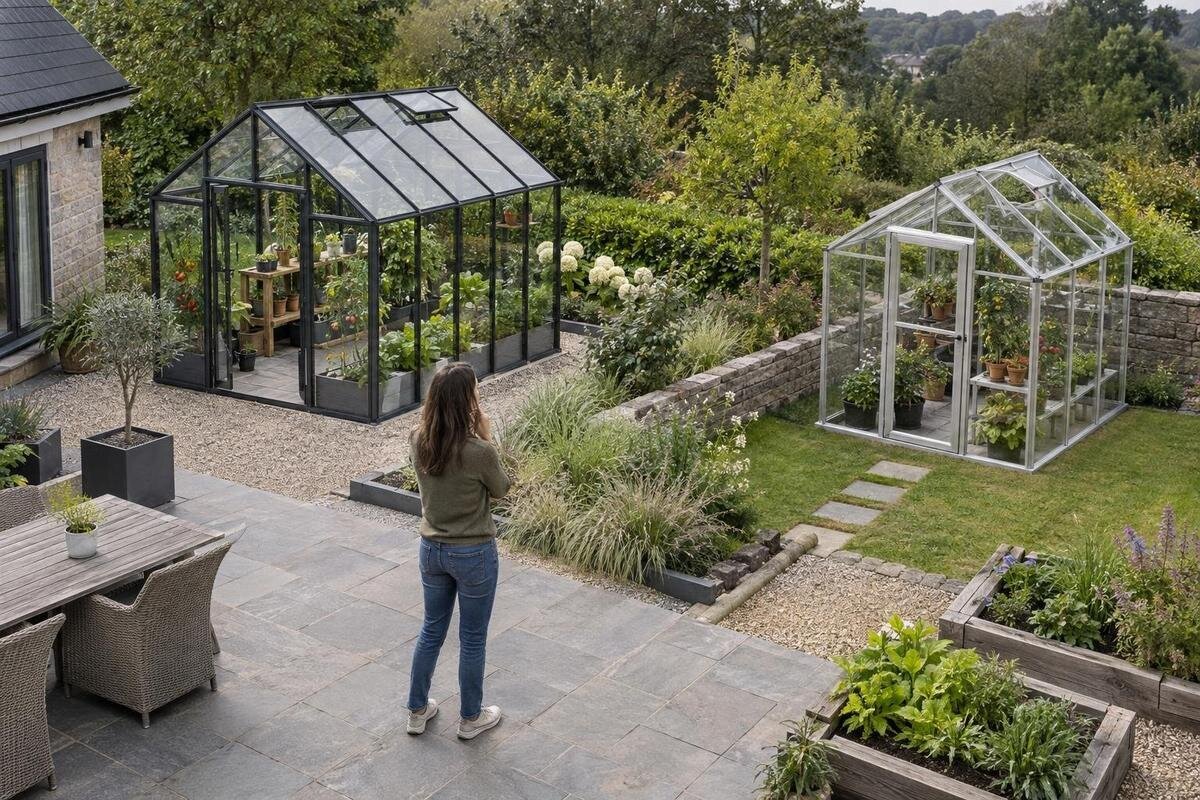
Greenhouse buying guide
Buying a freestanding greenhouse is easier when the site is part of the product decision from the outset. A model that fits your growing plans still has to fit the ground, light, access and daily routine of its intended position. Before comparing listings, walk the property, map the usable area and note potential obstacles. Those observations will help you shortlist suitable product types and identify details to confirm before ordering.

Buyer checklist 1
Confirm the site works for a freestanding greenhouse
A freestanding greenhouse needs a location that works as a standalone structure, not merely a patch that looks empty on a garden plan. Walk the property and mark two or three plausible areas. Include walls, sheds, fences, established beds and trees; each can restrict assembly, access or regular care even if the ground outline looks clear. Check the chosen product’s installation guidance for any required clearances rather than assuming every side can sit close to a boundary. A site that fits the outline but leaves no practical route to bring components into place, or to reach parts that need upkeep, may not suit your routine.
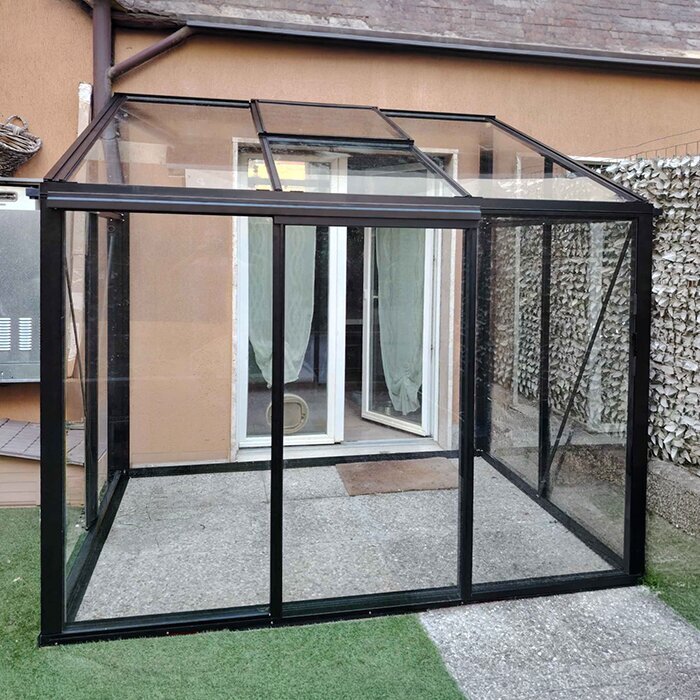
Decide whether placing the greenhouse away from a building works for the way you garden. A separate position may make it easier to arrange paths and beds around the structure, but it could also put watering and harvesting farther from the house. If the only plausible spot sits directly beside a wall, compare the freestanding format with a different type, such as an aluminum lean-to greenhouse. That page is an example of another greenhouse format, not a substitute recommendation: its own dimensions and siting guidance still need to suit the space.
Measure the footprint and working space
Measure between fixed obstacles, not just across the patch you hope to occupy. Use a tape and temporary markers or string to show the proposed outline on the ground, then mark the approach to the door and the space you need for regular work. Record narrow points, gate widths, fence corners, tree trunks and paths that must stay clear. Keep the outside footprint separate from the growing area inside; those are not interchangeable measurements. A sketch with labelled sides is useful when you compare listings, check a plan or ask for missing information. Measure diagonals as well as straight sides when the available area is irregular, since a corner that appears square by eye may reduce the usable space. Take photographs of the marked area from the intended entrance and delivery route so that site notes remain clear when you review product information later.
Use dimensions for the exact model, where provided, and check what those figures include. The base, roof projections or an opening door may affect the space needed beyond the main footprint; rely on product drawings and installation information rather than assumptions. A name such as Classic Plus 385 is an identifier, not a measurement. Do not interpret a number in a product name as a dimension or estimate the outline from a photograph. If the product information does not answer a measurement question, have it clarified before deciding that the greenhouse fits.
Buyer checklist 2
Assess sunlight for the crops you plan to grow
Observe the possible site at more than one time of day. Note where direct light reaches, when shadows cross the area and which structures or trees cast them. A single visit around midday can miss important changes in morning or afternoon light. Consider seasonal differences too: a deciduous tree may shade the site differently when it has leaves, while nearby buildings remain a source of shade throughout the year. If you cannot observe the spot in another season, use your knowledge of the property and be cautious about treating one day’s conditions as typical.
Match what you observe to the crops and growing routine you have in mind; there is no universal light target that applies to every greenhouse gardener. Make a simple note of the hours or parts of the site that receive sun, then check the growing requirements of the plants you expect to raise. When you assess a candidate such as the limited-edition aluminum greenhouse, use the same crop and site notes rather than assuming the model name tells you what light it needs. The listing’s identity alone cannot establish whether a particular position will work for your plants.
Consider wind exposure and nearby trees
Compare how exposed each possible position feels with the rest of the property. An open area may receive more wind, while a wall or fence can change exposure on one side; do not assume that nearby shelter removes the need to check the product’s siting guidance. Look up at mature trees as well as around the ground. Branches, leaves and other debris can affect the position you choose, and trees may also cast shade or limit access. Note overhead obstructions and places where routine clearing would be awkward before you settle on an outline.
For a location exposed to local weather, verify the selected greenhouse’s documented limits and installation requirements for the conditions it will face. Do not infer suitability from a photograph, a shape or a product title. This applies to any candidate, including the Bloomcabin Oasis Pyramid greenhouse; the name is not a weather rating. If the manufacturer’s information does not address an important site concern, ask for clarification or consult a qualified professional. That is more reliable than choosing a spot based only on how sheltered it seems during one visit.
Buyer checklist 3
Check drainage and ground conditions
Look at the site after rain if you can, and note where water collects, runs across the ground or arrives from higher ground nearby. A low spot that stays wet can make the approach muddy and may not meet the chosen model’s preparation requirements. Consider the surface as well: lawn, paving and other existing ground finishes each have different implications for how the area may need to be prepared. Notice whether roots, buried services, edging or established planting could affect the available area or site work, without disturbing anything to investigate. The aim is not to design a base on the spot, but to identify conditions that could affect the purchase or require more work before installation. Clear notes about what you can see give a qualified professional more useful context if site preparation needs to be discussed.
Record any slope, unevenness or soft ground and compare those observations with the product’s installation information. Do not assume that a named base means the greenhouse can be placed on any surface or that it resolves every site issue. For a candidate titled Bloomcabin Prestige greenhouse with metal base, for example, check the model-specific information for the base and preparation details rather than relying on the wording alone. If the ground may need levelling or foundation work, ask a qualified professional to assess it before ordering.
Plan access for daily use and maintenance
Think through an ordinary visit to the greenhouse: how you will arrive, open the entrance, carry in supplies and take out harvested plants. Mark the route on your site sketch and check whether it remains practical when the garden is busy or beds are planted. Look at how the selected model’s door opens and where its openings are shown on the product plan; do not assume a product image gives you enough information. A path that appears adequate on paper may become inconvenient if a gate, step or garden feature sits in the way.
Consider access around the outside as well as the route to the door. You may need to reach different sides for routine care, cleaning or inspection, subject to the manufacturer’s instructions. Avoid placing the structure where a tight passage would make those tasks difficult or where its entrance would face an awkward obstruction. For a named design such as the T-model orangery greenhouse, use the exact model plan to understand its outline and openings; the name alone is not a measured layout. If that information is not available, confirm it before finalizing the position.
Buyer checklist 4
Keep water and supplies within practical reach
Consider how you plan to water plants and move everyday supplies before choosing a distant corner of the garden. Mark the nearest water source and trace the route you would use with a hose, watering can or other method. Check that the route will not create an awkward crossing over a main path or make the greenhouse difficult to reach while you carry tools, pots or harvests. These are practical questions about your routine, not reasons to assume that one watering arrangement is right for every gardener.
If you expect to use powered equipment, note where it would be needed and have any electrical work assessed and completed by a qualified professional; do not plan installation from a product image. Think about where tools, pots and other supplies will be stored so that fetching them does not turn each visit into a separate trip across the property. If the Bloomcabin Orangerie is on your shortlist, apply the same route check to its proposed position. A product name cannot tell you whether that spot will be convenient for daily tasks.
Check boundaries, overhead constraints, and future changes
If a possible position is close to a fence, shared access or overhead equipment, confirm that you understand the relevant boundary and any restrictions that could affect the placement. Do not assume a visible fence establishes the exact property line. Check applicable local requirements or permissions with the relevant authority before ordering, particularly if the greenhouse would sit near a boundary or other feature with restrictions. This check helps prevent a site that appears to fit from becoming unusable after the product has been selected.
Look beyond the day you install the greenhouse. Consider planned garden changes, future planting, access for maintenance and whether a path or work area needs to remain open. If the only workable position is beside a building, compare the freestanding option with listings identified for another configuration, such as the T-model greenhouse orangery with wall base. Treat the title as a cue to review that product’s own instructions, not proof that it suits a particular wall or site. The actual installation information and measurements still need to match your property.

Buyer checklist 5
Compare product details with your site measurements
Once you have a marked outline and notes about light, access, ground and nearby obstacles, use them to screen candidate greenhouses. Make a short list of non-negotiables, such as fitting within the measured area and having a workable route to the entrance. Keep preferences, such as being near a particular bed, separate from requirements that would rule out a model. This makes comparisons more useful than browsing images alone: each candidate is tested against the same real position rather than judged by its appearance or name.
For each exact model, compare confirmed outside dimensions, base details, openings, any stated clearances and the product’s installation information. Note which points are documented and which still need an answer. If product details vary by configuration, make sure you are comparing the version you intend to order. A simple table helps reveal when a site constraint rules out a candidate or when a preference can be adjusted. Resolve unanswered questions about a decisive measurement or requirement before committing; do not fill gaps with an estimate based on another model.
Resolve delivery and preparation before ordering
Trace the route from the delivery access point to the proposed greenhouse position. Check gates, turns, narrow paths, steps and surfaces that could affect how goods are brought to the site. Confirm the delivery conditions and any unloading responsibilities rather than assuming the packages will be placed where you plan to build. If there is limited space for temporary storage, include that in your planning too. Consider whether parked vehicles, bins, garden furniture or seasonal planting could obstruct the route on the expected delivery day, and plan to keep the necessary passage clear. A greenhouse may fit its final position but still be difficult to bring through the property, so assess the route before you place the order.
Before arranging installation, confirm what site preparation the specific product requires and whether you need help with the ground or base. Follow the manufacturer’s guidance, and have any complex ground or foundation question assessed by a qualified professional. Coordinate the timing of preparation with delivery and installation so that the chosen position is ready when needed, without relying on unconfirmed dates or services. Keep your site sketch and product information together; they make it easier to check that the intended model, delivery route and prepared area all correspond.
Frequently asked questions
Does a freestanding greenhouse need full sun?
Not every crop has the same light needs, so assess the site against what you intend to grow. Observe where shadows fall at different times of day and consider how trees or buildings may change that pattern through the year. Check reliable growing guidance if you are unsure about a crop’s requirements.
How much space should I leave around a greenhouse?
There is no single clearance that suits every model. Start with the exact outside dimensions and any installation clearances given for that product, then allow for the door, a route in and the access you need for upkeep. If a key measurement is missing, confirm it rather than estimating from a photo.
Can I put a greenhouse on sloped or uneven ground?
Check the installation information for the specific model before choosing a surface or planning site preparation. Requirements vary, and a product name does not establish what its base needs. If levelling or foundation work is involved, ask a qualified professional to assess the site rather than improvising.
Can a greenhouse go near a house, fence, or tree?
Possibly, but nearby features can affect sunlight, access, falling debris and exposure to wind. Measure the space and check the selected model’s siting guidance. Do not assume that a wall or fence provides enough shelter, or that a clear-looking spot beneath a tree will stay free of branches and leaves.
What should I confirm before placing an order?
Match the exact model’s outside dimensions, base and siting requirements, access needs and delivery conditions to your site notes. Check any applicable local requirements with the relevant authority. Resolve unanswered questions about measurements, preparation or unloading before ordering instead of relying on a model name or product image.
Choosing the site first gives the purchase a clear test: the greenhouse must fit the measured ground, suit the light available for your crops and remain reachable for the work you plan to do. Once the position is marked, compare product information and delivery details against that record. If a key requirement is unclear, resolve it before committing; adjusting a site plan is easier than receiving a greenhouse that cannot be placed or used as intended.
