
Buying a Greenhouse for a Coastal Garden: Materials and Maintenance
Greenhouse buying guide
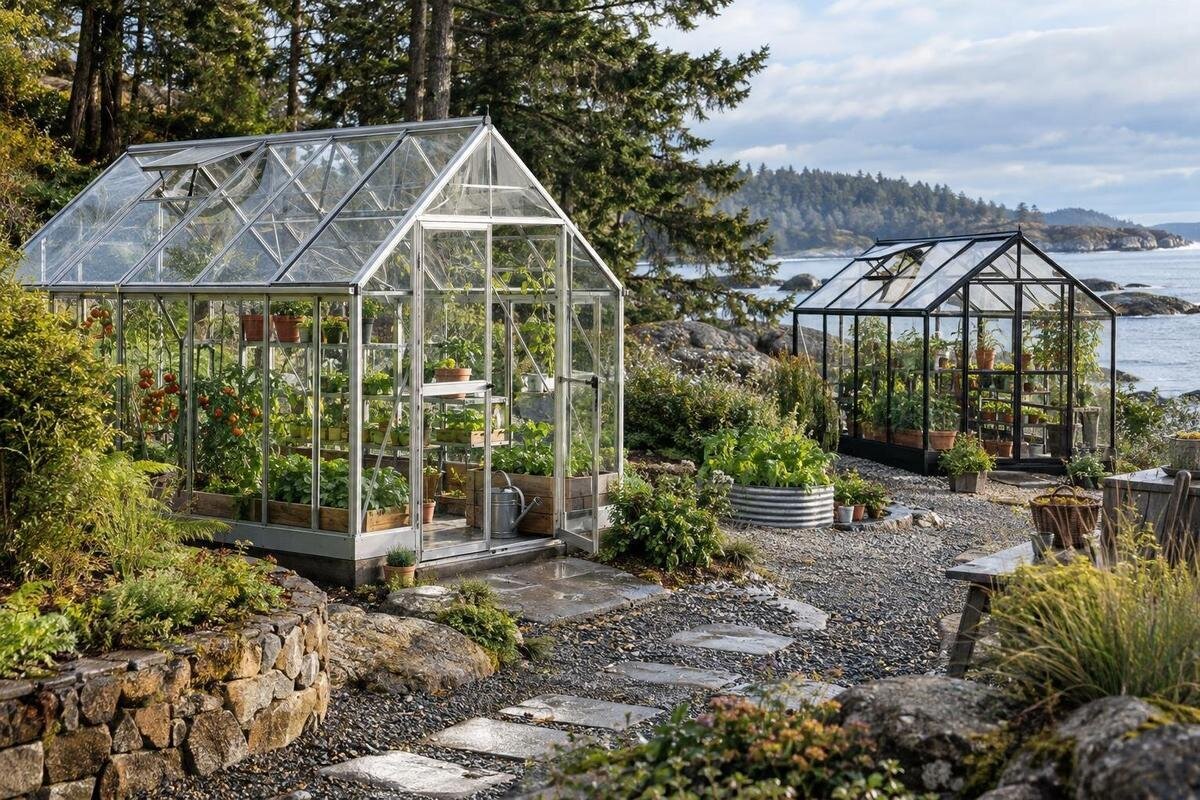
Buying a greenhouse for a coastal garden involves more than selecting a footprint. Salt carried in spray, damp conditions, wind-driven rain and gusts can affect exposed frame surfaces, fixings, glazing edges and the time needed for upkeep. Exposure also varies from one property to another: a sheltered yard and an open site near water are not interchangeable. Compare the complete assembly and its documented care requirements, not just the material named in a product title. Before you order, identify what each component is made from, how the structure is meant to be anchored, how glazing can be replaced and whether you can reach the areas that need cleaning. This makes it easier to choose a greenhouse whose requirements suit both the site and your maintenance routine.

Map the site’s salt, moisture and wind exposure
Begin by describing exposure at the actual greenhouse site, not by relying on a broad label such as coastal. A garden open to water, one sheltered behind buildings and one screened by trees can receive different amounts of salt spray and wind. Note the direction of gusts, places where wind is channelled between structures, surfaces that collect visible salt and where rainwater runs or pools. If possible, observe the garden in more than one weather pattern; a calm afternoon does not show how it behaves in gusts or wind-driven rain. A simple site sketch marking walls, eaves, trees, paving and the proposed door position helps connect these observations to a workable location. Shoreline distance alone is not a reliable buying test because terrain and shelter vary.
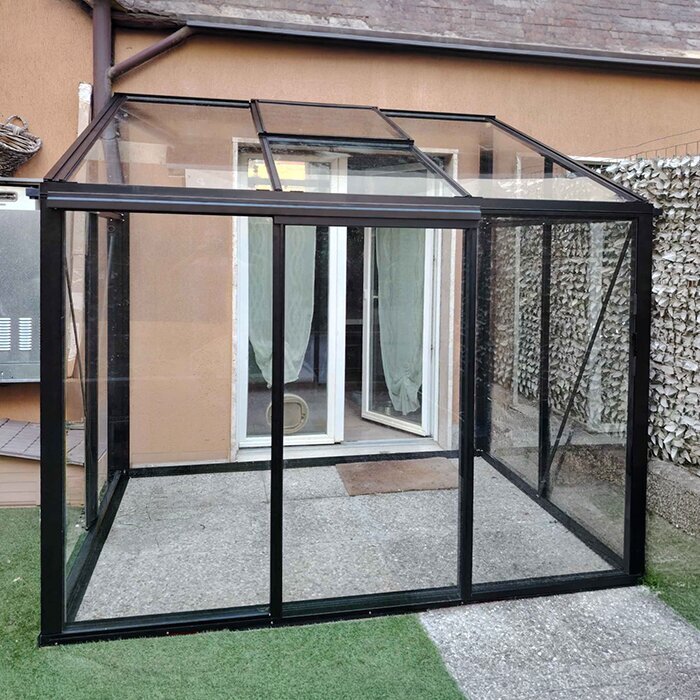
Check sunlight, drainage and access at the same time. Buildings and evergreen trees can shade a spot, while roof edges or paving can direct water towards a base; both affect growing conditions and maintenance. Leave room to open doors and vents, reach glazing edges and inspect less visible sides. The aluminum lean-to greenhouse is a named example of a wall-adjacent format; use its listing to check the actual footprint and installation requirements, not to assume a wall removes exposure or makes the site suitable. Consider whether you can bring cleaning equipment to the back and safely reach all the surfaces the manufacturer says to maintain.
Compare frame materials and protective finishes
Compare frame materials by their protection and care, not by metal name alone. Aluminum forms a naturally protective oxide layer, but salt deposits can still pit exposed surfaces or affect some finishes when they remain in place. Steel depends on its coating or other corrosion protection; scratches, cut edges and joints deserve attention because damage can expose the underlying metal. Timber does not corrode like metal, but repeated damp can cause swelling, surface breakdown or decay if moisture is retained. If considering wood, ask about its species, treatment, finish and how its lower sections are kept clear of persistent wetness. These are general material considerations, not a guarantee about a particular greenhouse.
Read the specification for each exposed part: frame sections, base, brackets and fasteners may not share the same material or finish. Ask whether an aluminum surface is bare, anodized or coated, how to clean it, and what the manufacturer recommends if the finish is scratched; ask equivalent coating and repair questions for steel or treated timber. The limited-edition aluminum greenhouse listing identifies an aluminum greenhouse by name, but its title does not tell you which components are aluminum or how they are protected. Request those details and the approved care method before comparing upkeep or assuming a low-maintenance result.
Include fasteners and joints in the material check
Salt and moisture also make small connection details important. Frame rails, screws, washers, brackets, hinges, handles, door tracks and vent hardware form one assembly; small fittings can be more exposed to trapped salt or harder to inspect than broad frame surfaces. When different metals touch in a wet, salty environment, galvanic corrosion can occur, depending on the metals and design. Ask what the fasteners are made from, what grade is specified, how they are compatible with the frame, and whether isolation or a protective coating is part of the manufacturer’s design. Stainless alone is not a complete answer because stainless grades and suitable uses differ.
Inspect how accessible joints are for cleaning and routine checks, especially at the base, corners, door openings and places where water can sit. Ask whether replacement hinges, screws or seals can be identified and ordered without replacing a larger assembly; do not assume every small part is available. When you assess the T-model orangery greenhouse, look to its technical documents for fastener and connection details rather than treating the model name as a hardware specification. Clear answers on these parts help you compare the care burden more honestly than a finish photograph does. Also ask whether routine tightening or inspection is required, and how the manufacturer says to do it.
Choose glazing with cleaning and replacement in mind
Glazing choice affects light, cleaning and replacement. Greenhouses commonly use glass or plastic panels such as polycarbonate, but the exact grade matters. Glass offers a clear, hard surface, though a pane can break and matching its dimensions and retention system matters when replacing it. Polycarbonate is often lighter and more impact-resistant than glass, but grades differ in light transmission, UV protection, scratch resistance and long-term appearance. Do not infer glazing from a product image or greenhouse name: check the stated material, thickness, treatment and how panels are held in the frame. If panels are multiwall, ask how their open channels are protected and maintained.
At the coast, salt film and dirt can reduce daylight and make the outer surface more demanding to clean. Ask which cleaning products and tools are permitted, whether either face of a panel has a specified orientation, and how to remove and refit a damaged panel safely. Check whether replacement glazing is identified by a part name or size and whether the panel system is documented. The Oasis pyramid greenhouse name does not identify its glazing; use the product details to find the panel specification and care instructions before judging whether it suits your site or routine. If replacement information is unclear, ask before ordering rather than relying on a future match by appearance.
Check how rain and condensation are managed
Follow water paths from roof to ground. Rain can carry airborne salt onto panels and frame edges, while splashes from paving, soil or a nearby wall can keep the lower frame wet. Look for details on glazing channels, seals, door tracks and base joints: install and maintain them as the manufacturer specifies, and keep drainage openings clear if the design includes them. Ask how condensation and roof runoff are managed rather than assuming every greenhouse drains in the same way. Check the proposed spot after rain as well as on a dry day, especially around paving or eaves that direct water towards the structure.
Clarify what the base is made from, how it connects to the supporting surface and whether it can sit where water collects. A product title that mentions a base is not a full account of its material, finish, anchoring or installation needs. For example, the Prestige greenhouse with a metal base makes the base a useful item to investigate: request its construction details and the manufacturer’s instructions for the supporting surface and connections. Avoid choosing a base or drainage arrangement by guesswork; if the site has uneven ground or persistent pooling, ask a qualified installer to assess what preparation is needed.
Estimate the maintenance the greenhouse will need
Make the upkeep plan specific before purchase. Salt, dust and organic debris can settle on glazing and frames; how often cleaning is needed depends on exposure, rainfall, shelter and the manufacturer’s instructions, so a fixed interval will not fit every garden. Ask whether a gentle fresh-water rinse is permitted for the frame and glazing, what cleaner is acceptable, and what to avoid. Plan to check for finish damage, pitting or rust, cracked panels, loose seals, blocked channels, and hinges or doors that no longer move as intended. Abrasive pads or strong solvents may harm a surface, so use them only if the manufacturer explicitly permits them. After severe weather, inspect when conditions are safe.
Also consider whether you can reach all sides without shifting plants or risking damage to the glazing. A narrow gap beside a fence or wall may make routine washing and checks difficult, even if the footprint fits. For the Orangerie greenhouse, look for any maintenance guidance or parts information associated with the listing; ask if it is not provided. Do not infer cleaning needs from the model name or appearance. Ask how finish repairs are handled, whether seals and hardware can be replaced, and which parts can be ordered separately. A greenhouse that is straightforward to inspect is easier to maintain than one whose vulnerable joints are inaccessible.
Verify wind and anchoring information
Treat wind suitability as a separate question from material choice. Coastal sites can be exposed, sheltered or affected by gusts channelled between buildings; a heavy-looking frame or nearby wall does not prove that an assembly suits the location. Ask for documented wind performance and the assumptions behind it, including the stated configuration, glazing, doors, vents, base and anchoring. Confirm whether the documents apply to the way the greenhouse will actually be assembled and installed, including any assumptions about doors or vents being closed in particular conditions. If a supplier cannot provide enough detail to compare a site-specific exposure, do not fill the gap with a guess based on shape or frame material.
Anchoring and support need to match the manufacturer’s instructions and the site; avoid selecting fasteners or altering the structure on the basis of a rule of thumb. The Classic Plus 385 is a product name, not evidence of wind capacity, so use its technical information to decide whether it belongs on your shortlist. If the garden is unusually exposed, sits on a slope or has other site constraints, ask a qualified installer or structural professional to review the proposed setup. That review should address the full assembled greenhouse and its connection to the supporting surface, not just the visible frame.
Match the greenhouse form to access and light
Choose the form and footprint around both gardening and maintenance. A freestanding greenhouse may need access around more of its perimeter; a wall-adjacent design can make one side harder to inspect and may encounter shade or water from the building. Neither shape guarantees protection from wind. Measure the outer footprint, but also account for door swing, vent operation, paths, benches and enough room to clean glazing and service connections. Check the usable interior area against the beds or containers you plan to use, and think through how you will bring in soil, pots or a replacement panel. Allow space for tools and access rather than measuring only the space the structure occupies.
Check sunlight through the day and season, and consider how neighbouring structures or trees affect the proposed position. A site convenient for rinsing may be too shaded for the plants you intend to grow; a sunny position may be more exposed to wind or salt. The wall-base T-model greenhouse is a named product to compare, but its title alone does not confirm how the manufacturer intends it to meet a wall or what clearance it requires. Use its dimensions and installation documents to check fit, access and exposure before choosing a layout. If a wall is part of the arrangement, review shade, runoff and the ability to inspect the connection.

Get the product and ordering details in writing
Make a comparison sheet with the same questions for every shortlisted greenhouse. Record the stated frame and base materials, protective finishes, fastener details, glazing type, panel treatment, dimensions and included components. Add documented wind information and the conditions it assumes, plus installation requirements for the support and anchoring. For dimensions, distinguish external measurements from usable interior area and check the doorway size against your intended access. For each item, note whether the answer is in the product details, a manual or a written response from the seller or manufacturer. A blank cell is a prompt to ask, not a reason to fill in an assumption from a photograph, category label or another model’s specifications.
Before placing an order, confirm the exact model and configuration, what arrives in the package, whether a base or fixing components are included, and what assembly requires. Check the delivery route and unloading arrangements for the package, and confirm which tools, equipment or installer services are your responsibility. Read any warranty and care terms as written, particularly conditions tied to cleaning, assembly or coastal exposure; do not assume a term applies unless the documents say so. Keep the manual and parts list for later maintenance and replacement enquiries. If an answer affects site preparation, get it in writing early enough to resolve it before delivery.
Weigh upkeep alongside the purchase price
Compare future effort as well as purchase price. Two greenhouses with a similar footprint can differ in how reachable their joints are, how panels are replaced, or whether finishes need particular care. Use the actual maintenance instructions to estimate the work you would do through the year, and ask about replacement glazing, seals, hardware and finish-repair products. If a part or repair route is unclear, include that uncertainty in the decision rather than assuming it will be straightforward later. A lower upkeep burden is only meaningful if the documentation supports it and the routine suits exposure at your address. If a maintenance task requires specialist work, include that in your planning too.
Then rank the non-negotiables for the site. For a highly exposed position, give documented material protection, fasteners and wind and anchoring details priority; for a frequently wet or shaded position, look closely at drainage, cleaning access and light. In every case, choose glazing and dimensions that suit your use, and make sure you can carry out the stated care. Eliminate options whose key material, installation or wind details remain unclear, then compare the remaining choices on footprint and maintenance demands. No frame or format is automatically suitable for every coastal garden; match a documented assembly to the conditions it will face.
Frequently asked questions
Is aluminum a good frame material for a coastal greenhouse?
It can be one option to compare, but the material name alone does not establish suitability. Salt exposure, surface finish, fastener compatibility, water retention and the manufacturer's care instructions all affect the full assembly. Check those details for the specific greenhouse.
Does a lean-to greenhouse solve wind exposure?
No. A nearby wall may provide some shelter, but gusts can be channelled around buildings, and the wall can affect shade and runoff. Check wind and installation information for the complete greenhouse rather than inferring suitability from its shape.
Should I choose glass or polycarbonate glazing?
There is no universal choice. Compare the stated glazing material, light transmission, UV treatment, impact and scratch trade-offs, cleaning method, replacement options and panel-retention details. Choose according to your growing plans and the care instructions for the particular glazing.
How often should I clean a greenhouse near the coast?
There is no single interval for every site. Follow the manufacturer's guidance and account for local exposure and shelter. Check for salt deposits, finish damage, blocked drainage, loose seals and panel damage, including after severe weather when it is safe to do so.
What should I confirm before ordering a coastal greenhouse?
Ask for the materials and finishes of the separate components, fastener details, glazing specifications and replacement information, wind documentation and its assumptions, anchoring instructions, maintenance guidance, dimensions and a clear list of what is included.
For a coastal garden, a considered greenhouse purchase depends on how its specified materials, finish, hardware, glazing, anchoring and care work together at the actual site. Look for enough documentation to compare those details, and choose a maintenance routine you can realistically carry out. Once the essential requirements are clear, footprint, layout and appearance can help you decide between the remaining options.
