
Buying a Greenhouse for Winter Growing: What It Can and Cannot Do
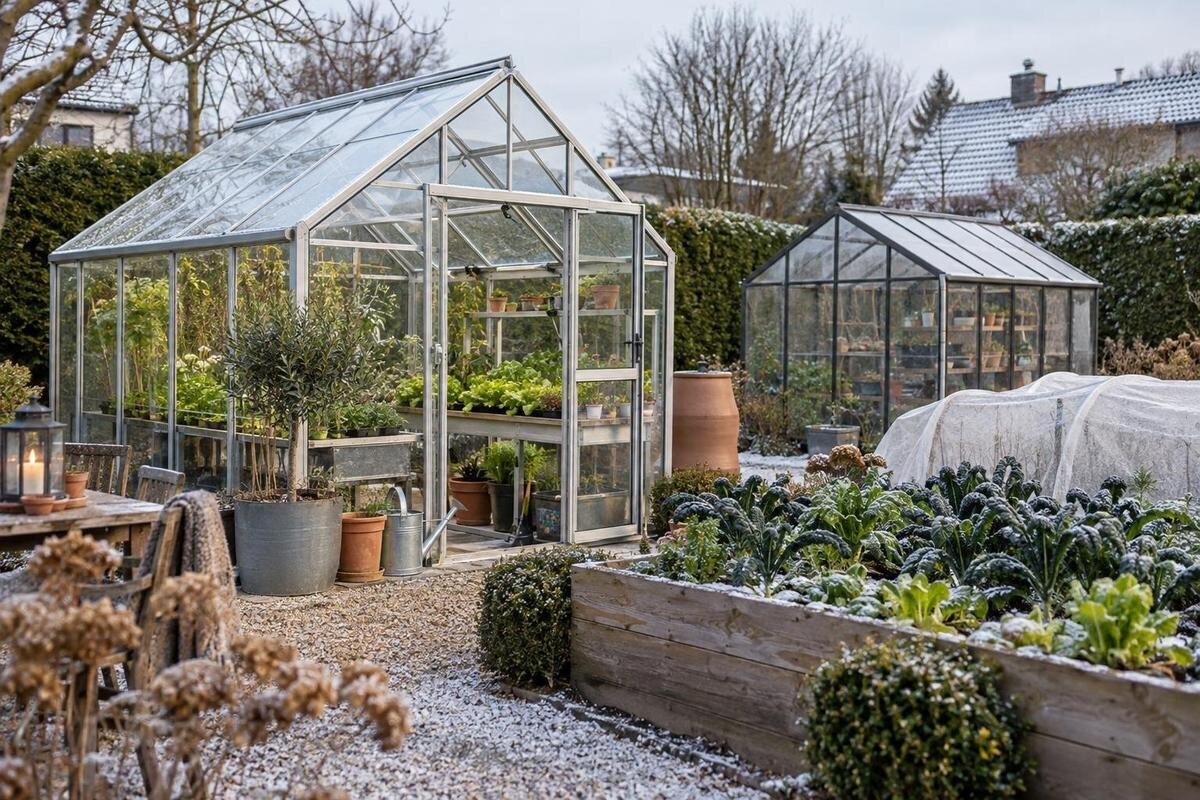
GREENHOUSE BUYING GUIDE
Buying a greenhouse for winter growing means deciding how much climate control you need—not assuming that an enclosure will keep crops warm. Sun can raise interior temperatures during the day, and a greenhouse can shelter plants from wind and precipitation, but glazing continues to lose heat after sunset. During a cold spell, an unheated structure can become very cold. The right purchase depends on local winter conditions, the plants’ minimum temperature needs, the greenhouse’s documented construction and your willingness to manage supplemental heat. Match the structure to a clear growing goal, then confirm what the manufacturer states about glazing, weather limits, ventilation and installation.

Before you buy 1
Setting a realistic winter growing target
Winter growing can mean keeping cold-tolerant crops alive, harvesting gradually, protecting established plants, or maintaining conditions for plants that cannot tolerate frost. Those are not equivalent jobs. Before comparing models, list the crops and consult reliable, crop-specific guidance for their minimum and preferred temperatures, including whether those limits apply overnight and support active growth or only survival. A label such as hardy does not promise that a plant will keep growing in any unheated enclosure. Decide whether you need continued growth or protection while plants are dormant; those goals call for different monitoring and heat plans. The purchase decision follows from your temperature goal, not from the word greenhouse.
Look beyond an average winter day. Review local overnight lows, the duration of cold spells, typical wind exposure and whether the proposed spot remains shaded. A long cold spell can matter more than a sunny afternoon, especially in an unheated structure. If you already garden outdoors, use what you know about the coldest conditions at your site, but do not assume a greenhouse will add a fixed number of degrees. Once installed, a min/max thermometer or data logger near the crop area can show overnight lows as well as daytime peaks. That record helps test your goal and shows whether heat is optional or essential before you invest in a full growing season.
What an unheated greenhouse can do
An unheated greenhouse can reduce direct exposure to wind and precipitation and provide a protected place to tend plants. On sunny days, solar energy may raise the air temperature above the outdoor temperature; the size and duration of that gain depend on sunlight, shade, glazing, air leakage and how quickly the structure exchanges heat. Shelter can help some hardy crops cope with a site, but it does not change their underlying temperature limits. Think of an unheated greenhouse as a milder microclimate and a season-extension tool, not a guaranteed warm room. Results vary with the site, weather and structure, so avoid basing a winter plan on a single mild day.
After sunset, the greenhouse loses heat through its cover and joints; over a long, cold night, the inside can approach outdoor conditions. Soil, pots or water may release heat they absorbed earlier, but the effect varies and should not be treated as dependable heating. Frost can still form inside, including after a sunny afternoon that felt comfortable. If the purpose is to keep plants above a particular minimum temperature, plan around overnight lows rather than the best daytime reading. Buyers who want shelter for hardy crops can assess an unheated setup differently from those expecting reliable frost protection.
Before you buy 2
Glazing and insulation: what to compare
The glazing is a major part of the greenhouse’s heat exchange and light transmission. Compare the stated glazing material, number of layers and any thermal-transmittance or U-factor information. On a comparable basis, a lower U-factor generally indicates less heat transfer through the tested element, but it does not predict the temperature inside the complete greenhouse. Check whether a figure refers to a panel alone or the assembled structure, and compare values only when their units and measurement basis match. Ask whether the information applies to the configuration you plan to buy, including its doors and other openings. A phrase such as insulated glazing is not enough to establish an overnight temperature.
Extra insulation may be possible through an internal liner or thermal screen, but do not assume that an add-on is compatible with every structure or creates a controlled growing environment. Check the maker’s guidance and consider effects on daylight, ventilation, condensation, access and maintenance. A layer that reduces heat loss can also change how much light reaches crops or complicate vent operation. An option such as the limited-edition aluminum greenhouse should be judged by explicit glazing and heat-loss information, not by the wording in its name. If those details are missing, ask before relying on it for a winter temperature target.
Frames, joints and seals
The frame, joints, doors and seals affect how quickly warm air escapes and cold air enters. Read specifications for frame construction and any thermal-break or sealing features rather than assuming a material name proves insulation. Check how doors and windows close, whether seals are described, and what maintenance the maker recommends. Gaps or an opening that does not close properly can undercut gains from the glazing; wind can make leakage more noticeable. Treat the greenhouse as an assembled system, because a panel’s insulation value does not describe performance at every joint. Look for information about how fixed panels meet movable parts and whether upkeep or replacement of seals is addressed.
For an aluminum lean-to greenhouse, treat the product name as an identifier, not evidence that the frame, joints or doors meet a winter insulation target. Look for information about the complete structure and ask which components are included; if air-leakage data are not provided, do not infer a rating from appearance. Confirm the assembly requirements and maintenance guidance for seals or moving parts, too. A structure that is difficult to keep closed or maintain can make temperature control less predictable, even when the glazing information looks favourable. These details are separate from whether the greenhouse fits a particular site.

Before you buy 3
Snow, wind and support requirements
Winter weather suitability is separate from insulation. Snow accumulation and wind place demands on the structure, anchoring and supporting surface; relevant limits depend on the product and installation conditions. Look for manufacturer-stated snow and wind ratings for the exact model and configuration, and ask what assumptions or exclusions apply. Do not judge capacity by a steep-looking roof, a heavy-looking frame, a product name or a promotional image. A picture does not establish a load rating. These checks matter even if the greenhouse will be heated, since a heating plan says nothing about structural capacity. If information is missing or the site is exposed, request clarification from the manufacturer and, where needed, a qualified structural or installation professional.
Confirm the maker’s requirements for anchoring, a base or foundation, and storm maintenance rather than choosing support based on appearance alone. The name the T-model orangery greenhouse gives no allowable snow or wind load; only specifications for the actual structure and its installation can answer that question. Ask how snow is to be managed and what the manufacturer advises after heavy accumulation. Do not climb onto the greenhouse or improvise a removal method; follow the maker’s guidance, and use a qualified service provider if safe access or maintenance is uncertain. Plan where cleared snow will go so it is not piled against the structure.
Winter site conditions
Visit the proposed site in winter where possible, or use observations from that season rather than choosing on the basis of summer light. The winter sun is lower and the day shorter, so a spot that looks bright on a warm-season visit may be shaded when the greenhouse is needed. Note shadows from buildings, fences and evergreen trees at different times of day, and consider local wind exposure. Sunlight can contribute daytime warmth, but it is not a dependable substitute for a heater during cloudy weather or long nights. A product’s shape or orientation does not create a fixed temperature; the site’s actual exposure belongs in your plan.
Also assess drainage, ground conditions and the space needed to keep snow away from doors and the base. Check the manufacturer’s stated support and installation requirements before deciding that a patio, soil bed or existing platform is suitable; seek a qualified installer or building professional if those requirements are unclear. An option such as the Bloomcabin Oasis pyramid greenhouse still needs to be assessed against its stated installation requirements and your chosen location: the word pyramid does not establish wind capacity or winter solar gain. If supplemental heat is likely, consider access to an appropriate power source, with any electrical work assessed by a qualified electrician.
Before you buy 4
Supplemental heat and running costs
Plan supplemental heat before ordering if the crops’ minimum temperature cannot be met by shelter alone. Set the night-time target from reliable crop guidance, then have likely heating demand assessed using the greenhouse’s dimensions, exposed surfaces, glazing, air leakage, site wind and local cold conditions. Those factors interact, so a heater chosen by guesswork may fail to maintain the target or run more than expected. Ask what data the manufacturer can provide and consult a qualified heating professional to size a system for the intended structure and location. No single heater rating suits every greenhouse, and maintaining a warmer target calls for a more demanding plan than avoiding brief frost.
Include likely energy use and controls in the ownership budget, not only the heater’s purchase price. Running costs depend on the target temperature, outdoor conditions, the greenhouse’s heat loss, ventilation and operating hours, so seek an estimate based on your plan and local energy costs. Ask a qualified electrician or heating professional about equipment suitability for a damp growing environment, required supply and safe installation. The name Prestige greenhouse with a metal base does not give a heat-loss figure or heater capacity; those need a separate assessment. If a crop cannot tolerate interruption, discuss how a loss of power or fuel would affect the plan before choosing a structure.
Ventilation, condensation and winter light
Plants, damp soil and watering contribute moisture to enclosed air. When that air meets cold glazing or frame surfaces, condensation may form; stagnant damp conditions can also make plant management harder. Ventilation helps manage humidity, but opening vents exchanges warm air for cooler air, so winter operation involves a balance. Compare stated ventilation openings and any controls, and learn how they are intended to operate; do not assume openings can be left shut all season or that automatic control is included. A name such as Classic Plus 385 does not tell you the vent layout or operating method. Verify those details for the exact configuration, including any maintenance needs for moving parts.
Winter daylight can limit growth, and heat does not replace a crop’s light requirements. Check whether the site’s winter light and any planned shading suit your crops before investing in a heater. On bright winter days, greenhouse air may warm while the outdoor air remains cold, so ventilation decisions should reflect indoor conditions rather than the forecast alone. Decide how you will monitor temperature and humidity, who will respond when readings change, and whether manual checks are practical. Include those ongoing tasks in the buying decision, especially if you expect the greenhouse to operate while unattended.

Before you buy 5
Wall-mounted greenhouses in winter
A wall-mounted or lean-to arrangement can suit a particular site, but do not count the adjoining wall automatically as insulation or a heat source. Any benefit depends on the wall’s construction and indoor conditions, and the greenhouse can still lose heat through glazing, joints and openings. Check whether the selected structure is intended for the proposed arrangement and whether its instructions address the connection. The name T-model greenhouse with a wall base does not establish compatibility with a specific wall, building or installation. Confirm the precise model details rather than treating a wall-related label as proof of winter performance.
Consider shade from the building, roof runoff, drainage, maintenance access and how moisture might affect the adjacent wall. The greenhouse and building need to be considered together: an existing wall is not automatically a suitable support, and a product described in wall-related terms does not attach to every surface. Ask a qualified building professional to assess the proposed arrangement if support, moisture or drainage is uncertain. Confirm any property-specific permissions or restrictions with the relevant local authority before ordering. If the wall’s temperature is part of your heating estimate, have a professional assess it rather than assuming heat will pass into the greenhouse.
Total costs of winter growing
Compare the full winter budget: the greenhouse, any required base or site work, heating equipment, controls, possible thermal screens, energy use and ongoing maintenance. Check delivery or assembly terms separately in the order information, but do not substitute them for technical suitability. Costs vary with local energy prices and the temperatures you plan to maintain, so use estimates that reflect your own conditions. When reviewing the Bloomcabin Orangerie, or another named option, list the information explicitly supplied about glazing, size, support and ventilation; the name alone cannot establish heat retention or winter capacity.
Before ordering, compare candidates against the same questions. What temperature must be maintained, and which crop guidance supports that target? What do the manufacturer’s glazing, air-leakage, ventilation, snow and wind details actually cover? What base and installation conditions apply? What is the expected heating demand, and who can confirm the system is suitable? Mark missing answers instead of filling them with assumptions. If the information does not resolve a critical load, connection or heating question, ask the manufacturer or an appropriate qualified professional. The answer may help you decide between an unheated season-extension structure and a heated growing space.
Frequently asked questions
Will an unheated greenhouse stay above freezing?
Not reliably. Sun may raise the temperature during the day, but the structure loses heat at night and can still fall below freezing. The result depends on the glazing, seals, weather and site; the word greenhouse does not guarantee frost-free conditions. If crops need a minimum overnight temperature, plan to monitor it and consider suitable supplemental heat.
Do insulated panels make a greenhouse suitable for winter?
They can reduce heat loss through the panels, but they do not determine the performance of the whole greenhouse. The frame, joints, doors, ventilation and installation also matter. Compare any thermal figures on the same basis, and check whether they describe a panel or the complete structure before deciding whether it fits your temperature goal.
What can I grow in an unheated greenhouse during winter?
It depends on the crop’s temperature and light needs, your local cold and how much shelter the greenhouse provides. Cold-tolerant crops are generally more plausible candidates than plants that need frost-free conditions, but suitability varies. Check crop-specific growing guidance and base your decision on overnight conditions, not a warm afternoon.
How can I tell whether a greenhouse can handle snow and wind?
Look for manufacturer-stated snow and wind ratings and installation requirements for the exact model and configuration. Ask what conditions the ratings assume. A roof shape, product name or photograph is not a load rating. If the information is missing or your site is exposed, ask the manufacturer or a qualified structural or installation professional.
When should I plan for supplemental heat?
Plan for it before ordering if your crops need temperatures that shelter alone may not maintain. Set the target from crop-specific guidance, then ask a qualified heating professional to assess the structure and site. Include expected energy use, controls and monitoring in your budget, and have any electrical or other installation requirements assessed by a qualified professional.
Choose a greenhouse by the winter conditions you need to maintain, not by the season named in a product description. For hardy crops, shelter and careful monitoring may fit the goal; for plants that need dependable warmth, the structure, documented performance and heating plan must work together. Knowing which conditions are essential—and which remain uncertain—makes the buying decision more grounded.
