
Buying a Greenhouse Kit: Assembly Skills and Tools
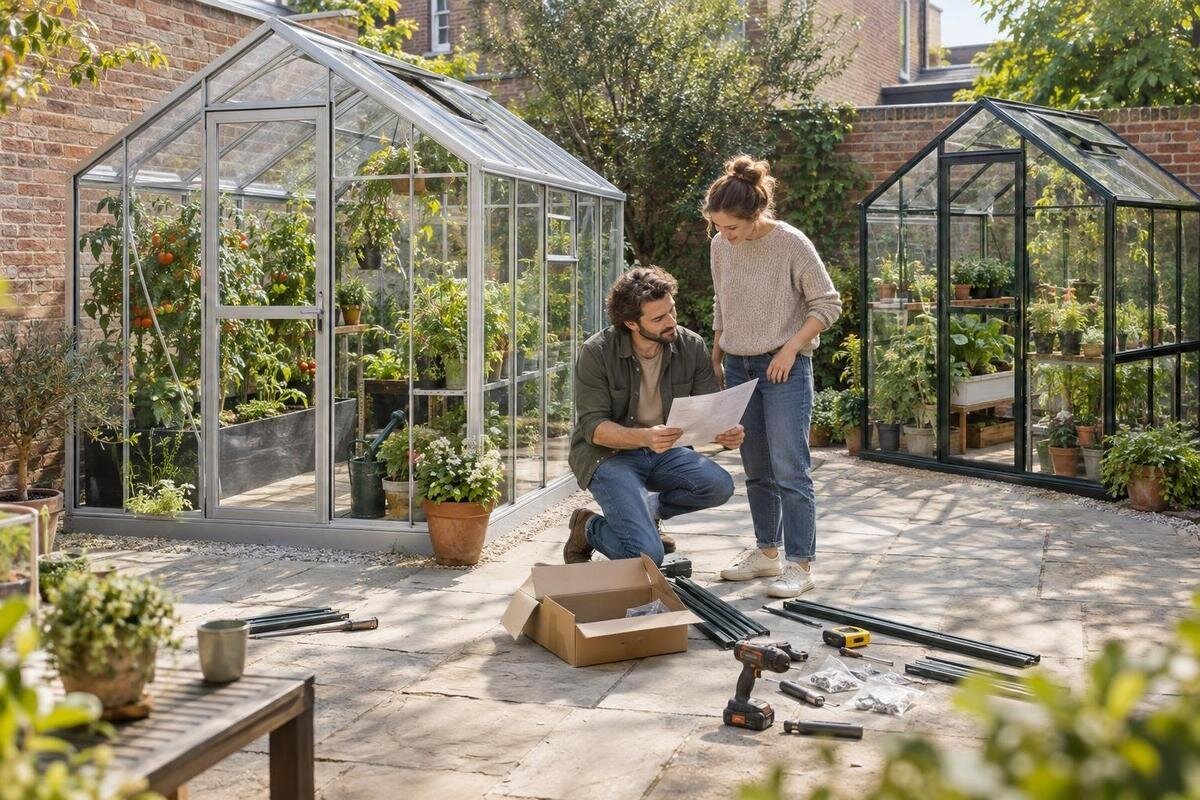
Greenhouse buying guide
Buying a greenhouse kit means more than choosing a shape and size: the work can depend on the exact instructions, the parts supplied, site preparation and the tools or help you must provide. A product photo cannot tell you whether assembly suits your experience. Before you order, match the manual and package details to the jobs you can handle, the tools you own or can borrow, and the time and assistance you can arrange. This guide helps you turn those questions into a practical buying check.

What is included in the greenhouse kit?
A greenhouse kit can be a collection of components without including every item needed to complete the project. Compare the product details and packing list for the frame, panels or glazing, connectors, fasteners, door hardware, base components and any special assembly aids. Treat each as a question to resolve, not an assumption based on a photo. Check whether accessories shown in images are included in the listed package or sold separately. Pay attention to whether the list gives quantities or only broad categories, and whether optional configurations change the package. If the wording is broad, ask for the exact contents list before ordering so you can budget for any extras.
A product name identifies a listing, but it is not a parts list. Use the aluminum lean-to greenhouse listing as a prompt to check the current product details and manual for included hardware, base components and tools, rather than assuming what comes in the package. Separate kit assembly from site preparation too: find out whether you need to supply a base, anchoring materials or other items before assembly can begin. Ask what you must provide, buy separately or arrange with a contractor, and keep the answer beside the package list. If a separate item is required, confirm its compatibility using the product information rather than choosing a substitute by appearance. This distinction affects both the true cost and the amount of work you are taking on.
The assembly manual shows the work involved
The assembly guide is the best evidence of the work you are buying. Request the manual for the exact model or version before committing, and check that its diagrams and part labels are readable. Look for the order of operations, tools called for, preparation expected before assembly, panel-handling notes and any recommendation about the number of people. Do not assume instructions for a similar greenhouse apply: a change in frame, panel or base details can alter the sequence or required hardware. If you cannot find the guide, ask whether it can be provided. Unresolved assembly requirements are a real buying uncertainty, not something a product photo can answer.
If a limited edition aluminum greenhouse is on your shortlist, use instructions tied to that specific listing rather than borrowing a tool list from a different model. Read beyond the first page: the parts inventory, symbols, notes and final checks can reveal tasks that photos do not show. Mark steps that call for measuring, repeated fastening, panel fitting or an extra pair of hands. You do not need to master every instruction before purchase, but you should understand enough to sort the work into familiar tasks, learnable tasks and tasks outside your experience. Ask for clarification where wording or a diagram leaves more than one interpretation.
Skills that help with kit assembly
Useful assembly skills are practical: reading diagrams, matching labelled parts to an inventory, keeping fasteners sorted, following a sequence and working carefully through repeated steps. The guide may use part codes, orientation notes or detail views, so you need to track which component a drawing shows rather than guess from appearance. Familiarity with a screwdriver or wrench can help, but the instructions determine which techniques the job actually calls for. Experience assembling furniture may transfer to sorting and following a sequence, but it does not automatically prepare you to handle larger components or keep a multi-piece frame aligned. Patience and careful checking matter as much as speed.
Ask yourself whether you can follow a drawing from more than one angle, pause to re-check a step and stop if a part does not fit as shown instead of forcing it. A T-model orangery greenhouse in a product comparison should be judged by its own guide, not by its name or outline; the manual will show the sequence and level of care expected. Previous repair experience is useful only if it matches the tasks involved, and it does not justify substituting a fastener or changing an assembly step. If a required task seems beyond your ability, consider a capable helper or qualified assembly before placing the order. That is a practical buying choice, not a judgement about DIY skill.
Tools to check before ordering
Use the exact manual's tool list as your shopping list; a generic greenhouse assembly checklist cannot tell you the sizes or types needed for your kit. Common possibilities include a tape measure, pencil or marker, level, screwdriver, hex key and wrench, but these are examples, not universal requirements. Check whether a tool is supplied, recommended or needed for a particular step. Compare the wording with what you own: a screwdriver set may not include the required driver bit, and an adjustable wrench may not replace a specifically sized tool. If the manual omits a size or type, ask before ordering rather than waiting until the work is underway to find out.
Confirm separately whether a powered driver or drill is allowed or called for; do not assume one can replace hand tools or that every fastener is suited to a power tool. Check for bits, sockets, batteries or other attachments named in the guide, then decide whether to borrow, rent or buy them. Ask which protective equipment the instructions specify and what tools, if any, the kit supplies. For a listing such as the Oasis pyramid greenhouse, rely on the exact model's written directions, not a visually similar structure or a guessed tool bundle. Keep optional convenience items separate from tools required to assemble the kit.

Site and base preparation are separate questions
Assembly is only one part of the project; site and base preparation may need separate planning, tools and skills. Check the guide for its stated surface, base and anchoring prerequisites, then compare those with your site and the dimensions shown in the product details. Measure the working area as well as the footprint: you may need room to lay out parts and move around the build. Ask what must be finished before the first assembly step, and whether the kit instructions cover that work or begin once a prepared base is ready. This helps distinguish a kit build from additional construction work that should be planned and budgeted separately.
Do not infer that a named base eliminates preparation or that any level-looking spot is suitable. With a listing titled Prestige greenhouse with metal base, confirm from the current details what is included and what base, attachment or site work remains. A tape measure and level can help you compare measurements with written requirements, but they do not replace an assessment of a site-specific structural issue. If the ground, slope or anchoring is uncertain, ask a qualified local professional to assess it before buying. Avoid choosing fixings or dimensions by guesswork, and factor any recommended site work into your decision about whether DIY assembly fits your plans.
Panel handling and the need for a helper
Panels and long structural pieces call for a different kind of planning from choosing a screwdriver. Find out what the kit's panels are made of, how they are packaged, and whether the instructions give handling guidance or say how many people are needed for particular stages. Do not infer weight, fragility or safe handling from a photograph; ask for the listed information if it affects your ability to move components. Check whether stages need to be coordinated, such as supporting one piece while another is fixed, or fitting panels only after a specified frame stage. The instructions should settle the sequence; your buying question is whether you can follow it with the help available.
A helper can make it easier to sort components, steady parts when the guide calls for it or complete a step that is awkward alone, but their availability needs to match the instructions. Do not assume that one person can do the whole build simply because a kit is sold for self-assembly. Ask whether a second person is required, whether a professional installer is recommended for any stage, and whether the helper needs particular experience. If Bloomcabin Orangerie is among your options, apply the same model-specific check: confirm crew and panel-handling requirements rather than inferring them from the name. Arrange help before delivery, not after.
How to estimate the time commitment
No single build-time estimate applies to every greenhouse kit. If the product details state a duration, check what it assumes: the number of assemblers, a prepared base, an uninterrupted work period, and whether sorting or site work is excluded. If no estimate is available, ask the seller or manufacturer for the expected crew and what the timing covers. This is not about demanding a guarantee; it helps you decide whether the work fits your calendar and whether extra help is needed. Leave room for reading instructions, identifying parts and resolving misunderstandings rather than planning only for the time spent fastening components.
Before work begins, plan a clear staging area and a way to keep labelled pieces and small hardware together. Use the packing list to check that listed parts are present, then keep the relevant diagrams accessible as you work. Ask how components should be stored if assembly must pause, and follow the manual's handling notes rather than improvising a storage method. If the guide permits work over more than one session, choose a practical stopping point; otherwise, make sure your helper and workspace will be available for the stated sequence. When reviewing Classic Plus 385, look for a model-specific time estimate and its assumptions, not a number borrowed from another kit.
Design and placement affect assembly planning
Configuration can affect what you need to verify even when the assembly method is not obvious from a product image. A wall-adjacent design and a freestanding structure may involve different placement, connection or base details; a multi-part shape may require different access during assembly. These are questions for the model's documentation, not conclusions to draw from a category name. With a listing titled T-model greenhouse orangery wall base, check what the name means in the exact product details and which connection or surface requirements are documented. A name or photograph does not confirm that a particular wall, base or location is suitable.
Check where packages will be set down and how their contents can reach the assembly area. Ask for package dimensions or weights if the route includes a gate, narrow passage or steps, and confirm who is responsible for moving them from the delivery point. During assembly, make sure you can access each side that the guide tells you to work on; an attractive position can still be awkward for tools or handling. Compare the dimensions and placement requirements stated for the chosen model with your site, and get clarification before ordering if the structure must fit around fixed features. This is an assembly-planning question as well as a question of final appearance.

Questions to ask before placing an order
Write down the points the manual or listing leaves open. Ask for the exact assembly guide, a full package and exclusions list, tool types and sizes, the recommended crew, an estimated build time and its assumptions, and any base or site preparation required. Ask whether the guide is current for the model and version you intend to buy, and how to get help if a diagram or part label does not match what arrives. Clear answers let you compare kits on the work involved, not just their appearance. If an answer depends on your site, describe the condition accurately and ask which professional should assess it.
Also check purchase and receiving terms before checkout: where delivery is made, whether you must move packages yourself, what package information is available, and how to report a missing or damaged part under the current policy. Do not assume delivery includes carrying to the site, assembly or disposal of packaging; confirm each service separately if it matters. Keep the product description, instructions and written replies together so you can refer to them when checking the delivery. This matters because your assembly plan depends on receiving the right components and knowing what support is actually offered.
When DIY assembly may not be the best fit
DIY can make sense when the guide is clear, the required tools are available, the site prerequisites are within your capability and the people needed can commit to the work. Include tool purchases or rentals, protective equipment, helper availability and preparation time in your budget. A lower kit price does not necessarily mean a lower total project cost if you also need to buy tools or arrange site work. Compare those costs with the price and scope of professional assembly, if available, or ask an independent installer whether they will assemble the specific kit. Confirming this before purchase avoids building your plan around help you have not actually arranged.
Pause before ordering if the manual is unavailable, required tools are unfamiliar and costly, panel handling exceeds what you can manage, or base and anchoring work remains unclear. You may still choose the kit, but first resolve the uncertain task by speaking with the seller or a qualified professional and confirming the cost and responsibilities. If you prefer to do the work yourself, choose on the basis of documented requirements, not the idea that every kit is simple because it arrives as a package. A realistic match between your experience and the written assembly demands is the key buying test.
Frequently asked questions
How difficult is it to assemble a greenhouse kit?
It depends on the specific kit, its instructions and the work needed to prepare the site. Check the exact manual for tools, assembly sequence, panel handling and any recommended helpers. A product photo or name is not enough to judge how demanding the build will be.
Are tools included with a greenhouse kit?
There is no universal tool list or package. Compare the product details and packing list with the manual, and ask which tools are supplied, required or optional. Budget for any tools you need to buy, borrow or rent before you place the order.
Can I assemble a greenhouse kit by myself?
Check the model-specific instructions for the number of people recommended at each stage, particularly for handling panels or larger components. Do not assume a kit is a one-person job because it is sold for self-assembly. Arrange help in advance if the guide calls for it.
Do I need to prepare a base before assembly?
Check the manual for the base, surface and anchoring prerequisites, then confirm what the package includes. Some site work may be separate from the kit assembly. If the ground, slope or anchoring requirements are unclear, ask a qualified local professional before buying.
When should I hire help to assemble a greenhouse?
Consider qualified help if the manual is unclear, the required tools or skills are outside your experience, or the site and anchoring work need assessment. Before ordering, confirm that an installer is willing to assemble the specific kit and clarify which preparation tasks are included in their scope.
Choose the kit whose written assembly demands make sense for your experience, tools, site and available help. A clear manual and a full understanding of what you must supply make the cost and effort easier to judge before purchase. If the work extends beyond your comfort level, arranging help before ordering is part of a sound buying decision; it is better than discovering a difficult step after the components arrive.
