
Buying a Greenhouse Locally or Online: Comparing Service and Total Cost

Greenhouse buying guide
Choosing whether to buy a greenhouse locally or online is about more than comparing two sticker prices. The buying route affects who answers your questions, how delivery and unloading are arranged, what you pay for separately, and whom you contact if something arrives damaged or incomplete. A nearby shop may offer a conversation, while an online order may provide a clear paper trail—but neither advantage is automatic. Compare the same greenhouse and service requirements, then judge the final written cost and support you can actually confirm.

01
Local and online are buying channels, not service guarantees
Local and online describe how you place an order, not a guaranteed level of service. A nearby garden or greenhouse retailer may have a display, staff who can discuss options or local delivery, but check what is actually available for the model you want. An online order may be fulfilled by a nearby business or a seller farther away, and the website may not be the company arranging transport or resolving a later issue. Identify the seller named on the quote, the party fulfilling the order and the contact for after-sale help. If one retailer sells through both channels, ask whether stock, delivery, support and terms are the same. Record whether the person quoting the order will handle follow-up or pass you to another team.
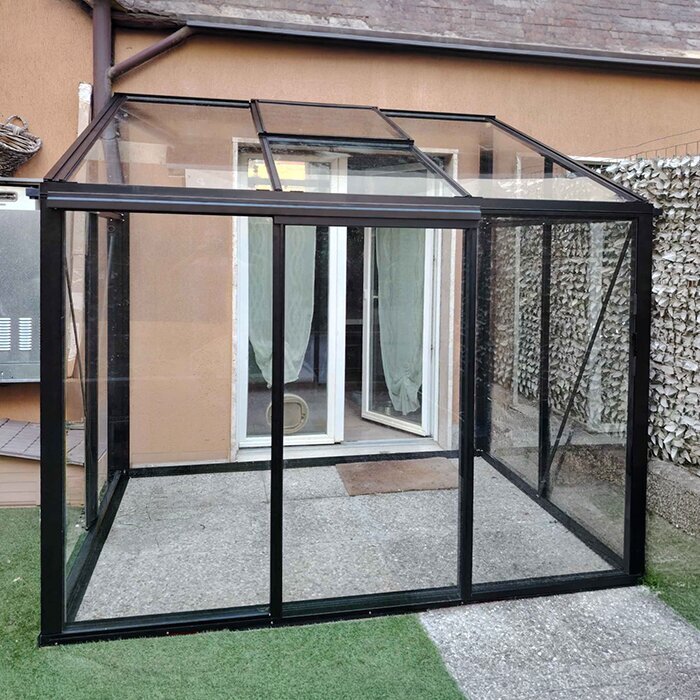
Keep a record for every candidate: exact model or listing, configuration, seller, contact, delivery or collection method and support route. For example, include an aluminum lean-to greenhouse only after opening its product page and obtaining a comparable quote; its name alone does not establish what is included, what delivery costs are or who will help after purchase. Treat the product and the seller’s service as separate questions. Add the quote date and any model identifier shown, and save a copy of the listing. That prevents a channel comparison from turning into a comparison of different products, bundles or responsibilities.
Test customer service before placing an order
Ask the same service questions in person and online: who can answer questions about the specific model, who coordinates delivery, and which team handles a problem such as a missing component or transit damage? If assembly or installation is offered, clarify whether it is included, priced separately or arranged through another provider, and what the service covers. Ask how to reach that team after purchase and whether the quote names a contact. Get important answers in writing, especially anything that changes the total, your responsibilities or the timing. A useful conversation can clarify options, but the written quote and terms show what is actually being offered.
Before committing, send a concise enquiry and note whether the reply answers each point, identifies a contact and explains what happens if a question has to be passed along. A fast reply is not the same as a useful commitment, and an in-person counter does not guarantee specialist advice. Try the same enquiry with every seller instead of judging service by the size of a showroom or website. For example, treat a page for a limited-edition aluminum greenhouse as a product lead; ask its seller how pre-sale questions, delivery and post-sale issues are handled rather than inferring service from the listing. Note unanswered questions and follow up before paying.
02
Build a complete greenhouse cost comparison
Write down the greenhouse price and every amount that could change what you pay to receive it. Ask whether applicable sales tax is included; whether freight, handling or a residential delivery charge is added; and whether unloading or delivery to the intended location is part of the service. Ask for a total to your postal code or delivery address, not a headline price on a product page. If the seller cannot confirm an amount, mark it as an estimate or unknown rather than treating it as zero. Confirm any payment or handling fees that apply and how long the quote stands. Compare written totals on the same tax and delivery basis.
Then separate the greenhouse itself from related costs: a base or other required components if not included, accessories you need, site preparation, assembly, and paid installation or delivery add-ons. Some costs belong to the product, while others may be arranged by you or a contractor, so do not hide them inside one rough allowance. A T-model orangery greenhouse listing can be one row in your worksheet, but use its published contents and a seller’s quote; the title alone does not establish the package or final delivered cost. Use columns for included items, required extras, optional extras and external work. Leave optional upgrades out of the must-pay total unless you choose them.
Confirm delivery, unloading and pickup arrangements
Delivery can change two apparently similar offers, so ask how the greenhouse will reach your property rather than assuming delivery means the same thing everywhere. Confirm the delivery area, quoted date or window, included drop-off location, whether unloading is included, and who moves the package beyond that point. Tell the seller about relevant access limits, such as a restricted approach or a long carry, and ask whether they change the service or price. Find out whether the order may arrive in more than one shipment and how you will be notified. Get any extra charge and delivery responsibility in writing before you order.
If collection is an option, ask where and when pickup is available, what help is provided at the collection point, and what transport arrangements you must make. Do not assume a package will fit a vehicle or that staff will load it; request the information needed to plan. An Oasis pyramid greenhouse product page is not a delivery quote, so record the seller’s terms for that exact order. Compare travel, vehicle or rental costs and time against delivery, including the effort of coordinating pickup with another service. Also ask what happens if the stated collection or delivery timing changes; keep that answer with the quote rather than relying on an informal estimate.
03
Read the return and problem-resolution terms
Before paying, read the written terms for a change of mind, a wrong item, transit damage and missing components. These situations can follow different processes. Check the time allowed to report a problem, what photos or paperwork are requested, whether packaging must be kept, who arranges collection and who pays return freight if a return is permitted. Ask whether the terms differ for a purchase made online, in store or by special order, rather than assuming one policy covers every route. Do not rely on a verbal assurance that a nearby shop will make returns simpler; confirm the policy for the actual order. Compare the effort and possible fees as well as the headline promise.
Identify the route for opening a case: a local store, online form, delivery company or another party. Ask how the seller communicates a decision and whether you should wait for approval before moving or discarding damaged packaging. Keep the order confirmation, quote and written messages together so the details do not depend on memory. For a Prestige greenhouse with a metal base, check the terms attached to the exact product page and purchase, not the product name or image. Also ask who follows up if the first contact cannot resolve the issue. A clear process is more useful than an assurance of easy returns without written detail.
Find out what support continues after delivery
Support after delivery matters if instructions are unclear or a component is missing. Ask who answers assembly questions, whether support comes from the retailer, manufacturer or a third-party installer, and which contact details remain valid after purchase. If you want help assembling the greenhouse, confirm whether the seller offers it at your address, what is included, whether the service is separately priced, and who provides the work. Do not assume a local purchase includes assembly or that an online seller cannot arrange it; both depend on the terms for that order. Ask where the assembly instructions come from and whether they are available before ordering, so you can judge what support you may need.
Compare the practical route to a resolution: can you send photos or identify a part, what order information will be needed, and how are updates provided? Ask the seller to point you to the relevant instructions or support materials and save them with the order. If a contractor will assemble the greenhouse, request a separate written scope and cost rather than treating installation as part of the product price. A page for an Orangerie greenhouse helps identify a candidate, but its name cannot tell you who will answer assembly or parts questions; confirm that directly. This is a service question for every shortlisted option, not a conclusion based on the sales channel.
04
Compare equivalent greenhouse offers
Make sure you are comparing the same greenhouse, or clearly mark the differences. A local display may let you see the displayed example and ask questions, but confirm that the quoted model and configuration match it. Online pages can keep product details in writing, but check that the price refers to the same version and included items. Use fields that matter to your choice—such as dimensions, glazing, frame, ventilation, doors and accessories—only when the seller provides the details. Do not infer specifications from a photograph, category label or model name. If you cannot confirm a field, mark it unknown rather than filling it from memory or from a similar model.
If an exact match is unavailable, record what differs and whether it changes the total or service; do not label the lower figure the better offer without context. For example, log the Classic Plus 385 greenhouse by its exact name, then note the specification and bundle shown on its page and the corresponding details in a local quotation. The model name is an identifier, not proof of size or equipment. Ask each seller to confirm the model, configuration and included components in the written quote. This lets you compare customer service and cost without accidentally judging two different packages. If one seller proposes an alternative, keep it on a separate line.
Separate included items from extras
Photographs can show a greenhouse with accessories or surrounding items that may not be included. Build a list of what you need for your intended use and mark each line as included, priced separately, not offered or still unknown. Ask specifically about any base, glazing, vents, shelving, anchoring components or other option you consider necessary; do not assume an item in a display or image comes with the purchase. Keep site work and preparation separate from the seller’s package, since those costs can depend on your property and chosen setup. This is a way to make offers comparable, not a presumption about a particular model. If you are unsure whether an item is needed, ask how it is classified before adding it to the total.
Ask each seller to price necessary add-ons and services, and leave optional upgrades in a separate column so they do not inflate one seller’s total unfairly. Check whether the quoted package is complete for the greenhouse you selected and whether parts are listed separately. For a wall-mounted T-model orangery greenhouse page, use the written contents and conditions for that listing; its label and illustration do not establish what arrives in the order. If a component is not included, price it consistently elsewhere and record the source. A one-page checklist can expose omissions before an online checkout or in-store deposit, when it is easier to clarify the quote.

05
Request comparable quotes from each seller
Prepare one enquiry and send it to every local and online seller you are considering. Include the exact model or comparable requirements, your delivery postal code, the desired purchase period and the services you need. Ask for an itemized quote showing applicable tax, transport, unloading, required components and assembly separately. Ask whether amounts are firm or estimated, how long the quote remains valid and whether the item is available for your intended timing. If delivery needs a full address to calculate, ask what information is necessary before sharing it. Use the same questions and destination details for each seller so price differences have a clear basis.
Use a comparison sheet with columns for item, price, tax, delivery or collection, add-ons, setup, returns, service contact and open questions. Label each figure as confirmed in writing, estimated or unanswered; never enter a blank as zero. When quotations differ, ask whether the gap comes from the greenhouse, delivery method or an included service. Save replies and revised quotes together, and update the comparison when a seller changes an amount. You can then see both total cost and what each business will actually do, without giving extra credit to a channel simply because its website or counter is easier to use.
Choose the route that fits your priorities and budget
Buying locally may suit you if a nearby seller offers the greenhouse you want and you value a display or in-person conversation, provided the seller can explain the costs and support terms. Buying online may suit you if the product information, delivery plan and post-sale contact are clear enough to assess without a visit. Neither route is automatically less expensive, faster or easier to resolve. If the same business offers both options, compare the terms for the exact order rather than assuming an in-store transaction and online checkout include identical stock, service or delivery arrangements. Let the service you can confirm—not the channel’s label—decide how much confidence to place in the quote.
Put confirmed costs beside practical effort: travel and pickup time, arranging unloading or assembly, being available for delivery, and the work involved if a problem needs reporting. These are not always separate charges, but they still matter to your decision. If a quote is lower only because a key cost or responsibility is unknown, keep the comparison open until the difference is clear. A slightly higher written total may be easier to plan around than a lower figure with unanswered delivery or support questions, but only you can decide how much certainty is worth. Choose the route whose stated total fits your budget and whose service path you understand.
Frequently asked questions
Is it cheaper to buy a greenhouse locally or online?
Neither route is automatically cheaper. Compare written totals for the same greenhouse and package, including applicable sales tax, delivery or pickup, unloading, required components and any assembly service you want. Mark estimates and unknowns clearly; a lower displayed price may not include the same costs or services.
Does buying locally guarantee in-person help?
No. Ask whether the seller has staff available to discuss the greenhouse you are considering and who handles questions after delivery. Confirm how to reach that contact and what support is included in the purchase. A nearby location is not, by itself, a service commitment.
What should I include in a greenhouse cost comparison?
Start with the greenhouse and applicable tax, then add freight or delivery, unloading, required components, accessories you need, site preparation and any assembly or installation service. If you collect the order, include travel and transport costs. Keep optional upgrades separate so the totals remain comparable.
What should I ask an online seller before ordering?
Confirm who sells and fulfils the order, what the quoted package includes, how delivery and unloading work, and whom to contact after delivery. Ask about the process for damage or missing parts, plus any assembly support you need. Get answers that affect cost or responsibility in writing.
Can I order online from a local greenhouse retailer?
If a retailer offers both options, compare the actual terms for the order you plan to place. Ask whether the same greenhouse, delivery arrangements, support and return terms apply through checkout and in-store. Do not assume the purchase channel changes nothing; use the written quote and terms.
The better buying route is the one that gives you a comparable total and a support process you understand. A local conversation can be useful when the retailer offers it, and written online details can make costs easier to review when they are complete. Neither channel should stand in for a clear quote. When you weigh the greenhouse, delivery, included services and possible follow-up together, the choice becomes less about where the order is placed and more about what the seller has agreed to provide.
