
Buying a Sauna for a Coastal Garden: What to Consider
Sauna buying guide
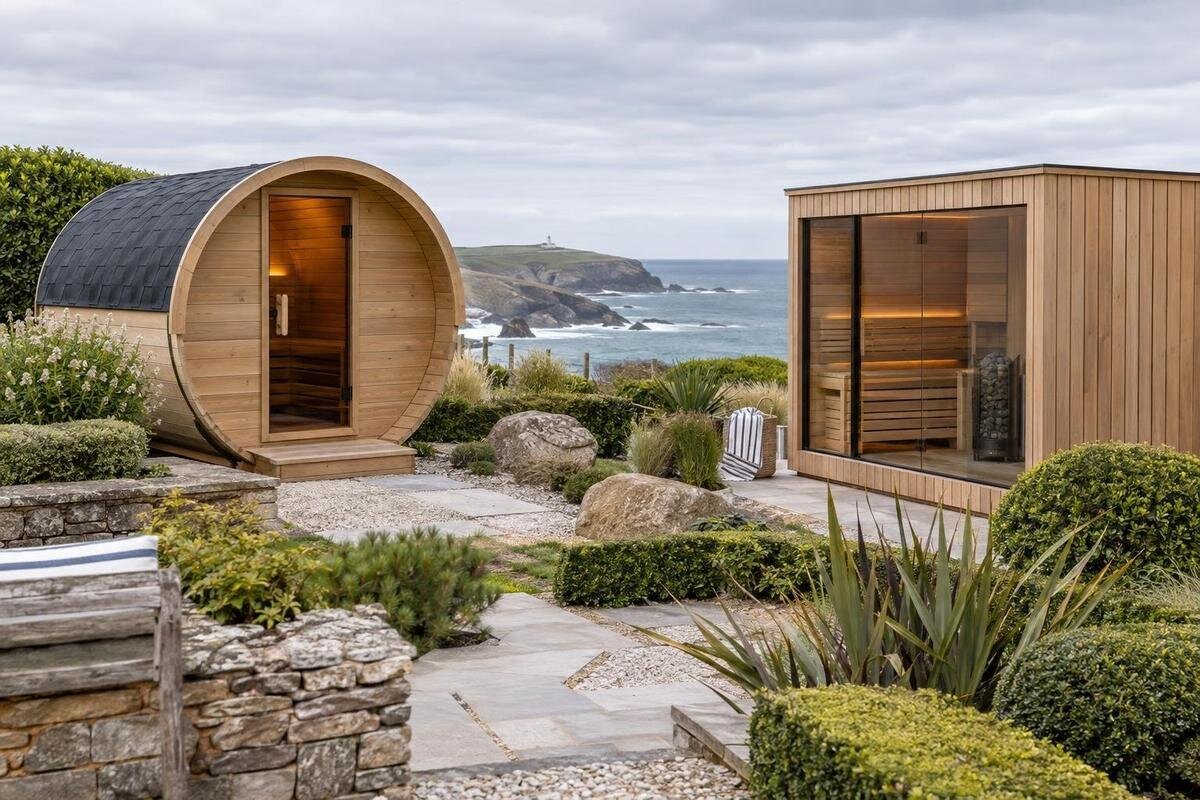
Coastal exposure is not a single condition: an open shoreline, a sheltered bay and a garden behind buildings can all present different challenges. When you buy a sauna for a coastal garden, match documented outdoor-use, material-care and installation requirements to the actual site. Then check the full footprint, delivery route and maintenance access—not just the spot where the cabin will sit. This guide outlines what to compare before choosing a model or placing an order.
Assess salt exposure at the exact site
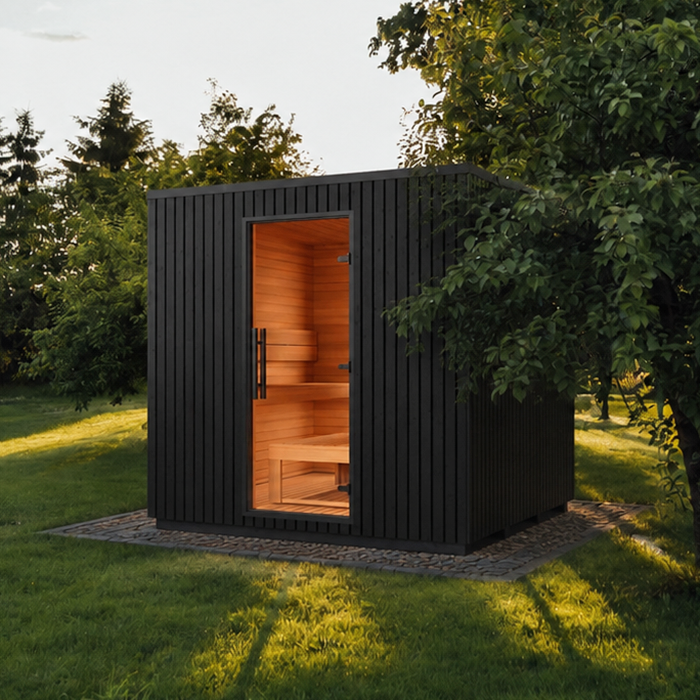
The phrase coastal garden covers very different exposures. A home on an open shoreline can face salt spray and strong wind, while a sheltered bay or a site behind buildings may be affected differently. Wind direction, tree cover, slope and nearby structures all influence what reaches a sauna; distance from water alone is not a dependable measure. Note which sides receive prevailing wind and wind-driven rain, whether surfaces regularly stay damp, and whether exposure changes through the year. If the garden is very open or has a history of storm damage, ask a qualified installer to assess the precise location before you settle on a model. Take observations after rain and during windy weather if possible, since a dry, calm visit may not reveal where water or airborne salt accumulates. Photographs of the proposed area and notes about recurring conditions can make discussions with an installer or seller more specific.
Look for model-specific information about outdoor use and coastal exposure, rather than relying on an attractive finish in a photograph. Salt can corrode exposed metal, so ask what protection applies to hardware and other exposed components, how salt residue should be handled, and what maintenance is expected. Do not infer these details from a product family name. A page such as the Thermowood barrel sauna S 140 listing identifies an option to investigate; the name itself does not establish its suitability for a salt-air site. If the instructions do not address your exposure, request an answer before treating the model as a candidate.
Understand the finish and care requirements
Coastal weather challenges an exterior in more than one way. Rain and damp air can keep surfaces wet, sun can age finishes, and salt may leave deposits on exposed fittings. The care needs depend on the specified materials and finish, not on a catalogue image or a broad label. Ask for details about the exterior and hardware, whether a protective finish is factory-applied, and which cleaning products or treatments the manufacturer permits. Also ask whether instructions differ between the outside and the hot-room interior; a method suitable for one surface may not be appropriate for another.
Request practical guidance on spotting damage, handling salt residue and inspecting exposed joints or fittings. Do not add stain, sealant or cleaner simply because it is used on a nearby structure; follow the manufacturer’s instructions for the exact model. Consider whether you can reach all sides after landscaping and keep up with the prescribed routine throughout the year. When reviewing the HC150 Thermowood barrel sauna page, use it as a starting point for model-specific questions, not as evidence of a particular finish or maintenance requirement.
Choose a position that balances shelter and access
Placement involves a trade-off. The most open patch may receive more wind and rain, but enclosing a sauna tightly with fencing, walls or dense planting can affect airflow, drying and access. Look for a position with practical shelter while preserving the clearances, ventilation and service access specified for the exact model. Observe how wind moves through the garden instead of judging only by the calmest day. If nearby trees shed branches or leaves, include that exposure in the discussion with the installer rather than assuming a screen is automatically protective. Consider seasonal changes as well: foliage, stored garden items and outdoor furniture can alter shelter and restrict access at different times of year. A site plan that shows fixed features and likely obstructions is more useful than selecting a location by appearance alone.
Think about the entrance as part of the site plan. The approach should remain usable and clear, and the door should not be crowded by a fence, garden furniture or a narrow path. Consider privacy from neighbouring windows and sightlines from the house, along with how any windows in the sauna might face the garden. If the available drawings do not show the layout clearly, request them. For example, the Thermowood barrel sauna HC 225 listing can help identify the model you are asking about; confirm its actual layout and clearances from current product documentation.
Plan drainage and the supporting base
Check how rainwater moves across the proposed position. A low spot, runoff from a nearby roof or water that collects beside a fence can leave the ground persistently wet. Consider the surrounding grade and drainage as part of the site assessment, rather than treating the sauna footprint as an isolated rectangle. Ask the manufacturer what kind of supporting base the exact model requires and have a qualified installer assess whether the chosen location is suitable. Requirements can vary, so do not assume that a familiar patio or a visually level patch is adequate. Review where snowmelt and water from adjacent hard surfaces travel, too, because conditions can change substantially through the seasons. Keep drainage routes accessible rather than allowing planting, edging or stored items to conceal a developing problem.
Tell the installer about any history of pooling or flooding at the site and ask who is responsible for preparing the base, checking the finished position and coordinating the work. Before any ground work, identify relevant buried services through an appropriate local professional. Leave enough access to inspect and maintain the area around the sauna once it is in place. Use the N 210 Thermowood barrel sauna page to identify a model when requesting its base requirements; do not infer those requirements from the model code or appearance.
Measure the full footprint and required clearances
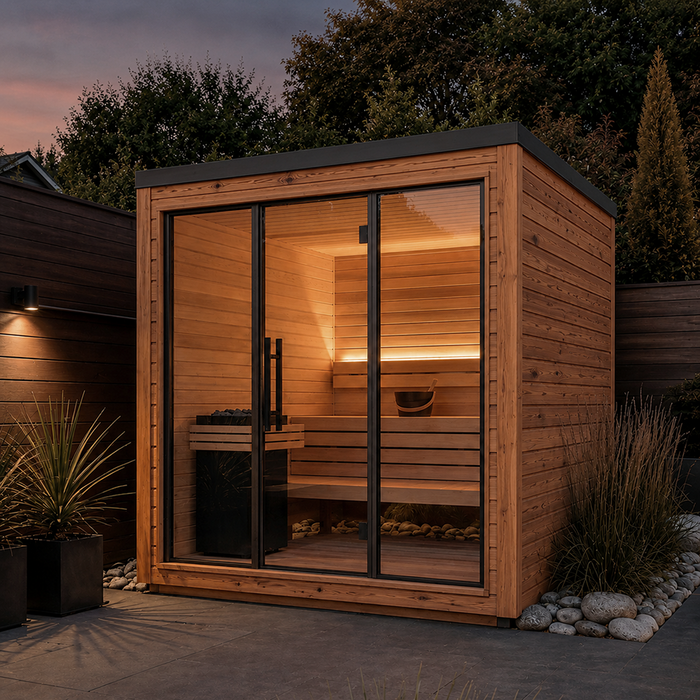
Record the exact external dimensions from the current documentation for the model you are considering. The space needed may extend beyond the main body to include the entry, any steps or landing, roof edges, heater clearances and room for maintenance. Use the manufacturer’s drawing and specified clearances rather than estimating from a product photo or model number. Keep the planned position distinct from the whole area needed to install and use the sauna; a tight fit on paper can leave too little room for access or servicing.
Mark the proposed area against existing garden features: paths, gates, doors, planting beds, storage and places where people sit. Allow for plants to grow and for a clear route to the entrance, while keeping the site’s drainage in view. If the model’s published dimensions or drawings are missing, ask for them before finalizing landscaping or other work. The N 250 Thermowood barrel sauna page can serve as a reference when you request the dimensions for that exact model; the number in its name should not be treated as a measurement.
Check the delivery and assembly route
A garden may have room for a sauna but no practical way to get it there. Measure the narrowest gate and path, corners, steps, slopes and overhead obstructions between the delivery point and the site. Note surface changes or tight turns, and share measurements and photos with the seller before ordering. Ask for the dimensions of the largest package or component and how delivery is handled. Do not assume that a model shown in a garden arrives in the same condition or by the same method as another sauna. Include temporary obstacles in the check, such as bins, parked vehicles, low branches and removable fence panels, and confirm whether they can realistically be moved when needed. A route that works on a sketch may still be impractical if handling space is unavailable at a turn or change in level.
Clarify who unloads and moves the components, what access is needed for assembly, and which parts of the site must be ready beforehand. If delivery and installation are handled by different parties, ask how their responsibilities and timing fit together, including who removes packaging. Ask what happens if the route you described cannot be used; do not rely on a return or redelivery arrangement that has not been confirmed. When discussing the LC 260 Thermowood barrel sauna listing, use the exact model name and get delivery and assembly details in writing.
Confirm heater and installation requirements
Treat the heater as part of the buying decision, not as a detail to resolve after the sauna arrives. Confirm the heating system and its energy source for the exact model, along with the manufacturer’s requirements for power or fuel, clearances, ventilation and controls. Ask how the recommended heater is matched to the sauna, and request the relevant installation documentation. A product image, family name or model code cannot confirm these details, and assumptions about another sauna’s setup may not apply.
Before ordering, ask a qualified installer to review the proposed arrangement and a qualified electrician to assess electrical feasibility where applicable. If a model uses another type of energy source, get guidance from a professional experienced with that system. The goal is to know what work and equipment the installation requires without trying to size or install it yourself. You can use the HCF 300 Thermowood barrel sauna page to identify the model when requesting its current heater and installation information; confirm any missing details with the manufacturer or seller.
Include upkeep and service in the buying decision
Compare the full project cost, not just the sauna price. Ask whether the quote includes delivery, unloading, assembly, a base, a heater or other components, and identify any site preparation or professional work that would be separate. Include ongoing maintenance and energy use in your own budget, using the model’s stated requirements rather than estimates based on a different product. Itemized quotes make it easier to compare options on the same basis and to spot work that has not yet been assigned.
Consider how you will reach exterior surfaces and fittings for routine care, and whether the seller can explain the process for maintenance questions or replacement parts. Read the applicable service and warranty terms, and ask whether any stated conditions apply to your intended coastal location; do not assume one product’s terms carry over to another. Use the Thermowood barrel sauna LCF 300 listing to identify the option when asking about its own care and support. A model that is difficult to access or maintain may demand more effort than its initial footprint suggests.
Compare documented details, not model names
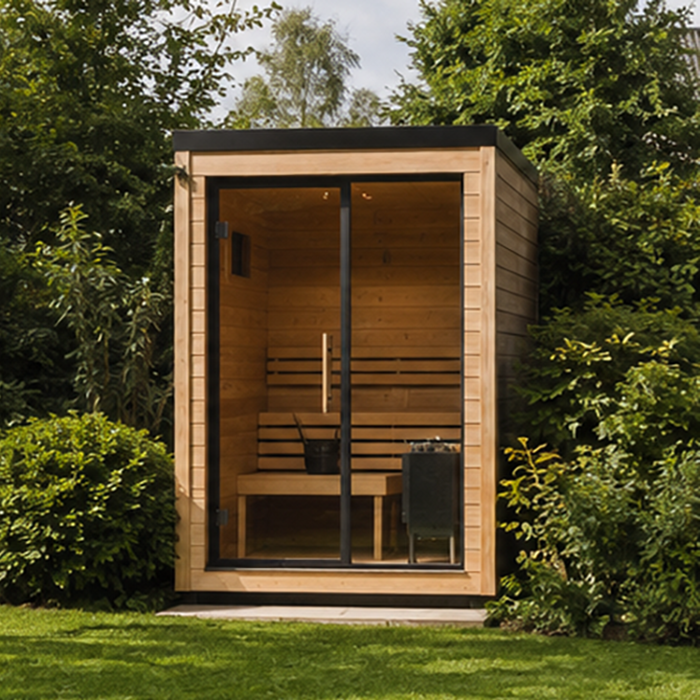
Build a short comparison sheet for each sauna you are considering. Record the exact model, outdoor-use guidance, exterior and hardware details, care instructions, dimensions, required clearances, base requirements, heater information, and delivery and assembly scope. Note whether each answer comes from current model documentation or still needs confirmation. This keeps two similar-looking options from seeming equivalent when their stated requirements or included services differ, and it gives the seller a clear list of questions to answer.
Give more weight to specific, model-based documentation than to a general phrase such as weather resistant. If the materials or instructions do not address salt exposure, ask the manufacturer what that means for the intended site and care routine. Compare service and warranty terms alongside the installation requirements, not after choosing on appearance alone. Where an important answer remains unclear, treat it as an open buying question rather than filling the gap with an assumption or a description taken from another model.
Make the choice around the whole garden
Before committing, consider the complete sequence: how exposed the position is, how water drains, what base the manufacturer requires, whether the full footprint and clearances fit, and whether delivery and installation are practical. Check that the approach and service access will remain usable after landscaping, and that the heater and its energy requirements have been reviewed by the appropriate professional. These are linked choices: moving a sauna to improve shelter can also change the route, available space or access for maintenance.
A sheltered location may reduce direct exposure, but do not add a roof, enclosure or screen unless it is compatible with the exact sauna and approved by the relevant professionals. Make the final comparison on the documented requirements and the work your property can accommodate, not on a product name alone. The right choice for a coastal garden is one whose exposure, care, installation and access needs are clear enough for you to manage over time.
Frequently asked questions
How close to the ocean can I place a garden sauna?
There is no single distance that describes salt exposure for every property. Wind direction, shoreline conditions, shelter and local topography all matter. Have the intended location assessed if exposure is a concern, and ask the sauna manufacturer whether the model’s materials and care requirements suit that site.
Does “Thermowood” in a product name mean a sauna is suited to salt air?
No. A product name does not confirm the exact finish, hardware protection, coastal suitability or maintenance requirements. Ask for the documentation for the specific model, including how its exterior should be cared for in a salt-exposed location.
Can I put a sauna under a pergola or roof?
Do not assume that a roof or pergola is compatible with a particular sauna. It can affect clearances, ventilation and access. Get approval for the exact model from its manufacturer and have a qualified installer assess the proposed arrangement before building around it.
What should I measure before ordering?
Measure the sauna’s full external footprint and the route from the delivery point to its final position, including gates, turns, stairs, slopes and overhead obstructions. Also allow for the model’s specified clearances, entry space, base and maintenance access.
What should I ask for before placing an order?
Request model-specific information on outdoor use, materials and care, dimensions, clearances, base requirements, heater and power or fuel needs, delivery, assembly and service terms. Confirm which costs and responsibilities are included in the quote.
A coastal sauna purchase is easier to assess when the site and the product are considered together. Salt, wind and damp conditions inform questions about materials and care; the garden’s layout affects drainage, access, delivery and installation. Confirm the requirements for the exact model, and make sure the proposed location and upkeep are realistic for your property. That gives you a sound basis for comparing options without relying on a name, photograph or assumption about coastal suitability.
