
Buying a Small Greenhouse for a Compact Garden
Greenhouse buying guide
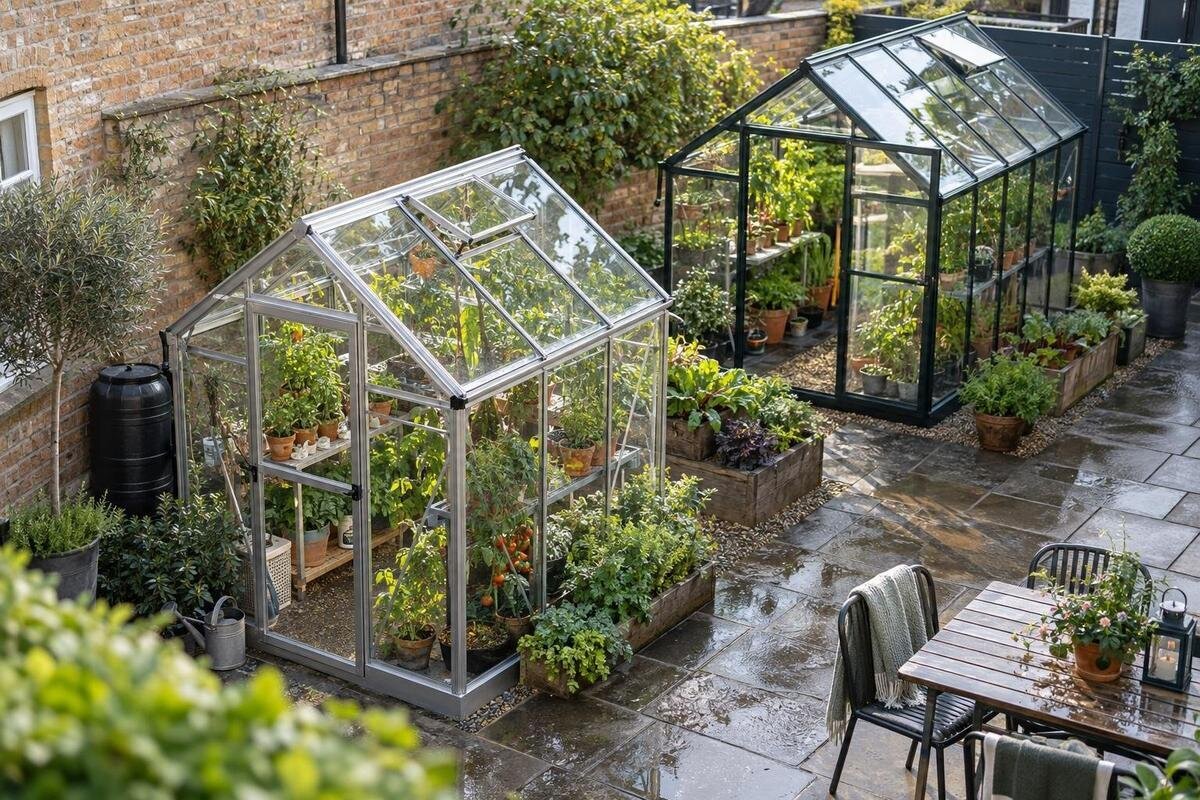
In a compact garden, a greenhouse has to earn its place. A smaller outline does not automatically make it a practical fit: the door may open into a path, the interior may not suit your containers, or the site may leave little room for assembly. The useful comparison is between your measured space, the layout you need inside and the plants you plan to grow. Check the shape, access, ventilation, base requirements and documented exposure guidance before buying.
Define what you want the greenhouse to do
Before comparing frames, decide what the greenhouse must do. Starting seedlings, growing herbs or salad greens, keeping warm-season crops in containers, and sheltering tender plants are different jobs. A tray nursery may need temporary room for a work surface, while mature plants need space for growth and regular access. If your goal is simply to grow more, a list of features can distract from the actual constraint. Name the crops you expect to keep inside, how many trays or containers you plan to use, and when you hope to use the space. That turns a broad wish into a practical capacity question. Include the busiest point in the season, rather than planning only for the first few weeks after sowing. A compact greenhouse can work well when it has a defined purpose, but it can become overcrowded when every plant and garden task is expected to fit inside at once.
Consider how your plans overlap over the growing season. Seedlings may need room early on, while larger plants later need space for their leaves, supports or containers. If you plan to move plants in and out, account for the area needed to handle them without blocking the route through the greenhouse. Also distinguish between a space for growing and one you expect to use for potting or storing tools; combining these jobs takes room. A short written list of your main plants and tasks will help you spot a mismatch between a compact exterior and an interior that cannot support your routine.
Measure the site and every access route
Measure the clear area where the greenhouse could stand, rather than estimating from a glance. Record the available length and width, and note fixed obstacles such as fences, steps, posts, eaves or neighbouring structures. Check the site at more than one point if its boundaries are irregular. Then compare your measurements with the product’s stated exterior dimensions, including its full height. A footprint on paper does not include every clearance that may be required for assembly, maintenance or an opening door, so keep those needs separate from the structure’s outline. Note changes in level, low branches and drainage features while measuring. They may not alter the footprint, but they can affect whether the proposed position is practical to reach, prepare and use through the season.
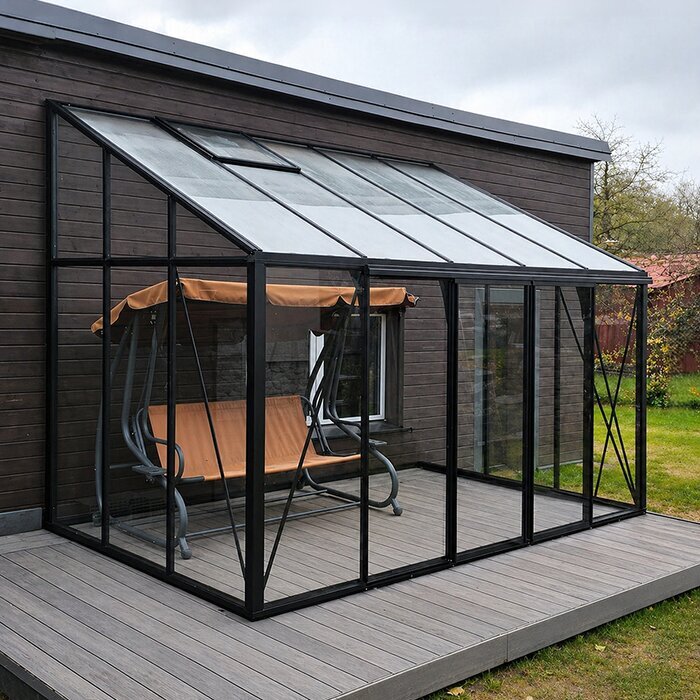
Mark the proposed footprint on the ground with string or removable markers, then walk around it and trace the route from the garden entrance. Allow for the door to open and for people to carry in trays, tools or plants. Check whether the greenhouse would narrow a path or interfere with another part of the garden you use regularly. If a lean-to arrangement is on your shortlist, use the aluminum lean-to greenhouse listing as a page to compare with your measurements; its title alone does not establish the footprint or clearance you need.
Compare wall-adjacent and freestanding positions
A greenhouse beside a wall may use an edge of the garden, but that does not automatically make it the better space-saving option. The position can affect how easily you reach the structure, which parts are shaded and whether the wall limits access to the inside. A freestanding layout may offer more approaches, but it still needs enough room around its footprint for the door, assembly and routine care. Compare both possibilities on a plan of the actual garden rather than choosing by style name alone. Map sunlight and shade at several times of day before settling on either position. Nearby trees, fences and buildings can change the light available to plants, especially when the sun is lower earlier or later in the growing season. A location that looks bright during one visit may not offer the same conditions throughout the day, so note what casts shade as well as where the greenhouse itself would cast it.
For a wall-adjacent position, check the wall’s length and height, nearby windows or openings, and anything that could obstruct access. Look at where water drains from the building and whether the proposed location leaves the greenhouse entrance usable. Also consider how sunlight and shade change across the day and season; a wall’s position can matter as much as its length. The T-model greenhouse and orangery wall-base listing names a wall-oriented format, but you will still need to compare its published dimensions and installation guidance with the particular wall and space you have.
Plan usable room inside the greenhouse
The outside footprint is only one part of the fit. Check the stated interior dimensions and consider how much clear width remains once plants, containers, benches or shelves are in place. A layout that leaves no comfortable way to reach the plants can be frustrating even when the structure fits neatly between garden boundaries. Think about where a path would run, whether you need to tend plants from one or both sides, and how much headroom your intended crops and supports may require.
Sketch the interior before ordering. Mark the door, a working route, the containers or trays you expect to use and any surfaces for potting or storage. Try to show the largest items you expect to move through the entrance, not just their final position. If you want to keep plants on both sides, check that the route still works when they are full-grown. A simple drawing makes compromises visible: it can show whether a bench removes too much growing area or whether the main plants would sit beyond easy reach. It can also reveal whether watering cans, soil bags or harvest containers have a temporary place while you work. These everyday items need not stay inside permanently, but the route should remain usable when they are carried in and out.
Choose a shape that suits the garden layout
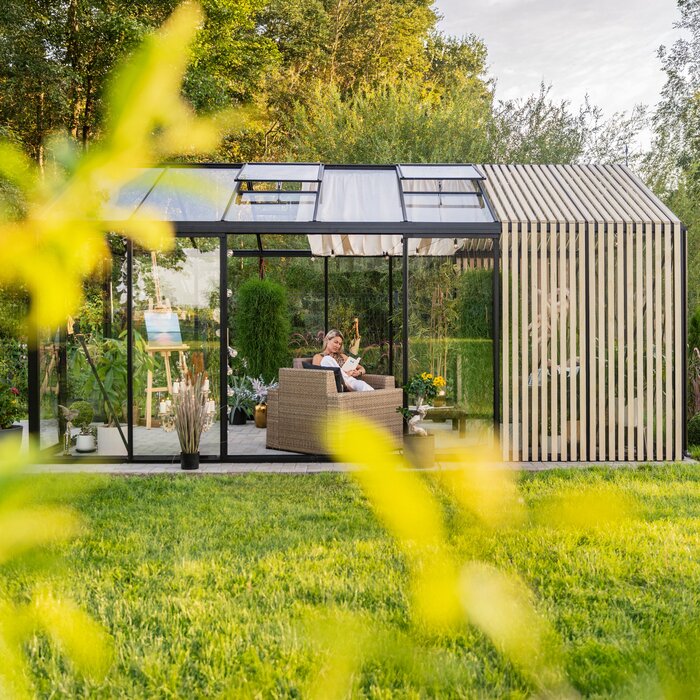
Two greenhouses with similar stated floor areas can occupy a garden differently. A long, narrow outline may fit along one boundary, while a broader plan may leave too little room for a path or another use of the garden. Changes in shape can also affect where the entrance sits and whether you can reach plants at the far end. Compare plan views wherever they are provided, and consider the way each outline relates to the boundaries and routes you have already measured. Leave enough circulation space outside for the garden tasks that continue around the greenhouse, such as mowing, weeding, moving a wheelbarrow or reaching a fence. The best outline is not necessarily the one that fills the largest available rectangle; it is the one that leaves the remaining garden practical to maintain. Mark the entrance on your site plan as well, since a suitable footprint can still create an awkward approach if the door faces a tight corner or busy path.
Do not assume that a distinctive shape will make a compact site easier to use. A T-shaped plan, for example, needs to be judged by the space its full outline occupies and how its sections affect movement inside. The T-model orangery greenhouse listing can be compared with other candidates using its published plan and dimensions; the model label is not a substitute for those measurements. Use the same site drawing for each option so that an unusual outline does not appear to fit simply because it is harder to picture.
Read frame and glazing details separately
Check the frame and glazing information as separate parts of the product description. Look for stated materials, panel details and any available information about light transmission or insulation, rather than assuming that one material name answers every question. Consider the care instructions, too: you will want to understand how the surfaces are meant to be cleaned and what maintenance the manufacturer describes. If a detail that matters to your growing plans is not stated, do not fill the gap with assumptions based on a photograph or model title. Read the specifications closely enough to distinguish documented information from optional accessories or images used for illustration. If you are comparing several candidates, record the same frame, panel and maintenance details for each one. This makes it easier to identify a meaningful difference and prevents a vague impression of quality from replacing information that the product page actually provides.
It is also worth checking how the product’s parts are identified and whether the manufacturer explains replacement panels or components. These details can matter if a part is damaged or needs attention later. Review the assembly information and warranty terms that apply to the specific model, without assuming they are the same across a range. The limited-edition aluminum greenhouse listing is a product page to assess for those documented details; its title does not establish the glazing, included parts or care requirements.
Check doors and ventilation for everyday use
Access is a daily-use feature, not a detail to leave until after choosing a size. Check the stated door position and opening information, and consider whether the entrance will be clear when plants or containers are in place. If the greenhouse has openings for ventilation, find out where they are and how they are operated. Make sure the controls or openings would be reachable in the layout you have planned, rather than hidden behind shelving or plants.
A greenhouse can warm in sunlight, so ventilation deserves attention even when the structure is small. Compare the documented openings and operating instructions for each candidate with your growing plans; do not infer ventilation from its outline or product photograph. Also consider how you would reach the plants to water, prune or move them without repeatedly shifting other containers. Check the actual door and vent details on the Oasis Pyramid greenhouse listing before treating a named shape as evidence of a particular access or ventilation arrangement. Consider who will carry out these routine tasks and when. An opening that is technically available may be less useful if it cannot be reached safely and conveniently once the greenhouse is planted up.
Check the base, assembly and site exposure
Find out what the manufacturer requires for the base and the surface beneath the greenhouse. Check whether the product description specifies a base arrangement, what is included and what preparation the site needs. Do not assume that a convenient existing surface is suitable without comparing it with the instructions for the model. A clear assembly area also matters: allow room to handle components and follow the supplied assembly guidance, and consider how the parts will travel from the garden entrance to the chosen position.
If the structure will remain outdoors through local wind or snow conditions, check the manufacturer’s documented exposure and structural guidance for that specific model. Where the site, proposed base or local conditions raise questions about suitability, ask a qualified professional to assess them; do not apply another greenhouse’s guidance or improvise an engineering solution. The Prestige greenhouse with metal base listing should be judged by its published base and anchoring instructions, not by assumptions about what the words in its name mean.
Compare the full purchase with your growing plan
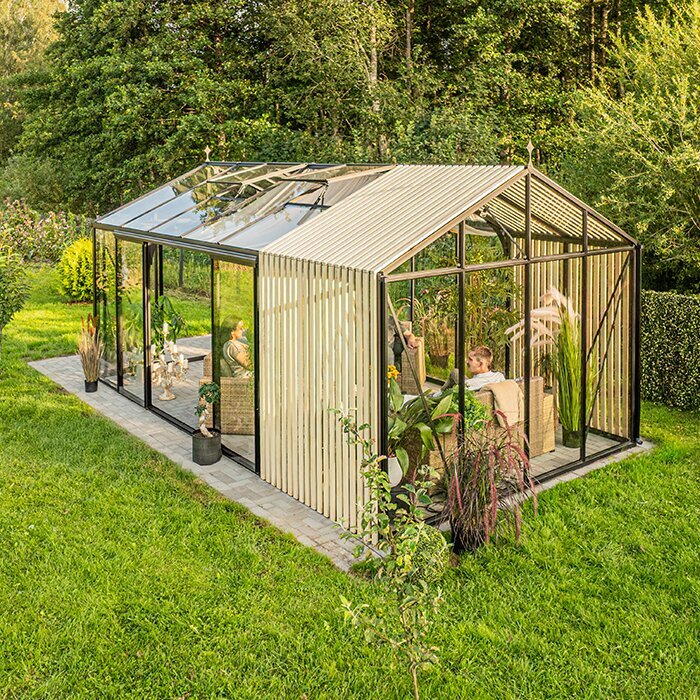
Set a budget for the complete setup, not just the greenhouse structure. Depending on the product and site, costs to verify may include base preparation, delivery or handling, assembly, shelving, ventilation accessories and other items you may need. Check what the listed product includes and which items, if any, are separate; do not assume that a photograph shows everything supplied. If you need help moving components into a restricted garden, include that practical requirement in your planning as well. Separate essential site and setup costs from optional items that can be added later. This helps you compare candidates fairly and avoids selecting a seemingly suitable greenhouse before accounting for the work needed to make the chosen location ready.
Judge value by whether a feature solves a real problem in your garden, not by how impressive it sounds in a description. A larger interior may be useful if your plant list calls for it, but unused area can take space from the rest of a compact garden. Conversely, a very tight layout may leave no room for a change in crops or routine. When assessing the Bloomcabin Orangerie greenhouse listing, as with any candidate, use its confirmed dimensions and included items in your comparison rather than relying on its name as an indication of cost or value. Make a simple comparison sheet that separates required spending from possible later additions and notes any unanswered questions. A candidate that seems less expensive at first may require more site preparation, while an option with a useful included item may better suit the plan. The point is not to predict costs from a model name, but to compare the complete requirements you can confirm for each greenhouse.
Make a like-for-like check before ordering
Put your strongest candidates side by side using the same questions: exterior dimensions, usable interior, door position, ventilation information, base requirements and the space needed for assembly. Record which points come from published product information and which remain unclear. This prevents a prominent feature or attractive image from outweighing a practical mismatch. It also makes it easier to compare models with different outlines, because each is being measured against the same site plan and growing list.
Before placing an order, review the current product information for the exact model, including what is supplied, assembly guidance and the applicable delivery and return terms. Confirm any unresolved question that could change whether the greenhouse fits or can be set up on your site. Treat numbers in product names as identifiers unless the specifications explicitly give them as measurements: Classic Plus 385 is a model listing, not a substitute for its stated dimensions. A careful final comparison can prevent a small garden from losing more space than the greenhouse needs.
Frequently asked questions
How small should a greenhouse for a compact garden be?
There is no single size that suits every small garden. Work from the crops and containers you want to grow, then compare their space needs with the greenhouse’s usable interior, door access and exterior footprint. Leave room for the way you need to work inside, too.
Is a lean-to greenhouse always the best choice for a small garden?
No. A wall-adjacent layout may suit one site but be a poor fit for another because of shade, access, drainage or the wall itself. Compare its measured footprint and installation requirements with a freestanding option before deciding.
Can I choose a greenhouse by its footprint alone?
No. The footprint helps show how much ground the structure occupies, but it does not tell you the clear room inside, how the door opens or how much space assembly needs. Check the exterior and interior dimensions, access and manufacturer’s guidance together.
What should I verify if the greenhouse will stay up through winter?
Look for the manufacturer’s documented guidance on exposure and structural suitability for the conditions at your site. If snow, wind or the proposed base raises questions, ask a qualified professional to assess the situation rather than assuming one model’s guidance applies to another.
Which features matter most in a small greenhouse?
Prioritize features that support your actual routine: workable access, suitable ventilation, an interior layout for your plants and clear instructions for the base and assembly. A feature is useful only if it addresses a need without making the space harder to use.
A good small greenhouse is one whose measured footprint fits the garden while its interior still supports the plants and tasks you have planned. Start with that growing list, map the available space, and compare each candidate using its actual dimensions and instructions. When the fit works both outside and inside, the greenhouse can serve its purpose without taking more of a compact garden than necessary.
