
Buying an Electric Outdoor Sauna: Checking the Power Supply
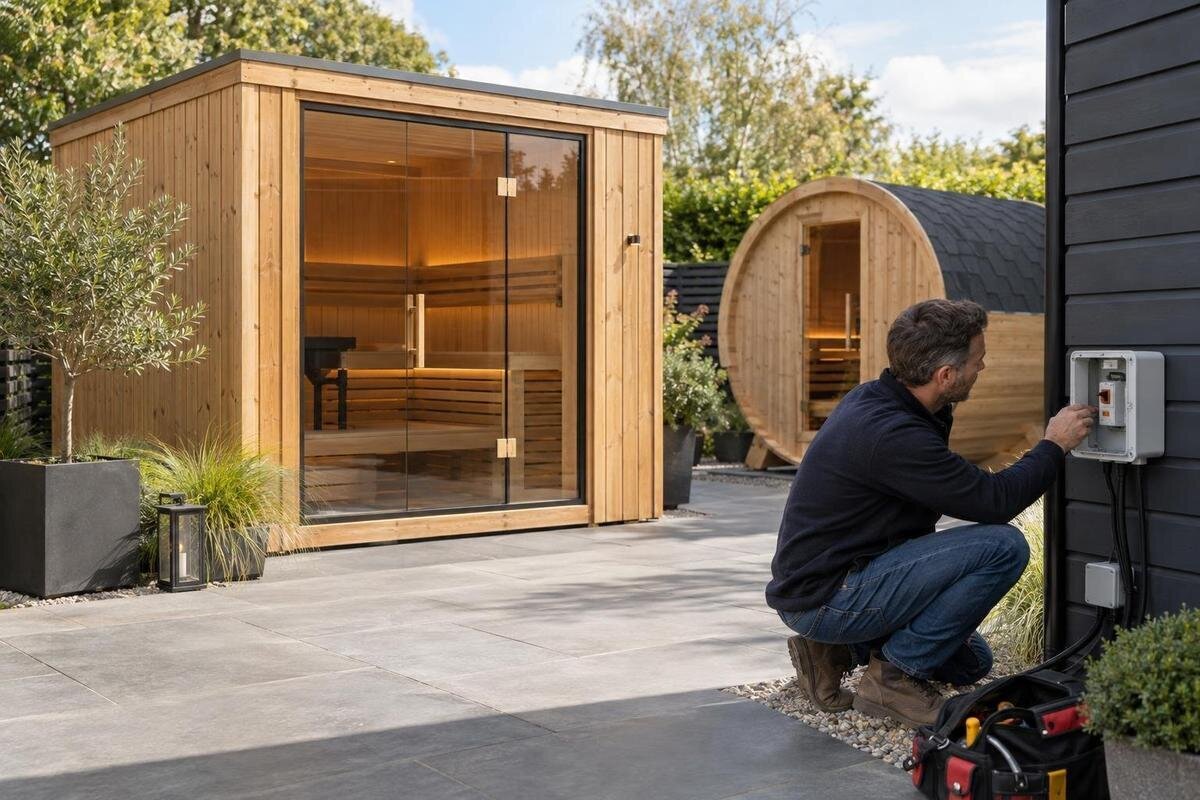
Electric outdoor sauna buying guide
If you’re planning to buy an electric outdoor sauna, include the home’s electrical supply in the model comparison rather than treating it as an installation detail to settle later. A cabin name or product photograph does not show whether a heater is included, which heater is specified or whether the home can supply it at the intended site. Collect the exact heater documents, map the proposed route and ask a qualified local electrical contractor to assess the setup before you commit. An early review can show whether the plan is workable as described, needs additional electrical work or calls for a different package.

01
Why electrical planning belongs in the buying decision
Electrical feasibility is part of choosing an electric outdoor sauna because the heater, not the cabin name, determines the information needed for a supply assessment. A seller may include a heater, offer one as an option or sell the sauna without a defined heater package, and those arrangements can change what needs to be checked. Confirm which applies to the exact item you plan to order. For example, when considering the Thermowood Barrel Sauna S 140 listing, ask which heater configuration is included; the product name alone does not establish its supply or connection requirements. Get package details in writing before asking an electrician to price the work.
Clarify what the seller means by ready for installation. The phrase may describe the delivered sauna rather than a completed electrical connection at your site. Ask which components are supplied, who selects the heater and which documents cover installation; also ask whether any option can change after purchase. Before comparing models, note the planned location, approximate distance from the home’s electrical service and known access or route constraints. A contractor can decide whether more information or a site visit is needed. An unresolved supply requirement is a buying question: a cabin that otherwise suits your plans may call for work you had not allowed for, or may not be practical at the chosen location.
Get the exact heater requirements
Request the heater manufacturer’s exact model name and current installation manual for the configuration being offered. Useful details include rated input, required supply voltage and phase, specified circuit and protective-device requirements, connection method, and compatible controls. Ask for the heater nameplate data or an official specification if the manual leaves a point unclear, and make sure the documents apply to the version that would actually be delivered. Do not estimate requirements from a sauna’s name, a photograph, an assumed cabin size or another product in the same range. For the HC150 Thermowood Barrel Sauna listing, confirm which heater, if any, comes with your package and obtain documents for that unit, not a generic example.
If the seller cannot identify the heater yet, ask when it will be selected and whether a substitute could be supplied. Keep equipment details together: sauna model and options, heater make and model, control unit and the manual that applies. The electrician needs to review the actual configuration, not a unit chosen because its name or advertised size looks close. If the manufacturer describes more than one connection arrangement, ask which one is intended for your order. Having the manual before ordering helps the contractor identify questions and prepare a better-grounded estimate; a general description such as standard electric heater does not settle your home’s supply requirements.
02
Check the home’s electrical service capacity
Homeowners often look at the electrical panel first, but unused spaces in it do not by themselves confirm that the home’s electrical service can support an added heater. The assessment must consider the selected heater’s documented demand and existing household loads, including equipment that could operate at the same time. A qualified electrician can review the service, the panel or subpanel arrangement and any need for further work. Do not choose a circuit based on a general online chart or another sauna’s figures: a model name, a nearby product or a rough cabin comparison cannot replace the heater’s own requirements and a review of the property.
Tell the contractor about other planned electrical additions, not just the sauna, because the wider project can affect the assessment. If you are considering the Thermowood Barrel Sauna HC 225 listing, get the heater option for that exact package before requesting a quote; otherwise, its scope may rest on an assumption. Ask what appears feasible with the current service, what additional work may be needed and what cannot be confirmed until a site visit. A professional review is more useful than a yes-or-no guess based on the home’s age or a number printed on one breaker. Share any service information from prior work, and let the contractor decide what is relevant.
Confirm circuit and control requirements
Separate the heater’s circuit requirements from the capacity of the whole-house service. The manufacturer’s instructions may specify a circuit arrangement, protective devices, switching or isolation, and a control unit; the actual requirements depend on the selected heater. Ask whether controls are included, sold separately or optional, and whether a remote-control feature changes the equipment needed. Get each control’s model number, not just a list of advertised functions, and have the electrician compare it with the heater instructions. This prevents a general feature description from being mistaken for confirmation of the circuit or control setup.
For the Thermowood Barrel Sauna N 210 listing, verify the package and control details rather than assuming the model name identifies them. Ask the contractor which decisions must be settled before an estimate and what can be confirmed during a site assessment. If a control or accessory is optional, check whether the heater manufacturer lists it as compatible and whether it changes the intended connection or installation plan. Note which items are included and which must be purchased separately. Avoid ordering an electrical accessory because it appears alongside the sauna online; the seller’s package details and electrician’s plan should refer to the same equipment.

03
Map the route to the sauna site
Map the proposed route from the home’s electrical service equipment to the sauna site before finalizing the location. Give the electrician a simple sketch, approximate distance, access limitations, buildings or hard surfaces along likely paths, and any places where work would be difficult. Note narrow access or gates that could affect reaching the route, and whether landscaping or construction is planned. This is useful planning information, not a cable-sizing exercise: site conditions can affect labour, materials and practical options, while the contractor determines the appropriate installation method. If your preferred spot creates a difficult route, compare another feasible location before ordering.
Use the Thermowood Barrel Sauna N 250 listing to identify the candidate you want assessed, then share the intended site and route for that exact choice. Do not plan to bridge the gap with an ordinary extension cord unless the heater manufacturer and electrician explicitly confirm it is suitable; it may not fit the product or a permanent outdoor installation. Ask where the connection point and controls can be located, whether future service access will remain practical and whether a driveway, deck or planned structure could obstruct the route. If the location changes after the estimate, tell the contractor before booking work so the route can be reviewed.
Account for outdoor conditions
Outdoor conditions belong in the electrical review as well as the site sketch. Rain, snow, moisture, changing temperatures and possible physical damage can affect which equipment and protective measures are appropriate. The heater manual and instructions for every supplied electrical component should cover the intended setting, and the electrician should assess the exposure at the proposed site. Do not assume a component is suitable for any outdoor exposure simply because the sauna itself is described as an outdoor product. Ask the retailer to identify the components in your package and the manufacturer’s stated installation conditions before treating a quote as final.
Consider whether a contractor can reach the planned connection and controls for installation and later service without an awkward route. Mention driveways, gates, existing structures and areas that may be hard to access, even if a product photograph gives no clue about them. For the LC 260 Thermowood Barrel Sauna listing, request exact heater documentation before treating its supply needs as known: a name or illustrative photograph cannot establish electrical ratings or suitability for a particular site. Leave decisions about outdoor protection and installation materials to the electrician, using the manufacturer’s instructions for the supplied equipment.
04
Compare the complete installation cost
Compare the full project scope rather than only the sauna’s listed price. Ask the seller to itemize what the package includes—cabin, heater, controls and any accessories, where applicable—and what is excluded. Then request a site-based estimate from a qualified electrician that describes anticipated work, its assumptions about the home supply and route, and possible added work if an upgrade or access issue is found. Ask whether design review, site work, electrical labour or commissioning are part of the estimate; do not assume the sauna purchase covers them. Check with the contractor or relevant local authority whether any approvals or inspections apply.
Give the same heater model, package information and site sketch to anyone pricing the work so you can compare like with like. If an estimate assumes a different heater or leaves the circuit arrangement unspecified, ask for clarification before comparing totals. Use the HCF 300 Thermowood Barrel Sauna listing only to identify the candidate you want assessed; the model name itself cannot establish the electrician’s scope or cost. If route work affects paving, landscaping or access, ask which parts are included and whether another contractor’s work is separate. Have each estimate distinguish confirmed work from assumptions and note what could change the scope.
Confirm the sauna and heater package
An outdoor sauna and a heater that can be supplied at your property are not automatically a confirmed package. Ask the seller or manufacturer to identify the heater intended for the exact sauna configuration and confirm that the offered combination is specified for use together. The electrician can then compare that heater’s requirements with the home’s service and proposed route. If the heater is selected separately, confirm compatibility before checkout; a replacement chosen by appearance or a broad size description may have different controls and electrical needs, making an earlier estimate outdated. Make sure the retailer and electrician are reviewing the same package.
Ask who must confirm a substitution if the original heater is unavailable, what documentation will accompany the replacement and whether the electrician should review it again. For the Thermowood Barrel Sauna LCF 300 listing, use the exact configuration proposed for your order, not another product with a similar name, in those discussions. Keep the heater, controls and relevant installation manual together in your purchase records. If the intended combination is unclear, request written clarification before paying or scheduling work. Uncertainty about included equipment is a reason to pause rather than guess after delivery.

05
Prepare for a pre-purchase electrical review
Give the electrician one concise information package rather than a chain of product photographs. Include the exact sauna listing and options, heater make and model, manufacturer’s manual, control details, proposed location, a simple route sketch and any written electrical information from the seller. Site photos that show access and obstacles may help, but do not treat them as a substitute for an assessment. Share what you know about the home’s service and planned additions, but do not open electrical equipment or attempt tests to fill gaps. If you lack service documents, say so and ask what the contractor needs to review the situation safely. Clear inputs reduce follow-up and make it less likely that an estimate rests on an assumed heater.
Ask for answers you can use in the buying decision: whether the specified heater can be assessed with the existing supply, what work might be needed, whether the proposed route is practicable and which facts remain unknown. Ask whether a site visit is needed before the contractor can describe the scope, and whether permits or inspections should be checked with the relevant local authority. If a product specification is missing, ask the sauna seller for it instead of filling in a figure from a different model. A pre-purchase review does not replace installation planning, but it can tell you whether this candidate should stay on the shortlist and which conditions the estimate assumes.
Resolve the details before ordering
Before placing an order, match what you are buying to what the electrician reviewed: sauna configuration, heater model, controls, intended site and electrical documents. Check that the seller’s order confirmation and contractor’s estimate refer to the same items, including any separately selected control equipment. If the product, heater or location changes, send the updated information for review; a small substitution can make earlier conclusions unreliable. Keep written replies and manuals with your order record so you can compare the delivered equipment with the arrangement that was assessed.
Settle responsibility for remaining decisions: who supplies the heater, who confirms a substitute, who performs the electrical work and who checks any approvals the professionals say may apply. Tell the electrician about planned changes to the home’s service or the sauna location; an assessment for today’s setup may not describe a future one. Keep assumptions attached to the estimate and ask for them to be revisited if the package changes. If an essential fact is missing, do not treat a standard arrangement as a substitute for it. If the assessment makes the chosen setup impractical, consider a different site or manufacturer-specified configuration and have that revised plan reviewed before ordering.
Frequently asked questions
Can I use an existing outdoor outlet for an electric sauna?
Do not assume so. The selected heater may require a supply and circuit arrangement different from the one serving a standard outlet. Have a qualified electrician compare the heater’s instructions with the outlet, circuit and home service. Until that review, treat the outlet as unconfirmed.
What electrical information should I request before ordering?
Ask for the heater’s exact make and model, its current manufacturer’s manual, rated input, supply voltage and phase, circuit and protective-device requirements, and control details. Confirm whether the heater is included and whether a substitute might be supplied. Send those documents and the proposed site information to the electrician.
Can I tell from the electrical panel whether there is enough capacity?
Not from a spare breaker space or one breaker label alone. A qualified electrician needs to assess the selected heater’s requirements alongside the home’s electrical service and existing loads. Share any service information you have, but don’t estimate capacity or open electrical equipment to fill in missing details.
Does the distance between the house and sauna matter?
The route can affect access, materials, labour and the installation estimate, but distance alone does not determine what wiring or protection is required. Show the contractor the intended location and likely route. If the sauna is moved later, the electrical plan may need to be reviewed again.
Can I choose a different heater after buying the sauna?
Only after confirming that the replacement is specified for the sauna and reviewing its electrical requirements. A different heater or control may change the supply information, so an earlier estimate may no longer apply. Get the replacement’s manufacturer documents and ask the electrician to reassess the plan before accepting a substitution.
The most useful pre-purchase answer is not a guess about whether a home is likely to have enough power. It is an assessment based on the actual heater, home and route, with any remaining work made visible before you order. If that review points to a different location or configuration, revisit the plan first; if it supports the proposed setup, your comparison rests on a clearer scope.
