
Buying a Home Sauna for a Glamping Site: Questions to Ask Before Choosing
SAUNA BUYING GUIDE
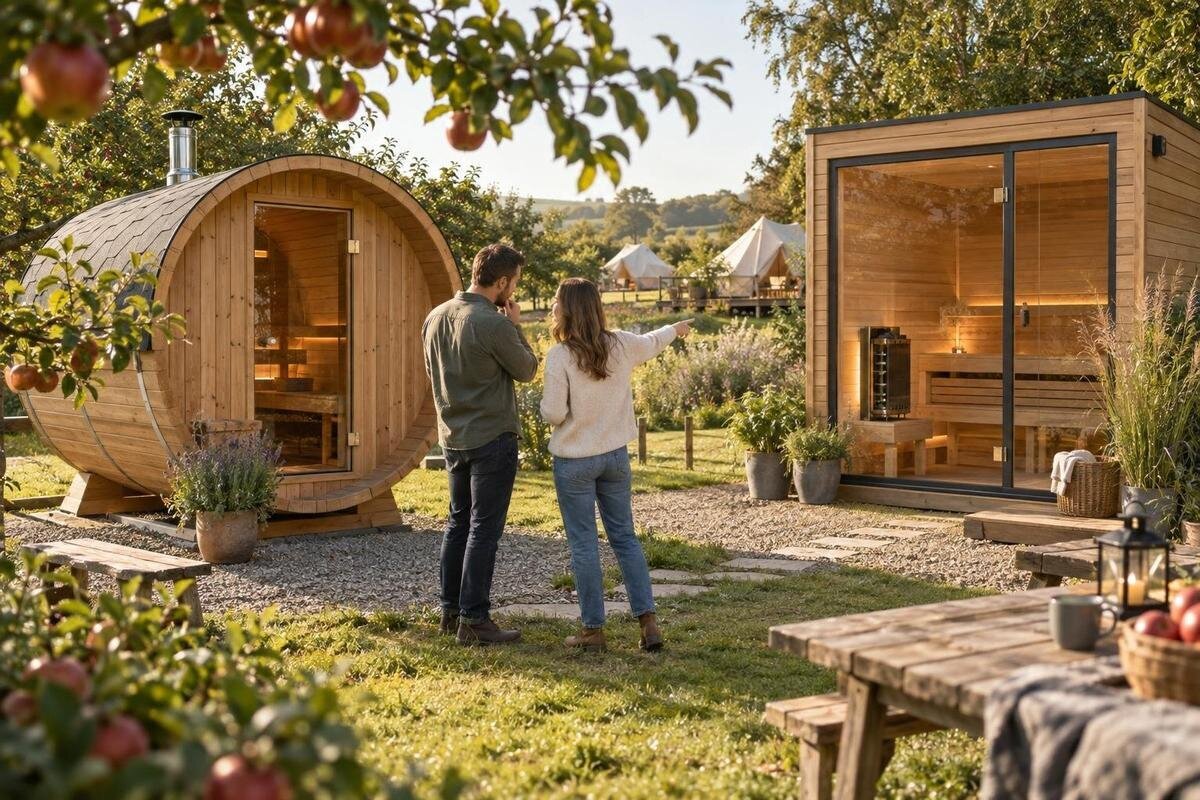
Buying a sauna for a glamping site calls for more than matching a model to an open patch of ground. A domestic sauna may look appealing, but the purchase also has to fit how guests book and share the amenity, the site’s services, privacy and your capacity to host it. A model intended for household use should not be assumed suitable for paid or repeated guest use. Before ordering, establish what the exact model is designed for, what requirements it brings, and whether its capacity and operating costs fit your plan. These questions help you compare home sauna options against the realities of a glamping business without treating a product photo or model code as a specification.
01
Is a home sauna suitable for repeated guest use?
A home sauna and a guest amenity may face very different use patterns. A household might use its sauna occasionally; a glamping site may schedule several parties over a busy day or season. Before choosing, describe your expected bookings to the seller: whether use will be private or shared, how many sessions you anticipate, and whether guests will use it without a host present. Ask whether the exact model is intended for business or rental use at that frequency, and whether that use affects any operating, service or warranty terms. A residential label alone cannot answer those questions.
Treat a clear, model-specific answer as a buying requirement, not a detail to sort out later. Ask for current documentation covering intended use, any stated limitations and the support available if the sauna is used by paying guests. If the seller cannot confirm the proposed use, pause rather than assuming a small guest count makes home and business use equivalent; check relevant terms with your installer and insurer too. The Thermowood barrel sauna S 140 page is one option to assess, but its name does not establish capacity, workload suitability or approval for commercial use.
What role will the sauna have in the guest stay?
Decide what guests will actually be booking before selecting a model. The sauna might be a private amenity for one accommodation, a shared facility for several stays, or an optional experience available at set times. Each arrangement creates different expectations for privacy, booking windows, host involvement and the number of people arriving together. A shared facility also calls for a plan that lets guests reach it without crossing another party’s private outdoor area. Consider how late arrivals, extensions to booking times and gaps between sessions would be handled, particularly when the same facility serves more than one party. Write down the intended offer first, then check whether the sauna and its proposed setting can support that promise. Do not advertise an exclusive experience unless your booking plan can reliably provide it.
Consider how the sauna fits into the whole stay. Will guests already have a suitable place to change, store towels or wash after use, or would you need to plan those arrangements separately? Do visitors have to carry supplies from their accommodation? Will the route and facilities suit the experience you want to offer in poor weather or after dark? These are questions about the site, not evidence that a sauna listing includes extra amenities. The HC150 Thermowood barrel sauna can be considered alongside your plan, but its name or image does not tell you what facilities are included.
02
How many guests should use it at one time?
Estimate the largest group likely to use the sauna together, rather than using the total number of overnight guests on your property. A group that books one accommodation may have different needs from several parties sharing a timed facility. Think about your typical and peak bookings, whether guests are likely to arrive as couples or larger groups, and whether your offer depends on everyone using the amenity together. This gives you a practical capacity target to compare with product documentation; it does not determine capacity from a model code or from how large the sauna looks in a photograph.
Ask the supplier for the stated occupant capacity and the exact model’s interior and seating information. Compare the documented layout with the group you expect to host: a stated maximum may not provide the arrangement or comfort your guests expect. If the facility will be shared, consider whether your booking slots can accommodate the groups you want to serve without creating a bottleneck. Allow time in the schedule for guests to leave, for the next group to arrive and for any routine attention your operating plan requires. The HC 225 Thermowood barrel sauna listing is a candidate for comparison only; the number in its name is not a capacity figure. Use written specifications to assess fit.
Where can the sauna sit on the property?
Check the proposed location against a site plan, using the exact model’s documented dimensions rather than estimating from a photograph. Consider the relationship to guest units, shared paths, neighbouring outdoor spaces, views and quiet areas. A location can fit physically yet feel intrusive if guests see into another accommodation or have to pass through a private sitting area. Consider what can be seen and heard from nearby decks, paths and accommodation entrances at the times the sauna is likely to be used. Include the route for staff who may need to reach the sauna for routine tasks or service. Ask the supplier or installer what clearances and access the particular model requires, and confirm that the planned position can accommodate them.
Describe the actual site conditions when you ask about placement, including the intended outdoor exposure and nearby structures. Do not infer outdoor suitability from a product image, its shape or a material-related word in the name. Confirm the model’s stated placement conditions and care requirements for the location you have in mind. If the site plan involves ground preparation or other construction work, discuss it with an appropriately qualified professional. The N 210 Thermowood barrel sauna page can be added to your comparison, but its listing does not establish a suitable location or installation plan.
03
Will guests have a private and practical route to it?
Consider the trip from accommodation to sauna as part of the amenity. Check whether the path crosses a shared gathering space, passes close to another guest’s windows or requires visitors to carry towels and other items a long way. Think about the route at the times you expect guests to use it, including in low light or seasonal weather. Assess the actual surface, changes in level, lighting and wayfinding with the people responsible for site planning; do not assume that a route is suitable just because it appears clear in a daytime photograph.
If accessibility matters to your guests, review the exact model’s entrance and interior dimensions together with the approach route and any steps or transitions. A product image or a wide-looking doorway cannot establish that the whole experience is accessible. Ask a qualified accessibility professional to help assess the site and the claims you plan to make in your booking information. The Thermowood barrel sauna N 250 may be one model to compare, but its title alone says nothing about the entrance, interior layout or accessibility.
What utilities and professional work will the model need?
Find out how the exact sauna is heated and what services its setup requires. Request model-specific information about any electrical or fuel requirements, controls and any water or drainage needs relevant to your plans. Do not assume that a connection serving a nearby cabin can support the sauna, or that a particular heater or accessory is included. If electrical work is required, have a qualified electrical professional assess the site and the proposed installation. For other construction or service work, ask an appropriately qualified installer what needs to be reviewed before you place the order.
Ask what work is included in the supplier’s proposed scope and what must be arranged separately. Depending on the product and site, you may need to coordinate more than one professional; do not treat a general product description as an installation plan. Check with the relevant local authority about whether any site-specific approvals apply, and discuss the proposed setup with your insurer where appropriate. The LC 260 Thermowood barrel sauna listing can help identify a candidate, but only the model documentation and a site assessment can clarify its requirements.
04
Does the model suit your season and site exposure?
Decide when the sauna will be available: throughout the year, during a defined glamping season, or only at busier times. That schedule affects your expectations for guest demand, site access and the time you can allocate to upkeep. Describe your location and the exposure at the proposed position when asking the supplier about suitability. Conditions can differ from one part of a property to another, so a broad description such as “outdoors” may not give enough information for a useful answer.
Ask for the exact model’s stated placement limits and care guidance for the conditions you expect, including relevant exposure to wind, rain or snow. Do not assume that a barrel shape, product photograph or a word such as “Thermowood” means the sauna is suited to every outdoor setting. If the product is intended for seasonal use or has conditions that affect when it can be used, include those details in your operating plan. The HCF 300 Thermowood barrel sauna is another listing to investigate, not evidence of weather performance or year-round suitability.
What will the purchase and ongoing costs involve?
Compare the full cost of the glamping amenity, not just the sauna’s purchase price. Build an estimate using the supplier’s quote and the professional advice for your site. Depending on the model and your plan, consider site preparation, installation, service connections, energy or fuel, staff time, cleaning supplies and any facilities you intend to offer alongside it. Use your own expected season and bookings when assessing recurring costs; do not rely on an assumed level of guest use or an unverified estimate of operating expense.
Ask suppliers to make the scope of their quotes clear so you can compare like with like. Confirm what is included, what must be sourced or arranged separately, and what routine care or service may involve. Separate one-time project costs from ongoing costs in your own budget, then consider them against the price and duration of the guest experience you plan to sell. The Thermowood barrel sauna LCF 300 page can form part of that comparison, but its product name provides no price or cost information.
05
How much host involvement will guest use require?
Match the model to the way your site is staffed. Decide whether a host will manage bookings and access, be present for each session, or make the sauna available with limited assistance. Consider how that choice fits your staffing during peak periods and quieter seasons, and whether the amenity can be offered without disrupting other guest services. If several accommodations share it, plan how bookings and arrival times will be coordinated. This is a question of whether the proposed guest experience is manageable for your operation, not a promise that a particular model will save time.
Before buying, ask to review current user information or see how the exact model’s guest-facing controls work. Consider whether your team can explain the basics clearly and whether the supplier’s documentation supports the kind of host-led or guest-led access you intend. Decide how guests will receive current information, how they can report a problem, and who can respond when the usual host is unavailable. Plan who will answer questions and keep the information current if the product or site setup changes. Do not infer ease of use from a photograph or a product title. The practical fit depends on the actual model, your staffing plan and the level of assistance you are prepared to provide.
What should you confirm before placing the order?
Compare shortlisted models in one document, using the same questions for each. Record the exact model identifier, supplier-confirmed intended use, documented occupant capacity, dimensions, placement conditions, service requirements and what the quote covers. Note any terms or site work that need separate confirmation. Include the assumptions behind your guest offer, such as whether access is private or shared, the expected group size and the planned operating season. Mark each item as confirmed, unanswered or not applicable so an attractive photograph or a similar-sounding model name does not conceal a gap. This makes it easier to see which options genuinely fit your guest offer and which still depend on assumptions.
Before committing, ask the seller to resolve any unclear or inconsistent information in writing and keep the relevant product and installation documents with your purchase records. Check that the model you are ordering is the one you compared, and that the confirmed requirements align with the plan reviewed by your installer and other professionals. If a central question about business use, capacity, placement or services remains unanswered, delay the decision rather than filling the gap with a guess. A well-matched home sauna is one whose documented use and requirements fit the site you actually operate.
Frequently asked questions
Can a home sauna be used for paid glamping stays?
Possibly, but do not assume that a model intended for household use is suitable for guest or business use. Ask the seller about the exact model, your expected frequency of use and any relevant terms, then confirm any site or insurance questions with the appropriate professionals.
How do I choose capacity for a glamping sauna?
Base your estimate on the largest group likely to use the sauna at the same time, not the total number of guests staying on site. Compare that number with the manufacturer’s stated capacity and usable interior layout for the exact model.
Can a product photo show whether a sauna is suitable for outdoor use?
No. A photo or product name does not establish where a model may be installed or how it handles the conditions at your site. Ask for current, model-specific guidance on intended placement, exposure and care.
What should I check about utilities before ordering?
Confirm the exact model’s heating method and any electrical, fuel, water or drainage requirements that apply to your plans. Have qualified professionals assess site work and connections; do not assume that services at a nearby accommodation unit will be suitable.
Should I choose the largest sauna that fits the site?
Not necessarily. Compare documented capacity with your likely group size and booking pattern, then weigh the space, service requirements, purchase scope and ongoing costs. A larger footprint is useful only if it fits the guest experience and site plan.
The right home sauna for a glamping site is not simply the one that fits the landscape or looks appealing in a listing. Its documented use, capacity and site requirements need to match your guest offer, staffing and budget. Confirm the points that affect the decision before ordering, and bring in qualified professionals wherever the site or installation needs their assessment. That gives you a sound basis for choosing a model without treating “residential” as a guarantee of suitability for guests.
