
Buying Your First Greenhouse: A Step-by-Step Decision Guide
Greenhouse buying guide
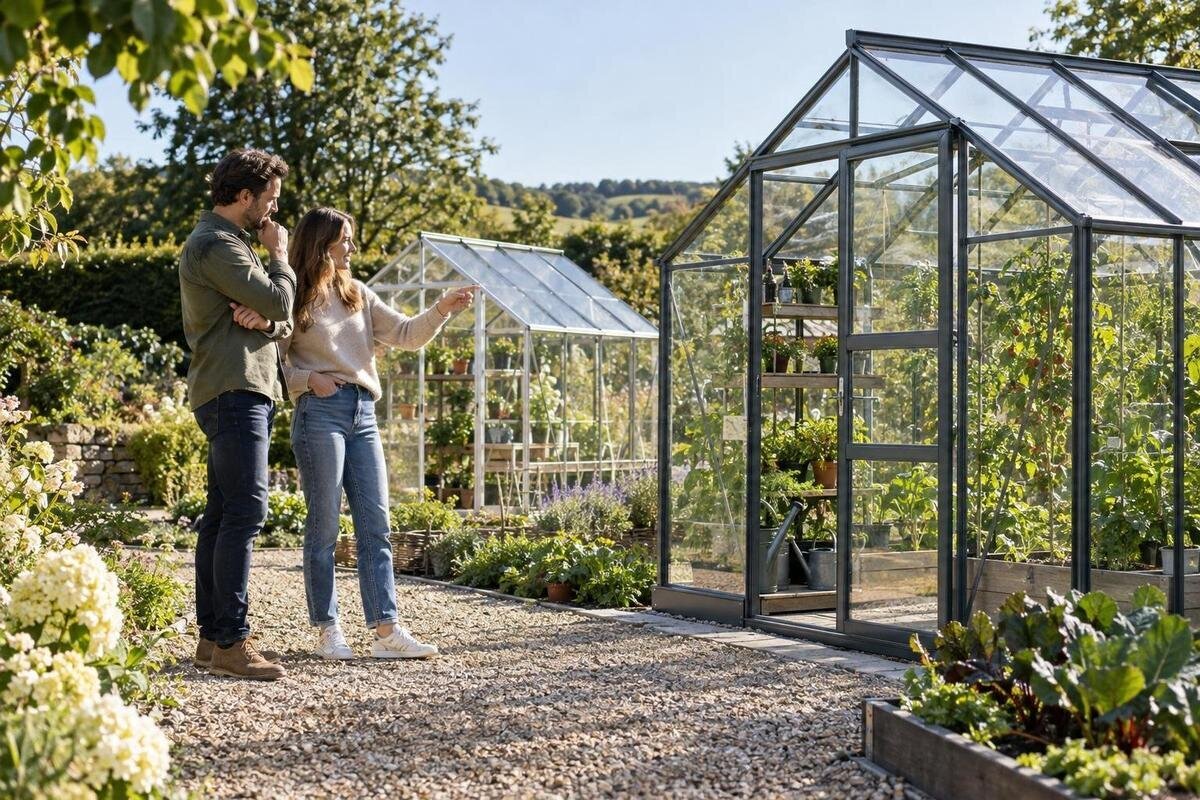
Buying your first greenhouse can feel like a choice between shapes, glazing and model names, but a useful starting point is simpler: decide what you want to grow, then test each option against your garden and the work you are willing to do. A greenhouse that looks spacious in a photo may not leave room for a path or a comfortable working position, while a smaller one may suit a focused growing plan. This guide takes you through the main decisions in order, from purpose and siting to materials, setup and total cost. Use it to build a shortlist, then confirm product-specific details before ordering.
Decide what you want to grow
List the crops or tasks that matter most in your first year: starting seedlings, growing herbs and salad greens, raising warm-season crops or protecting potted plants for part of the year. Then decide which season you want the greenhouse to cover. A structure used mainly in spring and summer has different demands from one expected to hold plants through cold months; winter use can call for environmental equipment and regular management that an enclosure alone does not provide. Keep your priorities to a few real uses rather than a long wish list. They will help you judge how much space and control you need.
Think about your routine as well as your crops. Decide whether you will sow seeds, pot up plants, grow in beds, keep containers or combine those activities; each uses the interior differently. Consider how often you can water, ventilate, tidy and harvest, and whether you want room to work when the weather is unpleasant. A greenhouse that relies on frequent attention or equipment may not suit a low-maintenance plan. Write down non-negotiables, such as space for a work surface or enough headroom for your planned plants. That list gives you a practical test for every style and size.
Choose a site that works in daily use
Walk the garden at different times of day before settling on a location. Note where direct light reaches, when nearby buildings or mature trees cast shade, and how those patterns change over the growing season. Check whether rainwater runs towards the proposed area, whether the ground stays wet and whether the route from the house or gate is clear. These observations cannot establish which greenhouse is technically suitable, but they can rule out inconvenient spots early. Note exposed corners and obstacles that could affect access or maintenance. A spot that looks open from the kitchen window may feel quite different once you use it every day.
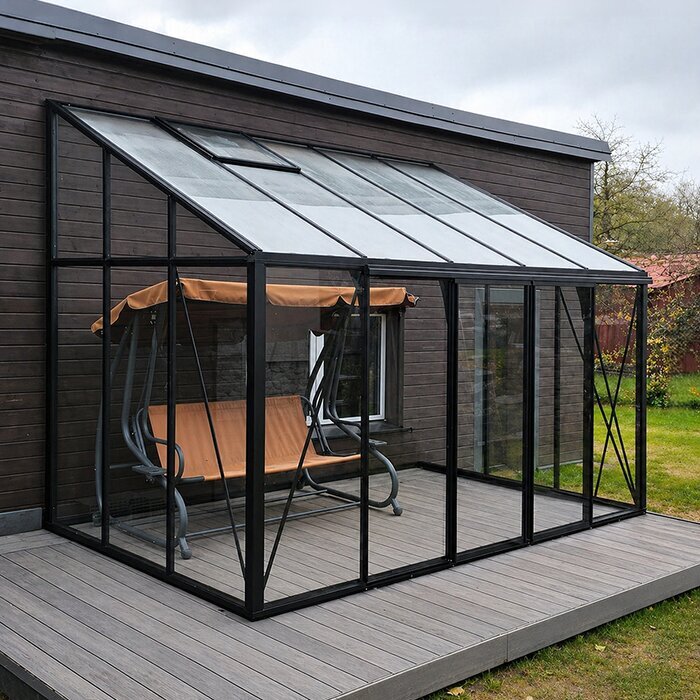
Consider the trip between the entrance and the rest of the garden. Carrying trays, compost and harvested plants is easier when the route is direct and not blocked by stored equipment. A position beside a wall can save open garden area, but the wall may create shade, restrict entrance placement or impose mounting requirements. If you are exploring that form, use an aluminum lean-to greenhouse as a style reference, then check the siting and mounting requirements for any candidate. The product page cannot establish whether your wall, surface or orientation suits an installation. Confirm those points and leave access for cleaning and maintenance.
Compare greenhouse styles for your property
Greenhouses differ in their relationship to a site, not just in appearance. A freestanding model can be positioned away from a building, while a lean-to depends on the wall and installation details. Other outlines may give you a different internal arrangement, but a model name alone does not show how much floor area remains clear. For example, a T-shaped orangery greenhouse is a distinct format to compare with a straightforward rectangular plan. Look for a drawing and stated dimensions to understand the actual footprint, openings and usable area. Do not choose a shape solely because it looks distinctive in a photograph.
Compare each outline with the space around it. A greenhouse that fits on paper still needs practical access at its entrance and enough room for the door to open as specified. Consider whether its position leaves your usual route through the garden intact, but give growing and installation needs priority over appearance. Check where the door, vents and proposed work areas are shown instead of assuming they can be repositioned. If the site is narrow, angled or close to a boundary, a plan view is more useful than a product image. The style should suit both the available space and the way you expect to work.
Size for plants and room to work
Measure the area you can actually use, not just the patch you hope to cover. Separate the greenhouse’s external length and width from its usable interior, and account for the entrance, door movement and a route to reach plants. A raised bed or bench can make a generous footprint feel tight if it leaves no clear path. For a candidate such as Bloomcabin Orangerie, look for stated dimensions and any layout drawing to check the space it occupies and how the interior might work. Keep a record of your site’s available width, length and height limits, as well as any height needed for your planned plants.
Test a few practical arrangements before settling on a size. Mark the proposed outline with string or temporary markers, then walk the route you would use with a tray or watering can. Sketch where benches, pots or beds might go, leaving room to reach plants and clean the glazing. The largest greenhouse that can physically fit is not automatically the right choice: more interior space may mean more assembly, upkeep and cost, while a very small one can restrict the jobs you planned. Decide which dimensions are essential and where you could compromise.
Read the frame and glazing specifications
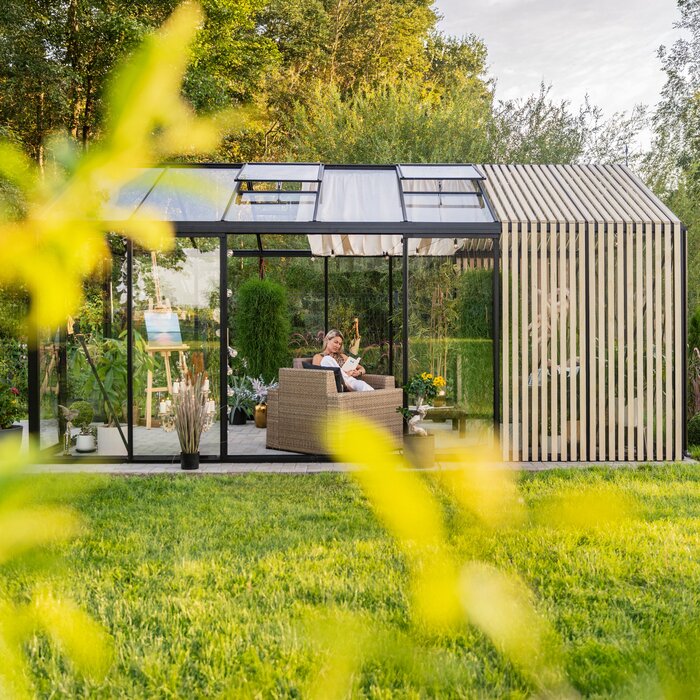
Treat the frame and glazing as a system; a material name is only a starting point. Find out what the frame is made from, how its members and joints are described, whether fixings are supplied and what maintenance the manufacturer expects. A product title such as limited-edition aluminum greenhouse listing identifies an aluminum greenhouse, but it does not establish the frame specification, glazing, assembly details or suitability for your climate. Compare the written product information across your shortlist. If a detail matters and is missing, ask for it rather than drawing conclusions from the photograph or the word aluminum.
For the glazing, identify the exact material and construction, then compare any stated information about light transmission, insulation, care and replacement panels. Glass, polycarbonate and other choices can behave differently, but a general material label does not tell you the performance of a particular product. Ask whether panels are included, how they fit and how replacements can be obtained if one is damaged. Consider what you are comfortable cleaning and maintaining, too. A low purchase price is not a useful comparison if an option’s care or replacement requirements do not fit your plans.
Plan benches, circulation and ventilation
Plan the interior around the tasks you intend to do. Decide whether beds, benches, shelves or containers will take priority, then reserve a route from the entrance to the far end and room to turn or carry items. A generous outside footprint can still offer less usable bench space than expected if the outline interrupts a straight run. For a candidate named Bloomcabin Oasis Pyramid greenhouse, look for a plan or stated interior dimensions; the word pyramid alone cannot tell you how the space is arranged. Think about where you will keep small tools and supplies without narrowing the walkway.
Ventilation and shade are part of how the greenhouse functions, not features to assume will be present. Compare the listed openings, their locations and how they operate; ask whether additional vents, automatic openers or shading products are included, optional or compatible. A photo may show an open window without indicating what comes with the greenhouse. Consider how you will monitor conditions and respond during warm, sunny periods, and whether doors and vents are reachable from your planned layout. If your growing plans depend on particular environmental controls, find out what equipment is available and what its requirements are before choosing.
Match seasonal plans to local exposure
Decide whether you need a seasonal shelter or a space for growing throughout the year. Those are different expectations: a basic greenhouse does not automatically keep conditions suitable through winter, and glazing by itself is not a heating or climate-control plan. If you want to grow or protect plants in colder months, identify the conditions they need and ask the manufacturer about the model’s stated limits and compatible equipment. If your aim is earlier starts or a longer warm-season harvest, say so plainly. You can then compare options without focusing on capabilities you do not need. Do not assume a model name or photograph proves seasonal performance.
Consider the conditions at your own property rather than relying on a broad label such as Canadian climate. Wind exposure, winter snow, freeze-thaw cycles, summer heat and nearby trees vary from site to site. Ask for explicit wind and snow design information for the exact model, along with installation guidance that applies to your location. Do not infer a rating from the frame material or greenhouse shape. If the necessary limits are not available, request written guidance from the seller or manufacturer. For a complicated or exposed site, a qualified local professional can help assess the installation requirements.
Confirm the base and assembly requirements
Before choosing a base, find out what support and anchoring the exact greenhouse requires. A supplied base, a separately sold base and a site foundation are not necessarily the same thing, so check what is included and what surface preparation remains. The title of a Bloomcabin Prestige greenhouse with metal base mentions a metal base, but that wording alone does not settle how it is supplied or what the installation needs. Read the manufacturer’s instructions for your proposed site rather than improvising support details. If the ground is sloped, drainage is difficult or the requirements are unclear, consult a qualified installer before buying.
Think through assembly as part of the purchase. Check what the instructions require, how many people the manufacturer recommends, whether tools or extra materials are needed and whether components can be moved from the delivery point to the site. These are questions for the exact kit, not assumptions to make from a photograph. If you plan to hire help, clarify the scope and cost before the greenhouse arrives. Ask how missing or damaged components are handled and whether replacement glazing or hardware can be ordered later. A realistic setup plan helps prevent delays caused by an unprepared site, unavailable help or an overlooked requirement.
Budget for the complete growing setup
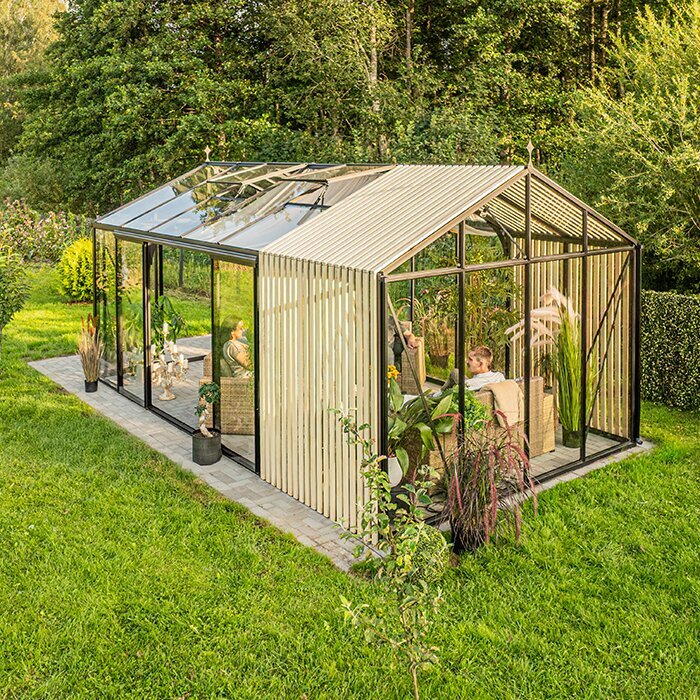
Set an overall budget before comparing models, and separate the greenhouse price from the cost of making it usable. Allow for any site preparation, base or foundation, assembly help, benches, shade, ventilation accessories, watering equipment and any heating or controls your growing plan requires. Add delivery charges and taxes where they apply, and leave room for needs you have not confirmed. When reviewing a candidate such as a T-model orangery greenhouse with wall base, check what the base wording means, whether it is part of the package and whether other site work is separate. Do not assume a pictured bench or accessory is included.
Compare complete packages, not just headline prices. Make a short must-have list and note whether each item is included, optional or not stated: frame, glazing, base, doors, vents, fixings and instructions, as applicable to the model. Check the seller’s current total, delivery scope, assembly arrangement and return terms before committing; none can be inferred from a product name. Keep optional upgrades separate so they do not obscure the initial cost. Decide what can wait, too. A feature that is not essential to your first season may be added later, but only if the manufacturer confirms compatibility and it still fits your budget.
Compare a shortlist on the same criteria
Make a shortlist of two or three candidates and compare them against the same written criteria: growing purpose, site fit, interior layout, style, frame and glazing, ventilation, weather information, base, assembly and full cost. A named option such as Classic Plus 385 belongs on the list only if its published details answer your requirements; the model name does not establish its dimensions or features. Record confirmed facts separately from unanswered questions, so a missing specification cannot be mistaken for a positive. This makes it easier to see whether a distinctive shape or a low initial price is overshadowing practical issues.
Before ordering, resolve the points that could change your decision: exact model and components, dimensions and entrance arrangement, material and glazing descriptions, site and anchoring requirements, and the total payable amount. Ask concise questions tied to your shortlist and keep the replies with the product information. If a must-have remains unknown, pause or compare another option rather than assume the answer. Then choose a greenhouse you can fit, set up and care for within your budget and routine. You do not need to find a perfect greenhouse; you need a clearly understood option that meets the priorities you set at the beginning.
Frequently asked questions
How big should my first greenhouse be?
Start with what you want to grow and how you will arrange beds, benches or containers. Allow for a usable route inside, the entrance and room to reach plants; then check the site’s limits. There is no single size that suits every garden, and choosing the largest footprint available is not automatically the best option.
Is a lean-to or freestanding greenhouse better?
Neither style is automatically better. A lean-to needs a suitable location beside a wall and must meet the manufacturer’s mounting requirements. A freestanding greenhouse offers a different siting choice but still needs a suitable space and installation plan. Compare both against your light, access, garden layout and the exact product instructions.
What greenhouse materials should I compare?
Compare the stated frame and glazing materials, their specifications, maintenance requirements and how replacement parts can be obtained. Names such as aluminum, glass or polycarbonate do not establish how a particular model performs. Look for product-specific information on the frame, panels and fixings, and ask about details that matter to your growing plans.
Does a greenhouse need a separate base or foundation?
It depends on the greenhouse design and the site. Find out what base, support and anchoring the manufacturer requires, and what is included in the package. A base mentioned in a product title does not answer every installation question. If you are unsure about the site or instructions, ask a qualified installer.
Can I use a greenhouse through winter in Canada?
That depends on the exact greenhouse, your local conditions and what you intend to grow. Do not assume an enclosure alone will provide suitable winter conditions. Ask the manufacturer about the model’s stated weather limits and compatible equipment, and consider the ongoing work involved in maintaining the conditions your plants need.
A sound first greenhouse choice supports a growing routine you can maintain and fits the space and conditions at your property. Keep your priorities in view, compare actual product details rather than names or photographs, and resolve any unanswered must-haves before committing. When the growing plan, installation and total cost all make sense together, you have a clear basis for choosing.
