
Can Your Home’s Electrical Supply Support a Sauna?
Sauna electrical planning
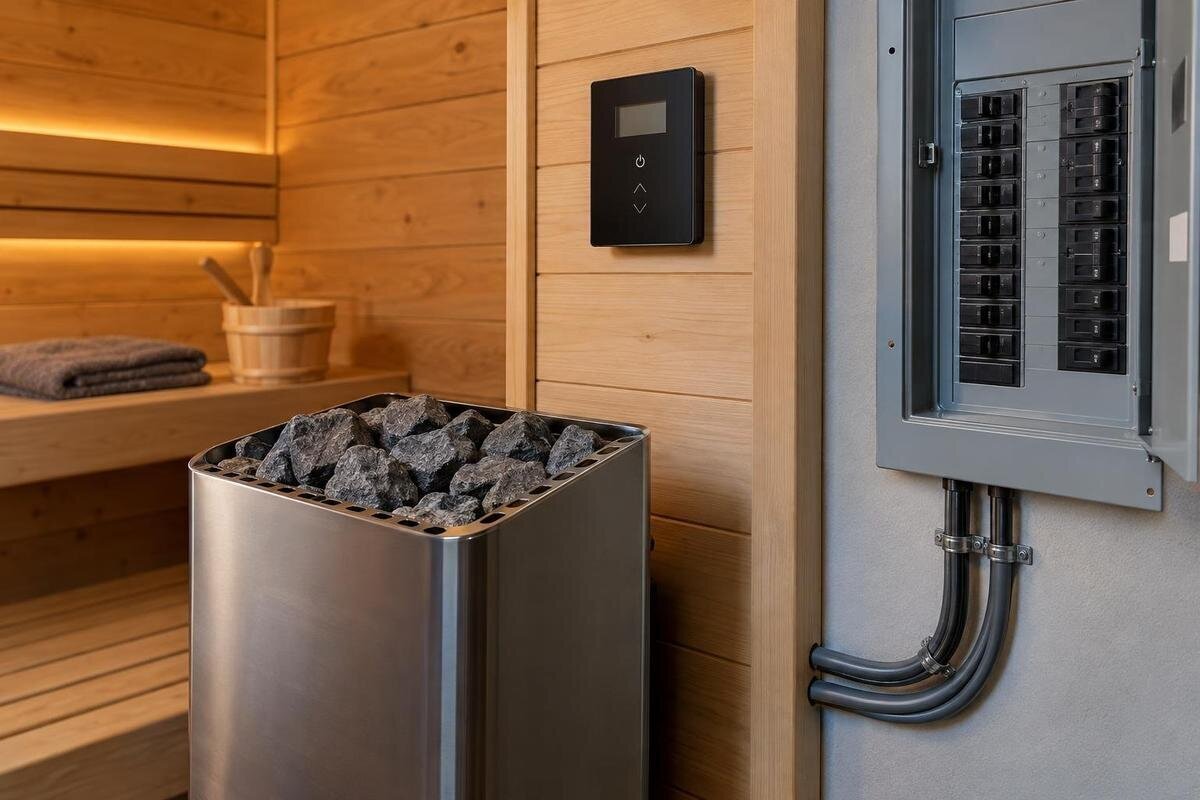
Electrical planning belongs near the beginning of sauna selection, while you can still compare options. A cabin name or listed area does not tell you whether your home’s supply can serve a particular heater. The answer depends on the exact heater and controls, the home’s existing and planned electrical loads, and the proposed installation location. Gather property records and manufacturer documents for the precise configuration, then have a qualified electrician assess them together. This guide covers what to collect and ask; it is not a wiring guide or a way to approve a setup by inspection alone.
Why electrical planning should come before ordering
Arrange the discussion before ordering the sauna or booking electrical work. An electrician can assess a defined proposal: the cabin or package, exact heater model, controls and intended location. A broad question such as “Can my home run a sauna?” leaves key variables unanswered and may invite an answer based on assumptions. Ask what is needed for an initial review and whether a site visit is required before a final recommendation. If you are comparing heater configurations, have each assessed separately; an answer about one should not be treated as approval of another. Keeping the purchase decision provisional leaves room to consider a different manufacturer-approved configuration if a mismatch emerges.
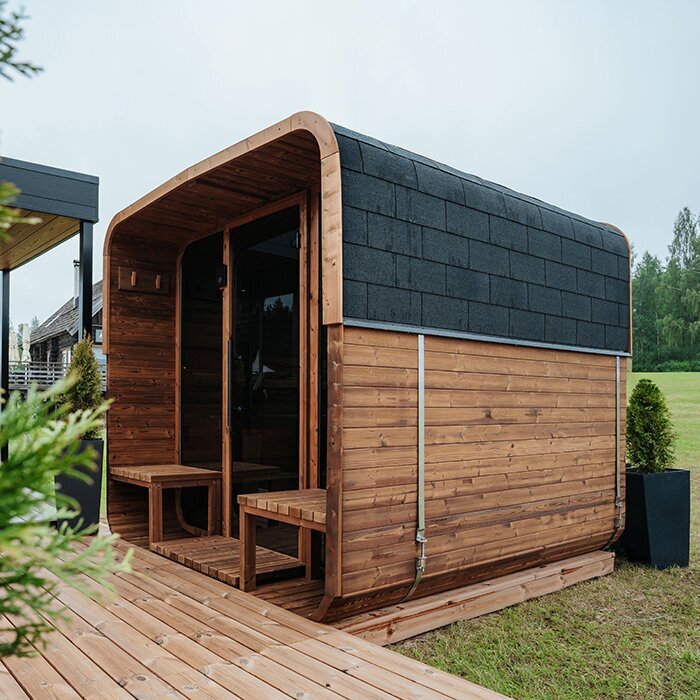
Use exact product identity as a starting point. The listing for Sauna HC-150 gives a listed area of 2.97 m², useful for distinguishing a candidate but not for establishing heater input, supply type or included equipment. Write down the model and package configuration, then mark each heater detail as confirmed or unknown. If the information you have does not identify a heater, ask the retailer or manufacturer for matching data. The assessment applies to the equipment that will actually be installed, not a product category or a guess based on cabin size. If you have not chosen a heater yet, say so rather than estimating its requirements from the cabin area.
The cabin and heater have different specifications
Treat the cabin and heater as separate specifications, even when they are sold together. The cabin description identifies the structure; the heater’s nameplate and manufacturer’s instructions establish its electrical requirements. Package contents may differ, so confirm whether the heater, control equipment and associated components are included, selected separately or still undecided. Ask for the exact make and model of each electrical component in the proposed setup, and keep the answer with the sales paperwork. If more than one package option is offered, record the combination you are actually considering rather than relying on a general product-family name.
Do not substitute cabin area for this information. The HC-225 Thermowood Barrel Sauna is listed with an area of 4.4 m²; that figure is not a heater rating, voltage or circuit requirement. When comparing offers, record the cabin model, proposed heater and controls on separate lines. This makes it easier to distinguish a change in the cabin from a change in the electrical equipment. Keep alternative packages in separate entries rather than combining their details into one description. If a sales quote names only the cabin, ask which electrical components, if any, that particular quote covers. Give the electrician the resulting configuration, with unanswered questions clearly marked. This keeps a cabin comparison useful without presenting it as an electrical specification.
Get documents for the exact heater and controls
Request the manufacturer’s installation manual and technical data for the exact heater model and configuration under consideration. The electrician needs the ratings and supply characteristics stated by the manufacturer, along with any requirements for the connection, protection and control equipment. These are details to check against the property’s system, not values for a homeowner to calculate or install. A marketing summary may omit information that appears in the technical documents. If a product is offered in several variants, ask which documentation matches the unit and controls in the proposed package, and keep the model identifiers with the paperwork.
Keep cabin documents and heater documents paired but distinct. For Sauna N-210, for example, the cabin’s identity does not by itself identify which heater would be installed. Put the cabin model on your cover note, then attach heater paperwork when the intended pairing is clear; label unresolved choices rather than treating a manual for a similar model as equivalent. This helps the electrician spot missing ratings, mismatched versions or uncertainty about included equipment. If the supplier cannot provide the heater requirements, hold off on an electrical decision until the exact documentation is available.
Collect the home’s electrical information
Collect information from existing records; do not open or handle electrical equipment. Useful starting points may include service and panel documents, a prior electrical assessment, the panel schedule and labels visible without removing a cover. Note what each record actually says, when it was prepared and anything you cannot confirm. Keep the original wording alongside your notes so a summary does not accidentally replace a rating or qualification. If records disagree, include both and flag the discrepancy for the electrician rather than deciding which is correct. Separate records of completed work from old estimates or proposals, and identify anything you know has changed since a record was prepared. Do not infer a panel rating from its appearance or an unfilled breaker position. A utility bill records energy use over a billing period, but does not by itself show the service’s available capacity when several appliances may be operating. Mention any known panel upgrades or subpanels, but only if you have reliable information about them.
Give the electrician the property address, intended sauna location and records, and let them verify the service and panel as needed. Put the exact cabin candidate, such as Sauna N-250, on the request so the review has a defined scope; attach heater data separately if it is known. If information is missing, say so instead of filling in a guess. Do not remove a panel cover, test conductors or try to read internal components. If you have a photograph, use only a safe exterior view of labels already visible without opening equipment, and let the professional decide whether an on-site check is needed.
Explain where the sauna will be installed
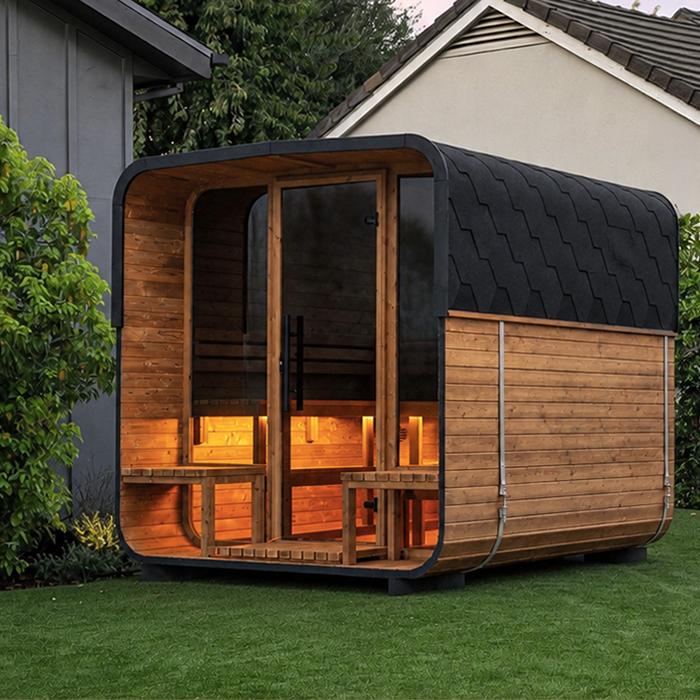
Describe where the sauna is intended to go, not only which model you prefer. Note whether the proposed installation is indoors or outdoors, where the heater would sit, and the general relationship between the sauna, the home’s panel and any outbuilding. A simple site sketch can mark these locations and obvious access constraints; it need not prescribe a cable route. Mention any physical feature that could affect access or the proposed position. A qualified electrician can determine what must be inspected and where equipment may be located. Do not choose a wiring path, specify protective equipment or assume an existing outlet will serve the heater.
Location may affect routing and the equipment or protection that must be checked against manufacturer instructions and applicable local requirements. A product page is not an installation drawing: for Sauna LC-260, confirm the exact product information and proposed siting rather than assuming the listing settles the electrical arrangement. Tell the electrician about weather exposure, approximate separation from the panel and physical constraints, and ask which details need an on-site check. A product photograph or sauna name alone does not confirm suitability for a particular location.
List current and planned electrical loads
Make a list of major electrical equipment already in the home and anything planned. Depending on the property, that might include an electric vehicle charger, hot tub, heat pump, electric range, dryer, electric water heating, space heating, workshop equipment or a separate building. Note what is installed, what is only planned, and any relevant pattern of simultaneous use. You do not need to total the loads yourself or decide which combination matters; provide a complete description and let the electrician assess demand using the appropriate method. Include future plans that could change the answer after the sauna is installed.
Place the proposed heater on that list too. A cabin identity such as Sauna HCF-300 helps label the proposal, but the heater’s exact data is what the electrician must assess. For each planned addition, distinguish a selected appliance from a general intention: a charger already specified is different information from a possible future vehicle purchase. Include model details you already have, without guessing at ratings for equipment you have not chosen. Describe normal household use in plain language, including equipment that could operate while the sauna is in use. If you are unsure about timing or frequency, say so. Do not promise to avoid using other appliances simply to obtain a favourable preliminary answer. Instead, ask the electrician how uncertain future plans affect the assessment and which choices would require another review. This gives the professional a usable account of household plans without turning your list into a homeowner’s load calculation.
Check supply compatibility against the heater requirements
Compatibility involves more than whether a plug fits. The manufacturer may specify supply characteristics, such as voltage or phase, and a particular control arrangement; the electrician verifies what the property actually has and whether it matches those requirements. Do not infer compatibility from a familiar household receptacle, the home’s age or a product photograph. Nor should you assume that a unit used elsewhere can be connected the same way at your address. Ask the electrician to identify the exact requirements being checked and explain any mismatch before you buy. No general online rule can confirm the result for your property.
Cabin area cannot resolve that comparison. The listings for HCF-300 and Sauna LCF-300 each identify an area of 6.89 m²; matching listed areas do not establish identical heaters, controls or electrical requirements. More broadly, do not transfer one model’s specifications to another simply because their names or footprints are similar. Ask the electrician to name the heater and control configuration reviewed in their written conclusion. If the product selection changes later, that record makes clear what needs to be checked again.
Options if the proposed setup is not compatible
An assessment may confirm that the proposed arrangement can be served as specified, identify missing information or show that changes need to be considered. Depending on the findings, an electrician may discuss manufacturer-approved equipment alternatives, electrical alterations, a service change or another approach suited to the property. These are possibilities, not remedies that can be prescribed from a generic article; the right option depends on the actual supply, household loads and equipment instructions. Ask what each option changes, what further assessment it requires and whether it remains within the manufacturer’s requirements.
A smaller-looking cabin is not an automatic capacity solution. The listing for Sauna S-140 gives an area of 1.93 m², but that figure alone does not disclose the heater’s requirements or prove the home can serve it. Do not substitute an unapproved heater, extension cord, adapter or improvised operating routine to make a preferred model work. If you consider another cabin or heater, obtain its exact documentation and have the electrician review the new combination before ordering or scheduling electrical work. A compact footprint is not electrical evidence.
What to ask the electrician
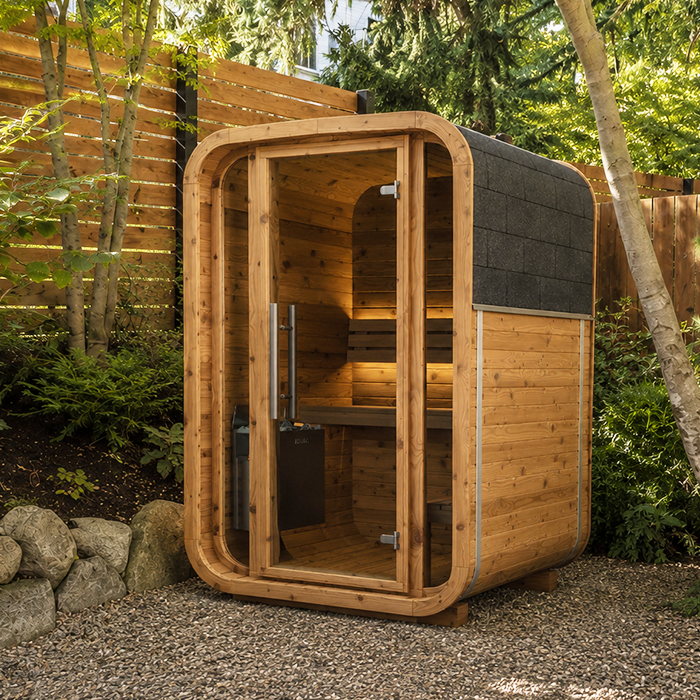
Ask the electrician to explain what has been verified and what remains uncertain. A useful review connects the exact heater and control documents with the home’s actual supply, existing loads and site conditions rather than relying on a single panel label. Ask whether an on-site assessment is needed, what assumptions were used, which records are missing and which installation requirements affect the proposal. If the heater is not yet chosen, ask whether a preliminary comparison would be useful or whether exact candidate documents are needed first. Make sure the scope and limitations of the review are clear.
Request a written summary naming the heater configuration reviewed, the conclusion about compatibility, any work or further checks identified, and items outside the scope. Ask whether utility coordination or another professional may be needed for this particular property; do not assume every project follows the same process. The electrician can identify local approval or inspection steps that apply, rather than relying on guidance for another area. A concise explanation of assumptions is more useful than a bare yes or no, especially if you later compare another model or quote.
Keep the decision tied to the exact configuration
Before accepting an electrical quote or finalizing the sauna choice, check that everyone means the same heater, controls, supply information and location. Compare scopes rather than labels such as “sauna connection”: one estimate may include a site assessment or changes to the property’s supply, while another may assume existing capacity. Ask which work is included, which is excluded and which details are provisional. Keep the manufacturer’s manual, electrician’s review and selected product configuration together so an unresolved assumption does not disappear when you move from planning to ordering.
Return to the electrician if the heater, control unit, package, location or household electrical plans change. A late substitution can alter the information behind an earlier assessment; a cabin name alone cannot carry a compatibility decision over to different equipment. When requesting a revision, identify the specific change and attach the replacement information rather than forwarding several versions without explanation. Keep a dated record of the selected configuration so the retailer’s order and the electrician’s scope can be compared against the same details. Mark superseded quotes or preliminary selections clearly, while retaining them if they help explain a decision. After the work, keep the final model identifiers and manufacturer paperwork with the home’s records, and ask what other documents should be retained. Separate the final installation record from early comparisons so future service or a later change can begin with the equipment actually installed.
Frequently asked questions
Can a sauna’s listed area tell me whether my electrical supply is adequate?
No. An area measurement helps identify a cabin, but it does not state the heater’s electrical requirements. The electrician needs details for the exact heater and controls, plus information about the home’s supply and other loads.
Does an empty breaker position mean there is capacity for a sauna?
Not necessarily. An open position does not establish how much capacity is available for a new heater. The electrician must assess the home’s actual supply, existing equipment and the proposed sauna requirements.
What if I can’t find my home’s service or panel information?
Tell the electrician what records you do have and what is missing. You can note labels that are visible without opening equipment, but do not remove a panel cover or try to inspect its internal components. The electrician can verify the details as needed.
Can I use an ordinary outlet or an extension cord for a sauna heater?
Do not assume that a plug fitting into an outlet, or an extension cord reaching the location, makes the connection suitable. Follow the exact manufacturer requirements and have a qualified electrician confirm compatibility. Don’t use adapters or extension cords as a workaround.
Will my home need an electrical service upgrade?
That cannot be determined from the sauna’s size or the home’s age alone. The electrician needs to assess the exact heater, the property’s supply, other electrical loads and the proposed location before advising whether any changes are needed.
There is no reliable shortcut from cabin size or panel appearance to a yes-or-no answer. The decision depends on the exact heater and controls, the home’s actual supply and other loads, and the proposed location. Bring those details together for a qualified electrician before finalizing the sauna configuration. If any part of the proposal changes, have the revised combination checked rather than relying on an earlier assessment.
