
Choosing a Greenhouse for a Windy Garden: Site and Specifications
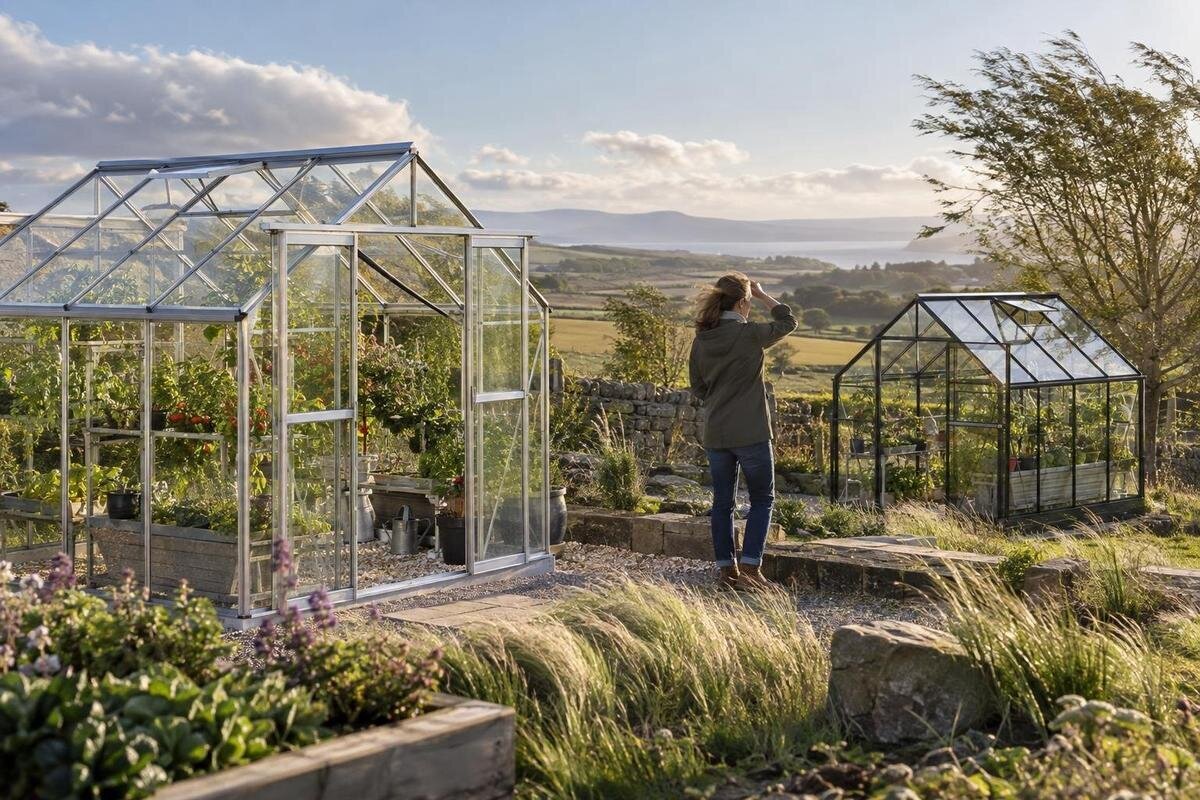
Greenhouse buying guide
Buying a greenhouse for a windy garden starts with the site, not with a claim that one shape or material is universally windproof. Gusts can behave differently across a yard: an open lawn, a passage between buildings and a corner behind a hedge may have distinct exposure. Before comparing models, note where the wind comes from, what shelter is reliable and how the proposed footprint fits. Then check whether the manufacturer’s documented frame, anchoring and glazing conditions apply to your site and the exact configuration you plan to order. This guide focuses on that match. Product names and photographs can help you identify a style, but they do not establish a wind rating, anchor capacity or compatibility with your foundation. A useful buying decision combines repeated site observations, complete specifications and clear answers about assembly and support. Where suitability depends on a wall, soil or local exposure, ask a qualified installer or other relevant professional rather than guessing.
Map wind at the proposed greenhouse site
Visit each candidate position during more than one windy period, if practical. Record the direction gusts come from, how long they last and whether they reach the spot openly, funnel between buildings or change after crossing a hedge or fence. A forecast or nearby weather station offers broad context, but it cannot describe every gust at greenhouse height in your yard. A location that feels calm with wind from one direction may be exposed when it shifts, so compare different conditions instead of relying on a single memorable storm. If possible, repeat observations at different times of year.
Draw a simple site plan and mark the house, garage, fences, trees, gates, paths and possible greenhouse footprint. Add arrows for observed directions and brief notes such as “open approach” or “gusts around corner.” Include the likely door side and routes you need for access; a sheltered corner is not useful if it leaves no room to enter or maintain the greenhouse. Observe from a safe place and do not go into hazardous weather to take measurements. The record is a practical description for your supplier or installer, not an engineering survey or a way to calculate a design wind load.
Assess shelter and nearby obstacles
Look at each barrier as a possible influence, not a guarantee. A hedge, fence or building may reduce direct exposure from one direction, but the effect depends on its height, gaps, density, distance and position. Wind can pass around or over an obstacle, and an opening between structures may expose a spot differently from the open yard. Solid fencing and a dense hedge are not interchangeable. Avoid applying a universal setback; interpret the layout in light of the wind directions you observed, and note what is present now rather than assuming it will remain unchanged.
Ask how dependable the shelter will remain. A deciduous hedge changes with the seasons, while a growing hedge may alter conditions over time; nearby trees also bring falling-branch and maintenance considerations. A shed that may be removed should not count as permanent protection. Keep room to reach doors, vents and panels for ordinary upkeep, and do not trade exposure for a position directly below branches without considering that risk. If shelter is central to the decision, share your site sketch with a qualified local installer and ask whether the proposed position needs a more specific assessment.
Wall-adjacent designs and their support requirements
A wall-adjacent greenhouse may seem appealing when a building appears to block wind, but the wall changes only part of the site’s exposure. The ends, roofline and open side may remain exposed, and gusts can behave differently beside a building. Check how the proposed orientation relates to the directions on your site sketch; do not assume that a sheltered wall eliminates the need for wind specifications. An attached format also raises different questions about the supporting surface and connections than a freestanding model.
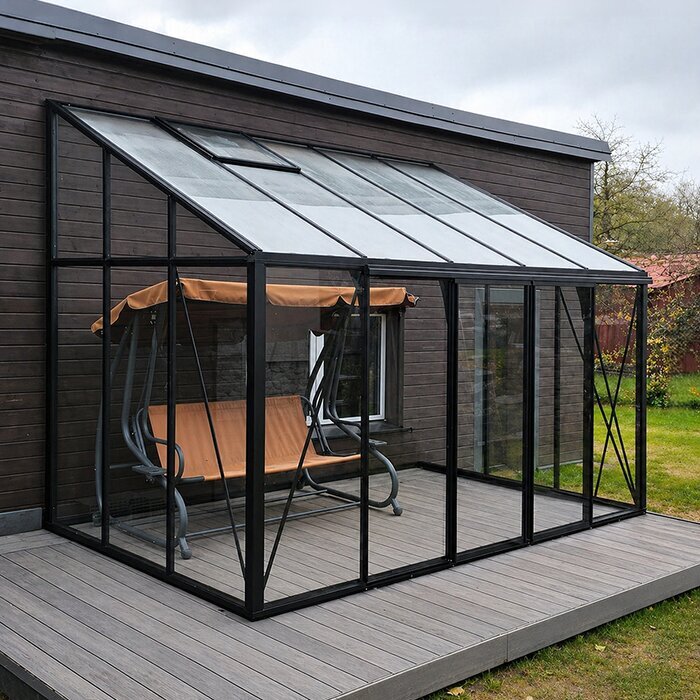
For a lean-to format, ask exactly which type of wall or support the manufacturer permits, how the greenhouse is attached, what base and anchors are required, and whether the building surface needs assessment. Do not treat a fence, shed or house wall as suitable without confirmation. The page for an aluminum lean-to greenhouse identifies a style to examine, but its title alone says nothing about wind performance or compatibility with your wall. Confirm who is responsible for the connection and any sealing, and have a qualified installer review it if the requirements are unclear.
How shape relates to wind specifications
Shape helps you compare footprints and access, but a silhouette does not establish wind performance. Overall height, width, roof form, exposed sides, doors and vents all contribute to the configuration described by the manufacturer. Avoid ranking designs from a photo or assuming that a lower profile, pointed roof or heavier-looking frame must perform better. A change in dimensions or openings can make a similar-looking model a different comparison. Follow manufacturer guidance on orientation and clearance instead of turning the greenhouse to meet the wind by guesswork.
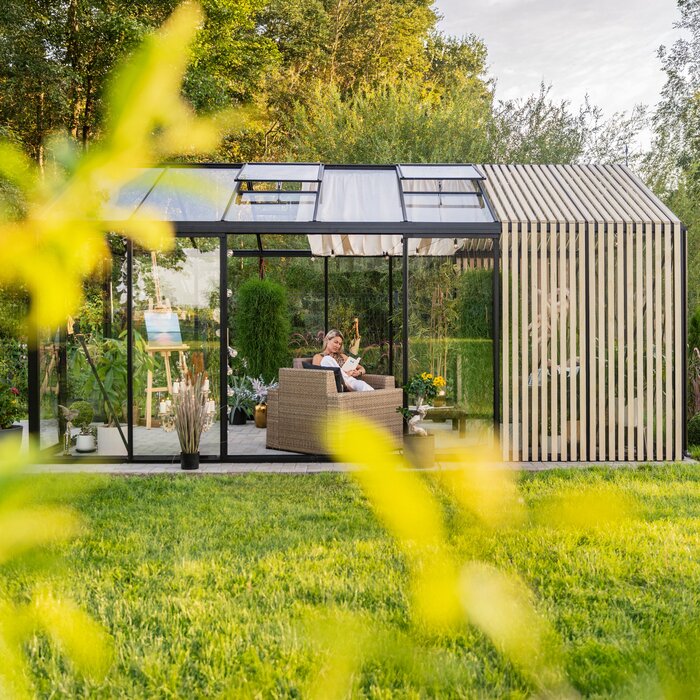
Use the same evidence check for every shape. Treat the Bloomcabin Oasis Pyramid Greenhouse as a product name, not a wind-performance statement: look for specifications that apply to the complete model, including its required anchoring and glazing. Compare those details with the exposure notes from your garden. If the documentation describes only a component or a particular test arrangement, ask whether it represents the greenhouse as you intend to order and install it. Keep any figure that cannot be tied to the exact configuration marked as unanswered.
Frame strength needs more than a material label
A frame-material label is only one detail. For a windy site, ask for the manufacturer’s stated wind conditions for the complete greenhouse and check whether the documentation identifies the frame members, connection points, bracing and exact model or options covered. A general description such as “strong frame” is not comparable with a defined specification. Do not infer capacity from appearance, material name, price or model family; none tells you how the joints and panels work together in a particular installation. Confirm whether any separately sold components are needed for the stated configuration.
If a wind figure is supplied, ask what it represents: a test result, design condition or another measure. Check the units and basis, which assembly was considered, and what assumptions apply to anchoring, exposure and the position of doors or vents. Ask whether the figure refers to gusts or another stated condition, and whether the same basis is used for models you are comparing. The title limited-edition aluminum greenhouse is an identification label, not technical evidence; request the relevant specification sheet or written clarification. Do not turn a figure into a site-specific engineering calculation yourself.
Anchoring, base and foundation requirements
Anchoring is part of a system: the frame connects to its base, and the base is fixed to an appropriate supporting surface. Compare the manufacturer’s instructions for those connections, not just whether a product title mentions a base. Ask whether anchors are included, what foundation or ground conditions are required, which parts must be purchased separately and whether the stated wind performance assumes a particular anchoring arrangement. Confirm whether the specification refers to the same base shown for the exact model. A generic stake or a base on its own should not be assumed to secure a greenhouse in every setting.
Soil, paving, an existing slab and a building wall are different supports; suitability depends on the manufacturer’s approved method and the specific installation. Do not choose anchor sizes or modify the base by guesswork. The Prestige greenhouse listing with a metal base is a cue to check the base details, not proof of anchor capacity. Ask for the base-to-frame and base-to-ground requirements in writing, and do not treat a product image as a foundation plan. If the connection or proposed foundation is unclear, have a qualified installer assess it before ordering or preparing the site.
Check the glazing, doors and vents
Glazing and openings are part of the wind specification, not details to compare only by appearance. For the exact model, identify the glazing type and thickness, how its edges are retained, how panels are secured, and whether the wind information applies to that glazing option. Ask about replacement panels and components as a practical ownership question, but do not assume that similar-looking materials have the same performance. A missing panel specification or a phrase such as “weather resistant” does not explain how the assembled greenhouse is rated. Ask what maintenance the manufacturer recommends for panels and fixings.
Find out how doors and vents are meant to be secured, and what position is required for any wind condition the manufacturer publishes. Confirm whether latches or other parts are included in the stated configuration and whether the instructions describe precautions before high winds. When reviewing a T-model orangery greenhouse listing, check its stated glazing and opening details rather than assuming them from the style name; request clarification for the exact option. The same questions apply to features shown in product photos: rely on the written configuration and follow the supplied operating instructions.
Measure footprint and access before comparing sizes
Measure the proposed location before comparing listed dimensions. Mark the greenhouse’s outside footprint and leave workable access for doors, vents, cleaning and repair; include room for the base and any clearance the supplier requires. Check the route for bringing materials to the site and whether gates, fences or planted beds could restrict assembly. A greenhouse may fit on a plan but still be awkward to reach or maintain if a door opens into a barrier or a path is too narrow. Record the clear space to nearby walls and fences, then ask whether the manufacturer specifies a minimum.
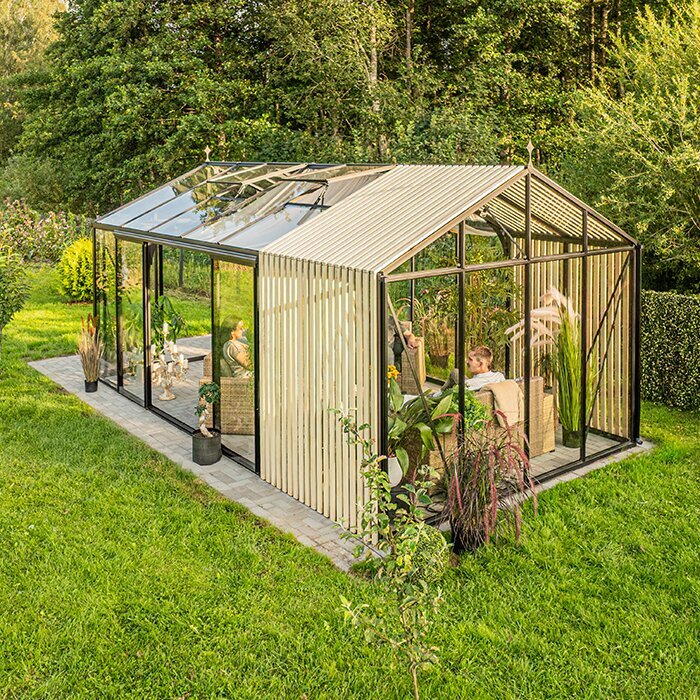
Ask for dimensions of the complete unit and base, not just the growing area, and check the height and width where they affect access and placement. Do not read dimensions into a model number or assume product photography is to scale. A page for Bloomcabin Orangerie can be compared with your measured sketch once its documented footprint is clear; the name does not tell you how much room the structure occupies. If a crucial dimension is missing, ask before ordering rather than designing the site around an estimate.
Assembly and delivery details to settle before ordering
Before buying, ask for the assembly manual and confirm that its named model, glazing and base options match the listing. Ask whether any stated wind performance applies only to a particular configuration or to assembly completed according to the supplied instructions. Find out whether the manual specifies particular skills, equipment or assistance; do not improvise structural changes to make a kit fit the site. If the instructions do not explain an exposed location or an anchoring requirement, seek clarification before installation rather than relying on a guess.
Check delivery access and order contents: where parts can be received and stored safely, what is included, and what must be purchased separately. Keep the product page, technical documents and supplier’s answers together so the installer can match the shipment to the intended configuration. When comparing the Classic Plus 385 listing with other options, record the exact variant and included components rather than treating the name or catalogue photo as a parts list. Ask how to identify replacement glazing, and read the written return and warranty terms, including any installation conditions, before ordering.
Use a written comparison to choose
Make a simple table with one column per greenhouse and rows for site exposure, manufacturer’s wind information, frame and connection details, anchoring and foundation, glazing and openings, dimensions, assembly, included parts and unanswered questions. Mark a specification “not provided” rather than filling it in from a picture, model number or similar product. Separate written details from assumptions, and note when two advertised figures use different conditions. This makes the comparison more useful than scoring options only by shape or a broad marketing description.
Before ordering, describe the proposed position to the supplier and ask whether the stated conditions and installation method cover it. If a model is attached or includes a named wall base, confirm the required connections and supporting surface for that exact configuration. For example, evaluate the T-model greenhouse with wall base against its own written instructions rather than inferring requirements from its title. Bring unresolved foundation, wall or exposure questions to a qualified local installer. Choose when the complete specification—not a single reassuring feature—fits the site and intended placement.
Frequently asked questions
Will a hedge or fence protect a greenhouse from wind?
It may reduce direct exposure from some directions, but shelter depends on the barrier’s height, gaps, distance and seasonal changes. Wind can pass around or over it, so a hedge or fence is not a substitute for a greenhouse’s stated wind conditions. Observe the proposed location in different conditions and ask how that exposure applies to the model you are considering.
Is an aluminum frame automatically the better choice?
No. A material name alone does not describe frame profiles, joints, bracing, glazing or how the base connects to the supporting surface. Compare the manufacturer’s information for the complete greenhouse and the exact installation. Do not infer strength from a product title or appearance.
Is a smaller greenhouse safer in a windy garden?
Not necessarily. Size and shape affect the configuration being assessed, but they do not establish how it performs. Ask for specifications that apply to the exact model and its required anchoring and glazing. Choose dimensions that fit your site, then check the manufacturer’s guidance for that configuration.
What wind rating should I look for?
There is no single number to choose without considering your site and the conditions the figure represents. Ask whether it is a test result, design condition or another measure, and which assembly, anchoring and exposure it assumes. Compare figures only when their basis is clear, and ask a qualified professional for site-specific advice if needed.
Can I place a greenhouse against my house for shelter?
A nearby wall may change wind exposure, but it does not automatically make a location suitable or remove the need for wind specifications. For an attached design, confirm the permitted wall, attachment method, base and anchors with the manufacturer. Have an installer assess the proposed connection if its requirements or the supporting surface are unclear.
For a windy garden, the best shortlist is not the one with the boldest product description or most appealing silhouette. It is the one whose stated wind conditions, frame and panel connections, anchoring, base and installation assumptions can be matched to the place you assessed. Treat unanswered details as genuine unknowns, and resolve wall or foundation questions before ordering. That leaves you choosing a greenhouse for the site you have, rather than for an idealized picture of a sheltered garden.
