
What Affects Outdoor Sauna Warm-Up Time?
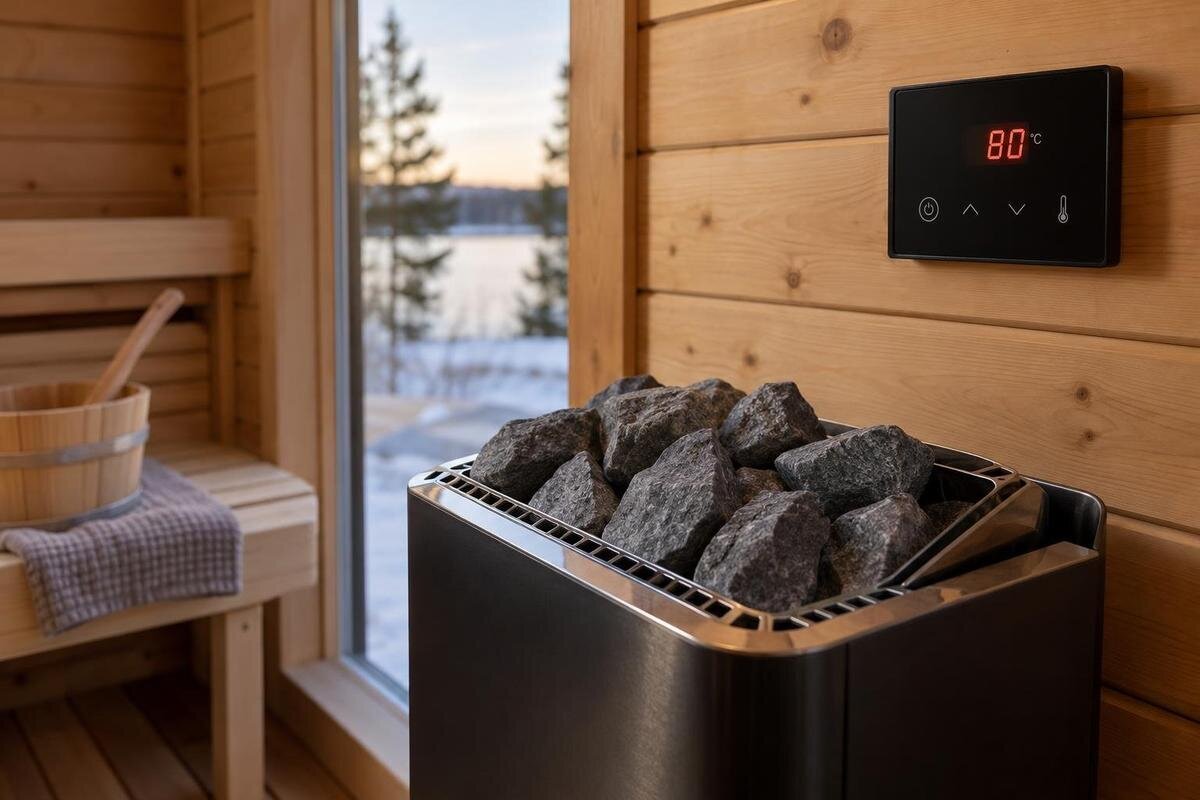
Outdoor sauna heating
Outdoor sauna warm-up time is often presented as one number, but that number describes a particular run, not every use of the cabin. The result changes with the sauna’s starting temperature, outdoor weather, heater setup and the temperature chosen as the endpoint. To judge a measured time fairly, look for the conditions and method beside it: what was warm or cold at the start, where the reading came from and exactly when the timer stopped.
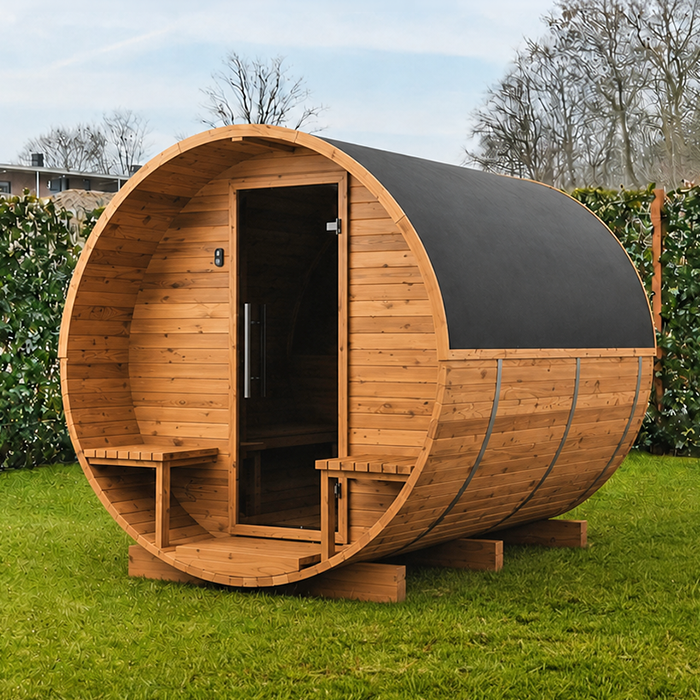
Define the start and end of the warm-up
A warm-up time is an elapsed measurement, so both its start and finish need definitions. For a repeatable test, start the clock at the same event each time—usually when the heater is switched on, unless preparation is deliberately included—and stop it when a sensor at a stated location first reaches the chosen target. A report may instead wait until the reading stays at or above that target for a specified period. Those are different outcomes: a momentary threshold crossing is not the same as a stable reading, and a report should not hide the distinction behind the word “ready.” For heaters with a start-up phase, state whether that phase counts toward the result.
Choose and publish the target before the run, in °C, and use the same target for each comparison. It is a measurement endpoint, not a universal comfort recommendation. The heater controller’s setting is not automatically the same as air temperature at a bench or another sensor point, since the controller and measuring thermometer may be in different places. Write down which actual reading stops the clock; if you use the controller display instead of a separate thermometer, say so. A lower endpoint and a higher one are not the same test. Identify the target even when it comes from a manual or test protocol.
Measure the sauna’s starting temperature
Outside temperature is not the same as the sauna’s starting temperature. A cabin may still be warm after previous use, or its walls and benches may have cooled during a long idle period even if the day has since warmed. Record the air temperature inside the sauna before heating and the outdoor reading near the cabin at that same time; note how long it had been unused, if known. An internal air reading does not describe every surface, but it gives a clear starting reference when taken consistently. When comparing a test with the Thermowood Barrel Sauna S-140 listing, which gives 1.93 m², keep the product details separate from the starting readings. Put the readings at the beginning of the test log, before the elapsed-time entries. Also distinguish a temperature measured immediately before switch-on from an earlier reading taken during preparation, so readers know which value describes the start.
Show starting values beside every measured duration, not in a general description that could refer to another run. If one test begins at 12 °C inside and 8 °C outside while another begins at 2 °C inside and −5 °C outside, those are plainly different starting conditions even if the target and hardware match. This pair is a hypothetical illustration, not reported test data. Match the initial cabin temperature as closely as practical, or disclose the difference and avoid treating the elapsed times as a direct model comparison. There is no sound minute-per-degree correction to apply without evidence from tests of that setup.
Record weather at the sauna
Outdoor temperature and exposure can matter after the clock starts. Cold air, wind, precipitation and direct sun can change the conditions around an outdoor cabin; the effect depends on the enclosure and site, so there is no single weather correction for every sauna. Record an outdoor reading near the cabin and note conditions during the test, including wind or direct sun when relevant. A forecast or the daily high from a distant town is not a substitute for an on-site reading. If the weather shifts substantially during a run, record the change rather than reporting only the starting conditions.
Repeat tests at the same location and exposure where possible. If a run is repeated on another day, record what changed instead of describing both days simply as “cold” or “mild.” For a report about the Thermowood Barrel Sauna HC-150, listed at 2.97 m², put the site and weather details alongside the model identification. Include the date and time so that notes about sunshine, wind or a weather change belong to a particular run rather than to the site in general. When reading results from different locations, distinguish a recorded outdoor temperature from a description of exposure: matching temperatures do not establish matching conditions. If one report describes a sheltered site and another gives no exposure details, retain that difference in the comparison. Do not fill in missing weather information from the product photograph or assume that all tests of the same model took place at the same site.
Cabin size and heat loss affect the result
A sauna’s volume, construction and air leakage all affect the heating task. A greater internal volume contains more air to warm, while the walls, floor, ceiling, benches and other surfaces also absorb heat as they warm. A listed area does not establish that volume: ceiling height and the shape of the enclosure matter, as do insulation, glazing, door fit and openings. Two cabins with similar catalogue areas can therefore be different test subjects. Avoid turning square metres into a predicted time or applying a universal size multiplier; the complete cabin and heater setup matter together.
Use manufacturer drawings and specifications to identify internal dimensions and relevant construction details instead of guessing from a product name or photograph. The store listing for the Thermowood Barrel Sauna HC-225 states 4.4 m². Use that catalogue figure when identifying the listing, while keeping internal dimensions and construction in separate comparison fields. This makes it easier to see whether two reports describe the same enclosure or merely quote similar areas. If a test compares cabins with different dimensions or construction, say so before discussing elapsed time; readers should not attribute a difference to the heater alone when the enclosures also differ. For a buying comparison, separate the question of which cabin layout you prefer from the question of how a particular cabin and heater performed together. Confirm the intended heater pairing using the heater maker’s instructions.
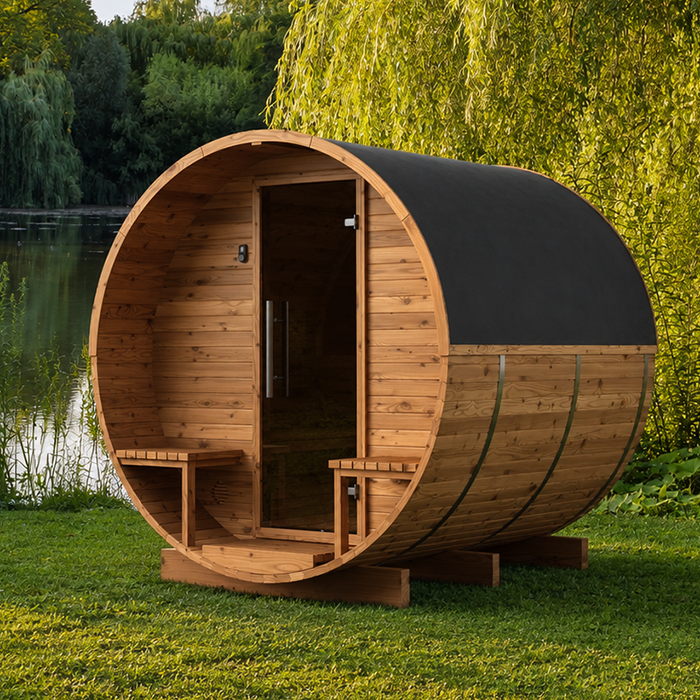
Identify the heater and its settings
Warm-up time belongs to the heater and its operating setup as well as to the sauna. Heater type, rated output, controls and selected settings affect the run, and the correct pairing should come from the heater manufacturer’s instructions for the actual cabin and construction. Avoid a universal wattage-per-square-metre shortcut. Define what “start” means for the heater being tested: one report may time from switch-on, while another includes preparation or ignition. Those numbers answer different questions unless their timing rules and setups are stated. Record any pre-start timer or other delay separately if it matters to the comparison.
Record the exact heater make and model, selected setting, and any setup detail the manual says affects operation, such as the prescribed stone load when the heater uses stones. Keep the rated output, control setting and measured temperature in separate fields: they describe different parts of the test, and none should stand in for another. When reviewing the Thermowood Barrel Sauna N-210 listing, which gives an area of 4.43 m², identify the heater used in any accompanying warm-up report rather than assuming it from the cabin name. If a buyer is considering a different heater configuration, label that separately from the tested setup. A result should remain attached to the equipment actually used, even when several configurations are discussed together. Verify the actual pairing against the relevant manufacturer documentation instead of inferring output or compatibility from area.
Keep ventilation and door use consistent
Ventilation settings, door position and the number of door openings should remain consistent between runs. Sauna ventilation serves a purpose; do not close vents or change their position simply to make the recorded time shorter. Follow the sauna and heater instructions, and state the configuration used in the test. Opening the door to check a thermometer or adjust something can interrupt the run and alter the air. Decide whether the clock continues during an interruption or pauses, then use the same rule for every test and report what happened.
Some enclosure details are fixed rather than adjustable: glazing, dimensions, seals and the arrangement of openings. Record them when test subjects differ, since the heater’s work depends on the setup as a whole. For the Thermowood Barrel Sauna N-250, the catalogue area is 5.27 m²; use available drawings and manuals to describe the enclosure and its ventilation arrangement. Keep those fixed details separate from what happened during the run. A door-opening note should say when the opening occurred, why it was needed and whether the timer continued, rather than simply marking the test as interrupted. This lets readers distinguish a change in the cabin being tested from a change in how the test was carried out. It also makes repeat runs easier to compare without treating every difference as a feature of the sauna itself.
Record what is inside the sauna
What is inside the cabin also belongs in the test conditions. An empty sauna, one holding objects or accessories, and one with people present are not identical warm-up runs: added material can absorb heat, and occupants can move or open the door. For a repeatable comparison, use the same normal setup each time and state whether the cabin was empty or what was left inside. If anything changes mid-test, record when it happened and whether the timing continued. Otherwise, a reported duration can look more precise than its conditions actually were.
Where a heater uses stones or water is poured during warm-up, follow its instructions and keep the load and practice consistent between compared runs; note what was done and when. Adding water changes the conditions being observed, so it should not disappear from a comparison of thermometer readings. When considering the Thermowood Barrel Sauna LC-260, listed at 5.12 m², look for a description of test preparation as well as the cabin identity. A useful record distinguishes what was inside before heating began from anything added or removed later. For example, a note about accessories left in place belongs with the initial setup, while an item brought in during the run belongs in the event log. Describe any occupants separately from objects or heater stones, rather than grouping everything under an unexplained “load” label. This keeps the account understandable without assigning unsupported heating effects to individual items.
Measure temperature at the same point
Temperature varies by position inside a heated cabin. Warm air can collect higher up, and a sensor near the heater or a wall may read differently from one at a chosen bench location. A fair report says where the thermometer sat, including its height and position relative to fixed features, and repeats that position exactly. Use a test point prescribed in applicable instructions if one is given; otherwise describe it clearly enough that another person could reproduce it. A reading near the ceiling should not be compared directly with one taken at sitting height.
Use the same thermometer and reading method across runs, and avoid moving the sensor or opening the door just to check it if that changes cabin conditions. If multiple sensors are used, state which one determines the endpoint and report the others separately; averaging readings from unlike locations can conceal differences. In a test report for the Thermowood Barrel Sauna HCF-300, describe the measuring point in words rather than relying on the model name to explain it. Keep the heater controller’s display clearly labelled if it appears alongside a separate thermometer reading. Also state whether readings were logged continuously or checked at intervals, so the reported endpoint is understandable. If the report uses the first observed target reading, call it that rather than implying a different timing method. The aim is a result another reader can interpret without guessing which instrument or observation stopped the clock.
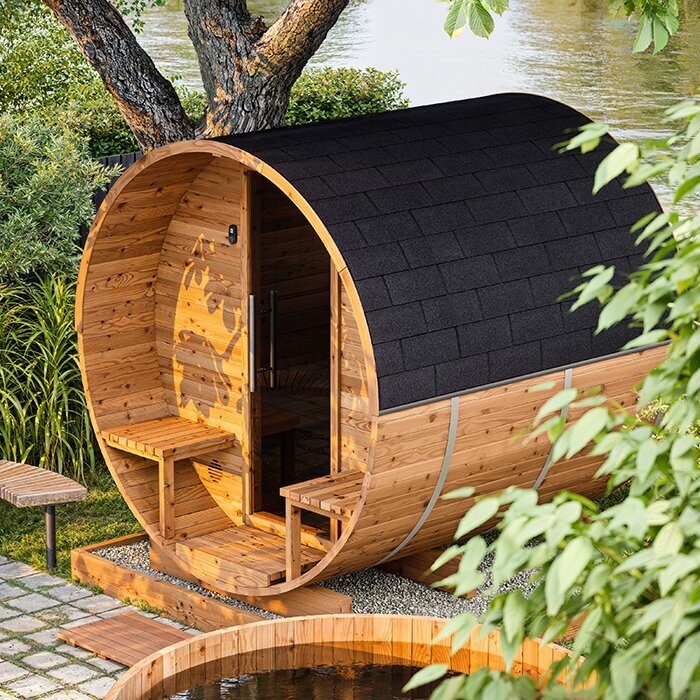
Compare complete test records
Before comparing elapsed times, line up the test records: exact cabin and heater, starting temperatures inside and outside, weather and exposure, settings, target, sensor position, ventilation and door use, interior load, and start and stop definitions. If a field is missing, mark it as unknown rather than filling the gap with an assumption. A duration without a cabin-start temperature could describe a sauna warmed by recent use or a cold start; a target without a sensor location is also ambiguous. The comparison is strongest when the reported conditions match, not when the headline numbers happen to look close.
A useful report places actual readings in °C beside the target and measured elapsed time. Show each run as its own entry, with starting readings and method, instead of giving one time for several different conditions. If the test is repeated, report each result or a range and explain the variation; do not publish only the fastest run. When reviewing results for the Thermowood Barrel Sauna LCF-300, listed at 6.89 m², keep the individual runs visible beneath any summary. A range should identify which runs it includes and whether they used the same starting conditions and endpoint. Separate tests with different targets rather than presenting them as interchangeable entries in a fastest-to-slowest ranking. If only one run is available, label it as one observation. That is more informative than presenting a single elapsed time as the model’s usual performance.
Apply the result to your own conditions
Even a carefully measured duration applies only to the conditions it records. If the sauna usually sits unused through changing weather, a cold-start test may be more useful for planning than a run made soon after another session. Several observations at your own site can show whether conditions change the result, provided each log includes its starting readings and method. Keep preparation time separate from heating time if that distinction matters to your routine. Do not extrapolate from one mild-day reading to every season or use one test as a guaranteed schedule.
When considering a sauna and heater together, confirm the exact configuration and the manufacturer’s heating guidance before relying on a claimed time. Ask what starting temperature, target, sensor position and stop rule produced a published figure. If those details are missing, treat the number as a rough impression, not a promise. The useful answer to “how long?” is a measured interval from a test whose conditions are close to your own, with enough information to know what was measured; an area figure or model name cannot replace that record.
Frequently asked questions
How long does an outdoor sauna take to heat up?
There is no dependable single time for every outdoor sauna. The result depends on the starting temperatures, weather, cabin and heater setup, and the target used to end the test. Treat a time without those details as an impression, not a promise.
Does outdoor temperature affect sauna warm-up time?
It can. Outdoor air and exposure affect the conditions around the cabin, but the outside temperature alone does not tell you how warm the sauna was before heating began. Record readings both inside and outside at the start, and note weather changes during the run.
When should I start the timer?
Choose a clear event, such as switching on the heater, and use it consistently. If the test includes preparation or ignition, state that. The report should also say whether timing stops at the first target reading or after the temperature has stayed there for a specified period.
What starting conditions should a warm-up test report?
At minimum, record the sauna’s starting air temperature, the outdoor temperature at the site, the cabin and heater setup, the target, thermometer position, and the timing rule. Note recent use, weather, ventilation, door openings and what was inside if any of those varied.
Can I compare sauna warm-up times using listed area alone?
No. Area does not establish a cabin’s internal volume, construction, heat retention or heater configuration. It can help identify a product listing, but a fair comparison needs measured results and the conditions under which each test was run.
The most useful outdoor sauna warm-up time comes from a clearly described test under conditions close to your own. Keep the measured interval attached to its starting readings and method, and distinguish repeat observations from a single run. This gives you a practical basis for planning while avoiding a fixed-time promise that one test cannot support.
