
Daily or Weekend Sauna Use: Planning Your Routine
Sauna planning
How often you use a sauna affects more than the number of sessions: it shapes how much preparation feels acceptable, how simple the controls need to be, and how cleaning and upkeep fit into the week. A daily routine rewards easy access and habits that are quick to repeat. Weekend use can leave more time for setup, but a quiet stretch between visits still calls for sensible care. The right plan is the one that matches your household’s real schedule and the instructions for the sauna and heater you choose.
Buyer checklist 1
Planning for a realistic sauna schedule
The useful question is not simply whether you would like a sauna every day or on weekends. Ask when a session would fit, how many people are likely to use it, and how much preparation you are willing to repeat. Before-work or after-dinner use puts a premium on having towels, changing space and controls easy to reach. A weekend plan may leave more time to gather supplies or coordinate a group, but it can also be displaced by errands, visitors or other plans. Choose for the pattern you expect to keep, not the most enthusiastic version of it. Think about who will handle setup and cleanup, too.
Separate likely use from aspirational use. For a few weeks, notice which time slots would genuinely work and what normally competes with them; there is no need to commit to a rigid calendar. Ask whether another household member can manage the routine or whether one person would always have to prepare the space. A plan that depends on perfect timing, an empty house or a long, uninterrupted evening may suit neither daily nor weekend use in practice. This reality check helps you identify what matters most: easy access, familiar controls, room for your usual group, or a reset you can complete before moving on.
Daily use makes access and storage more important
With daily use, the route to and from the sauna becomes part of the routine. Consider where clean towels and robes can stay, where used textiles will go, and whether the path crosses a busy entrance or shared room. A place to change and somewhere to put personal items reduce the need to improvise each time. If household members use the sauna at different times, decide how one person will leave the space ready for the next. If the route is outdoors, think about carrying supplies and getting back inside in wet or cold conditions. These details are easier to plan before choosing a location.
Check drawings and dimensions before deciding whether a model’s placement will leave enough room for the approach, changing and storage you have in mind. The Sauna S-140 listing gives an area of 1.93 m², but that figure alone does not establish capacity, clearances or how much room you will need outside the sauna. Confirm what the listed area represents and review the drawing for the exact model. Then trace your everyday route: where you collect a towel, where you change, and where you leave used items afterwards. If two household members follow that route at different times, consider whether their belongings would get in each other’s way. This gives you a more useful basis for comparing locations than looking at the sauna’s listed area in isolation.
Buyer checklist 2
Preparing for weekend sauna use
An occasional session is easier to enjoy when the preparation has a place in the plan. Before the day, decide who will gather towels, clear personal items and check the operating instructions. If several people are joining, agree on a start time and who is responsible for resetting the space afterwards. That avoids having one person do all the work while everyone else arrives. Include time for the preparation and closing routine, not just the session itself. A weekend slot that has no room for those tasks may feel less convenient than it looked on the calendar.
For a group, look beyond an area figure when comparing a model with the space you have in mind. The HC-150 product page lists 2.97 m²; use the model’s drawing to check the actual arrangement and entry rather than treating the number as a promise about how many people will fit comfortably. Also consider where guests will leave coats or change, if that is part of your plan. Think through arrivals as well as the session: will everyone need the changing area at once, or will people use it at different times? Decide where clean towels will be available and where guests should leave used ones. These arrangements help you assess the whole visit without assuming that the sauna interior must accommodate every activity.
Control convenience matters when sessions are frequent
When a sauna is used often, the controls become part of a repeated household routine. Look for instructions that regular users can understand and consider whether everyone who may operate the sauna knows the correct sequence. With occasional use, it can help to keep the manual accessible so no one has to rely on memory after a long gap. In either case, distinguish a basic control from functions such as a timer or remote operation. Do not assume those features are included or appropriate for every heater and sauna combination.
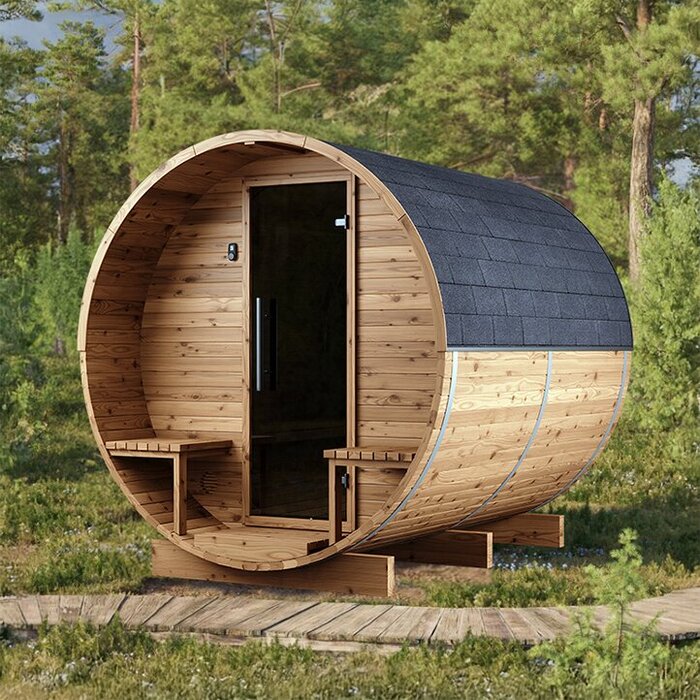
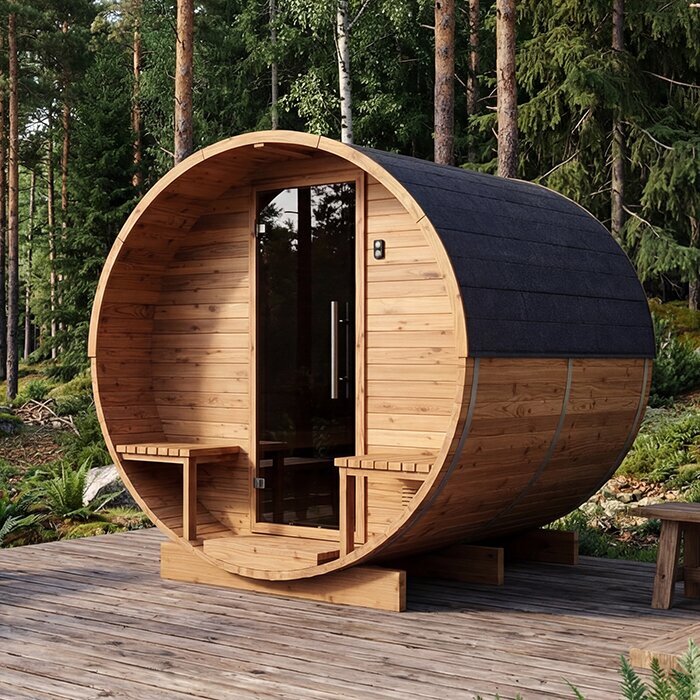
The HC-225 product listing identifies a Thermowood Barrel Sauna and gives an area of 4.4 m². Its name and listed area do not confirm which heater or control system comes with the configuration you would buy. Check the exact inclusions and the instructions for that heater before deciding whether its controls suit your routine. Compare the everyday tasks each user would perform, including starting the system, understanding its settings and shutting it down as instructed. For frequent use, consider whether the sequence is straightforward enough to repeat without confusion. For weekend use, consider how easily someone could follow it after time away. If a control feature depends on another component, confirm compatibility for the complete system rather than inferring it from the sauna model alone.
Buyer checklist 3
A shared routine for starting and shutting down
A short checklist can make either schedule easier to manage. Before starting, gather what you need, remove items that should not be left in the space and follow the operating sequence in the manual. After use, deal with towels and personal belongings, then switch off or leave the sauna as its instructions specify. Follow the manufacturer’s guidance for airing or drying the space. Keep the checklist brief enough that people will actually use it, and make sure everyone in the household can find the relevant instructions.
If you are comparing the N-210 listing, which gives an area of 4.43 m², include its operating routine in your assessment alongside its layout. Find the manual for the exact sauna and heater configuration before writing your checklist. Organize the checklist around preparation, operation and closing so users can find the part they need without reading unrelated care notes. Keep model-specific instructions separate from household reminders such as where towels belong. If multiple people will use the controls, agree on where the checklist and full manual will be kept, and who will update the notes if the equipment changes. Occasional users can then refresh their memory, while daily users have a consistent reference. The checklist should help people follow the manual, not replace it or introduce shortcuts.
Build a cleaning reset into every session
After a session, remove towels and personal items and follow the manufacturer’s directions for cleaning surfaces people have used. Check whether the instructions specify how to air or dry the interior before the next session. Avoid assuming that a household cleaner or care method is suitable for every material; use the guidance for the selected sauna. A simple reset is easier to keep up with when the cleaning items and a place for used textiles are planned in advance, rather than left for someone to sort out later.
Think about cleaning access while you review the layout. The N-250 product page lists 5.27 m², but area alone does not show how easily you can reach the seating, corners or floor in the installed arrangement. Check the actual drawing and consider where a person will stand while cleaning and where used towels can go. Then decide how that work will be shared. If several people use the sauna separately, clarify what each person should leave ready for the next user. After a weekend gathering, decide who handles the final reset rather than assuming a guest will do it. Include the handling of used towels in the plan, so clearing the sauna does not simply move an unfinished task elsewhere. Keep any cleaning methods tied to the manufacturer’s care instructions.
Buyer checklist 4
Occasional use still needs care between visits
A sauna that sits unused between weekends still needs the care described in its instructions. Follow guidance on leaving the space clean, dry or ventilated, and take a moment to look for visible changes before the next use. Damage, signs of moisture or loose components are reasons to check the manual and seek appropriate help, rather than guessing at a repair. Do not open or service heater components yourself unless the manufacturer’s instructions and your qualifications allow it. A longer gap between sessions is not a substitute for the model’s maintenance requirements.
Ask for the care instructions for the exact model before you buy, including any material-specific tasks and what to do when the sauna will be unused for a period. The LC-260 listing gives an area of 5.12 m²; assess its care requirements separately from that size information. Keep the manual somewhere you can find it after a gap in use, and note any tasks that should be completed before the next session. If different household members visit on different weekends, a brief handover note can record when the sauna was last used, what care was completed and whether anything needs attention. Avoid vague messages such as “all done” when a task remains outstanding. The aim is to make returning to the sauna straightforward without repeating checks that someone else has already recorded.
Frequent use calls for a realistic maintenance plan
With regular use, maintenance tasks can become easy to overlook because they are part of the background routine. Use the manufacturer’s schedule for inspections and service; do not substitute an assumed daily, monthly or seasonal interval. A simple record of checks, cleaning and any changes you notice can help you keep track of what has been done and identify questions to ask about the equipment. If something appears damaged or does not operate as expected, stop relying on guesswork and consult the appropriate instructions or a qualified service professional.
Leave room for maintenance access when planning the location. The HCF-300 product page lists an area of 6.89 m², but a listed area is not a measurement of service clearance. Review the current drawing and installation information for the exact configuration, and ask a qualified professional about site-specific access or heater requirements. Alongside access, consider who will keep track of the maintenance schedule and arrange service when required. Keep routine cleaning notes distinct from service records so it is clear which tasks have actually been completed. If instructions specify different checks or intervals, record them separately rather than grouping everything under a single reminder. This makes the upkeep easier to organize around frequent use and avoids treating a clean interior as evidence that all maintenance is up to date.
Buyer checklist 5
Match the interior layout to the people who will use it
Your usual group may differ between weekdays and weekends. A person using a sauna alone most days may invite family or friends for an occasional session, while another household may share it daily. Think through who will sit where, how people will enter and leave, and whether the layout makes it practical to clean after a larger group. Review model drawings for the interior arrangement instead of assuming an area figure tells you how many people can use the sauna. A layout that works for the busiest occasion may also need to feel manageable in everyday use.
The LCF-300 model page lists 6.89 m². That figure can be one point of comparison, but it does not establish the bench arrangement or comfortable occupancy. Compare the actual drawing and the information for the configuration you would purchase. Even when two sauna listings show the same area, do not assume their interiors, entry arrangements or included equipment are alike. Review the layout twice: once for an ordinary weekday and once for the occasional gathering you realistically expect. Note where people would sit and how they would enter or leave while others remain seated. If a layout raises questions, identify them specifically rather than describing the model only as too large or too small. This keeps the comparison focused on how your household would actually use the space.
Compare the routine as well as the product listing
A simple comparison can keep the decision focused. For each model you are considering, note how it would fit your likely schedule, where towels and changing items would go, how the controls would work for your household, and what the after-use reset involves. Add the manufacturer’s between-use care and maintenance instructions to the same comparison. This makes daily and weekend options easier to judge on the same basis. It can also reveal that the deciding factor is not a feature, but whether the location and household routine make regular use practical.
Before ordering, verify the exact configuration, current inclusions, drawings, dimensions and relevant manuals for the sauna and heater. Confirm what any area figure measures, and check current local availability rather than assuming that every configuration shown can be purchased. For site-specific placement or electrical questions, have a qualified professional review the requirements. The product name can help you identify a model to compare, but only the details for the exact version you plan to buy can answer practical questions about its setup and care.
Frequently asked questions
Is a sauna designed for daily use different from one used on weekends?
Frequency alone does not determine which sauna is right. Daily users may value an easy-to-repeat setup and simple cleaning routine, while occasional users may have more time to prepare. Compare the actual layout, controls and care instructions for each model.
Does daily use mean I need a different heater?
Not necessarily. Heater requirements depend on the sauna and its exact configuration, not just how often you plan to use it. Follow the manufacturer’s guidance for the selected model and ask a qualified professional about site-specific requirements.
How often should I clean a sauna?
Plan a quick reset after each use, such as removing towels and following the care instructions for user-contact surfaces. Deeper cleaning and any material-specific tasks should follow the sauna manufacturer’s guidance rather than a universal schedule.
Can I use a timer to prepare a sauna for a weekend visit?
Do not assume a timer or remote-start feature is included, compatible or suitable for unattended use. Check the instructions for the exact sauna and heater configuration, including any operating restrictions, and consult a qualified professional if you are unsure.
What should I compare before choosing a sauna routine?
Consider when sessions will fit, who will use the sauna, how much setup is manageable, how the controls work, and what cleaning and maintenance the manufacturer specifies. Check the model’s drawings and exact inclusions before relying on a listing figure.
For daily use, prioritize preparation and cleanup that fit comfortably into an ordinary day. For occasional weekends, allow time to get ready, accommodate your guests and leave the sauna ready for the gap between visits. Both routines depend on clear operating instructions and care suited to the exact sauna and heater. Choose a model whose layout, controls and upkeep fit the way your household expects to use it, rather than choosing for a frequency you are unlikely to maintain.
