
How to Calculate Electric Sauna Cost per Session
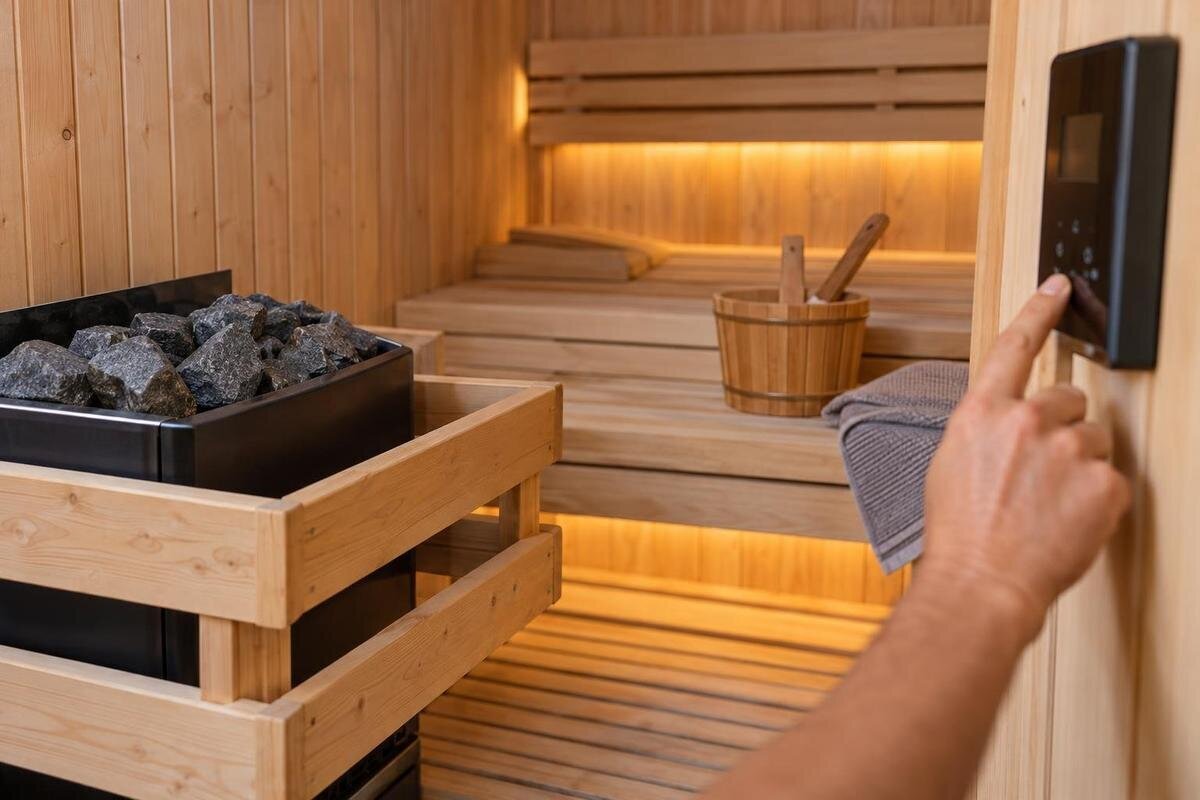
Sauna running costs
To estimate what one electric sauna session adds to your electricity bill, measure the energy used from the start of preheating through the end of the sauna session, then apply the rate or rates that cover those kilowatt-hours. The heater’s rated kilowatts are useful context, but they are not a session reading: controls can cycle the heater, and energy use changes with conditions and timing. A transparent calculation separates measured kWh, usage-based bill charges and fixed monthly costs, so the amount has a clear meaning rather than looking precise without a defined basis.
Define the session you are costing
Define one session before taking a reading. A practical boundary runs from switching the sauna on for preheating to turning the heater off after the last person has finished using it. Include warm-up: it is part of the session’s energy use, even if nobody is inside yet. If you preheat, turn the heater off and return much later, decide whether to record that as one session or two, then apply the same rule each time. A consistent start-and-stop convention makes readings comparable and prevents a warm-up-only figure from being mistaken for the cost of a complete session. If the heater stays on during a break, include that energy in the same measurement window.
Decide whether your amount covers the heater alone or all sauna-related electricity, and state that scope beside the result. One heating cycle has a cost regardless of the number of bathers; dividing it among them is a separate way to share the expense. Keep the whole-session amount visible so a lower per-person figure is not mistaken for lower electricity consumption. Also decide whether you are calculating the extra amount added to the bill or allocating a share of account overhead. These answer different budgeting questions. Purchase and installation expenses do not belong in an electricity-only session figure, and fixed monthly charges should remain separate from the cost of additional consumption. Clear labels make it easier to compare estimates that otherwise appear to describe the same expense.
Measure energy in kWh
Energy is measured in kilowatt-hours (kWh), not just kilowatts (kW). A suitable meter that records accumulated kWh over the full window is the clearest basis: note the reading immediately before preheating and after shutdown, or use its logged total for those times. A display that shows only instantaneous kW is not enough by itself; it must record energy over time or provide timed data to capture cycling. Metering at the sauna circuit is more specific than a whole-house total, but a fixed, high-load circuit calls for equipment and installation appropriate to the heater. Do not improvise a connection; ask a qualified electrician or installer about a safe measurement method.
A home electricity meter or utility interval display can still help, but it may combine the sauna with refrigeration, space heating, cooking, hot water or other loads; its intervals may also be too broad to isolate one session. If relying on whole-home readings, use a quiet, repeatable baseline and treat the difference as an estimate, not a precise sauna-only measurement. If readings bracket multiple uses, do not divide the total automatically when the gap includes standby time or other loads. Record kWh only to the instrument’s sensible precision. Add the date, start and stop times, display units and meter boundary to a simple log so you can match the reading to the right rate later.
Rated heater power is not session consumption
Rated power is a power level, normally stated in kilowatts; energy is that power accumulated over time. Multiplying nameplate kW by elapsed hours assumes the heater drew its full rated electrical input every minute. A 6 kW rating identifies an input level; it does not tell you how many minutes the elements will be energized. Thermostatic control changes how long the elements operate: demand differs during warm-up and temperature maintenance, then varies as the control responds. For a listing such as the LC-260 Thermowood Barrel Sauna, confirm the selected heater and its documentation; the model name alone is not measured energy use.
Use power × hours to illustrate an assumption, not to claim a typical bill. For example, a hypothetical 6 kW heater running continuously for 1.5 hours would use 9 kWh (6 × 1.5). If it cycles off, actual heater energy is lower than that full-load calculation; other loads inside a wider measurement boundary can add energy. And 9 kWh is not $9: the tariff converts the energy amount into dollars. A meter captures what happened without guessing at the on-and-off pattern. If no reading is available, label the result as a scenario and list the assumed power, duration and included loads so the figure can be replaced by measured data.
Use the rate on your electricity bill
Take the rate from the bill or tariff that actually applies to your account and the session time. Check whether it is quoted in dollars or cents per kWh, whether it is the energy supply charge alone or a broader variable rate, and whether the amount changes by time period or usage tier. Do not substitute a generic online rate or one from another account; billing structures vary by utility, account and time. For a rate quoted in cents, divide by 100 to express it in dollars before multiplying. Keep the units visible: kWh × dollars per kWh gives dollars, which helps catch a rate in cents being treated as dollars.
Suppose a meter records 7.2 kWh and the applicable all-in variable rate is an illustrative $0.18/kWh. The arithmetic is 7.2 × $0.18 = $1.296, or about $1.30 before any charges not included in that assumed rate. This is a calculation example, not a quoted Canadian tariff. If you are comparing electricity estimates while considering the HCF-300 Thermowood Barrel Sauna, keep the product choice and account rate as separate inputs: the listing name does not set your bill rate or establish a session’s kWh. Writing the rate as dollars per kWh also makes clear what is included in the example.
Handle time-of-use and tiered rates
With time-of-use pricing, the rate can depend on when each portion of energy is used. If preheating falls in one price period and time in the sauna continues in another, one total kWh figure is not enough for an exact bill-impact calculation unless you know how usage was distributed. Use interval data or a meter that records by time period, then calculate (kWh in period A × rate A) + (kWh in period B × rate B), continuing for every applicable period. A total counter without timestamps cannot accurately allocate energy across a price change; splitting the number in half assumes even use, which you should not assume without evidence. A simple average of the rates is misleading unless weighted by the energy used at each rate.
Tiered pricing works differently: the rate depends on how much electricity the account has already used within the billing cycle. Find cycle-to-date consumption and the tier thresholds on the applicable tariff, then calculate the variable charge with the sauna’s energy added and without it; the difference is the incremental session cost. If a session crosses a threshold, split the kWh across the remaining allowance and next tier. When the threshold applies to whole-account use, household consumption before the sauna can change which portion falls in each tier. For a plan involving the LCF-300 Thermowood Barrel Sauna, record the billing period and rate structure alongside kWh; the same energy reading can produce a different cost under another tier or time period.
Separate variable charges from fixed fees
An electricity bill may separate energy supply from delivery, riders, credits and taxes. For the amount a session adds to the bill, include the usage-based components that actually apply to each kWh or relevant interval, and handle taxes as the bill calculates them. The line-item names are not always a clean all-in rate, so avoid multiplying energy by an advertised supply rate and calling it the full invoice impact. If credits or adjustments reduce a usage-based charge, decide whether you are reporting a before-credit cost or the actual bill impact and apply that choice consistently. A worksheet can show an energy-only subtotal and a separate all-in variable-cost estimate.
Fixed monthly account or service charges generally do not rise just because one sauna session is added, so they belong outside a marginal cost-per-session calculation. You can allocate a share of fixed overhead if you specifically want a fully allocated household-cost figure, but state the method and keep it separate from what the extra use costs. A demand charge, where a tariff has one, may depend on the highest use in a billing interval; kWh × rate alone may not capture the effect. Check the account tariff and interval data rather than assigning a generic extra amount. An estimate for the S-140 Thermowood Barrel Sauna should say whether it is energy-only, variable bill impact or allocated total cost.
Keep the measurement boundary consistent
Meter placement determines what the kWh reading represents. A heater-only meter gives an appliance figure, while a meter covering several sauna circuits captures those circuits together; neither is wrong if labelled accurately. This distinction matters when comparing two estimates: a heater-only reading and a reading that includes controls, lights or ventilation do not cover the same equipment. Do not treat the difference as evidence that one heater uses more electricity. If accessory consumption is added separately, identify that adjustment rather than presenting the combined total as a single meter reading. A listing such as the HC-150 Thermowood Barrel Sauna cannot tell you what a particular meter includes; confirm the selected configuration and circuit with its documentation or a qualified installer.
Check the time covered by each reading as well as the equipment included. A record that begins when the room reaches its chosen setting omits warm-up, while a reading taken several hours after shutdown may include another use or unrelated loads. Neither can be compared directly with a complete session reading. Keep the start and finish readings together so their difference corresponds to one defined period. Do not combine warm-up kWh from one use with energy measured during occupancy on another and describe the result as a measured session total. If a record covers only part of a session, label that limitation beside the figure rather than leaving it in a separate note. This keeps partial measurements useful without giving them a broader meaning than they support.
Compare similar sessions
Energy use can differ even with the same equipment and stated session length. A cold start, outdoor conditions, wind exposure, changes to ventilation, door openings, target setting and time spent at temperature can all change the heater’s work. Warm-up may account for a different share than temperature maintenance when starting conditions change. The number of occupants is not an automatic energy multiplier; it matters only insofar as the group changes time, settings, door use or other actual consumption. These are reasons to measure more than once, not to apply a universal seasonal adjustment. Note unusual conditions beside each reading so one cold start or changed routine is not mistaken for normal consumption.
Compare energy and price separately. kWh describes electricity for that defined setup; dollars also reflect the rate period, tier and included bill charges. A log for the HC-225 Thermowood Barrel Sauna is more useful if each comparable session records both kWh and the applicable rate period, rather than only a rounded dollar estimate. After several representative uses, calculate an average or range from the sessions you actually measured, and keep unusual events visible instead of silently folding them into a typical figure. Note the number of sessions in the sample; compare kWh averages when you want to assess energy use independently of tariff changes. Divide by participant count only when calculating a shared per-person amount.
Estimate cautiously without a meter
When no dedicated reading is available, look for energy-use information for the exact heater and configuration in the manufacturer’s documentation, if it provides measured or operating data. Distinguish that information from a power rating, which cannot tell you how often the heater cycles. Do not invent an on-time percentage or assume a heater runs at full input for a fixed fraction of every session. Any comparison with documented operating data should identify the stated conditions rather than treating the figure as a measurement of your own use. Timed whole-home interval readings may help, but separating the sauna from background use remains uncertain when other appliances switch on. Until you have a suitable reading, state the assumptions and call the result a planning estimate, not a guaranteed session cost.
A rough heater-only upper-bound scenario is rated electrical input (kW) × full session duration (hours), provided the stated rating is maximum input and you explicitly assume continuous full draw. It is not a typical-use forecast, and it omits accessory loads beyond the heater. If the duration includes preheating and time in the sauna, describe the assumption as full-load across the entire window, not as actual heater-on time. If an estimate for the N-210 Thermowood Barrel Sauna depends on a heater not yet selected, show heater power and configuration as unresolved inputs rather than inventing a figure. Replace the scenario when measured data is available.
Turn session costs into a monthly budget
To project a monthly amount, add the cost of expected sessions using the rate that applies to each one. Multiplying a representative session cost by the planned number of uses is reasonable only when sessions and rates are alike and the rate structure does not change with timing or cumulative use. With time-of-use prices or tiers, calculate each session or estimate the monthly total under the tariff rather than treating every use as identical. Use your household’s realistic frequency, not an assumed typical user. If you want a simple baseline, apply the average cost from comparable measured sessions and label it as an estimate; recalculate if the tariff period or billing tier changes. Keep electricity separate from one-time sauna, base, service or installation costs.
Use your session worksheet to distinguish a measured monthly total from a projection. For a completed month, retain each session’s calculated cost and add those amounts; for a future month, state which representative readings and planned frequency underpin the estimate. A low-to-high range from comparable sessions can show how much the projection depends on weather or routine, without making one precise-looking average carry more weight than the data supports. Keep the units and source of each input beside the calculation, and round only as far as the meter and bill inputs support. Revisit the budget if the heater configuration, schedule or utility rate changes. When evaluating a listing such as the N-250 Thermowood Barrel Sauna, keep model assumptions separate from the measured running-cost line; the session figure should trace to your own meter and bill, not a model name.
Frequently asked questions
Does a heater’s rated kW tell me the cost per session?
No. kW describes a power level; multiplying it by all session hours assumes the heater drew full input continuously. Measure kWh over the defined session and apply the tariff. Use the rating only for a clearly labelled full-load scenario if you have no reading.
Should I include preheating?
Yes, if you want the cost of a complete session. Start the measurement before preheating and finish after the heater is turned off at the end of use. If your reading covers only warm-up or only the time people are inside, label it as a partial figure rather than a complete session cost.
Should I use the electricity supply rate or the whole bill?
Use the charges that change with consumption and apply during the session. For bill impact, include relevant per-kWh delivery charges, riders and taxes, and account for credits consistently. A fixed monthly customer charge is not normally an added cost of one more session.
How do I calculate a session across time-of-use periods?
Use interval kWh for each rate period and calculate each portion separately. If you have only one session total, you cannot know the exact split across a rate change; a weighted estimate needs data on when the energy was used.
Can I divide the cost by the number of bathers?
Yes, as a separate sharing calculation: divide the session’s total dollar cost by the number of people sharing it. Keep the whole-session amount too, since the per-person figure is an allocation rather than a separate measurement of electricity use.
An electric sauna’s cost per session does not come from its heater’s kW label or a generic rate. It is the energy for a defined use, including preheating, priced against the account’s actual usage charges. Measure a repeatable start-to-finish window, account for time-based or tiered rates, and state whether the result is energy-only or the fuller variable bill impact. A small log of kWh, timing and conditions helps show whether a figure is measured, estimated or allocated—and keeps the final budget useful without overstating its precision.
