
How to Manage a Sauna Budget Without Cutting Essentials
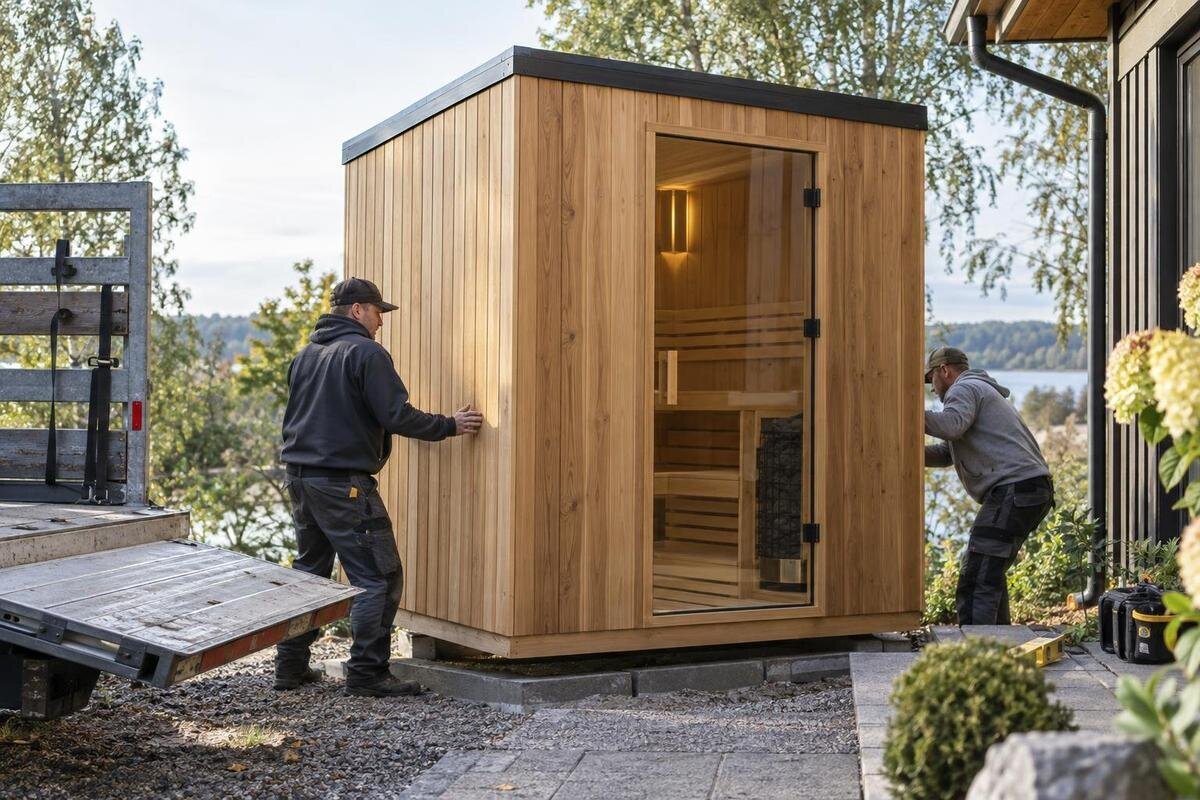
Sauna project planning
A sauna project is easier to budget when you separate the experience you want from the options that can wait. Define the scope, confirm what the site needs, and price the full work required for the selected configuration. A lower quote isn’t a saving if it leaves out electrical, structural, ventilation or fire-safety provisions that apply to your project. The strongest cost controls are usually avoiding unused capacity, finding site issues early and choosing optional finishes carefully—not cutting professional work needed for a safe installation.
01
Set the scope before requesting quotes
Write a brief before requesting quotes. State where the sauna will go, who will use it at once, the seating arrangement you want, and whether the installation is indoors or outdoors. Name the features that matter, but separate required functions from preferred extras. List the sauna itself, site preparation, assembly, professional trade work and any surrounding work as distinct parts of the project. Set a ceiling for the whole project, not just the sauna, and note which choices you could revisit if quotes exceed it. Include who will coordinate estimates, particularly if separate contractors are involved. This gives each supplier the same starting point and makes it harder for a low total to conceal a narrower scope.
Use three labels: must-have, optional and deferred. Must-haves reflect how you will use the sauna and constraints confirmed by relevant professionals; optional items add value but can be removed; deferred items are not needed for initial use. Catalogue pages help identify candidates, not finalize a design: the LC-260 Thermowood Barrel Sauna listing gives 5.12 m², but that figure alone cannot confirm fit or layout. Check the current configuration, drawings and local availability before including a model in your project budget. If a quote covers only the unit, list assembly and site or trade services separately instead of treating them as included. Keep unanswered questions beside the shortlist so they don’t disappear during comparison.
Choose a size and layout that suit actual use
Choose the space and seating you need, rather than relying on the largest capacity claim or the smallest catalogue footprint. Count simultaneous users and decide whether they will mostly sit upright or need room to change posture. On manufacturer drawings, check usable bench length and depth, headroom, door location and any clearances shown; a headline capacity does not guarantee comfortable seating. Think through how people enter, sit and leave, not just how many fit. Measure the intended location and route into it, then ask the supplier or installer to match those measurements to the exact configuration. Gross area may not describe usable bench space, so check the dimensions that matter to your layout.
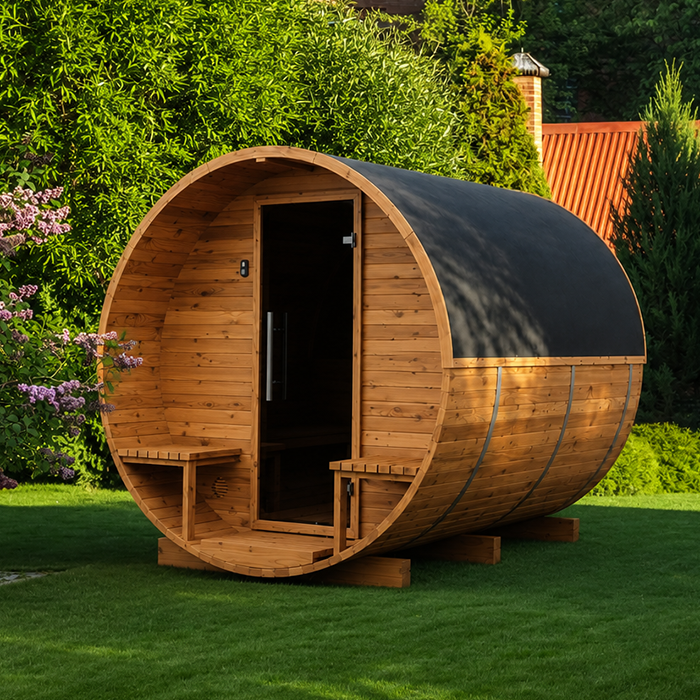
The Sauna S-140 Thermowood Barrel Sauna page lists an area of 1.93 m². Ask what that figure represents, then use full dimensions and drawings to assess seating and plan the space around the unit. Occupancy, bench length and installation space need to be considered separately from the listed area. Compare candidates on the same basis, including door swing and clearances shown in the manual. If a larger layout adds room you won’t use, ask whether its effect on the complete quote is worthwhile; if a smaller one compromises seating, the headline saving may not meet your needs. If a drawing is unclear, ask the supplier to identify the relevant dimensions before you price the installation.
02
Assess the site before choosing a configuration
Site preparation is easier to price after someone has reviewed the exact sauna drawings and proposed location. Record the surface and ground conditions, drainage, nearby walls or overhead features, access for assembly, and the route for any required services. These details can affect support, levelling, clearances and preparatory work, but they don’t point to one universal foundation. Have a qualified builder or installer assess the specific site and identify what has to be ready before assembly. Clarify whether the assessment includes written recommendations or only an initial estimate. Don’t choose a base from a generic rule of thumb or assume that an existing patio or floor is suitable.
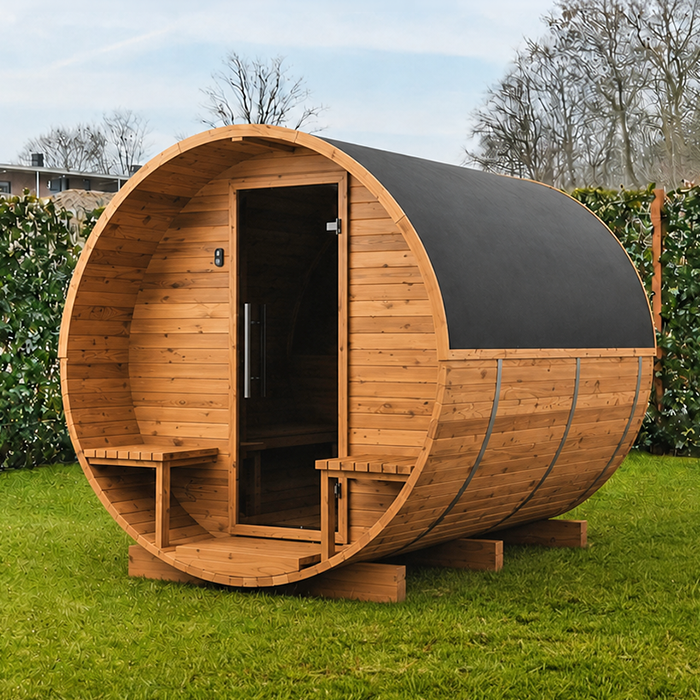
The HC-225 Thermowood Barrel Sauna listing states 4.4 m², but a catalogue area doesn’t establish the complete footprint, clearances or site work. Obtain the verified drawing and compare it with measurements from the proposed location; ask the appropriate professional to confirm support and surrounding conditions. Record who supplies any base or platform, who handles grading or drainage work if needed, and what remains outside the quote. Photos may help explain the location, but they aren’t a substitute for an assessment required by the installer or another professional. Where a site condition is uncertain, resolve it before committing rather than leaving a large, undefined allowance.
Keep required technical and safety work in the budget
Keep required electrical, structural, ventilation and fire-safety provisions in the protected part of the budget. Which work applies depends on the sauna configuration, installation location, manufacturer instructions and requirements that govern the project. It isn’t safe to assume that a smaller model, simpler finish or do-it-yourself plan eliminates a necessary provision. Don’t remove electrical work, supports, clearances, ventilation components or fire-safety measures identified for the site just because they’ll be hidden after installation. If a quote omits an item, ask whether it has been assessed as not applicable or simply falls outside the quoted scope. Include a confirmed price or a clearly identified allowance for each required item.
Ask the qualified electrician, builder or sauna installer to describe their part of the work, dependencies and hand-offs in writing. Have them identify which assumptions rely on manufacturer drawings and which need confirmation with a relevant local authority or professional, where applicable. Keep an unconfirmed line as an allowance, not a zero-cost item, until the responsible person confirms it. Make clear who is responsible for any applicable inspection or approval. A written division of responsibilities also prevents two quotes from each assuming that another trade will provide a required connection, support or check.
03
Compare quotes against the same scope
Compare quotes against the same written scope, not just their totals. Request separate lines for the sauna model and configuration, included equipment, assembly, site preparation, structural work, electrical work, ventilation or fire-safety work that applies, finishes and optional accessories. Ask which figures are firm and which are allowances, and what assumptions each allowance depends on. Clarify applicable taxes and which contractor is responsible for each task. Make sure every supplier is pricing the same options and assembly scope. A quote with fewer items may still be valid, but you can’t compare it fairly until you know whether work is excluded, supplied elsewhere or genuinely unnecessary for your site.
Give product details their own column in your comparison, separate from the installation scope. For example, the Sauna N-250 product page lists 5.27 m²; record that alongside the exact configuration, then use the written quote to establish actual inclusions and installation costs. Ask each supplier to identify work to be completed by other trades and the site assumptions behind the quoted amount. Mark every cost line as confirmed, excluded or provisional. This makes differently structured quotes easier to compare and shows where a lower total simply moves work to another contractor. Keep a copy of the quoted scope and note the quote date and any stated expiry.
Simplify finishes without compromising their purpose
Finish choices can be an area to simplify, but first find out whether a selection is decorative or serves a protective or maintenance purpose. Ask what a proposed finish changes: appearance, care routine, suitability for the chosen exposure, or a component required by the manufacturer. If an option is purely visual, choosing a standard selection or fewer decorative details may be a reasonable saving when those choices are offered. Ask the manufacturer how each finish is cleaned and maintained and what it is intended for at your site. If a finish protects a surface or affects upkeep, don’t treat it as an optional upgrade without a clear explanation from the supplier.
The HCF-300 Thermowood Barrel Sauna listing identifies a model, but its name alone doesn’t tell you which finish choices are included in a current quote. Request a written breakdown of the standard selection, chargeable upgrades, care instructions and any elements that must remain for the proposed location. Price purely cosmetic differences separately and decide whether they matter enough to keep. Confirm a simpler alternative with the supplier and installer before choosing it; visual similarity alone doesn’t establish that a substitute is suitable. Save the selected finish by name in the quote so the agreed scope is clear.
04
Separate essential equipment from optional accessories
Sort accessories by function before approving them. Keep everything needed for the specified sauna system and the professional work that makes it safe; consider deferring convenience or decorative additions that don’t affect that function. Ask whether each item is included, required for the selected configuration, optional, or suitable for later installation. Put add-ons on separate quote lines so you can see whether removing a bundle changes any included equipment. This matters especially where an accessory interacts with electrical equipment, clearances or assembly. A product photograph isn’t an inclusion list, and a phrase such as “complete package” isn’t precise enough to budget against without a written schedule.
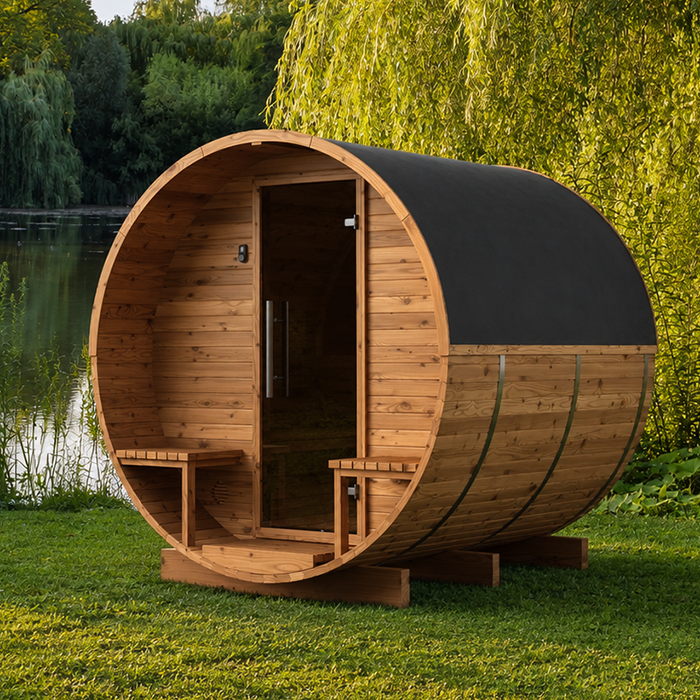
When reviewing a candidate such as the LCF-300 Thermowood Barrel Sauna page, separate its listed area of 6.89 m² from the accessories included in the quoted configuration. Request a current inclusion sheet and itemized prices for extras, then ask whether an omitted item can be added later without reopening finished work. For an accessory that needs to be fitted during assembly or requires a trade visit, compare the cost and work involved in adding it now with the practical effect of postponing it. Record any preparation that must remain in the initial scope even if the accessory is deferred. Defer only items confirmed as nonessential to the initial installation.
Budget separately for operation and maintenance
Separate the purchase-and-installation budget from expected operating and maintenance expenses. Electricity use depends on the exact heater and controls, the installation, how the sauna is used and the local utility rate; listed area alone can’t produce a reliable estimate. Ask the supplier for documented information for the proposed configuration, then have a qualified electrician confirm the electrical requirements. Use your likely pattern of use and current rate when estimating ongoing costs, and label the result as an estimate rather than treating a general rule as a guaranteed bill. If estimates differ, ask what assumptions each one uses before comparing them.
For a candidate such as the HC-150 Thermowood Barrel Sauna product page, keep the listed area of 2.97 m² separate from the heater’s power rating and estimated energy use. Request heater and control details and any manufacturer usage guidance available, and check that the installation scope includes the professional review needed for your setup. Add routine care and possible repair allowances using the maintenance documentation, not assumptions about a different model. Keep the assumptions behind your estimate, including the expected use pattern and utility rate. Separating these expenses from the project total shows both the upfront commitment and recurring costs without using either to hide the other.
05
Track uncertainties and changes to the project
Set aside a contingency for uncertainty, but base it on identified unknowns rather than an arbitrary percentage copied from another project. Note what has been confirmed, what is only an allowance, and what needs a site visit or professional decision. As quotes change, keep a simple log of the original assumption, new information, written cost change and person who approved it. If site work hasn’t been assessed, record who will obtain that information and when it’s needed. Don’t use contingency for optional upgrades while an essential technical item is unresolved; keep uncertain requirements visible until they have an owner and an answer.
If you replace one candidate with another, record the substitution as a scope change, not just a price change. The N-210 Thermowood Barrel Sauna listing gives 4.43 m²; when comparing it with another model, review the drawings, clearances, service needs and included work rather than assuming that a difference in area explains every difference in cost. Ask for a revised quote based on the exact model and configuration, and verify local availability before approving the substitution. A model change after site planning can affect several line items, so compare revised totals rather than subtracting one catalogue price from another. Update the budget record whenever a revised assumption changes the work.
Review the full budget before approval
Keep one budget sheet with each item, the written quote or estimate behind it, who is responsible, and whether the amount is confirmed, excluded or provisional. Group lines under sauna and inclusions, site preparation, qualified trades, required safety work, optional choices and ongoing expenses. Note why each must-have is necessary and which optional choices can be deferred. Use the same version of the scope for every supplier, and record what remains to be resolved before ordering. This simple record is more useful than a single headline figure because it shows what the total covers and who will provide any missing information.
If the full scope exceeds your ceiling, revisit optional finishes, accessories and nonessential surrounding work first. Then consider whether the size or layout can be simplified without losing what your brief requires. Don’t fill the gap by cutting electrical, structural, ventilation or fire-safety provisions that apply. Ask for a revised written quote after each scope change, and review the total again once site questions are resolved. Approve the budget only when the responsible professionals have addressed essential items and the remaining allowances are clearly identified.
Frequently asked questions
Where can I cut costs first?
Review unused capacity, cosmetic choices, convenience accessories and surrounding work that can be postponed without affecting installation. Confirm that each item is genuinely optional, then have the quote revised. The new scope should still include site preparation and all electrical, structural, ventilation and fire-safety provisions identified for the project.
Which sauna costs should not be removed?
Keep the electrical, structural, ventilation and fire-safety work that qualified professionals identify as necessary for your configuration and site. If a quote excludes an item, confirm in writing whether it is not applicable or included in another contractor’s scope. Don’t remove an unresolved line to meet a budget target.
Does a smaller sauna always cost less?
No. A listed area does not establish usable seating or determine the full project cost. Site preparation, configuration, professional requirements and assembly scope also matter. Compare quotes for options that meet the same needs, with the same work included, rather than judging by area or a single product price.
How can I tell what a sauna quote includes?
Ask for the exact model and configuration, written inclusions, drawings, site assumptions, trade exclusions and itemized prices for add-ons. A product name, photograph or area listing does not confirm what is supplied or what installation costs are included. Confirm current local availability before approving a budget.
Can I add upgrades later?
Sometimes. A purely cosmetic option or accessory may be deferred if the supplier and installer confirm that doing so won’t affect required equipment, assembly, later compatibility or technical work. Keep any necessary preparation in the current scope, and don’t postpone a provision required for safe installation.
Managing a sauna budget means keeping the scope clear as well as setting a spending limit. Decide what the sauna must do, confirm that the site can support the chosen configuration, and get complete written pricing for preparation and qualified work. Then simplify optional selections and track the cost of each change. Clarify uncertain cost items before ordering, and retain the work needed to meet identified technical and safety requirements. The aim is a project you can afford with the essentials accounted for—not a lower total that leaves necessary work unpaid.
