
How Long Does an Outdoor Sauna Last? Build and Care Factors
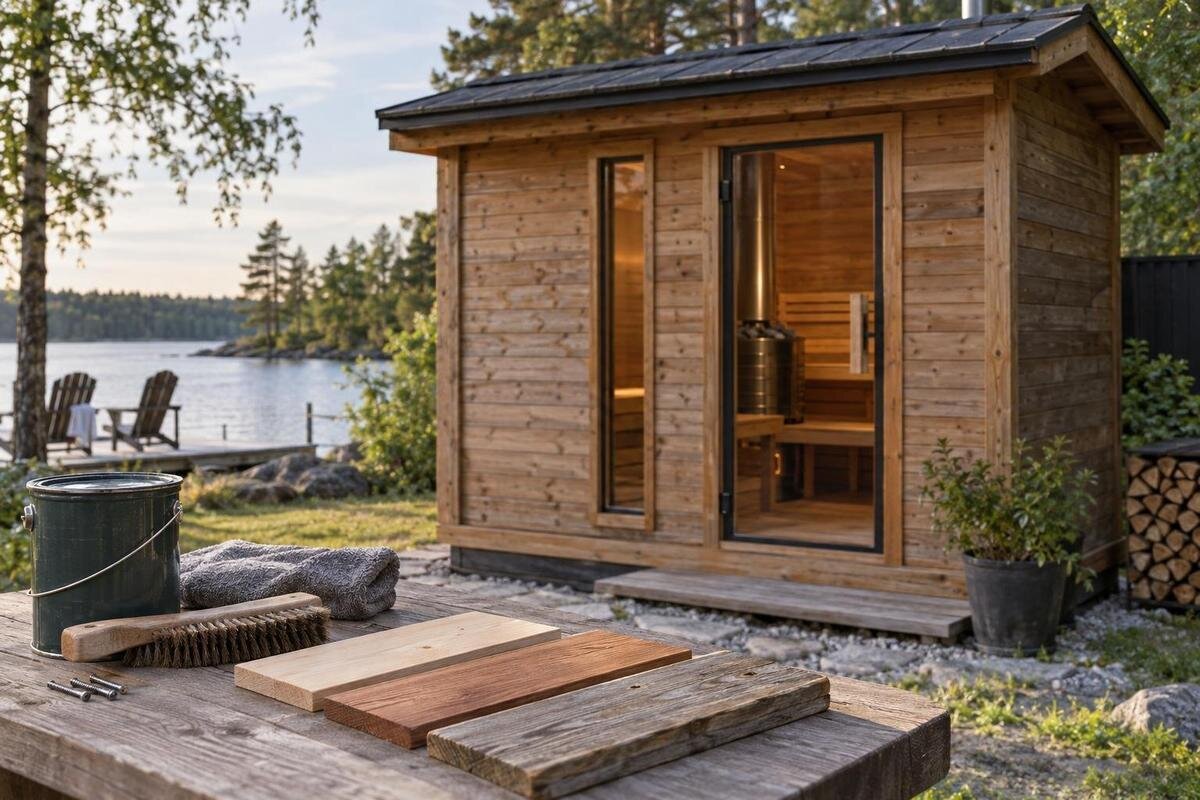
Outdoor sauna buying guide
An outdoor sauna has no dependable, universal lifespan. Its condition over time depends on documented materials, construction and assembly, the ground and weather around it, use, and care that suits the design. A warranty term is useful information, but it is not a prediction of how long the sauna will remain usable. When comparing models, look beyond the product label and ask for the specific build, installation and maintenance information behind any durability claim.
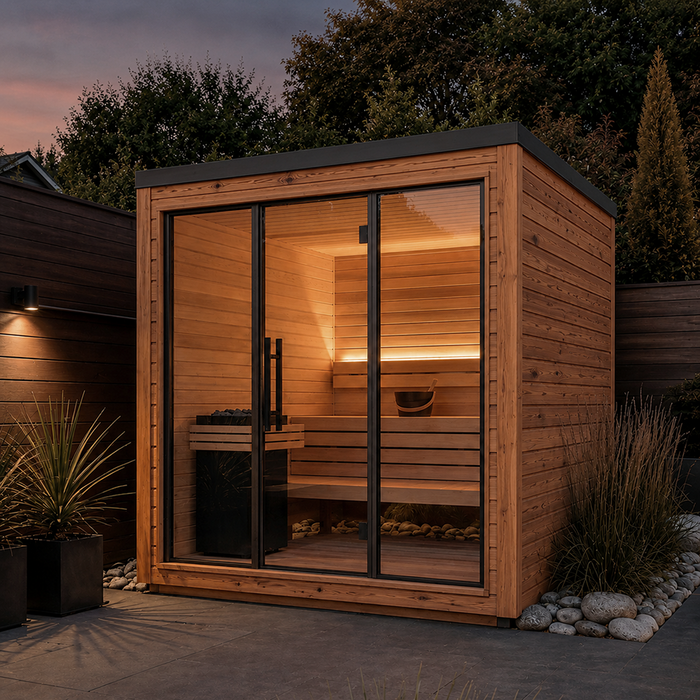
Why an outdoor sauna has no fixed lifespan
There is no single year count that works as a reliable forecast for every outdoor sauna. Useful life depends on the materials, how joints and openings are detailed, whether assembly follows the maker’s instructions, how water drains around the base, and the local mix of sun, wind, rain, snow and temperature changes. Routine care and frequency of use matter too. Two cabins of a similar style can age differently because their sites, construction details and upkeep are not the same. Without that information, a precise lifespan figure is guesswork.
Clarify what you mean by “lasts” before comparing claims. You may mean that the cabin remains suitable for sauna use, that the exterior finish keeps a particular appearance, or that repairs remain manageable. These are different standards: a surface can weather while the cabin remains usable, and a replaceable part can need service before the structure does. Colour changes or small surface cracks are not, by themselves, a complete diagnosis. Persistent dampness, shifting joints or changes in fit deserve closer attention. Age and appearance provide context, not proof of condition.
A warranty period is not a service-life estimate
Warranty wording and useful life answer different questions. A warranty states what the seller or manufacturer agrees to cover, for which period, and under what conditions; it does not promise that every part will remain unchanged for that length of time. The stated period may apply to only certain components or types of defects. Weathering, wear, assembly, maintenance or alterations may be addressed separately in the terms, so do not assume what is included from a headline alone. Nor does a shorter term, by itself, prove that construction is poor.
Compare the full terms: when coverage begins, which parts are included, how a defect is assessed, what maintenance records are needed, and what remedy is offered. Check whether the cabin, heater, controls, finish and accessories have separate coverage. When considering the Sauna HCF-300 product listing, locate current terms for the exact model and configuration rather than drawing conclusions from its name. Read the remedy as carefully as the coverage period: ask whether it involves a replacement part, a repair or another arrangement, and what responsibilities remain with you. If two warranties have different terms, comparing their headline lengths alone leaves out information that could matter when a problem occurs. Retain the terms with the purchase documents. Treat warranty length as one buying factor alongside construction details, repair access and care requirements.
Timber and finish specifications
Ask what the timber and other exposed materials actually are instead of relying on a general label. Useful details may include species, grade, treatment process and which surfaces receive a finish. Exterior cladding, interior lining, benches, flooring and supporting pieces can have different requirements; a manufacturer’s material schedule can clarify whether they do. For each part, distinguish what is supplied from any treatment you are expected to apply after assembly. Ask whether care instructions refer to the original finish or to an optional finish, and whether they differ between interior and exterior surfaces. These questions help you understand the work involved without assuming that every wooden part needs the same treatment. The question is not whether a name sounds durable, but whether the stated material and finish suit their particular locations and come with clear care instructions.
Terms such as Thermowood in a listing should not be treated as a complete specification. For example, the Sauna LCF-300 listing identifies a Thermowood Barrel Sauna, but its name alone does not establish the exact species, treatment details, finish or maintenance interval. Ask for the manufacturer’s description of the supplied timber and guidance on any coating or preservative that may need to be reapplied. Confirm that a suggested product suits the relevant surface and sauna environment; a coating used outdoors is not automatically appropriate inside a hot cabin. Do not substitute a deck-care routine for the written instructions.
Assembly and joints affect durability
Even well-chosen materials can require more repairs if the cabin is assembled poorly or details that shed moisture are missed. A clear manual and drawing should identify parts, orientation, joint fit, fasteners and seals, as well as any steps needed to let timber move as designed. Look for instructions specific to the configuration you are considering, not a generic diagram that omits options. Before arranging assembly, establish which tasks are included and who will resolve any discrepancies between the delivered parts and the drawings. Ask whether the instructions call for checks after assembly and who will carry them out. This separates completion of the initial build from any follow-up work, rather than leaving both parties to assume the other will handle it. Ask what skills assembly requires and how missing or damaged parts are handled before work begins.
After installation, check that doors, windows and panels align as intended and that joints do not leave obvious openings for wind-driven water. This is a visual check, not a structural assessment. If parts do not fit or the instructions are unclear, pause and ask the supplier or an experienced installer rather than forcing pieces or adding unapproved sealant. The Sauna S-140 product page can identify the exact model you are researching; use that reference when requesting its current assembly manual and parts list. Clear instructions can also make later repairs easier to plan.
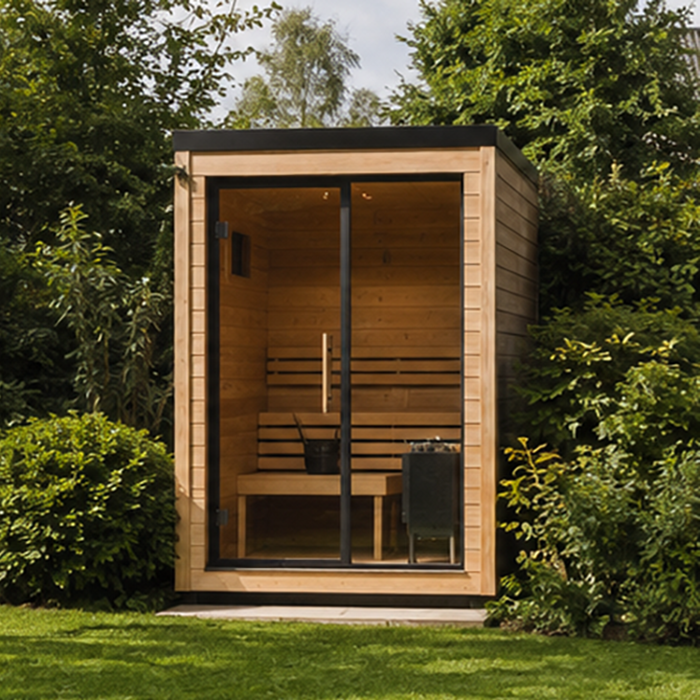
The base and surrounding ground matter
The base supports the cabin and affects whether lower surfaces stay clear of wet ground and standing water. Follow the manufacturer’s layout and support points; the word “level” alone is not a complete installation specification. A surface may look flat but still fail to support the required locations or let runoff escape. Do not rely on a photograph of another installation as proof that the same foundation will suit your soil, slope or local conditions. When reviewing a proposed base, ask how its layout corresponds to the cabin drawing and whether lower edges will remain accessible for inspection. Clarify which details come from the sauna manufacturer and which require assessment of your property. That distinction makes it easier to compare installation proposals without treating a general description of the base as a complete plan. The intended support method should be set out in the installation documents.
Consider where water moves around the site. Roof runoff, meltwater, irrigation and rain should not be directed beneath or trapped beside the base. Keep access to lower edges so you can inspect them and remove debris. If ground stability, drainage or support requirements are uncertain, have a qualified local contractor assess the site against the manufacturer’s drawing; do not guess at dimensions or make structural calculations from general advice. The Sauna HC-150 listing identifies a model to ask about, but suitable base guidance must come from its product documents and the site itself.
Weather exposure changes the care required
Weather reaches different parts of a sauna in different ways. Direct sun can weather exposed surfaces, while wind can drive rain or snow against areas that would otherwise stay drier. A shaded location may reduce sun exposure, but surfaces with little airflow can take longer to dry. Repeated temperature changes can also reveal weaknesses in drainage, joints or finishes. The combination varies by site, so a sheltered setting is not automatically maintenance-free and an exposed setting does not affect every material in the same way.
When assessing a proposed location, consider orientation, nearby trees and structures, wind exposure, splashback and access for inspection. Leaves or branches can also make it harder to see or reach affected surfaces. Look at the full area around the cabin, not just the side visible in a product photograph. Note which sides would be difficult to inspect or maintain once the sauna is in place, and whether nearby objects would obstruct access to joints or lower edges. Consider conditions at different times of year rather than judging the site only on the day you visit it. For the Sauna HC-225, compare the placement and care instructions with those observations. The purpose is to understand the exposure and access at your property, not to infer weather resistance from the model’s appearance.
Use and moisture management affect condition
Use creates changing heat and moisture conditions. Towels, cleaning and water used during a session can add moisture, while the way a cabin is aired afterwards affects how it dries. The details depend on the design and its instructions, so a generic number of sessions cannot be translated into a lifespan. Describe your expected routine when asking about care: how often you plan to use the sauna, when cleaning would take place and how you would manage the recommended airing afterwards. Ask which steps are needed after each use and which belong to periodic maintenance. This helps you judge whether the required care fits your routine, rather than comparing models only by how often you expect to switch on the heater. Confirm what use patterns and water practices the manufacturer permits.
Take care with products used on sauna surfaces. A cleaner or coating suitable for an outdoor deck is not necessarily suitable for an interior exposed to heat. Follow the specific cleaning and ventilation guidance, including any restrictions on products or methods. The Sauna N-210 listing can help identify the model you are considering; use its exact documentation to confirm care directions instead of borrowing a routine from another cabin. Consistent care that fits the materials is more useful than applying a treatment simply because it is common for other outdoor wood products.
Regular checks help catch repair needs early
Use the inspection schedule in the product instructions, and check again after unusual weather or a repair. Look over exposed surfaces, joints, the door’s fit, the area around the base and any place where water may enter. Inside, note persistent damp patches, changes in the finish or parts that have loosened. Include lower edges and less visible areas, where signs of moisture can be easy to miss. Use the same areas as reference points at successive checks so that you can describe what has changed. A note such as a door becoming harder to close or a damp patch remaining in one location is more useful than a general impression that the cabin looks older. Record observations separately from guesses about their cause. An inspection is an opportunity to notice change, not a guarantee that every hidden problem will be found.
Keep dated notes or photos of areas that change, and compare them over time. If a surface remains damp or a joint opens, find out why before covering it with a new finish or sealant; otherwise, the cause may remain. Ask the supplier about suitable repairs, and involve a qualified professional if the condition appears to affect the structure or electrical equipment. The Sauna N-250 product page gives you a specific model reference when you request its maintenance instructions and repair guidance.
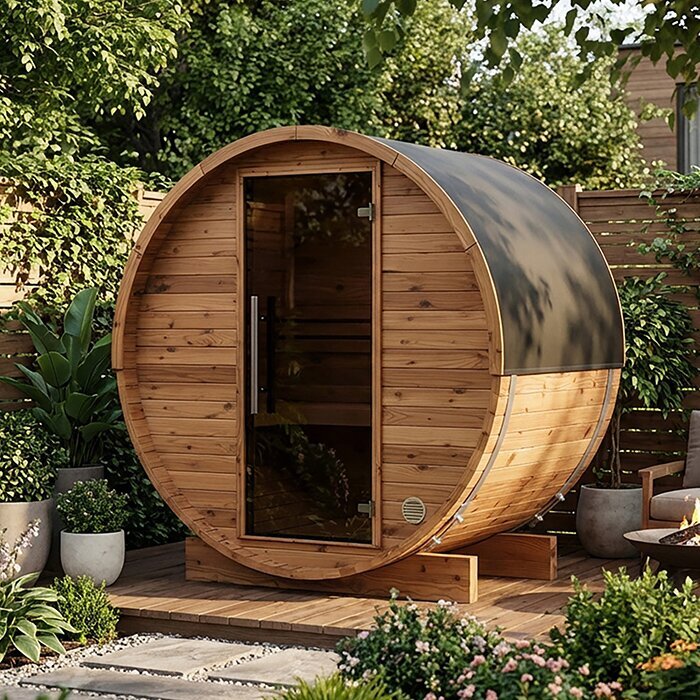
Component service life and repair options
A sauna is made up of parts that may need service at different times. The cabin, heater, controls, seals, door hardware and glazing do not necessarily share one service life. A heater issue does not automatically mean the cabin has reached the end of its useful life, and a cabin that looks sound does not confirm that powered equipment is in good condition. Ask which components are serviceable, what replacement parts are specified and how to arrange qualified help for electrical repairs. For other components, ask how a replacement is identified and whether access requires removing adjacent parts. A clear answer helps you distinguish a limited repair from work that affects more of the cabin. Keep the exact component details where available, rather than assuming that a part described as suitable for a similar-looking sauna will fit yours.
How often the sauna is used affects its maintenance burden, but there is no simple adjustment that turns frequency into a lifespan figure. Confirm that the intended pattern of use is supported by the maker’s instructions, and ask what routine checks it calls for. Do not assume that replacement parts will always be available; ask about the service process before purchase. The Sauna LC-260 listing identifies an exact model for that discussion. Consider the cabin and its components separately rather than treating the whole system as a single item with one expected lifespan.
Compare documented evidence, not broad claims
A fair comparison needs more than a product name or a general durability claim. Gather the current model and configuration details, material information by part, assembly drawings, base requirements, maintenance instructions and warranty terms. Note whether the documents cover the supplied accessories as well as the cabin. Compare models under the same headings, and separate purchase inclusions from work or materials you would need to arrange yourself. For maintenance, record the actual task described rather than simply writing “regular care”; for repairs, note the component and the service route. This makes differences easier to understand without converting them into an unsupported durability ranking. If an important detail is missing, record it as unknown and ask for clarification instead of filling the gap with an assumption. Keep written details separate from marketing language so you can compare the same kinds of information across models.
Treat phrases such as “maintenance-free”, “all-weather” and “long-lasting” as prompts to ask what they cover, which conditions they assume and what care is still required. Ask how repairs are handled and who to contact for service. Once installed, keep the manual, purchase documents, assembly date, photographs and records of treatments or repairs together. That history can help you track changes and explain the cabin’s condition later, but it does not guarantee a particular lifespan. A useful comparison makes the expected care clearer without inventing a year count.
Frequently asked questions
How many years should an outdoor sauna last?
There is no reliable lifespan that applies to every outdoor sauna. Materials, assembly, site exposure, use and care all affect condition. Compare the construction and maintenance information for the exact model rather than relying on a general year count.
Does a longer warranty mean the sauna will last longer?
No. A warranty sets out the coverage offered for specified parts or problems over a stated period. It is not a forecast of useful life. Read the terms alongside the construction details, maintenance instructions and information about repairs.
What matters most for an outdoor sauna’s durability?
There is no single deciding factor. Materials, joints, assembly, support, weather exposure and moisture management work together. A weakness in one area can increase maintenance needs even when other parts are in good condition.
Can I leave an outdoor sauna outside through winter?
Check the instructions for the exact model. An outdoor product label does not explain every exposure or winter-care requirement. Confirm the manufacturer’s guidance for placement, maintenance and the sauna’s components rather than assuming all designs need the same care.
How often should I maintain an outdoor sauna?
Follow the maintenance schedule for the specific design and materials; there is no universal interval. Check for changes in exposed surfaces, joints and areas that stay damp. Inspect again after unusual weather or a repair, and follow up on changes rather than waiting for the next scheduled check.
An outdoor sauna’s useful life is best judged from its construction details and the conditions it will face, not a headline year figure. Compare timber and finish information, assembly and base guidance, site exposure, maintenance, component service and warranty terms separately. If a claim cannot be tied to instructions or a specific part, treat it as unknown rather than as a lifespan promise. The clearest comparison is the one that shows what care the design actually requires.
