
Planning Outdoor Sauna Costs Over Five Years
Five-year outdoor sauna budget
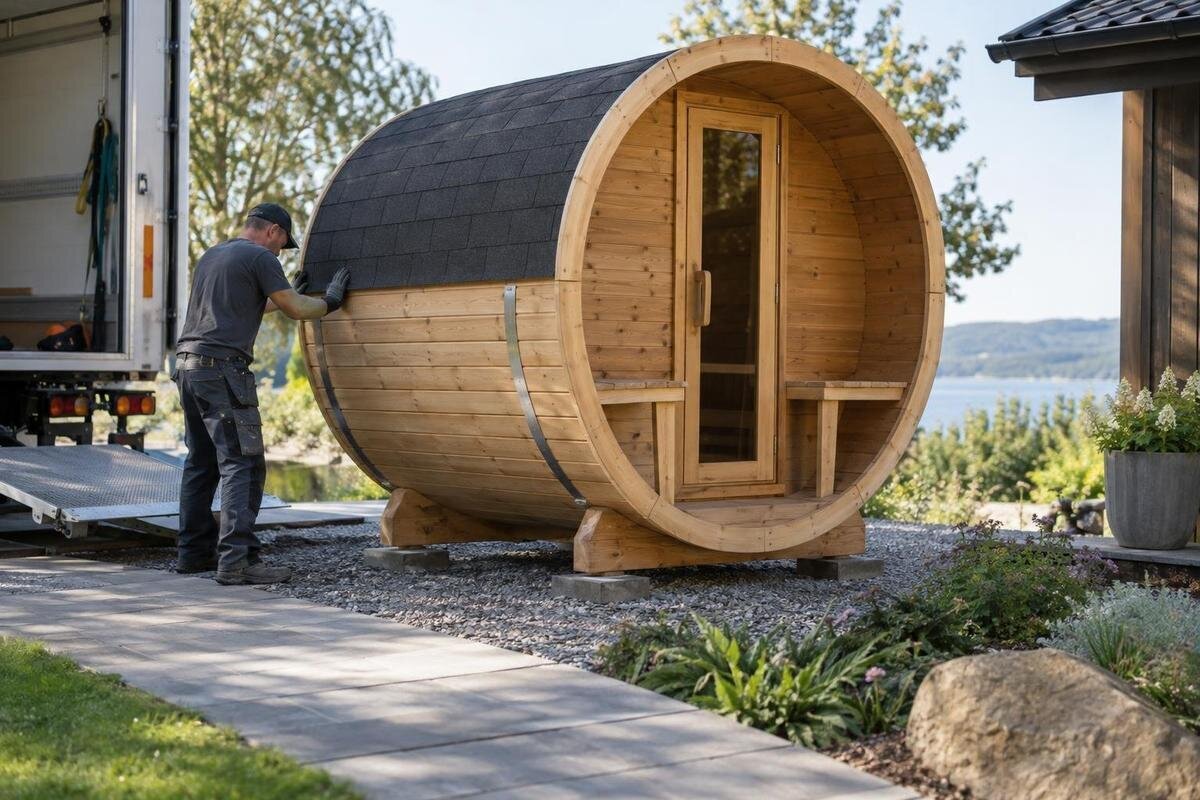
An outdoor sauna’s purchase price or installation quote does not answer what it will cost to own for five years. The initial figure covers a defined order and scope of work; the longer-term budget adds heating, routine care, paid service, repairs and financing across a stated period. Those costs depend on the selected configuration, property, local energy or fuel prices and how often you use it, so a universal total would be misleading. Build a specific purchase scenario from real quotes, measured or documented use, and clearly labelled assumptions.
01
What belongs in a five-year ownership budget
An installed price is the amount quoted for a defined sauna and a written supply-and-install scope at a particular property. It does not automatically cover every task needed there: delivery, unloading, site preparation, assembly or connection work may sit outside the quote. Five-year ownership adds what happens after installation, including energy or fuel, routine care, paid service, repairs or replacement parts, and borrowing charges if financed. Show the initial amount on its own and the five-year figure beside it. That split helps distinguish a high upfront project cost from larger ongoing costs. Use a consistent tax basis and identify any later one-time purchases.
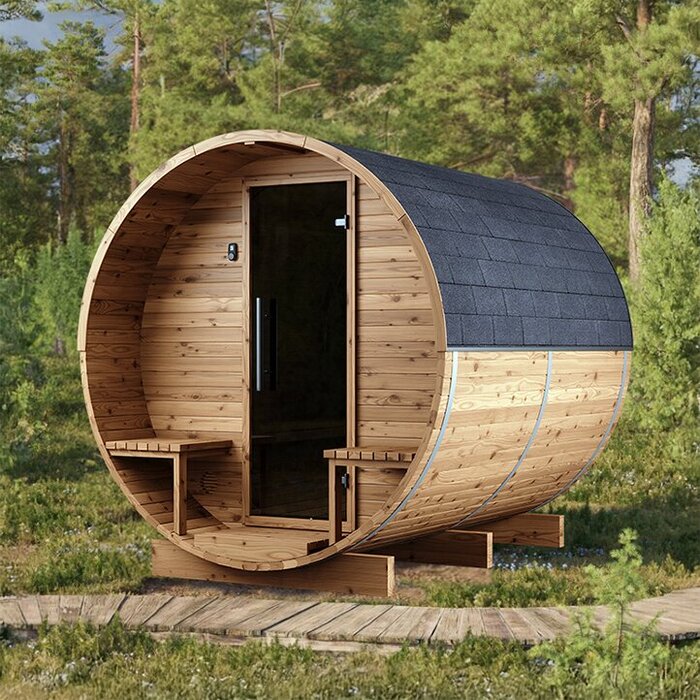
Set out Year 0 for the initial project and a separate total for each of Years 1 through 5. Add one-time expenses in the year they arise, only once. Do not reduce the result by assuming resale proceeds; list a possible future sale separately because it is uncertain. The LCF-300 Thermowood Barrel Sauna listing is one exact product name to record beside a quote. Its listed area of 6.89 m² is not a price, installation scope or energy measure. Match each cost to the selected model and configuration so an amount from one quote is not carried over without evidence.
Write down the purchase scenario and its assumptions
Use one explicit baseline rather than blending different owners’ habits. Assume a household buys one new outdoor sauna immediately before its first year of use, pays cash, keeps it for five full years and chooses one heating setup. Record the initial purchase and installation costs in Year 0. Set planned use at two sessions per week for 50 weeks per year: 100 sessions annually, or 500 over five years. These are calculation assumptions, not typical-use data or advice about frequency. For a concrete model name in the worksheet, the Sauna S-140 listing can be used as the sample choice; its listed area of 1.93 m² does not establish whether it suits a particular site or household.
Fill the initial cost with current written amounts for the sauna and configuration, delivery, assembly, site preparation, and qualified connection work where applicable. Call these amounts P, D, A, G and C; the Year 0 project figure is P + D + A + G + C, plus other necessary quoted items not already included. For this baseline, budget one owner-care allowance in each year using the exact manual and local supply prices. Do not invent an annual paid-service visit: add service when the documentation or a qualified provider identifies it, and mark an unresolved amount as pending rather than zero. Record the quote date and whether tax is included. These assumptions define a scenario; they do not supply a product price.
02
Estimate heating costs from actual use
Session count alone cannot produce a heating cost. For an electric setup, the amount depends on energy actually used and the local utility charges that apply. For a wood-fired setup, it depends on the quantity of fuel used and the price paid. Warm-up, bathing time and the owner’s operating pattern all matter, so use observations from comparable use where possible. Do not multiply a heater’s rated power by every minute of an assumed visit and treat the result as measured consumption; rated power alone does not show the energy used during a complete session. Keep the calculation tied to the heating setup selected for your scenario.
Use utility bills, suitable measurement records, fuel receipts or a documented estimate rather than a generic rate. Include delivery or kindling costs only if they are part of your actual fuel purchases, and count a fixed utility charge only if the sauna adds it. The HC-150 Thermowood Barrel Sauna is listed with an area of 2.97 m², but that figure is not a reading of energy consumption. Multiply a comparable per-session cost by the scenario’s 500 sessions, or total each year’s bills and fuel receipts. If use or rates vary through the year, keep the annual figures separate instead of forcing them into a single average.
Check what the installed quote covers
Ask the supplier or installer to define what “installed” includes for the exact order. Confirm whether the quote covers delivery to the property, unloading, access to the chosen location, assembly, a prepared base or other site work, and connection or heating-system work by the appropriate qualified professional. These are questions, not assumptions that every project needs every item or that one quote includes them. Ask what remains excluded, what depends on a site visit, and what could change with access or ground conditions. Also confirm whether travel, taxes or disposal are included, and get any conditions or exclusions in writing so the Year 0 figure has a clear boundary.
Put confirmed work in the initial project amount and list conditional items separately if they are not yet priced. Do not add delivery, assembly or connection a second time when they are already included. Name the HC-225 model listing in a model-specific estimate request; its listed 4.4 m² does not describe an access route, base requirement or installed price. Compare quotes only after their stated scope matches. If you have questions about local approvals or inspections, ask the relevant authority or a qualified professional rather than relying on an assumption.
03
Budget for routine sauna maintenance
Routine maintenance is different from a paid service visit and from a repair. Use the care instructions for the exact model; tasks, intervals and permitted products depend on the documentation and the product’s materials and exposure. Check what the manual says about cleaning, drying or ventilation, and any finish or inspection tasks, but do not turn examples into a universal schedule. Price only supplies or work called for by the instructions or confirmed by an experienced provider. If the manual does not specify a product or interval, leave it for confirmation instead of adding an assumed coating or replacement to all five years.
Give routine care a separate line for each year, even if an amount is provisional. Base it on planned quantities, current local prices, receipts or a written supplier estimate, and revise it if the plan changes. The N-210 Thermowood Barrel Sauna listing helps identify a particular model; it does not provide a maintenance schedule. Use the documentation for the actual sauna rather than borrowing care assumptions from another model. If you count your own time for decision-making, show it separately from cash spending so it is not confused with paid labour or supply costs.
Estimate servicing and repairs separately
Budget a paid service job separately from owner care. Do not assume a technician must visit every year, or that no visit or repair will arise. Check the exact product documentation and ask a qualified local provider what service applies to the selected configuration and when. Request an estimate that separates any travel or call-out charge, diagnosis, labour, parts and relevant taxes. If a service requirement is linked to a warranty or contract, read the actual terms; neither coverage nor a particular interval can be inferred from a product name. Ask whether the estimate covers a single visit or additional work as well.
Place a confirmed visit in the year it is expected, and identify possible repairs that have not yet been priced in a separate contingency note. A reserve is a planning allowance, not a prediction that a repair will happen; use a numerical range only when supported by provider estimates or actual costs. The N-250 Thermowood Barrel Sauna is an exact model reference to give a provider, but its product identity does not establish service costs. If a purchase or installation package includes a visit, record its scope and avoid counting the same work again in a later year.
04
Add the annual operating and care costs
Build a year-by-year ledger so the total can reflect changes. For year y, let E_y be electricity or fuel, M_y routine-care supplies or work, S_y paid servicing, R_y repairs and parts, and O_y another recurring cash cost caused by ownership. The annual amount is E_y + M_y + S_y + R_y + O_y. Add the five annual amounts to the initial Year 0 project figure, then add any one-time replacement or financing charges not already counted. For wood-fired use, enter purchased fuel in E_y; do not put the same logs in a second line. Record actual spending as it occurs so estimates can be updated.
Keep fixed and variable costs apart. Heating often moves with use, while a quoted service visit or one-time repair belongs in the year expected, not multiplied by the session count. Include a fixed fee only if owning the sauna actually adds that expense. You can divide measured running costs by actual or planned sessions for a supplementary cost-per-use figure, but keep the installed investment visible. The Sauna LC-260 listing shows a listed area of 5.12 m²; it identifies a model, not a basis for applying a generic utility rate.
Test how use changes the five-year total
Keep the purchase quote fixed and compare low, base and high session counts that match your plans. For illustration, one, two or three sessions a week over 50 weeks would equal 250, 500 or 750 sessions in five years. These are arithmetic examples, not typical-use data or usage guidance. Recalculate the heating or fuel line from a cost based on comparable use. Do not automatically multiply every maintenance allowance, service visit or repair reserve by session count; change those inputs only where the underlying estimate genuinely depends on use. This shows whether the budget is sensitive to the number of sessions or mainly to fixed costs.
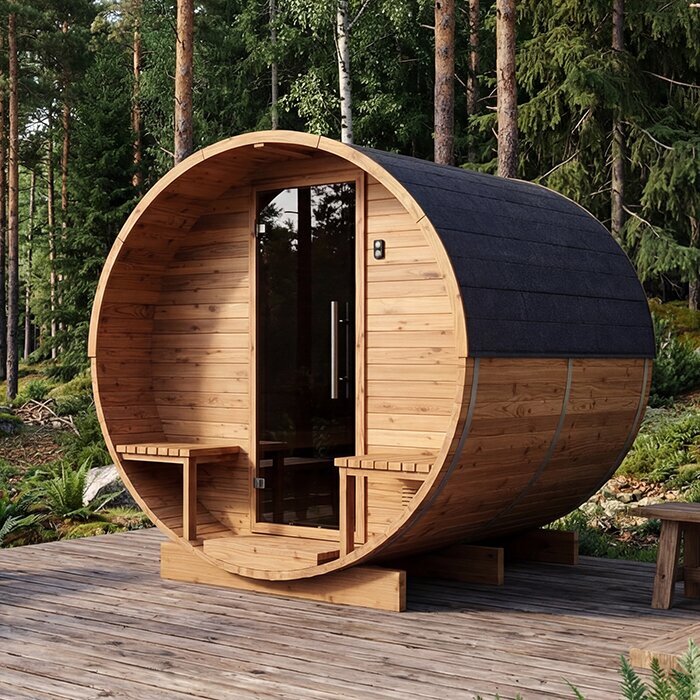
Then test local prices using current bills, fuel receipts or actual quotes, not an invented percentage increase. State any assumption about future rates explicitly. Change one input at a time to see what drives the result, then combine credible assumptions at the higher end of your estimates for a cautious case. If you are pricing another configuration such as the HCF-300 Thermowood Barrel Sauna, prepare a separate purchase and operating record rather than transferring an unverified price or energy estimate from another model. Its listed area of 6.89 m² is not a cost multiplier.
05
Keep extras and financing visible
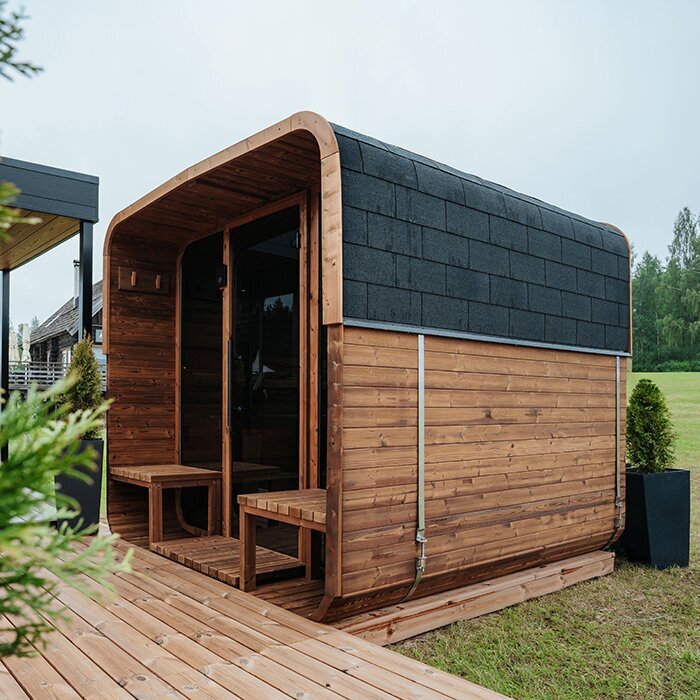
Keep optional property work and accessories separate from the sauna’s core installed amount. A path, screening, landscaping, lighting, seating or another enhancement belongs in the five-year budget only if you intend to pay for it; label it optional and place it in the year of purchase. Show quoted site work separately from personal additions so different scenarios can be compared fairly. For work that affects access or connections, ask the appropriate qualified professional what your property requires. A product photograph cannot establish which work or materials a particular location needs, so do not use one as a cost estimate.
If you borrow, state whether your report shows the cash purchase cost or a financed cost. Count the purchase principal once, then add the actual borrowing charges and fees from the agreement; adding every loan payment to the full purchase amount would count the principal twice. A separate cash-flow view can still show deposits and payment timing. Use lender and supplier documents for the figures, and keep taxes and deposits on a consistent basis. If you pay cash, financing charges do not apply to that scenario. Do not insert an assumed interest rate or promotional term.
Present the five-year estimate with its assumptions
Show the assumptions beside the result: exact model and configuration, quote date and installation scope, heating source, planned sessions, local energy or fuel input, maintenance basis, service assumption and tax treatment. State whether you hold future prices flat or change them, and explain the basis for any change. A base estimate is useful; add lower and higher cases when there is genuine uncertainty about site work, use or service. Mark unresolved amounts as not yet priced. A tidy subtotal that leaves an open installation or service item out is not the full project or ownership amount.
After the first year, replace estimates with session records, utility bills, fuel receipts and care or service expenses, then update the remaining four years. Keep actual spending separate from forecasts so later revisions are based on what happened, not on treating the original scenario as a promise. The useful comparison is the initial installed price beside the cumulative five-year ownership amount, with major assumptions visible. If a required figure is still unavailable, show its status instead of hiding it in an unexplained contingency.
Frequently asked questions
Does the five-year total include the installed price?
Yes. Add the actual initial project amount to the costs you expect over Years 1 through 5. Show the initial installed price separately as well, so you can distinguish the upfront project cost from later spending on use and care.
How can I estimate the total before I have final quotes?
Use named cost lines and placeholders for the sauna, delivery, site work, heating and care. Mark unpriced items as pending rather than zero, then replace placeholders with current supplier, utility, fuel and service figures before treating the result as a budget.
Can I estimate electricity cost using the heater’s rated power?
Not as a measured cost. Use energy consumption from comparable use or a suitable measurement, including the relevant warm-up and bathing period, and apply your local rate. Rated power alone does not show how much energy a complete session uses.
Should I budget for a paid service visit every year?
Only include a scheduled visit when the exact product documentation or a qualified local provider supports that timing. Keep owner maintenance, confirmed service and possible repairs in separate lines; leave an unpriced service item visible rather than assuming it costs nothing.
Should I subtract the sauna’s expected resale value?
Keep possible resale proceeds separate from the five-year ownership outlay. A future sale is uncertain, so subtracting an assumed amount can make the budget look lower than the cash you expect to spend.
A useful five-year figure combines a clearly defined initial project cost with five years of use and care assumptions that you can revise. Keep purchase and installation quotes, energy bills or fuel receipts, routine maintenance allowances and service estimates distinct, with unknown costs visible. In the example, 500 sessions is a planning count, not a promise. Updating that count and the actual costs as ownership continues shows which assumptions drive the budget and keeps the initial installed price separate from the longer-term total.
