
When Should You Order an Outdoor Sauna?

Outdoor sauna planning
Ordering an outdoor sauna is not a matter of counting a standard number of weeks back from summer. The date depends on the exact model and configuration, current production and delivery estimates, approvals that apply to the property, site preparation, and the people responsible for assembly or connections. Work backwards from the first session you want, rather than treating dispatch as the finish line. A unit can arrive while the base, access, services or required checks are still incomplete. This guide sets out the decisions to make early, the dates to confirm in writing, and the gaps to leave for work beyond the supplier’s control.
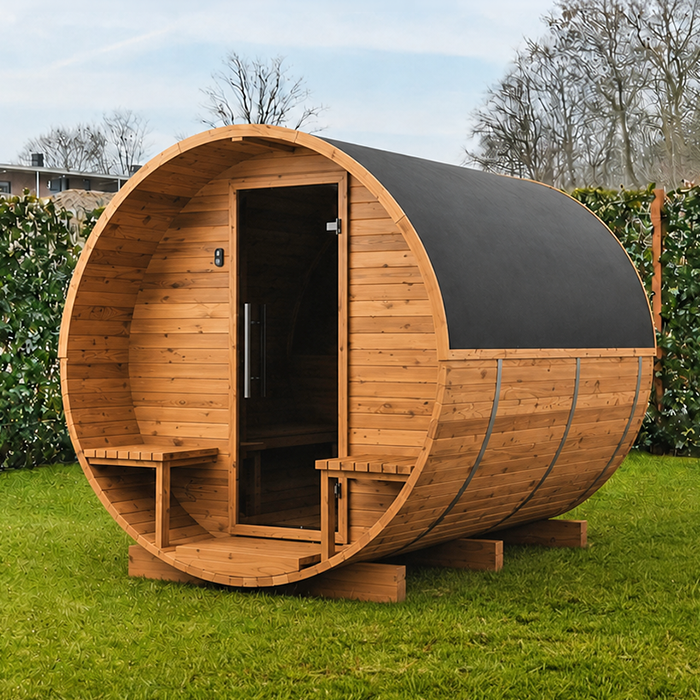
Work backwards from your first-use date
Set a realistic first-use window before asking for a delivery date. Decide whether you are planning around a specific gathering or simply want the sauna ready within a season, and note a backup period if the date can move. Define what “ready” means for this project: the site is prepared to the selected model’s current instructions, assembly is complete, any required services and checks are done, and the person responsible has the operating information needed for first use. Some projects will not need every task in that list. The point is to plan for the actual configuration, not to treat shipment arrival as a finished sauna.
Draw a dependency chain backwards from that milestone: final checks or commissioning, assembly, delivery, production and dispatch, order and drawing confirmation, any required reviews, and site work. Beside each task, record an owner, an expected date, when it was last confirmed and who supplied the estimate. Mark which steps depend on others: the support surface should follow the correct model instructions, for example, and a required review may need specific documents first. Some conversations can happen in parallel, but that does not mean site work should start before the layout is confirmed. Schedule check-ins before dependent bookings, and leave time to answer questions or correct incomplete work.
Model selection and order scope
Start with a short brief: how many people are likely to use the sauna at once, how they will move through the space, and where the unit could fit on the property. Compare those needs with current manufacturer drawings and instructions for each model under consideration. A product name, photograph or floor-area figure is not a substitute for a dimensioned layout, openings and installation requirements. If you are tracking a store item, Sauna LCF-300 is a useful exact model reference for your questions; it does not by itself establish that the model suits your site. Check the intended footprint and the access route against authoritative documents before settling on a choice.
Write down the exact model and configuration you intend to order, then ask what the supply includes and excludes. Confirm whether the heater and controls, assembly, electrical connection, commissioning, accessories, site work, unloading and delivery are part of the order or handled separately. Do not infer inclusions from a product category or photograph. Ask which document confirms each selection and whether changing an option later could affect drawings, approvals, the base or the production estimate. Keeping one current scope sheet, with the supplier’s confirmation, gives contractors and reviewers a consistent reference.
Property approvals and review timelines
Ask early whether local approvals or property rules apply to the proposed location and sauna configuration. Depending on the property, relevant contacts might include a municipal building department, a condominium or strata council, a landlord, or another organization responsible for the site. Explain what you are proposing and ask which details matter, such as placement, structure information, the selected heater or service requirements. Requirements depend on the location and property, so do not rely on a checklist from another project or assume that the same process applies everywhere in Canada.
If a review is needed, ask what drawings and supporting information it requires and when those documents must be submitted. Identify the intended product precisely—for example, the Sauna S-140 product page—then request the current manufacturer documents for that exact model and configuration. A catalogue entry can identify the item, but it is not a substitute for plans or approval from the relevant authority. Record any required confirmation and make it a project milestone before irreversible site work or commitments whose terms you have not checked. Build in time for questions or revised documents; the supplier’s production estimate does not tell you how long a local review will take.
Measure the location and delivery route
Check two different kinds of space: where the sauna will sit and how it will reach that location. Use the current layout drawing to assess the footprint, openings and any clearances specified by the manufacturer. Check property boundaries, existing services, nearby structures and the path people will use to reach the unit. Ask the relevant authority or a qualified professional about constraints you cannot confirm yourself. If the work or delivery is planned for a season when local snow, rain or freeze conditions could affect access, include that site-specific risk in the schedule rather than assuming the route will remain usable.
Walk the delivery route and note gates, turns, steps, overhead obstructions, driveway conditions and possible staging space. Ask the supplier or carrier for the actual package dimensions, handling method and unloading requirements; a barrel-sauna category or product image does not show how a particular order will arrive. Keep the model reference clear, such as Sauna HC-150, when asking for those details. Confirm who arranges unloading, how far the carrier can bring the shipment onto the property, and whether assembly is included or booked separately. Share route measurements or photos with the responsible party before setting a delivery date.
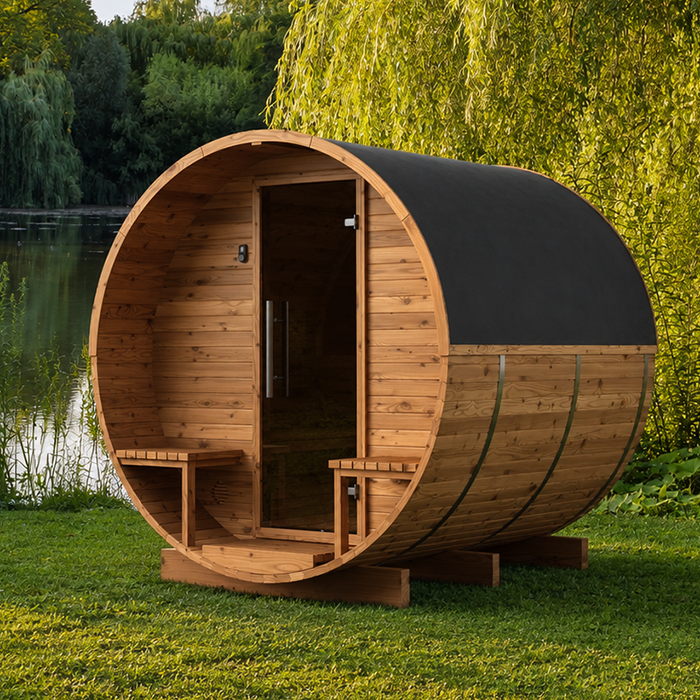
Support surface and site preparation
Do not choose a base or support method by copying another sauna project. Get the current instructions for the exact model, including any requirements for support points, level, anchoring or drainage, and have a qualified contractor assess the site where needed. An existing deck, sloped ground or drainage concern may need professional review; a product listing does not provide an engineering assessment or a load rating. If the instructions or local review leave a question unanswered, resolve it before construction rather than relying on a guess that could affect fit or installation.
Ask the contractor what has to happen, in what order, and what needs to be inspected or confirmed before the delivery. Allow the site-preparation schedule to account for the contractor’s availability and local weather; do not invent a curing or inspection period if the relevant professional has not specified one. The drawings for Sauna HC-225 are not interchangeable with instructions for another model, so keep the chosen model and configuration on the work order. Before delivery, confirm that the surface meets the applicable instructions, the route is clear, and any relevant utility locations have been checked by the appropriate service or professional.
Services and trade bookings
Find out what services the selected configuration requires before arranging electrical or other trade work. Ask the supplier for current heater, control and installation documentation, and for a clear list of what is supplied and what must be provided separately. Do not assume a heater or connection is included just because a listing describes a sauna. When you contact a qualified electrician or other relevant trade, identify the exact item, such as Sauna N-210, and share the manufacturer documents rather than asking them to work from a product photo or model name alone.
Have the responsible professional confirm the work, sequence and any local review or inspection that applies. Coordinate service routes with site preparation so that any required work is planned before the relevant surfaces are finished, but do not carry out electrical or installation work from general online advice. Ask who books each trade, who arranges any required sign-off, and whether those tasks are part of the supplier’s installation service or a separate appointment. Keep the service date distinct from delivery: a unit can arrive before the people and checks needed to complete the project are available.
Get a current lead-time estimate before ordering
Ask the supplier for a current estimate for the exact model, configuration and delivery destination. Find out whether the item is available for immediate dispatch or has a production schedule, without assuming either from the product page. Clarify when the quoted lead time begins—for example, after order confirmation, final drawing approval or another stated milestone—and whether the estimate covers production, dispatch, transit, delivery or only some of those stages. Ask whether the estimate is expressed in calendar days or business days, and which factors could change it. A figure for a different model or an earlier enquiry is not a reliable schedule for your order.
Before placing the order, put the schedule beside your project milestones. Check the written order details and the terms for configuration changes, delivery rescheduling and any other issue that could affect timing. If the supplier needs further information before confirming a date, provide it early and ask when you should expect an update. For a model you are considering, such as Sauna N-250, ask the supplier to tie the estimate to the configuration on your order. Place the order when the scope and important dependencies are understood, then allow a buffer before the date you hope to use the sauna.
Production updates and order changes
Once the order is confirmed, keep one schedule shared with the people responsible for the site, delivery and any trade work. Record the supplier’s latest production and dispatch estimates separately from the carrier’s delivery window, along with who confirmed each date. Set reminders to check in before you commit dependent bookings, rather than assuming an early estimate will remain current. A project sheet can include the model, configuration, outstanding documents, approvals, site-preparation status, delivery access and the next person who needs to act. The order reference should be unambiguous; for example, Sauna LC-260 identifies a particular model, but the confirmed order documents define the actual configuration.
Tell the supplier promptly if the configuration, destination or site circumstances change, and ask whether revised documents or a new estimate are needed. Even a change that seems small to the buyer may affect a drawing, a review or a delivery plan, so get its effect confirmed before treating the old dates as valid. If production or delivery may slip, update contractors early and ask what can be moved and what needs a revised appointment. Keep any local weather risk in view as well. A useful timeline is one that is refreshed when circumstances change, not just a set of dates copied from the original order.
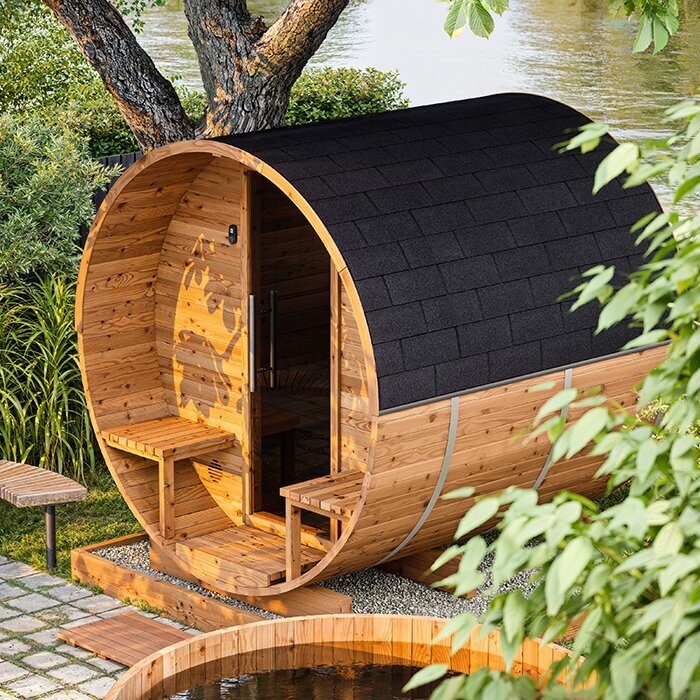
Prepare for delivery and receiving
Before confirming a delivery appointment, ask the supplier or carrier how the order will arrive and what the site must provide. Confirm the shipment dimensions, unloading method, vehicle access, appointment window and any restrictions on bringing the item onto the property. Ask whether a recipient must be present and who is responsible for unloading or moving the sauna beyond the delivery point. Keep the model reference exact—for example, Sauna HCF-300 catalogue entry—but do not assume the product page or photograph describes the package or handling requirements. Use the carrier’s current instructions to decide whether the planned route and staging area are suitable.
Set a delivery-day plan that leaves the route clear and gives the receiver time to follow the supplier’s instructions. Confirm beforehand how to check the order, what to do if something appears damaged or missing, and how quickly the supplier needs to be notified. Do not book assembly or trade work on the assumption that unloading will finish at a precise time unless the responsible parties have agreed on the sequence. If weather or access prevents delivery, ask in advance how a new appointment is arranged and whether temporary storage is possible. Update the people waiting on the shipment as soon as the carrier changes the date.
Assembly, commissioning and first use
Delivery is a project milestone, not proof that the sauna is ready for use. Confirm who is responsible for assembly, any required service connections, final checks and commissioning, and whether those tasks need separate appointments. Use the current manufacturer instructions and the relevant qualified professionals for the work; do not rely on a generic schedule for installation details. Ask what documentation or confirmation will be provided at handover, and keep the operating instructions with the order records. If an approval or inspection applies to the project, include its completion in the readiness plan rather than assuming it will happen automatically on delivery day.
Schedule the first session only after the applicable assembly, service work and checks are complete and the sauna can be operated according to its instructions. Leave time to resolve a missing document, a delivery issue or work that needs another visit instead of putting the first-use date immediately after arrival. A simple close-out record can note the model delivered, the people who completed the work, outstanding items and where the manuals are kept. The final date is easier to judge once those responsibilities are settled and the site is ready, rather than when the supplier first provides a production estimate.
Frequently asked questions
How far in advance should I order an outdoor sauna?
There is no reliable lead time that applies to every model, configuration and destination. Ask the supplier for a current estimate for your exact order, then work backwards from the date you want the sauna ready. Include approvals, site preparation, delivery and any assembly or commissioning, and leave room for delays.
Can I order while the site is being prepared?
Possibly, if the model and configuration are settled, the required drawings are available, and you understand the supplier’s order and delivery terms. Confirm whether the site work can proceed from those documents and whether changes could affect production timing. Do not assume an unfinished site can accept a delivery.
Does the delivery date mean the sauna is ready to use?
Not necessarily. Delivery may be separate from unloading, assembly, utility connections, required checks and commissioning. Confirm which tasks are included and who is responsible for each. Plan first use after the applicable work is complete and you have followed the manufacturer’s operating instructions.
Which dates should I get in writing?
Ask when the lead-time estimate starts, when production is expected to finish, and whether dispatch, transit and delivery have separate estimates. Also confirm the delivery window, the site-readiness requirements and any installation or trade bookings. Record the date each estimate was confirmed so you know when to request an update.
What if approval or weather delays site preparation?
Tell the supplier and any booked contractors as soon as the delay becomes likely. Ask for revised production or delivery estimates and confirm the terms for rescheduling or temporary storage rather than assuming either is available. Update dependent bookings and keep the first-use date flexible until the site is ready.
An outdoor sauna is ready for first use when site preparation, assembly and any required trade work and checks are complete—not simply when production is finished. Build the schedule around the confirmed configuration and destination, check changing estimates with the people responsible, and keep first use as the final milestone. That way, a hopeful delivery date is less likely to become a rushed arrival at an unprepared site.
