
Selecting an Outdoor Sauna for Long Canadian Winters
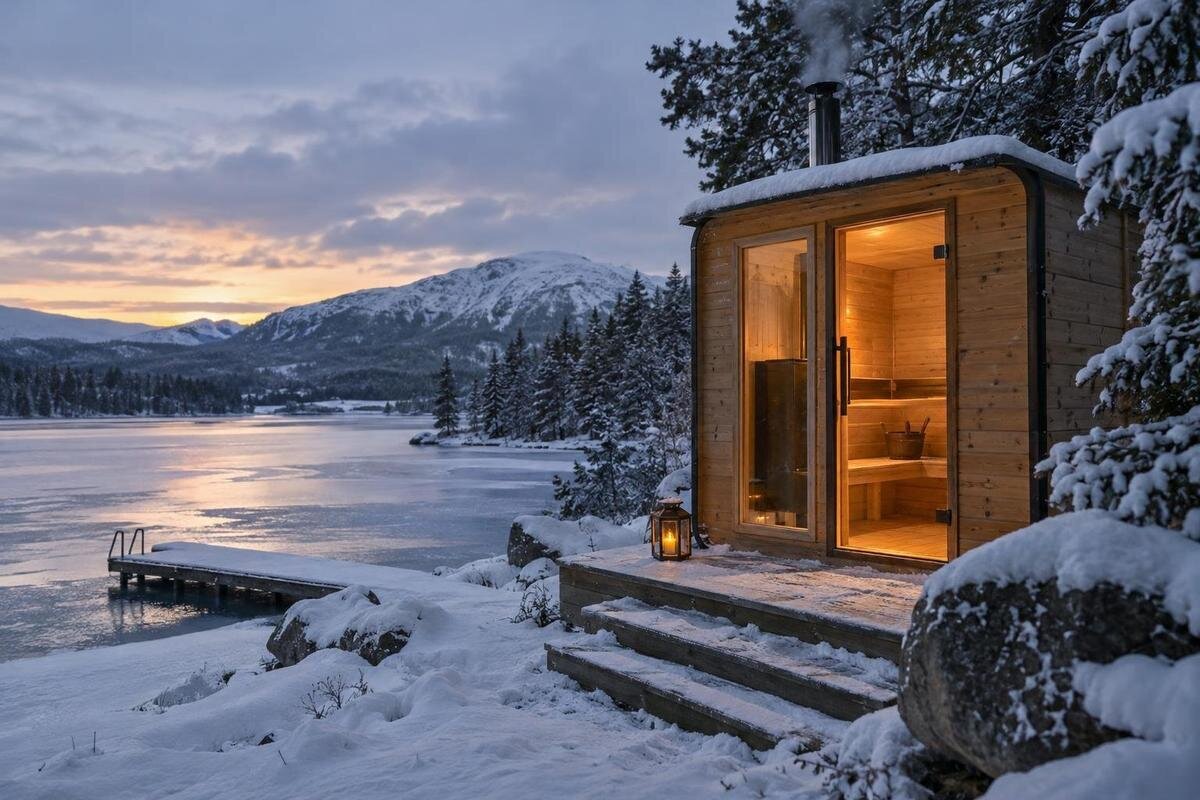
Outdoor sauna planning
An outdoor sauna used through a long Canadian winter has to work as part of a complete site, not just as a cabin that heats up. The relevant questions run from the manufacturer’s documented operating conditions and the construction of the enclosure to where snow drifts, how meltwater drains, and whether the walk from the house can be cleared safely. Canadian conditions vary by region and property, so there is no single winter specification to assume. Compare the exact sauna and heater documentation, then assess the exposure, ground and access at your own site.
01
Cold-weather limits for the sauna and heater
Begin with the installation and operating manuals for the exact sauna configuration and its heater, not a general category description. Ask the manufacturer or seller for written guidance on outdoor use, any ambient-temperature limits, required start-up and shutdown steps, and restrictions during storage or prolonged non-use. Confirm whether the heater is included, selected separately or supplied by another party, then read its manual as well; the cabin and heater instructions both matter. Ask whether guidance differs for first start-up, routine use and restarting after a long idle period. If the documents do not address the conditions you expect, request clarification before committing. A product name, a high advertised sauna temperature or an “all-season” phrase does not, on its own, establish suitability for severe cold.
Build the check around your actual winter pattern: usual cold spells, wind exposure, drifting snow, thaw-and-refreeze periods and how often someone will be available to inspect or clear the area. A sheltered yard and an exposed corner can behave differently even within one community. Cold starts and wind may affect warm-up behaviour and energy use, but the effect depends on the enclosure, heater, installation and weather; ask for expectations tied to the exact configuration rather than estimating from area alone. Record the conditions the maker confirms and any assumptions behind that guidance. If your site regularly falls outside the documented range, discuss the mismatch with the manufacturer or an installer before purchase.
Construction details beyond the exterior finish
Review what the sauna is made of and how its parts fit together, rather than treating the exterior finish as the whole specification. Ask for an assembly drawing and material information for the wall, roof, floor, door, glazing, joints and hardware; verify which parts are supplied and which must be sourced separately. Request the manufacturer’s explanation of insulation, air sealing and protection from wind-driven precipitation where those details apply to the design. Ask how exposed edges and connections are meant to be inspected or maintained over time. The word “Thermowood” in a listing does not establish a particular insulation level or weather rating. Keep the documents for the precise model and options you plan to order.
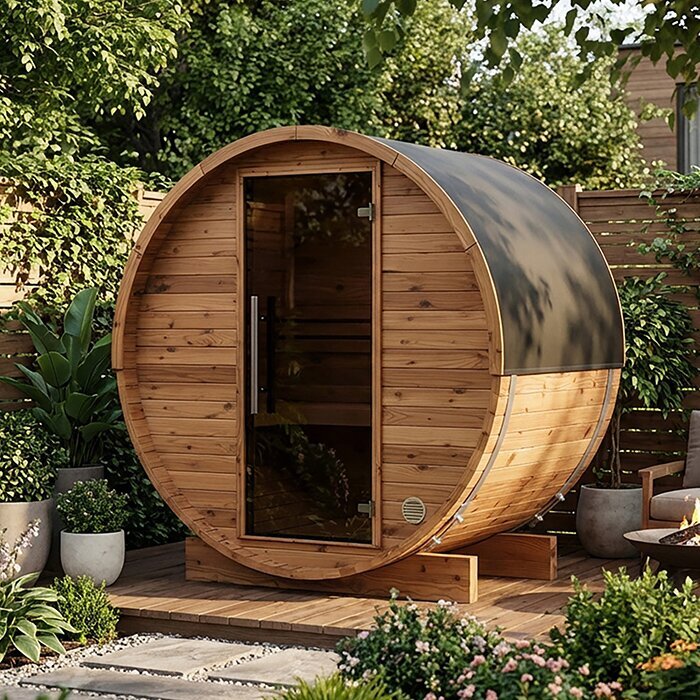
Look closely at transitions: the roof-to-wall junction, corners, door frame and any window or service opening. Ask how each is assembled, how water is kept out and what maintenance preserves the intended finish. When comparing the Thermowood Barrel Sauna HC-225 with other models, use its current drawing and assembly instructions to review any roof covering, seals or insulation. Compare these details using equivalent information for each option, rather than relying on exterior appearance. A photograph may show the general shape and finish, but it cannot confirm hidden layers or construction details. Also check whether selected options change the layout or construction shown in the drawing, so that your comparison reflects the version you would actually order.
02
Roof protection and meltwater management
Separate the sauna cabin from whatever protects it from precipitation. Confirm whether a roof covering, flashing, trim or other weather-protection component is included, optional or not part of the package. Ask how the manufacturer expects rain and meltwater to leave the roof, and what written limits or care instructions apply to snow and ice. Do not assume that a product image showing a roof, a timber surface or a barrel profile proves a complete weather-protection system. If a covering is selected locally or installed by a contractor, ask whether the proposed assembly is accepted by the sauna manufacturer and whether it affects the installation instructions or warranty terms. Verify the answer for the exact configuration rather than inferring it.
Consider water after it leaves the roof as well as protection above the cabin. Roof runoff, wind-driven rain and snowmelt should not be directed onto the entrance path or left to collect at the base. Ask the installer how the site will handle drainage through freeze-thaw conditions, including where water will go if the ground is frozen or saturated. The Thermowood Barrel Sauna N-210 is one model to assess using its exact documentation; its catalogue name does not confirm a roof package or snow limit. Verify the configuration being quoted, including components installed by others, and clarify who will maintain any locally sourced roof covering.
Snow, wind and overhead exposure at the site
Consider where wind tends to pile snow, where roof runoff falls and which way drifts build. Nearby fences, buildings and trees can affect shelter and snow deposition, but they do not automatically protect a sauna: a sheltered position may still receive runoff or be awkward to clear. Check whether a likely drift zone could block the entrance, cover a designed air opening or make maintenance difficult. If drawings show vents, controls or other exterior components, follow the manufacturer’s stated clearances and keep them accessible; do not move, seal or bury parts to stop drafts. Look at the site in winter if possible, or ask someone familiar with it about recurring drifts and snow coming off nearby roofs.
Ask for documented wind and snow exposure information for the exact model, roof arrangement and installation, and have an appropriate local professional review questions about the structure or location. A product listing cannot establish a snow-load capacity, a wind rating or suitability for a particular exposed site. If you are considering the Thermowood Barrel Sauna N-250, include its drawings and proposed position in that review. Plan where cleared snow will go so it will not drift back against the door, block service access or redirect meltwater towards the base. Include room for snow-clearing equipment and inspection, not only the footprint of the installed sauna.
03
Base support and drainage
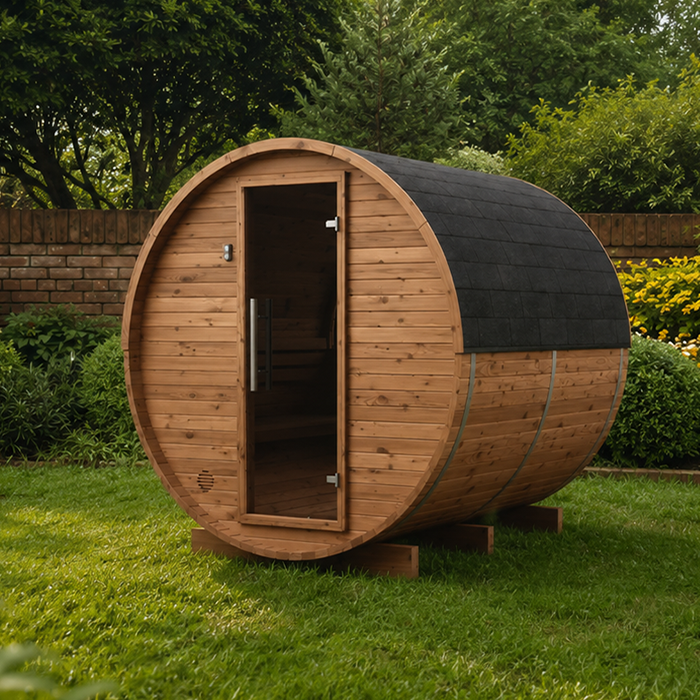
Use the manufacturer’s base and support requirements as the starting point, then have them matched to the actual ground. Ask whether the drawing specifies a level support surface, what tolerances apply and which parts of the installation should be checked before assembly. Soil, slope, drainage and repeated freezing and thawing all matter to site planning, so a surface that works for a different cabin or a neighbouring property may not suit this one. Avoid choosing blocks, a slab or another foundation method by appearance alone. For the Thermowood Barrel Sauna LC-260, request the model’s support requirements before discussing base options with your contractor. Keep the proposed support arrangement and the site conditions together in that discussion.
Consider runoff before the base is installed, not after water starts to freeze beside it. Review the site’s slope, the route from roof to ground and any low spots where meltwater could gather; avoid directing water towards a doorway, path or nearby building. If excavation, grading or structural support is needed, ask a qualified contractor to determine the appropriate approach for the site and follow the manufacturer’s requirements. Do not use a general guide to size a foundation or decide what soil can carry. Ask the installer to state any assumptions about the ground and drainage, and keep the final drawings and installation records for future assessment.
Winter access from the house to the sauna
Plan the whole walk from the house, parking area or changing space to the sauna, including the last few metres at the door. Consider whether the route can be cleared in darkness, where removed snow can be stored, how thawing snow will drain and whether steps or slopes become difficult when icy. Check the exact door position, swing, threshold and required working space in the drawing; a photograph is not a scale plan. Before placing the Thermowood Barrel Sauna HCF-300, ask for its entrance layout and dimensions so the route and landing can be planned around the actual configuration. Mark where people will turn, pause or set down what they are carrying.
Treat the entrance as a small outdoor work area, not just an opening in the wall. Keep room to open the door, step aside, carry towels or supplies and reach any controls or maintenance points identified in the instructions. Lighting should make the approach and footing visible in winter’s shorter daylight; consult a qualified professional if wiring or outdoor electrical work is involved. Choose paving and any traction treatment with the surface material and its care instructions in mind. Plan who will clear the path after snowfall and where the tools will be stored. A walkway is not dependable winter access simply because it was clear on installation day.
04
Heater, power and service requirements
Resolve the heater and utilities before finalizing the site. Confirm whether the quoted sauna includes a heater, controls, wiring, chimney or other items, and identify what must be supplied or fitted separately. For an electric heater, have a qualified electrician review the manufacturer’s requirements and the proposed power supply, controls and outdoor cable route. For a fuel-fired option, have a qualified installer assess the heater, flue or chimney, clearances and related components against that model’s documentation. Ask how the heater is matched to the exact cabin rather than selecting one from a room-size guess. Do not adapt the cabin or relocate an opening without guidance from the relevant manufacturer or installer.
There is no universal wiring or chimney arrangement for every sauna. When reviewing the Thermowood Barrel Sauna LCF-300, check the current offer and written specification for the heater type, electrical supply, controls and included components. Have the qualified professional confirm that exterior connections remain accessible for inspection and service, and that snow clearing will not damage them. Review access with winter conditions in mind, including the snow that usually accumulates around the sauna. If the site has constraints or the heater instructions differ from the cabin instructions, resolve those questions before installation. This also helps clarify which service arrangements belong in the installation plan rather than being left until the cabin is in place.
Ventilation and moisture management in winter
Ask for ventilation and moisture-management instructions for the exact sauna and heater. Identify designed air openings on the drawing and how they are meant to remain clear during snow and ice; do not block a vent to retain heat or add one based on general advice. Follow the specified start-up and after-use routine, including any directions for airing and drying the interior. Warm, moist air meeting cold surfaces can cause condensation, so the manufacturer’s moisture guidance matters alongside the heating instructions. For the Thermowood Barrel Sauna S-140, request the drawing for the version you are considering and use it to locate the openings covered by those instructions.
Ask what the maker recommends when the sauna is used intermittently or left unused for an extended period in winter. The right approach to ventilation and drying depends on the design and instructions, so do not assume that a routine for another cabin applies. If the sauna will be closed for a season, get directions for that situation as well as everyday use. Where a site plan includes separate water or shower equipment, treat its winter care as a separate question for the relevant supplier and installer; do not assume those components are part of the sauna package. Keep the routine practical for the conditions in which you will actually use the space.
05
Interior space and seating for winter use
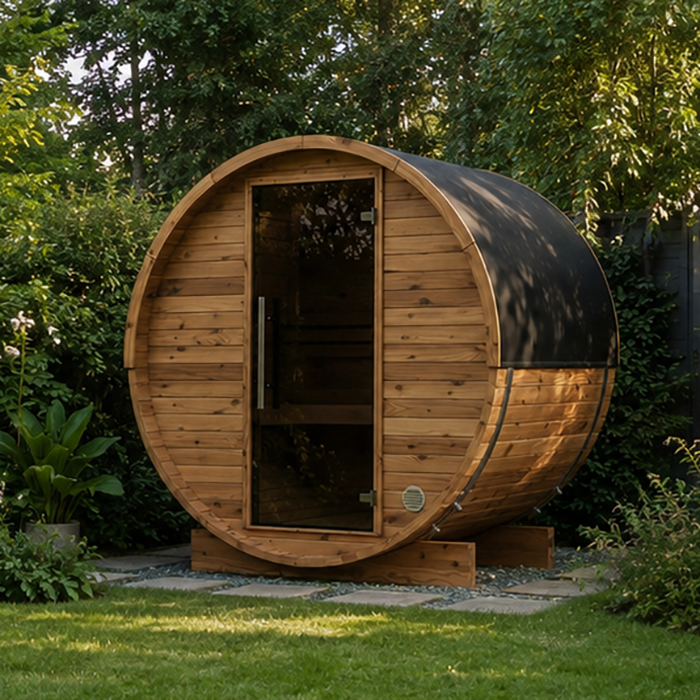
Choose interior space from the way you expect to use it, not from a model name or exterior photograph. Ask for a dimensioned plan showing usable interior space, bench sizes and positions, headroom, the entrance and heater location. Decide how many people will normally use the sauna at once and whether they can sit without obstructing the door or the clearances specified by the manufacturer. Catalogue area is not an occupant rating. For example, the Thermowood Barrel Sauna HC-150 is listed at 2.97 m²; that figure alone does not establish bench layout, interior dimensions or capacity. Confirm the plan for the exact version and options being considered.
Winter use also involves what happens before and after a session. Decide where wet boots, coats, towels and other outdoor items will go, whether there is a sheltered place to change, and how far users must walk between the house and sauna. Those needs may call for a separate covered area, but do not assume it is included with the sauna. A larger layout can take up more yard space and require more snow clearing; a smaller one can limit seating or circulation. Consider where people will leave footwear without blocking the exit, then compare the plan with your household’s routine and the heater manufacturer’s requirements.
Maintenance, storms and service interruptions
Make a plan for the weeks when storms, ice or outages interrupt the usual routine. Keep the current manuals available, know how to shut down the chosen heater as its manufacturer directs, and follow the stated procedure before restarting after an interruption or visible damage. If a control, connection, door or enclosure appears damaged, do not improvise a repair or continue operation without qualified guidance. Decide who will clear snow from the approach and check the site after severe weather, and where tools can be stored without blocking the route. Clear responsibilities matter if several people use the sauna.
Ask what care the materials and components need, how often to inspect visible seams, the door, roof covering and exposed hardware, and which cleaning or treatment products are compatible. Do not apply a generic coating or caulk a gap without the maker’s direction. Find out which parts need access for service and whether an inspection after a storm can be done safely by the homeowner or requires a professional. Keep those access points in the site plan, and note any maintenance instructions that apply to optional or locally installed components. The method and interval depend on the product, so follow its guidance rather than inventing a schedule.
Frequently asked questions
Does a barrel-shaped sauna automatically suit long winters?
No. Shape and appearance do not establish cold-weather operating limits, roof performance or suitability for an exposed site. Check the documentation for the exact sauna and heater, including installation and maintenance requirements.
Which cold-weather details should I verify?
Ask for written guidance for the exact configuration on outdoor use, any ambient-temperature limits, start-up and shutdown, and prolonged periods when the sauna is not used. Compare it with your site conditions, and request clarification if the documents do not address them.
Can I assume the sauna roof is designed for snow?
No. Confirm what roof protection is included, what limits or care instructions apply to snow and ice, and whether any locally sourced or installed components are accepted by the manufacturer. A product photo is not a rating.
Does the listed area tell me how many people the sauna can hold?
No. Area alone does not show interior dimensions, bench layout, clearances or user capacity. Ask for a dimensioned interior plan and the heater requirements, then compare them with your household’s needs.
What makes a route to the sauna practical in winter?
Plan for snow storage, drainage, lighting, icy conditions, door swing and a landing with enough clearance. Check dimensions on the installation drawing and choose path materials and treatments that suit their care instructions.
Choose an outdoor sauna for winter by comparing the documented limits, construction and heater configuration with the conditions on your property. Then consider what surrounds the cabin: roof protection, runoff, the base, snow exposure, a route you can clear and maintenance you can carry out. A listing name, photograph or generic winter claim cannot answer every question. When the manufacturer’s information and a qualified site review support the plan, you can compare options on evidence rather than assumption—and know what needs attention through the season.
