
Does an Outdoor Sauna Need Water or a Drain?
Outdoor sauna planning
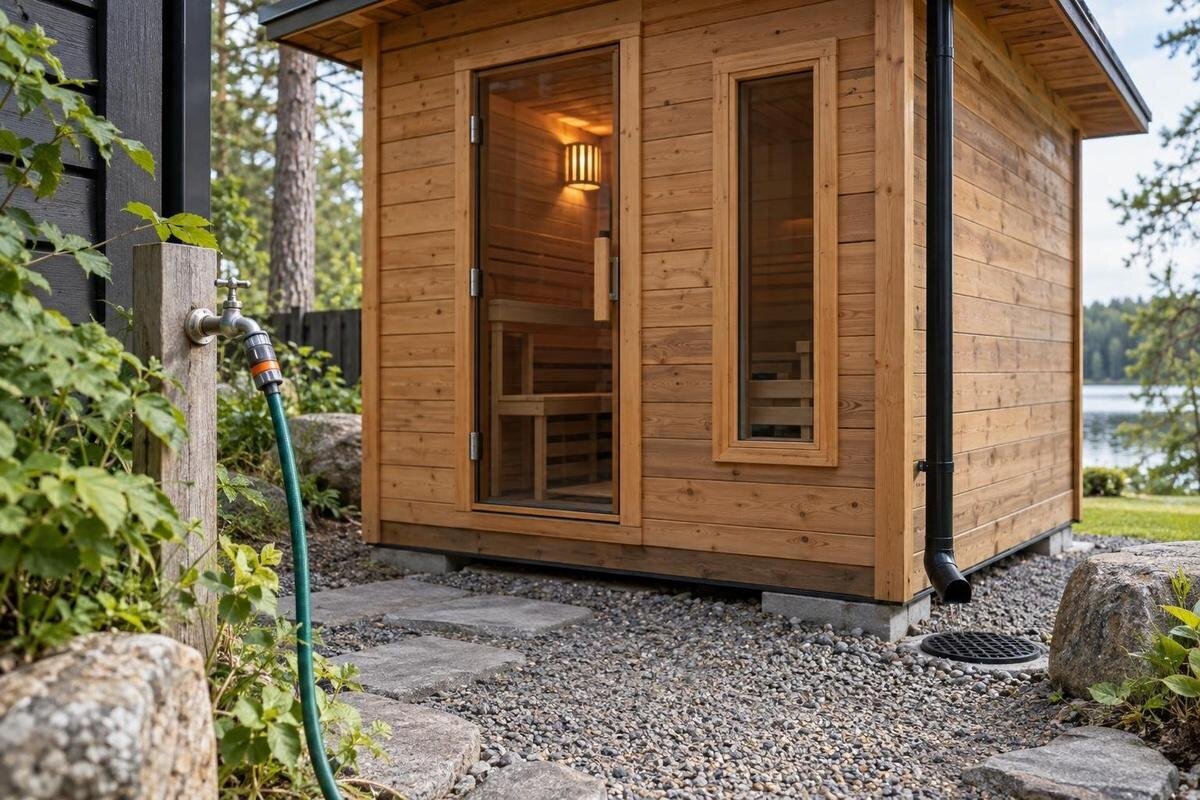
An outdoor sauna and an outdoor wash area are related, but they do not automatically share the same service needs. The cabin may not need a fixed water line or floor drain, while a shower, model-specific feature or water-based cleaning routine can change the plan. Separate water used with the heater from water supplied by plumbing, and decide where any wastewater will go. Then compare that plan with the exact cabin and heater instructions and your site’s services.
Before you buy 1
Does the sauna cabin itself need a water line?
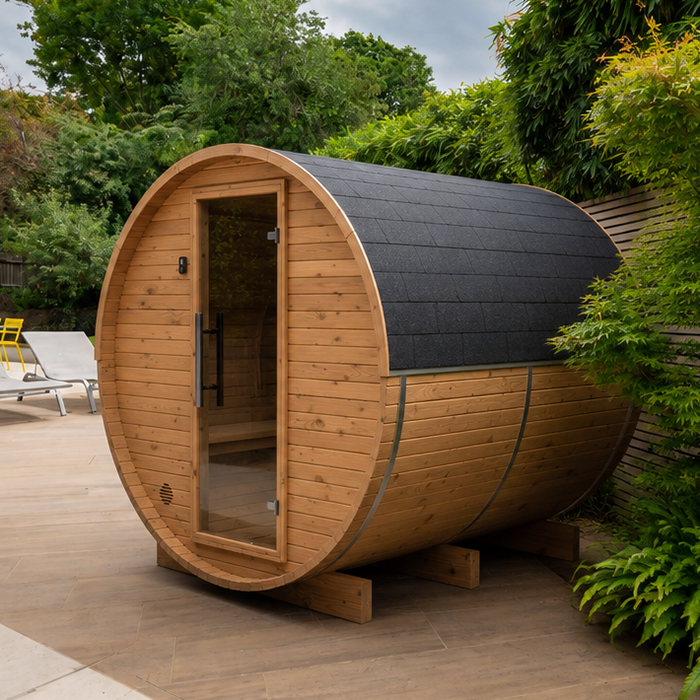
An outdoor sauna does not need a piped water supply simply because it is outside. Whether a particular cabin needs one depends on its design, included features and operating instructions, as well as how you intend to use it. A cabin used for heat alone may be planned without a permanent line, but that is not a specification for every model. A product name, photograph or listed floor area cannot confirm a tap, shower, drain opening or water requirement. Use the Sauna S-140 listing to identify a candidate, then request documents for that exact configuration rather than reading plumbing details into the product category. This is especially important if the cabin and heater are supplied separately.
Separate four questions before planning services: does the cabin require a fixed line; does the heater permit water use; will cleaning involve water; and do you want a shower? The answers can differ. Water carried to the sauna for an activity allowed by the heater manual does not by itself mean that a supply pipe is needed. A shower, by contrast, adds its own source and wastewater questions even if it sits beside, not inside, the sauna. Ask whether included or optional features alter the requirements, and keep the answer tied to the model and heater you would actually buy. That distinction prevents an optional convenience from being mistaken for a cabin requirement.
Water for the heater is separate from plumbing
Water used at a heater and water supplied by a pipe are separate decisions. If the exact heater manual permits water on the stones, that activity does not automatically require a permanent connection. How you bring in permitted water is a practical choice, subject to the instructions and any specified accessories. The heater manual should state whether water is allowed and under what conditions. Do not transfer directions from a different heater or assume every model accepts water. Water use at the heater also does not automatically establish a need for a floor drain; check the floor and care instructions separately. Keep these operating questions distinct from the decision to install plumbing.
When comparing a cabin such as the one on the HC-150 product page, identify the heater that would be paired with it and keep both sets of instructions together. Clarify whether a container or other accessory is specified, whether splashes are expected, and which surfaces should remain dry. Do not treat unclear directions as permission to wet equipment or surrounding timber; ask the manufacturer or supplier to resolve the point. A plumber can advise on a proposed fixed connection, but cannot substitute for manufacturer guidance on operating the heater. Keep heater power or fuel requirements separate from plumbing; those are another part of the installation plan.
Before you buy 2
Cleaning does not automatically call for a floor drain
Your cleaning routine can affect whether you need drainage. Do not infer that the floor, timber, benches or joints are intended to be hosed, flooded or repeatedly wiped with water. The care instructions for the exact cabin should describe methods suitable for its supplied surfaces; a sales photo cannot tell you. Until you have that guidance, do not build a drainage plan around a cleaning method you have not confirmed. Some cleaning routines may use little or no wash water, while others create water that needs collecting. Consider frequency as well as method, since a routine rinse is different from occasional spot cleaning.
Ask what parts may be wetted, how to handle spills, whether water can collect beneath the floor, and whether the manufacturer specifies a drainage route. A controlled wipe-down and a washdown create different water-management needs: the first may not call for fixed drainage, while repeated wet cleaning needs collection and disposal planning. That does not mean a drain should be added without knowing where it leads. Keep water away from components the manual identifies as vulnerable, and do not treat a visible floor gap as a drain. When considering the HC-225 model listing, include these cleaning questions in your comparison so you can assess the routine as well as the cabin itself.
Wastewater collection and discharge
Choose a drain only after identifying where the water will come from and where it can go. A floor drain is one part of a drainage arrangement, not a wastewater destination in itself. Water from a shower, cleaning, spills or heater use should not be treated as one interchangeable flow; each use creates a different pattern. Some water may be contained or collected rather than sent through a fixed floor outlet, but that choice depends on the design and site. Do not assume that soil, a stormwater outlet or an existing drain is suitable for sauna wastewater. The acceptable destination can depend on local requirements and on the services already available.
Before choosing equipment, explain the planned use to a qualified local plumber or relevant authority and ask what collection and discharge route fits it. Be specific about whether you want a shower, wet cleaning or only water used with the heater; these are not equivalent. A drain without a confirmed destination does not solve the problem. If the cabin on the Sauna N-210 page is on your shortlist, use its exact model name when discussing the proposed arrangement. The cabin drawing helps establish where water would be collected, while local site advice addresses where it can go. Resolve both parts before planning a connection, rather than selecting an outlet first and looking for a destination afterwards.
Before you buy 3
A shower adds separate supply and drainage needs
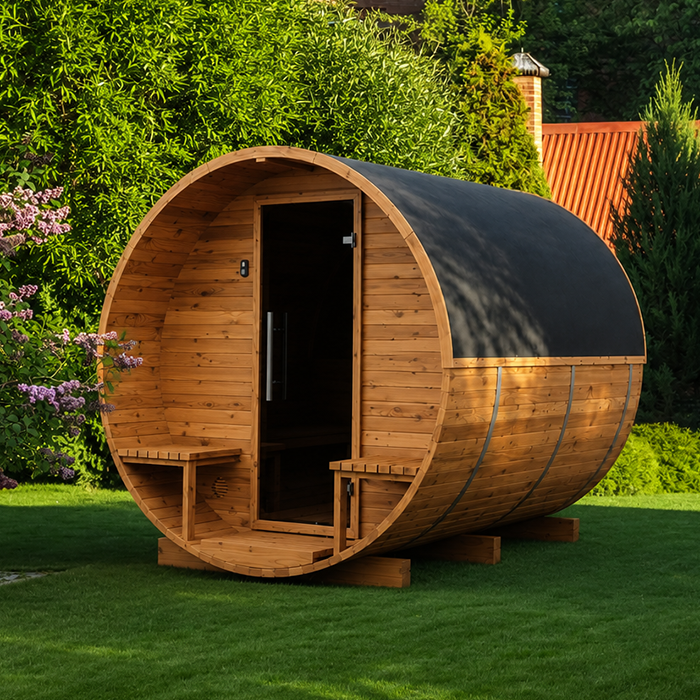
An outdoor shower is an optional amenity, not an automatic part of an outdoor sauna. It adds a water-supply question and a wastewater question: where water comes from, where people shower, and how used water is managed. A shower beside the cabin can be planned as a separate fixture, but it still needs a suitable site-specific supply and drainage arrangement. A shower inside the cabin changes moisture exposure and should only be considered if the manufacturer confirms that the exact design supports it. Do not treat a nearby product page or a spacious-looking interior as evidence of shower suitability. An ordinary floor opening, if present, would not by itself establish that a shower is supported.
Before adding a shower, clarify whether warm water is wanted, how the system will be managed when it is not in use, and where splashes will go. Plan the route between shower and sauna too, considering whether the path and nearby surfaces are suitable for people returning wet from the shower. Ask a qualified professional about supply and wastewater at that location, and ask the sauna manufacturer about in-cabin wet use. A drain alone does not make a regular sauna suitable as a shower room. When reviewing the N-250 listing, distinguish the cabin package from any proposed shower equipment. Check which components would be separate purchases so the comparison reflects the complete setup you want.
Water supply and drainage in freezing weather
Where pipes or drains may be exposed to freezing conditions, plan for more than summer operation. Water left in a line or low point can freeze, interrupt service and cause damage; the actual risk depends on the system. A garden tap that works in warm weather does not automatically provide dependable winter service. Decide whether the sauna will be used year-round or shut down seasonally before choosing a fixed supply, shower or drain. That choice may create a recurring winter maintenance task, so account for it in the use plan. Cold-weather suitability is not something to infer from a cabin’s model name or product photograph.
Ask a qualified local plumber how the proposed system should be protected, isolated or taken out of service for your conditions; do not rely on a generic online procedure. A drain deserves attention too if water could remain in it during cold weather. If you plan to carry in water only when needed, keep that routine separate from decisions about permanent pipes. Confirm how any seasonal hose, tap or shower connection will be managed before the first cold spell, rather than after it. As you review the LC-260 product page, record whether your intended setup includes seasonal or year-round water service. That choice belongs in the site plan alongside the cabin selection.
Before you buy 4
Verify the exact cabin and heater documents
A product listing identifies a cabin; it is not a complete plumbing specification. Request the manufacturer’s drawing and current installation and operating manuals for the exact model, plus separate heater documentation if the heater is selected independently. Check what is included, whether water-related options are offered, what surfaces may be wetted, whether a floor opening is shown, and which site services are specified. Do not assume that an area figure, barrel shape or model name reveals a water fitting or drainage arrangement. If the documents leave a point unclear, ask before preparing the site so a guess does not become a buried connection or misplaced outlet. Keep versions or dates with your planning notes so the advice relates to the current configuration.
Use model names consistently when you ask questions: the HCF-300 listing identifies one listed sauna, but its matching documents are needed for model-specific answers. Ask whether a fixed water line or drain is required, included, optional or outside the package. Confirm the supplied heater model, any limits on water use, and whether proposed cleaning or an in-cabin shower is permitted. Ask for the answer in writing if it affects site work or what you intend to buy. Keep any electrical or fuel-service answer separate from plumbing; those requirements also need the appropriate professional and should not be inferred here. Do not carry instructions from a similar-looking model over to another version without confirmation.
Map the water and drainage routes at the site
Once the water uses are clear, draw a simple site sketch showing the cabin, any proposed shower, nearest water source, wastewater destination and access for servicing. Mark existing utilities, obstacles, paths and the places where a hose or pipe might cross a walkway, garden bed or other structure. Include access to any shut-off or service points rather than planning only for the initial installation. Record whether a nearby tap is year-round and available for your intended use. This is not an installation drawing; it is a way to find conflicts before site preparation begins. Check the intended drain route alongside its destination, not just the convenient spot beside the sauna.
Have a qualified local professional review the proposed routes and site conditions before you settle the layout. They can advise whether the source, connection, wastewater destination and local checks suit the proposed use. The base, water supply and drainage are separate design questions; one should not be inferred from the fact that the sauna is outdoors. Do not assume that a yard drain, hose route or existing connection can serve the cabin without review. If comparing the LCF-300 model page with another option, keep a separate sketch for each proposed layout and use the matching cabin drawing. This makes it easier to compare the routes without mixing model details. Leave service points accessible for inspection and maintenance after the surrounding area is finished.
Before you buy 5
What if there is no nearby water or drain?
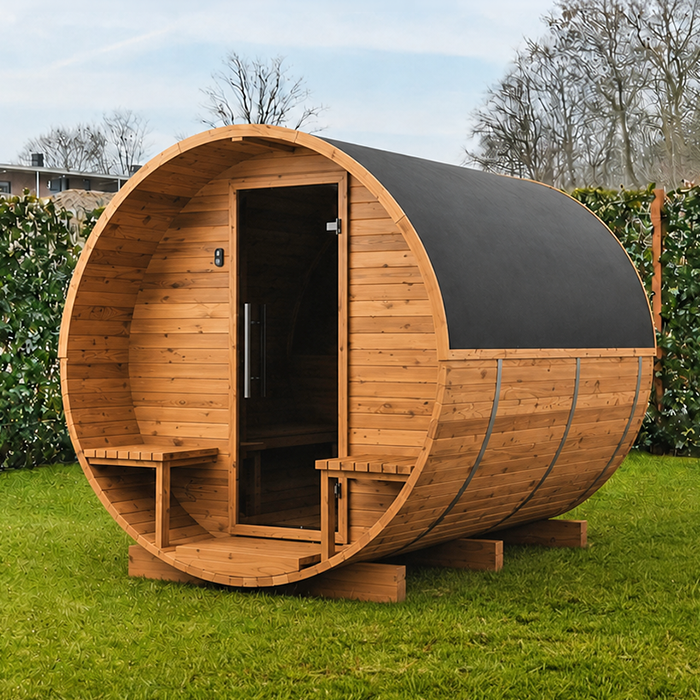
No nearby water line or drain does not automatically rule out an outdoor sauna; it changes which features are practical. If the exact cabin and heater instructions do not require fixed water, you can investigate a heat-only plan. Water may be carried in for a permitted heater activity, and cleaning can follow the manufacturer’s stated method, but neither choice should be assumed in advance. You may also decide to leave a shower out or place wash facilities elsewhere as a separate project. Match every use to product instructions and a manageable source, rather than improvising plumbing because the site lacks services. Check any other heater services separately.
If you want a shower or regular wet cleaning without existing services, first find out whether a suitable independent supply and wastewater arrangement can be provided. Do not send used water onto a base, neighbouring property or an unverified outlet simply because no drain is nearby. A portable container may address how water arrives, but it does not decide how wastewater will be collected or disposed of. If there is no appropriate way to manage the water, remove that feature from the plan instead of relying on an unconfirmed workaround. Resolve the decision before buying accessories or preparing the location, when the scope can still be changed easily.
Write down the intended water uses before buying
Before ordering, write a water-use plan with an entry for each activity: heater use, cabin cleaning, hand washing if planned, and showering. For each, record whether it needs a fixed source, produces wastewater, and has applicable product instructions and a confirmed wastewater destination where needed. Note whether use is seasonal or year-round, and whether the cabin and heater are supplied as one package or chosen separately. This turns a broad yes-or-no question into smaller, answerable decisions. It also prevents different people from using “drain” to mean a floor outlet, a shower waste route or site runoff. Keep the plan with the selected model and proposed site sketch.
Ask the manufacturer or seller about the cabin and heater; ask a qualified plumber about connections, collection and discharge; consult the relevant local authority when site requirements are unclear. Keep product-specific answers separate from site-specific advice so one cannot be mistaken for the other. If you later add a shower, revisit the plan: that change can alter both service routes and the water-management routine. Use the written scope when comparing models or quotes, rather than assuming that a listed sauna includes a tap, drain or shower. A considered plan can leave fixed plumbing out if the cabin’s requirements and your intended use allow it.
Frequently asked questions
Can I put an outdoor sauna where there is no water connection?
Possibly. A fixed water line is not automatic for every cabin, but check the instructions for the exact sauna and heater. A shower or water-based cleaning routine brings separate supply and wastewater questions. The water decision also does not settle any other services the heater may need.
Does water used on sauna stones mean I need a drain?
Not automatically. First confirm in the heater manual that water is permitted and follow its directions. Then check the cabin’s floor and care instructions for how to handle spills or other water. Water use at the heater does not, by itself, determine whether a fixed drain is needed.
Can I clean an outdoor sauna with a hose?
Do not assume so. Follow the care instructions for the exact cabin and its surfaces. If the approved method uses water, plan how to collect and manage any runoff. A cleaning method that involves limited water is different from regularly washing down the floor.
Does an outdoor sauna shower need a drain?
A shower needs a deliberate plan for its water supply and wastewater, but the right collection method and destination depend on the design and site. A floor drain is not the only question, and adding one does not make a sauna cabin suitable for showering. Confirm both the cabin’s suitability and local plumbing arrangements.
How should I plan sauna plumbing where pipes could freeze?
Decide whether the water service will operate year-round or be shut down seasonally, then ask a qualified local plumber how the proposed supply and drain should be managed for your conditions. A generic procedure may not suit your layout. Consider exposed connections and drains as well as the water line.
Water and drainage are choices tied to use, not automatic consequences of putting a sauna outdoors. A cabin-only plan, water used with a heater when its manual permits it, wet cleaning and an outdoor shower are different cases. Decide which are in scope, confirm the exact cabin and heater requirements, and make sure there is a workable destination for every stream of wastewater. That keeps optional plumbing from driving the layout and prevents a later shower from being treated as a small add-on.
