
Private or Shared Saunas for Glamping Accommodation
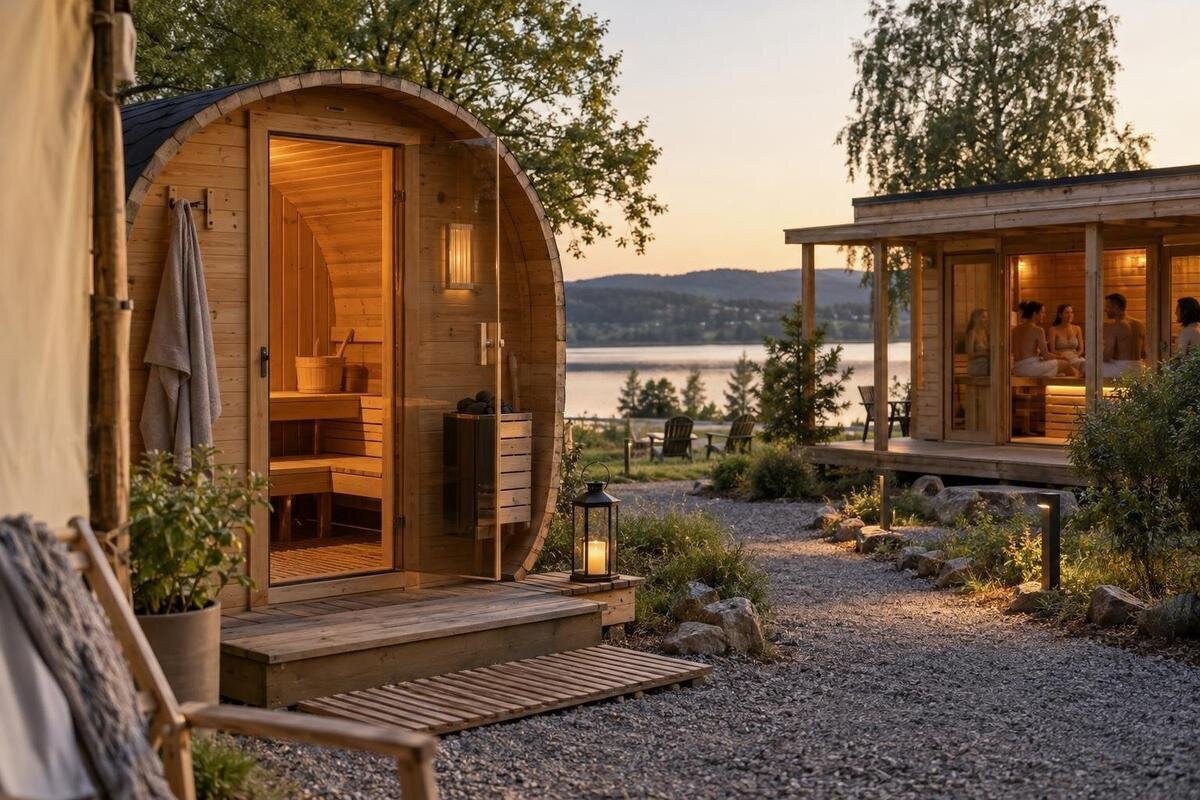
Glamping sauna planning
Adding a sauna to a glamping site involves decisions about guest access and daily operations as well as the building itself. A facility reserved for one accommodation unit can make access straightforward for that booking party; a shared facility centralizes the booking calendar, cleaning and service work. Neither arrangement guarantees stronger demand or lower operating costs. The right fit depends on how guests use the amenity, site layout, staff availability, maintenance plans and whether the selected sauna is approved for the intended commercial use. Compare the operating routines, not just where a sauna sits.
01
What private and shared sauna access means
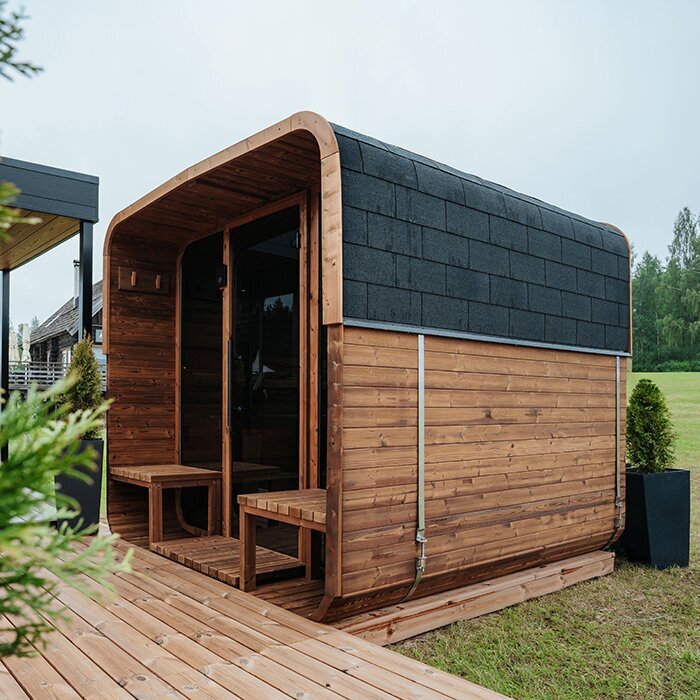
Distinguish a private sauna from private use of a shared facility. Here, a private sauna is a dedicated facility reserved for guests of one accommodation unit. A shared sauna serves guests from more than one unit, either by reservation or during set open-access hours. Shared does not necessarily mean that several parties use it at once: the site can allocate exclusive sessions. A private session therefore describes an access arrangement, while a per-unit sauna describes how facilities are distributed across the property. This distinction changes the promise guests see, the booking process and the staff duties behind it.
Small details can change the comparison. A centrally located sauna with exclusive timed bookings is shared infrastructure but private during each session. A sauna beside a cabin may still have staff-controlled entry, time limits or rules about accompanying visitors. Define who may enter, how guests receive access, whether a reservation is needed and what happens when arrival or departure times change. Use the same explanation in the listing, confirmation message, signs and staff procedure. Also say whether a shared booking is exclusive or permits other guests; do not leave that to interpretation.
How a private sauna changes guest access and staff work
With a per-unit arrangement, access is tied to the party that booked that accommodation. Guests do not have to negotiate a site-wide calendar with people staying elsewhere, and a delay in one booking is less likely to displace another party’s time. It can simplify the guest-facing explanation: access is attached to the reservation rather than a communal queue. The experience may feel more private because guests reach the facility without joining a shared session. Even so, state who can use it, how access works, whether staff prepare it and which operating instructions apply. A booking-specific window may still need to be reserved.
The trade-off is distribution. Staff may have several locations to inspect, reset and reach when a guest needs help; cleaning visits can take longer across a spread-out site, and each unit can create another service point. Separate facilities may be underused at quiet times, but actual use should be observed rather than forecast. Build a location-by-location checklist and a response plan for faults, then keep directions and access details consistent at every unit. When considering the Sauna N-250 model page, request matching drawings and operating manuals so the checklist refers to the exact configuration. Confirm its suitability for the intended guest use rather than treating a model name as evidence of fit or capacity.
02
What to plan for a shared sauna
A central facility concentrates opening checks, cleaning and planned service at one location. That can make it easier to organize a consistent access process: one booking record, one set of guest instructions and one place for staff to inspect before use. It may suit an operation that can assign staff to a shared amenity rather than maintain several separate locations. Centralized work is not automatically less work, however. A busy schedule can make each reset time-sensitive, and an outage may affect reservations from several accommodation units. Decide who is responsible during each operating period and who takes over when that person is away.
The guest route is part of the amenity. Consider whether visitors pass other sites, cross a service area or share a changing space, and whether the path is easy to understand after dark and in the weather your site experiences. Set expectations about shared use: open-access hours, an exclusive reservation and a scheduled group session are different offers. Check the route and signs with someone who has not seen the plan; guests should not have to ask another accommodation party for directions. If you are considering the Sauna LC-260 product listing, describe your proposed shared-access arrangement to the supplier. Confirm suitability for that arrangement and location before including the model in your site plan.
Booking rules for private and shared access
With private-by-unit access, booking is often simpler, but timing still needs a clear rule. Decide whether guests may use the sauna during stated operating hours, reserve a slot or request staff preparation. Distinguish the guest’s access window from any preparation, inspection and cleaning the operation requires. Set those windows only after understanding the manufacturer’s operating instructions and the staff work before and after use. Allow for check-in delays and late requests, and identify who responds if the sauna is not ready. Avoid promising unlimited availability when operation depends on a staff member or a task between uses.
For a shared sauna, publish how reservations work before guests arrive. State when booking opens, whether each reservation is exclusive, how long a slot lasts if you set one, and how cancellations or late arrivals are handled. Make the calendar accessible to staff responsible for preventing conflicts, but do not promise more access than remains after allowing for turnover and servicing. Revisit the rules if reservations regularly clash; do not solve a scheduling issue by quietly changing the guest offer. When reviewing the Sauna HCF-300 listing, keep those booking decisions separate from the product name. Guest capacity and operating instructions need confirmation for the exact configuration before you can set a workable reservation schedule.
03
Arrival times, operating hours and turnover
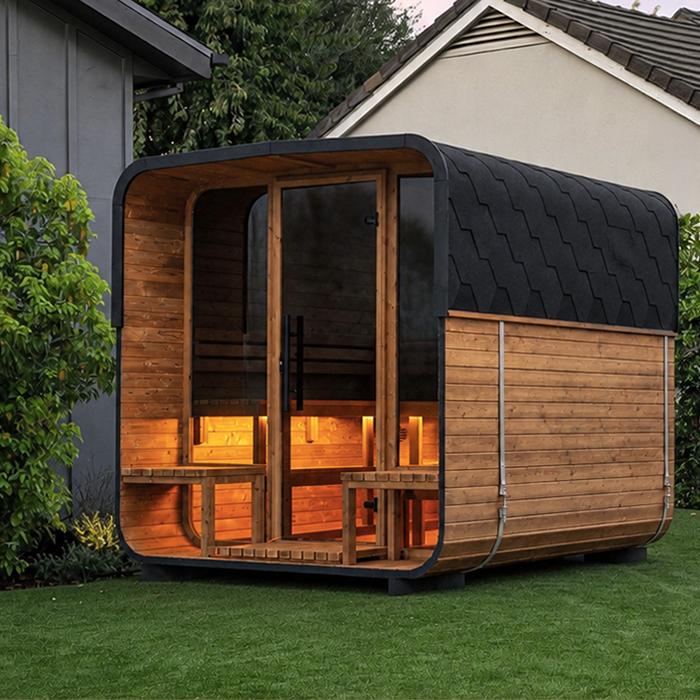
Map the schedule against the stay, rather than treating the sauna as a separate calendar. Guests may arrive before their accommodation is ready, check in late or ask to use an amenity close to departure. Decide whether access begins at check-in, ends at checkout or follows booked sessions, then make the rule consistent in confirmation messages and signs. For each arrangement, record who makes the sauna available and who can respond when it is not ready. If guests operate it themselves, provide instructions for the exact model and follow the manufacturer’s directions; do not assume everyone has used the same controls before.
Shared use needs a turnover gap that reflects the cleaning and checks actually required, not an arbitrary promise of continuous slots. Private use has a turnover question too when different bookings occupy the same accommodation consecutively: assign enough time for the work on the checklist. Do not use a universal warm-up or reset interval; confirm any model-specific timing in current instructions and plan the guest calendar around the whole operating cycle. If you are assessing the Sauna LCF-300 model listing, request the instructions for the configuration you intend to buy and use them when planning preparation and reset tasks. Resolve any unanswered timing questions before selling access in fixed slots.
Cleaning responsibilities and routines
Write a cleaning plan that separates guest responsibilities from staff responsibilities. Specify what guests should leave tidy, what staff inspect after each use or booking, and who checks the facility between operating periods. Keep instructions easy to find at the point of access and say what to do if a surface, control or room is left in an unexpected condition. Use the manufacturer’s current care guidance for the specific materials and equipment; do not improvise cleaners or treatment methods. A record of completed checks helps staff hand over tasks, but it does not replace the inspection itself.
With several private saunas, the work is spread across the property, so staff need a route and a consistent checklist for each location. A shared facility puts turnover tasks in one place, but reservations can put pressure on the time available between parties. Match the procedure to actual staffing: identify who resets access, replenishes operator-provided items, checks the room and reports damage. If guests have a role, describe it plainly rather than assuming they will know what is expected. For a model you are considering, such as the Thermowood Barrel Sauna S-140, obtain the relevant care instructions and use them to define cleaning tasks, permitted methods and staff responsibilities.
04
Service access and handling an outage
Plan for a fault before it interrupts a stay. In a private arrangement, a problem at one unit may be limited to that location, but the affected guests still need a prompt explanation and an operator-defined alternative or refund policy. In a shared arrangement, one unavailable facility can affect several reservations, so decide how staff will contact guests, change bookings and record the issue. Do not advertise a backup unless you can genuinely offer it. Identify who can make the decision outside normal desk hours and what staff should say while a fault is being assessed.
Ask for the maintenance schedule and service requirements for the exact configuration before purchase, including who can perform work, what records to keep and how to request parts or technical support. Check the response options available from qualified service providers in your area rather than assuming a technician will be nearby. Plan access for service visits as well as for guests, and route electrical, heater or other technical work to appropriately qualified professionals. Keep the model and service records together so staff can report the correct equipment details. If the Sauna HC-150 product page is on your shortlist, use that model reference in service enquiries and confirm what support is available for your intended operation.
Site layout, privacy and guest routes
Private installations can reduce guests’ need to cross communal areas, but they can also put activity close to a cabin, deck or neighbouring booking. Consider sightlines, noise, lighting, privacy and whether staff can reach the area without disturbing guests. Keep a clear working route for cleaning and maintenance, not only a guest path. If the site operates outdoors, confirm that the selected configuration and proposed installation are intended for that location; a product name or photograph does not establish exposure limits or site requirements. Use verified drawings before fixing distances or planning adjacent structures, and account for the conditions in which the site will operate.
One shared facility may be easier to signpost, yet its route carries more traffic and may need to accommodate different mobility needs, weather clothing and the privacy expectations of unrelated parties. Review the path, entrance, changing arrangements and waiting area with a qualified design professional; a product image is not an accessibility or clearance drawing. For a shortlisted model such as the Sauna HC-225, obtain verified dimensions and clearances for the selected configuration. Use those details to assess the full approach and guest circulation, including where people wait and how staff reach the facility, rather than planning around the sauna’s appearance alone.
05
Confirm commercial suitability before purchase
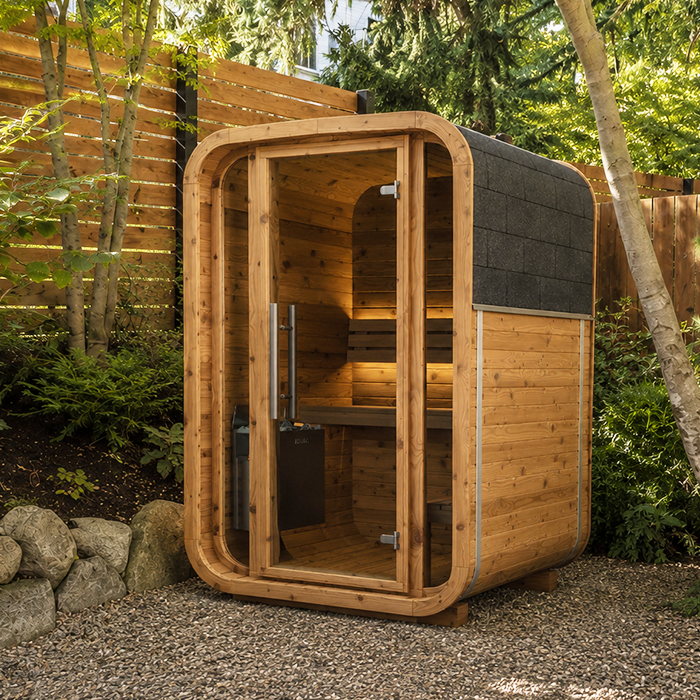
Commercial suitability is separate from whether a sauna is listed for sale or looks appropriate beside a cabin. Ask the manufacturer or supplier in writing whether the exact model and configuration may be used in the proposed glamping operation. Describe the expected guest access, frequency of operation, supervision, cleaning arrangements and installation. Request the documents that govern operation, maintenance and permitted use, and ask what conditions affect warranty or service. Ask specifically about guest turnover and self-service if either is part of your plan. Do not infer approval for paying guests from a retail category, a similar model or another operator’s setup.
Then have qualified professionals review the installation and site requirements, including electrical work and the proposed location, before opening the amenity. Requirements depend on the project and its location, so confirm them with professionals and the appropriate local authorities rather than relying on a generic online checklist. Ask your insurer whether the planned guest use fits your coverage, and keep written answers with the model records. If you are considering the Sauna N-210 product page, identify that exact model and proposed configuration in your enquiries. Keep the responses tied to that proposal so approval, warranty and coverage conditions are not confused with those for another model or use.
Compare the full operating model
Compare both options against the same operating day. Sketch what happens when a guest arrives early, two parties request the same shared slot, staff are cleaning another unit or the sauna needs attention during a booking. Identify the person responsible at each point and note every promise that depends on that person being available. This exercise shows whether the main constraint is access, staffing, route length, turnover or service response. If a facility is already operating, use actual booking and service records to adjust the plan. For a new site, compare documented responsibilities and supplier information rather than invented occupancy or revenue projections.
Private access fits when guest separation and control at the individual accommodation level matter most and the operation can support more locations, inspections and service points. A shared facility fits when centralized oversight suits the staffing plan and the site can deliver transparent reservations, turnover and disruption notices. Compare installation, staff time, cleaning and servicing using project-specific information rather than assumed savings. If neither routine is workable, reconsider placement, access rules or the promise made to guests before committing. The apparent simplicity of one arrangement on a site plan may not hold during a real turnover.
Frequently asked questions
Is a private sauna better for a glamping site?
Neither arrangement is universally better. Private access gives the booking party clearer control over timing and privacy, but creates more locations to inspect and service. A shared sauna centralizes the facility, while the operator must manage fair access, turnover and communication when reservations clash or the equipment is unavailable. Compare the routine your staff can deliver rather than assuming a particular level of demand.
How many guests can use a shared sauna?
Do not infer capacity from a model name, product photograph or listed area. Consult the manufacturer’s documentation for the exact configuration and request written confirmation for the intended commercial use and supervision. Set any guest limit only after that review and any necessary site-specific assessment.
Should guests reserve a shared sauna?
Use reservations when guests would otherwise compete for the same periods, and publish the rules before arrival. First-come access can work only if guests know the operating hours, whether use is exclusive and how staff handle overlapping requests. Either approach still needs time for turnover and a plan for outages.
Who should clean the sauna between bookings?
The operator should assign tasks instead of leaving responsibility implicit. Explain what guests are expected to do, when staff inspect and reset the space, who records concerns and which manufacturer care instructions apply. A shared facility needs turnover coordination; per-unit saunas need a repeatable process at each location.
Can a sauna sold for home use be used for paying guests?
Do not assume so. Ask the manufacturer or supplier for written confirmation covering the exact model and configuration, then review any warranty and service conditions. Have qualified professionals check the proposed installation and the requirements that apply at your location.
Private and shared saunas distribute work differently: per-unit facilities spread equipment and checks across the site, while a shared facility concentrates servicing but makes scheduling, turnover and outage handling relevant to more guests. Exclusive sessions can offer privacy within a shared arrangement, provided the booking rules are clear. The dependable choice is the one whose guest access, staff routine, location and manufacturer-approved use all match. Make that comparison before adding a sauna to a listing, so guests are offered an amenity the team can support.
