
Can an Outdoor Sauna Move with You?
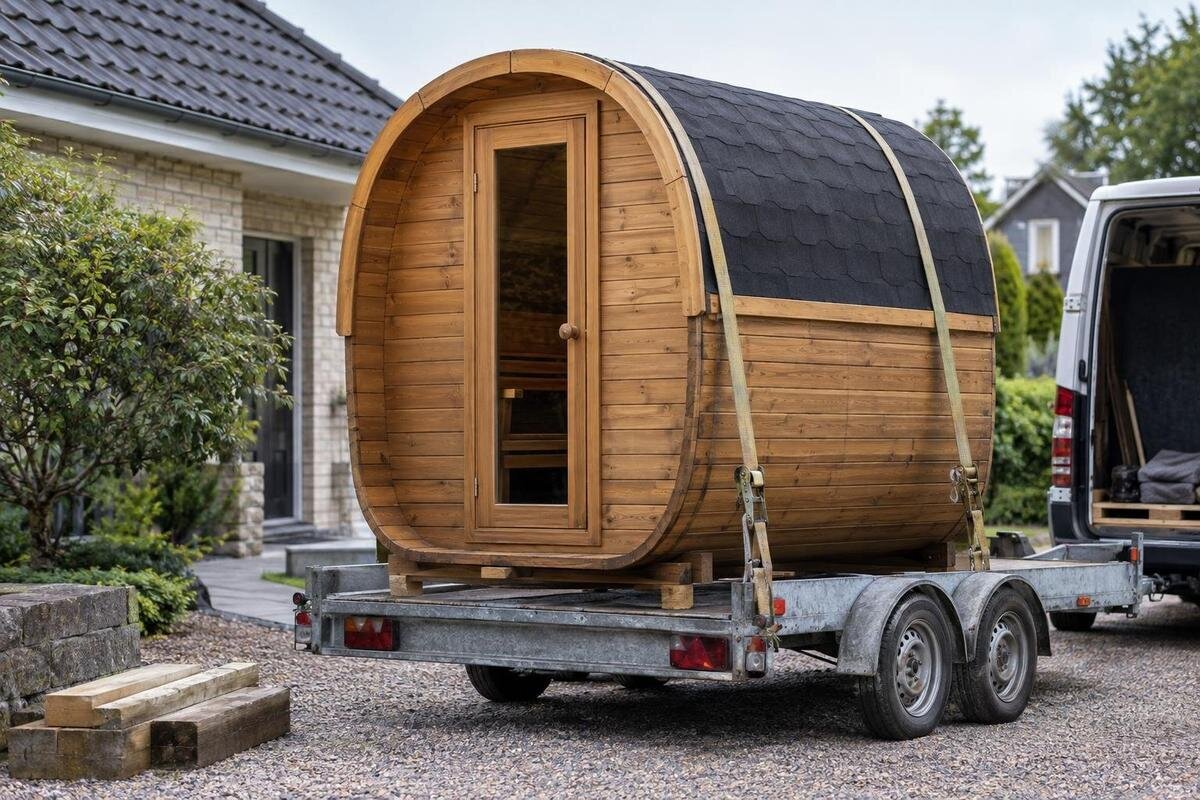
SAUNA RELOCATION
An outdoor sauna may be able to move to a new property, but its size or appearance alone cannot tell you whether it can be dismantled, lifted, transported and reassembled safely. The answer depends on the exact model’s written relocation instructions, the unit’s condition, the route out and in, and the requirements at the new site. Check those points before booking the moving crew; the manufacturer’s approval can change the plan from the outset.

Is this exact sauna approved for relocation?
An outdoor sauna is not automatically portable. A unit may have parts that appear detachable, yet the maker may require a specific sequence, a trained installer or a particular moving method. Its assembled appearance does not establish that it can be lifted intact, and being able to take it apart does not prove it can be rebuilt. Ask the manufacturer whether relocation is approved for your exact model and production version, whether it may be dismantled, and whether it can be installed again at another address. Request the conditions in writing, including who is allowed to do the work and whether the maker needs to inspect the unit first. Establish this before booking the truck.
Clarify the approved method: partial disassembly, complete disassembly or transport as a complete assembly. Ask whether the instructions cover lifting, storage and a second installation, and whether parts or seals must be replaced. A catalogue name such as Thermowood Barrel Sauna N-250 can help identify the sauna you mean, but it does not establish a permitted handling method. Ask whether approval depends on who does the work, the parts used or the proposed configuration. If the manufacturer no longer supports the model, ask whether a qualified sauna installer can assess it; do not treat a mover’s willingness to take the job as manufacturer approval. Save the response with the move records.
Identify the unit and collect its records
Identify the sauna before asking for a moving quote. Record the full model code, serial or production number, any rating label, approximate purchase date and the address where it is currently installed. Photograph the labels and overall condition without opening electrical enclosures or removing cladding to search for a plate. Note who installed it and any repairs, replacement components or alterations. The manufacturer can then check whether the unit matches the right drawings and revision; the mover and installer can also refer to one clearly identified item instead of guessing from a photo or a similar-looking product. Mark any unknown details as unknown rather than filling gaps with assumptions.
Gather the invoice or order confirmation, owner’s manual, installation guide, drawings, warranty paperwork and previous service records. If you bought the sauna second-hand, ask the seller for what remains and note any missing information. If your records identify the unit as a Thermowood Barrel Sauna LC-260, use that name when requesting the matching documentation, together with its serial number and details of the supplied equipment. Keep a digital copy available to the manufacturer, removal contractor, electrician and reinstaller, and retain originals separately from boxes in transit. Have a qualified electrician document any connection details that are hidden from view.
Get the dismantling sequence in writing
Do not begin dismantling until you have the maker’s current instructions for this exact unit. Ask for the order of work, which named components may be removed, which parts must remain attached, and whether any panel, roof, glazing, bench, doorway or weather seal needs special handling. Get clarity on who disconnects electrical equipment or any other service; the sauna moving crew should not be expected to work around a connected system. If the instructions describe only assembled lifting, do not improvise a teardown because it seems easier. Ask an installer to identify which steps are within the approved procedure and which require a qualified trade.
Ask what hardware and consumable items need to be kept, replaced or supplied for the second installation. Label components as they come off, keep matched fasteners and fittings with the relevant parts, and photograph stages if the manufacturer permits; a loose box of unidentified hardware is difficult to reconcile at the destination. Use the exact model identification—for example, Thermowood Barrel Sauna HCF-300—when requesting the dismantling sequence, not just a general product-family name. Get the reassembly instructions at the same time. Confirm whether the maker specifies replacement parts or approved substitutes, and how damaged or missing pieces must be handled. Discovering that an item cannot be reused after the old site has been cleared can delay the move.
Plan the lift at both properties
The lifting plan needs information for the sauna in the state it will actually be moved: as one assembly or as separate components. Ask the maker or installer for documented overall dimensions, weights, lifting points and any limits on orientation or handling that apply to the exact configuration. Do not estimate lifting needs from a floor-area figure, a product photograph or a model name. Give the drawings to a qualified moving or rigging contractor and ask them to confirm the equipment, crew, access and responsibilities at both properties. If the maker will not provide a published lift method, have a competent professional propose one for approval rather than inventing a method on site.
Arrange a site visit at both addresses, not only a discussion based on the driveway entrance. The contractor needs to consider the entire route: gates, turns, overhead branches or services, ground conditions, slopes, loading space and a clear place to set the sauna down. Check that the route from the current location to the vehicle and from the vehicle to the new location can be completed with the planned equipment without striking buildings or landscaping. A catalogue entry such as Thermowood Barrel Sauna LCF-300 is not a lift drawing; use the exact model documentation alongside on-site measurements. Weather or seasonal access may also change the plan, so confirm who can make the final call if conditions differ on moving day.
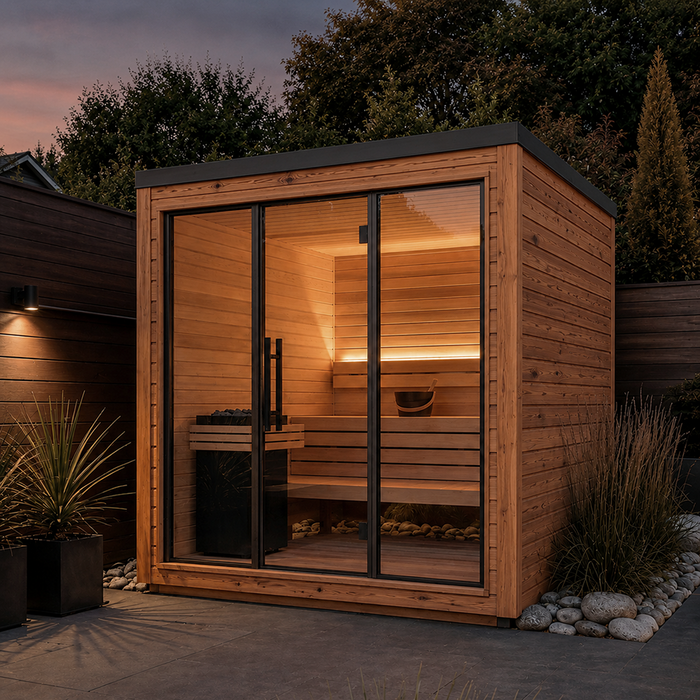
Record the sauna’s condition before removal
Make a dated condition record before removal, while the sauna is still assembled and accessible. Photograph each exterior side, roof, floor or support interface, door and visible glazing, as well as interior surfaces and equipment. Note existing cracks, loose pieces, water staining, damaged finishes, missing parts or previous repairs without trying to decide from a photograph whether a structural component is safe. Ask the manufacturer or a qualified installer to assess anything that might affect lifting or reassembly. Sharing these observations before the contractor arrives helps distinguish an existing issue from damage that occurs during dismantling or transport, and gives the maker context when deciding whether relocation remains acceptable.
Make an inventory with photographs and note which items work, which are untested and which are already damaged; do not describe an untested heater or control as operational. Include the model identifier in the report—for example, Sauna S-140—so the manufacturer can match the condition notes to the right unit. Agree with the mover how the unit will be checked at loading and arrival, how differences will be recorded, and whom to contact before anyone tries to repair a newly found defect. Take close-up photographs of the same areas after delivery, before packing materials are discarded. Keep the records and correspondence together in case a claim or warranty question arises later.
Agree on packing, transport and storage
Transport protection should follow the manufacturer’s guidance for the specific parts, rather than a generic wrapping recipe. Ask how to protect surfaces, glazing, seals, electrical controls and exposed edges from movement, impact and weather, and whether components must stay dry, ventilated, upright or in a particular orientation. Confirm what may be stacked and what must not carry weight; do not let a general mover decide by appearance. The removal team should label packages and keep fittings with the matching components, while the inventory records how many packages left. That makes it easier to spot a missing item before the reassembly crew has finished.
Set out transport and storage responsibilities in the written quote. Ask who supplies packing, loading, securement, unloading, temporary storage and redelivery, and who is responsible if a component arrives damaged or missing. Confirm what the mover’s insurance covers and any exclusions or notice deadlines with the mover and your insurer; coverage should not be assumed from a standard household move. If the sauna cannot go directly to the new property, ask the manufacturer to specify acceptable storage conditions before choosing a facility. When requesting this guidance for a Thermowood Barrel Sauna HC-150, include its production details and the proposed storage arrangements. Keep the response with the transport plan and inventory.
Check the destination before delivery
Assess the destination before the sauna leaves the old property. Compare the intended location with the current manufacturer’s installation drawing for the exact model, including the space it occupies, access for installation and maintenance, door movement, and any clearances or support requirements stated by the maker. Have the location assessed against those instructions rather than assuming that a level-looking area or an existing pad is suitable. For a Thermowood Barrel Sauna HC-225, request the drawing that matches the unit’s production version and configuration. If the manual is missing or the site differs from its assumptions, ask the installer before committing to a location.
Check practical access at the new home as carefully as at the old one: can the planned lifting equipment reach the set-down point, is there room to assemble components, and will deliveries or trades be blocked by fences, stairs, trees or other work? Consider drainage and exposure against manufacturer requirements and a property professional’s assessment; do not transfer the old arrangement by habit. Where landlord, condominium, insurer or local approvals may apply, confirm them with the responsible party before delivery rather than relying on a general online checklist. Record who has approved the location and any conditions installers must follow. This prevents a successful pickup from turning into a storage problem because the new site was not ready.
Arrange qualified service work
Treat utility disconnection and reconnection as a separate work scope. If the sauna has an electric heater, controller, lights or other electrical equipment, arrange for a qualified electrician to identify and disconnect it as appropriate and assess the proposed connection at the new address. Do not assume the existing circuit, cable route or control setup can be reused. Share the equipment labels, manuals and installation history with the electrician, and ask what should be recorded before disconnection. The sauna model alone may not identify later equipment changes, so keep separate records for each unit and component. Do not ask a moving crew to disconnect or commission electrical systems unless it is qualified and engaged for that work.
If the sauna has a wood-burning heater, chimney or another service needing specialist attention, ask the maker and a qualified installer to specify what must be removed, inspected and reinstated. Make the new configuration part of the written scope; changing a location or flue route should not be treated as a minor detail. When planning service work for a Thermowood Barrel Sauna N-210, identify the installed heater and accessories from their own labels and records, since the sauna’s model name does not establish which equipment is fitted. The responsible professional can check relevant local requirements and explain any inspection or approval needed, without the homeowner guessing at clearances or doing the technical work. Keep service decisions with the relocation records.
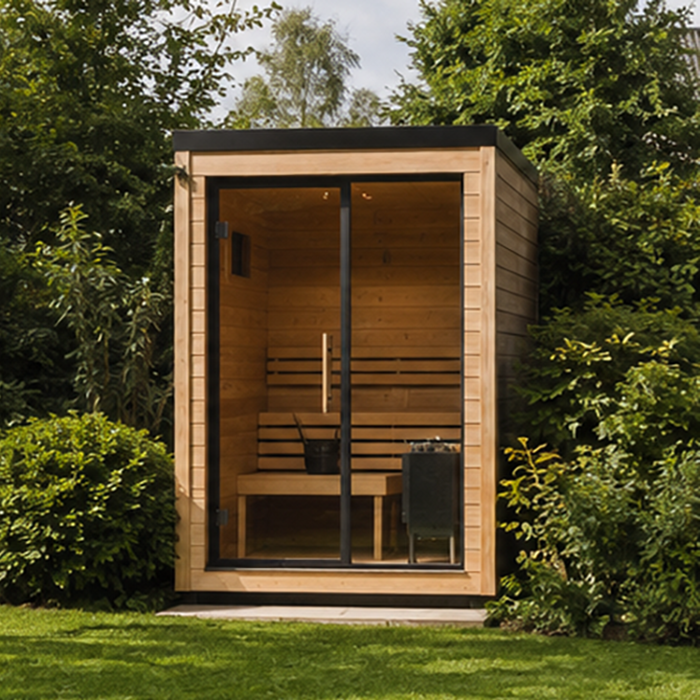
Reassemble and document the work
Reassembly should follow the model-specific instructions and any written conditions from the maker. Confirm who is responsible for each stage, whether the same installer will rebuild the sauna, and whether a different professional must sign off on equipment or site work. Have approved replacement hardware and any specified consumables on hand before assembly begins; do not let missing items be replaced with a convenient substitute without approval. If parts were damaged, lost or altered in transit, stop that stage and obtain a decision from the manufacturer or a qualified installer. Record deviations from the original configuration and keep any approval with the work order.
Before the sauna is used, ask the installer to complete the maker’s inspection or commissioning checklist, including the checks that apply to the assembled structure, doors, glazing, weather protection and connected equipment. Do not infer that a completed-looking exterior means hidden fasteners or services are correct, and do not operate a system that has not been cleared by the qualified professional responsible for it. Collect the completed checklist, service records, dated photographs, invoices and any revised manual or warranty response. Send the new address and installation details to the manufacturer if its process requires it, and retain written confirmation of how relocation affects warranty coverage.
Compare the full moving cost with the alternatives
Get an itemized relocation quote that separates dismantling, condition assessment, lifting at both addresses, packing, transport, storage, delivery, reassembly, service work, replacement parts and any required site preparation. Ask which tasks are excluded, who arranges each trade, how a delay is handled, and whether the quoted crew will return if the destination is not ready. Compare the total with practical alternatives—leaving the sauna with the property, selling or giving it away, or selecting another unit—rather than comparing transport alone with a new purchase. No option is automatically cheaper; the relevant figures depend on the actual scope and condition.
Relocation is easier to justify when the maker supports it in writing, the sauna is in suitable condition, both routes and destinations have been assessed, the right trades are booked, and the full cost and warranty position are understood. If any of those remain uncertain, pause before signing a moving contract and price the uncertainty: an unplanned repair, storage period or second delivery can change the decision. If the manufacturer says the sauna cannot be relocated, do not override that advice just because it is physically possible to lift. Ask about approved alternatives, then decide whether the unit stays behind or is replaced. A clear no-go can be as useful as a confirmed move plan.
Frequently asked questions
Can an outdoor sauna be moved in one piece?
Only if the manufacturer permits moving that exact model as an assembled unit and provides or approves a suitable lifting method. Appearance and apparent size are not enough to establish that it can be lifted safely. Have a qualified moving or rigging contractor assess access at both properties before booking.
Can the sauna’s warranty continue after a move?
It depends on the warranty terms and the manufacturer’s requirements. Before dismantling, ask in writing whether relocation affects coverage, who must do the work, and what records or inspections are required after reinstallation. Do not assume that coverage continues—or ends—without checking the terms for your specific unit.
Can a regular moving company transport the sauna?
Possibly, if the company accepts the manufacturer’s handling requirements and has the appropriate experience, equipment and insurance for the agreed scope. Ask who is responsible for dismantling, lifting, packing and reassembly, and whether separate qualified trades are needed. A general household moving quote alone does not confirm that the sauna can be handled as planned.
Can I reuse the sauna’s base after moving?
Not automatically. The destination and any existing support need to be assessed against the current installation instructions for the exact sauna and the conditions at the new site. Ask the manufacturer or a qualified installer what must be checked before delivery; do not assume that the old layout or a level-looking surface is suitable.
When should I arrange the relocation?
Start after identifying the model and asking the manufacturer whether relocation is permitted, but before setting a firm moving date. The answer may affect dismantling, trades, access equipment, storage and the destination site. Timing varies with the work required, so ask each contractor for their schedule and confirm the new location is ready before the sauna leaves.
Taking an outdoor sauna to a new home depends on an approved moving method, suitable condition and a destination that meets its installation requirements. Establish those points before committing to a moving date, then keep dismantling, lifting, transport and reinstallation within the documented scope. If relocation is not supported, leaving the sauna behind is a reasonable choice. If the move is permitted, clear records help each professional understand what has been done and what remains to be completed.
