
Getting a Sauna into a Backyard with Narrow Access
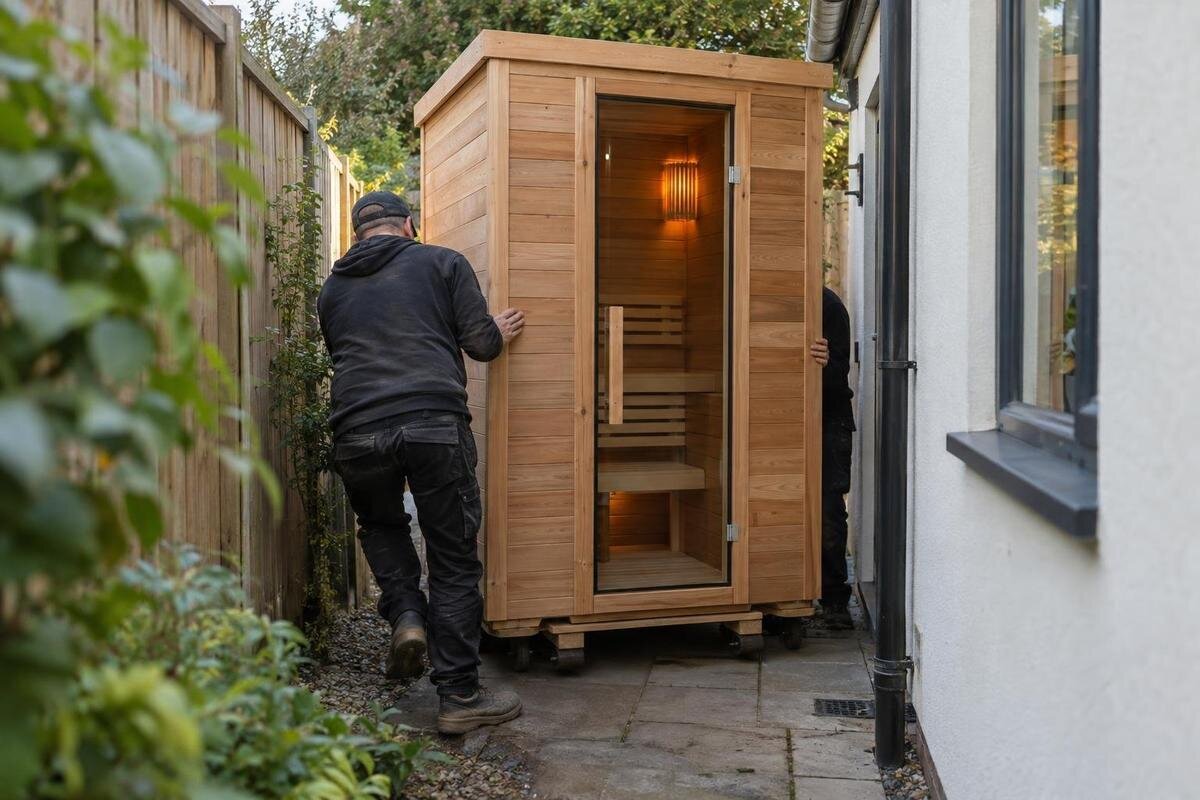
Sauna delivery planning
A sauna’s finished footprint tells you where it will sit, not whether it can get through a side gate. Plan delivery around the exact model’s confirmed shipping format and dimensions, then check openings, turns, overhead obstacles and unloading space before ordering.
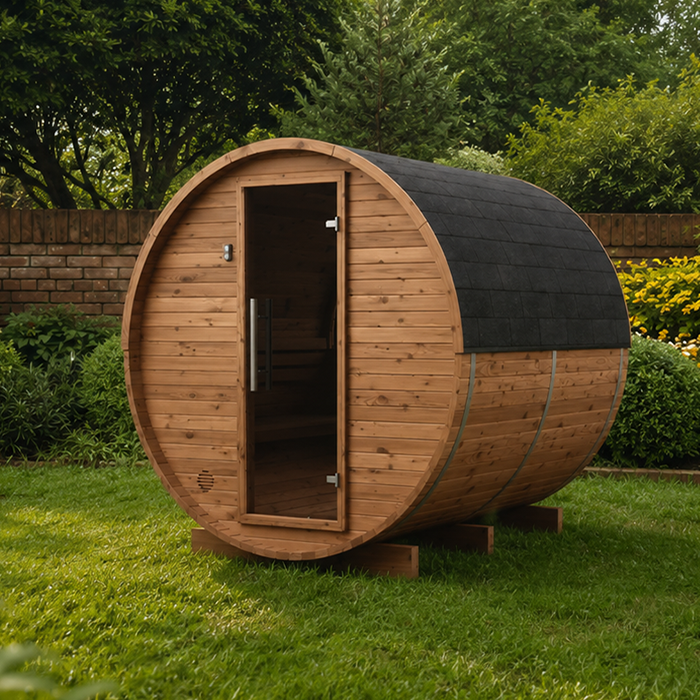
Delivery-route checklist 1
Delivery dimensions differ from the finished footprint
The space reserved for an installed sauna answers a siting question: how much room the finished unit occupies once it is on its prepared support. Delivery asks something different: what shape has to pass along the route, in what orientation, and with what crew or handling equipment. A sauna may fit the planned spot but be impossible to bring through a side yard as a complete unit. A restricted gate might be manageable if the supplier offers a component delivery that can be carried and assembled on site. Confirm that option for the exact model and configuration; a product photo or category label does not establish it. A smaller finished footprint does not, by itself, prove that the package will be easier to move.
Write down the exact model before measuring. A record such as the Sauna N-250 listing helps keep the product identity straight, but its name or image is not a transport drawing. Ask whether your order will arrive assembled, in sections or in packages, and whether that format is actually supplied for your order. Check the largest outside dimensions of each item as delivered, not only the sauna’s finished length and width. Protective packing or a pallet may change the outer profile, so ask whether those are included in the figures. This distinction helps avoid a common planning error: mapping the destination carefully while leaving the route to it unverified.
Get delivery dimensions for the exact model
Ask the retailer or manufacturer for a dimensioned drawing or delivery specification tied to the exact model and configuration. For a boxed or sectioned delivery, request the number of packages and the maximum external length, width and height of every package, as well as its weight and handling requirements. One smaller box will not be the limiting item if a longer section arrives separately. For a preassembled unit, request its overall dimensions in the transport position, including protective packing and any projections. A measurement of the assembled sauna may describe the finished product rather than what comes off the truck, so do not treat the two sets of dimensions as interchangeable. Keep the drawing or written response with your order details.
When you enquire about the LC-260 sauna listing, include its model label and the configuration you intend to buy. Ask whether all packages arrive together, which item needs the most clearance and whether the delivery format or packaging can change before dispatch. Confirm whether the carrier expects to move the sauna assembled or in sections, and who is responsible for any assembly. Do not assume an item can be tilted, turned on its side, unpacked in the driveway or carried piece by piece; the supplier and carrier must confirm what is permitted and included. If a drawing shows only the bare product, request the maximum dimensions as delivered rather than guessing at an allowance.
Delivery-route checklist 2
Measure every opening along the route
Walk the actual route and note each pinch point from the planned unloading area to the sauna’s destination. Look beyond the gate to fence posts, hinges, latches, walls, downspouts, railings, steps and eaves. Measure the clear opening with the gate at the angle it can realistically stay open; the distance between posts or the stated gate width can overstate the space a package can pass through. Check whether the ground or fence slopes, and note any obstruction at the top as well as at ground level. Record measurements in millimetres or centimetres, and identify where each one was taken so someone reviewing your plan can find the same spot.
Allow for the practical space needed to guide the load, not just the item’s outside dimensions. Depending on the confirmed handling method, straps, a trolley, protective material or the people guiding a bulky section may need room. Put the exact selection, such as the HCF-300 product page, beside your measurements so the supplier and carrier know which model you mean. A gap that works only if the item brushes both sides is not a reliable fit. Rather than choosing a clearance allowance from a rule of thumb, ask the delivery team what usable opening it needs for the actual package and handling method.
Allow room to turn and manoeuvre
A route can be wide enough along every straight stretch and still fail at a corner. As a long package changes direction, its front, rear and outer edges sweep through space. The turning area depends on the item’s dimensions, shape and permitted orientation, so measuring a diagonal across the opening alone does not prove the turn will work. Mark each bend, gate beside a wall, narrow passage opening into a wider yard, and step or landing where a long item may need to pivot. Look beyond the corner too: a garden bed, fence, fixed fixture or low eave can limit the movement even when the passage itself seems clear.
Share a route drawing and the confirmed delivery dimensions, along with the product identifier such as the LCF-300 model page, with the person responsible for delivery planning. Ask them to review the complete manoeuvre, including where the load can be turned or rested and whether different packages need different paths. Tape on clear ground can help visualize a package’s outline and turning space, but it does not reproduce height, weight, grip or the movement of delivery equipment. Do not promise that a crew can angle a unit or lift it over a fence based on a rough sketch. The carrier needs to confirm a practical route.
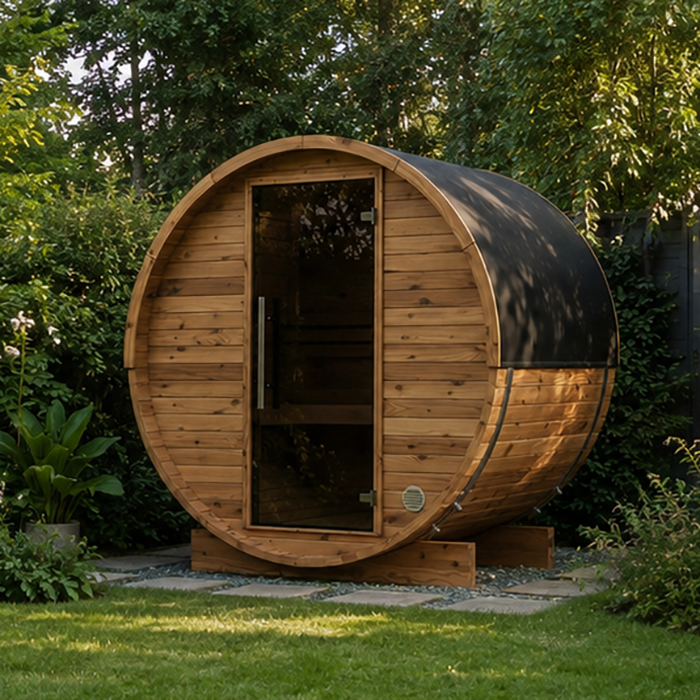
Delivery-route checklist 3
Check overhead clearance
Height is easy to miss when attention stays on gate width. Check the route for low branches, pergolas, eaves, balconies, gate arches, overhead pipes and service wires, as well as the height of the item in its approved transport position. A slope or step can affect clearance while a long package is being guided, and a unit that fits upright at the gate may meet an obstruction farther along. Measure at the lowest point, not just from one side of the route. Share measurements and photos with the delivery provider, and ask what clearance its vehicle, equipment and handling method require.
If the route passes near overhead electrical lines, do not treat lifting or branch removal as a do-it-yourself task. Tell the carrier and get advice from the appropriate utility provider or qualified service professional before work is planned; do not assume a load can safely be raised, tilted or carried under a line. The Sauna S-140 listing identifies a product, but it does not specify the height of the delivery vehicle or equipment. Ask who is responsible for clearing any obstruction and whether the route will still be open on delivery day. Branches can grow or move back into the path between measurement and delivery.
Assess the path surface separately from the sauna base
A route needs to work for the load and handling method, not merely be easy to walk. Note the surface and condition of each section: concrete, pavers, gravel, grass, a ramp or a threshold with a step. Include slopes, soft spots, drains, sharp edges and transitions between materials. Rain, thaw, snow or ice can change a surface between your first inspection and delivery. Tell the carrier what the path is like and ask whether its proposed equipment can travel there. Do not assume that a trolley, forklift or other aid can cross a lawn, step or loose paving because it works on a smooth driveway; the delivery team needs to assess the actual route and load.
Package weight and carrying distance also matter, so ask for those details before anyone commits to a manual carry or machine. If the route crosses a deck, narrow bridge, retaining edge or other structure, do not judge its capacity by appearance; involve the owner and a qualified professional where an assessment is needed. The HC-150 model listing can help identify your selection in that discussion, while the supplier provides the actual delivery details. Keep this assessment separate from the sauna’s permanent support: a path that can accept delivery equipment is not automatically the right finished base, and a prepared base does not show whether the carrier can reach it.
Delivery-route checklist 4
Plan the vehicle approach and unloading point
Trace access from the street or driveway to the planned delivery stop as carefully as the garden path. Confirm where a vehicle can stop, how it can approach or turn around, and what clear space it needs beside or behind it. Check for height restrictions at the driveway entrance, carport or low tree. The carrier may use a vehicle or unloading equipment you do not expect, so ask about the service assigned and its arrival requirements. A clear side gate is of little help if the load cannot be unloaded at the front or moved from the drop point to the gate. Note any steps and the distance between the unloading area and the final location.
Ask exactly what delivery includes: for example, whether the load is left at the curb, brought onto the driveway, unloaded to the ground or moved beyond the vehicle. Confirm who is responsible for each part. Do not assume the driver will carry components through the yard or that a liftgate, forklift or crane is included; these are different service details to verify. Identify your selection, such as the HC-225 sauna page, in the enquiry and ask the retailer and carrier who will coordinate unloading. Keep the agreed staging area clear without blocking the vehicle or creating another bottleneck. If the handoff is at the driveway, assess the remaining route from that point as well.
Decide what can be removed—and who can remove it
If an obstruction blocks the route, record it and consider a specific alternative rather than treating removal as automatic. A gate leaf, planter, storage bin or fence panel may offer another path only if its owner or a qualified trade confirms it can be moved and safely restored. Do not cut, dig or dismantle a permanent fixture based on a delivery estimate. Check whether work could affect an adjacent post, structure or buried service, and agree who will arrange it and when. For branches, confirm that any planned trimming will leave enough lasting clearance for the load; a small cut that springs back into the path will not solve the problem.
An alternate access route or professional lift may be worth asking about, but it still needs a complete assessment. The carrier or qualified lifting contractor must review setup space, overhead obstructions, surface conditions and the exact placement point, then confirm whether the method is available and suitable. Do not treat a shed roof, pergola or other garden structure as a landing or lifting platform; special rigging and temporary support must be assessed by a qualified professional. When asking what can be supplied, identify the exact selection, such as the N-210 product listing, rather than assuming a different delivery configuration will be available.
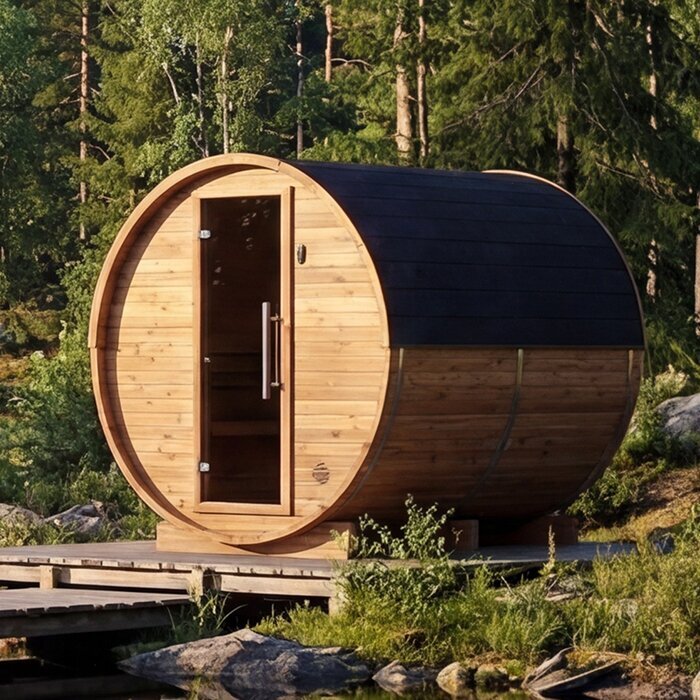
Delivery-route checklist 5
Put the route details in one delivery plan
Bring the information together in one route sheet before ordering or booking delivery. Include the model and configuration, delivery format, package count, outer dimensions and weights, narrowest clear openings, turns, surface changes, steps and overhead obstructions. Mark the vehicle stopping point, unloading scope and any agreed changes to gates or other obstacles. Add photos from the street to the destination, but label them with measurements and locations; pictures alone cannot show every clearance. A numbered route makes it easier to identify handoffs and the points where items may need to turn. Keep the supplier’s drawings and delivery instructions with the sheet so the plan does not depend on a verbal note.
Send the information to both the sauna supplier and carrier if they are different companies, and ask each to confirm its part in writing. The supplier can verify the product and supplied configuration; the carrier can confirm what its actual vehicle, crew and handling service can manage. Ask who will contact you if the assigned vehicle or method changes. If anyone cannot verify a tight corner, height limit or difficult surface, request a site visit, qualified assessment or revised plan before dispatch. A product page or booking confirmation does not establish that an unmeasured route will work.
Keep delivery-day conditions consistent with the plan
Recheck the route close to delivery, especially if it was measured weeks or months earlier. Move temporary items, open the gate to the agreed position and make sure any planned obstruction removal is complete. Keep pets, children and bystanders away from the work area, and ensure the agreed vehicle stop and staging space are available. Check that weather has not changed the path—for example, by leaving grass soft or paving icy. Do not add boards, sheets or improvised ramps without asking the carrier; they can move, create a new threshold or be unsuitable for the equipment. Tell the delivery team about changed conditions before unloading begins.
Choose one adult contact who has the route plan, model and configuration details, and supplier and carrier contact information. That person can answer questions without directing the crew onto an unassessed alternative route. Let the delivery personnel control the handling; an offer to lift or tilt a package does not replace their plan. If the opening is narrower than recorded, the vehicle is different or the path is blocked, pause and ask the carrier to reassess. Changing the plan may be inconvenient, but it is better than forcing a load through a route that no longer matches the confirmed arrangements.
Frequently asked questions
Does the sauna’s finished footprint tell me if it will fit through a side gate?
No. The finished footprint describes the space the assembled sauna occupies at its destination. For delivery, you need the outside dimensions of the item as transported, plus enough clearance for its turns, handling method and route. Ask for the exact model’s delivery details and have the carrier review the route.
What dimensions should I request before ordering?
For a packaged or sectioned delivery, request the number of packages and the maximum outside length, width and height of each, along with its weight and handling requirements. For an assembled unit, request its overall dimensions in the approved transport position, including packaging or projections. Confirm vehicle and unloading requirements separately.
Can the delivery crew tilt a package to get it through a narrow opening?
Do not assume that tilting or turning it onto another side is permitted. The supplier and carrier need to confirm the approved handling position and whether there is room to manoeuvre it that way. A tight fit on paper is not a confirmed delivery plan.
What can I do if the gate opening is too narrow?
Ask whether the chosen configuration can be delivered in sections, or whether a gate panel or other obstruction can be removed safely by its owner or a qualified trade. An alternate access route or professional lift may also be considered, but the carrier or qualified lifting contractor must assess and confirm the method first.
Is the delivery route assessment the same as checking the sauna’s base?
No. The route assessment considers the packages, vehicle, handling equipment and path to the destination. The finished base is a separate siting and support question. Use the sauna’s instructions and seek qualified, site-specific advice where needed; a suitable route does not establish that the destination is ready.
Narrow access is a measurement and handling question, not one the finished footprint can settle. A route plan that pairs confirmed package dimensions with the gates, turns, overhead space, path surface and unloading point gives the supplier and carrier something specific to assess before delivery. If they cannot confirm a workable route, resolve the gap before dispatch rather than improvising on delivery day.
