
Choosing a Sauna for a Weekend Cottage

Saunas for weekend cottages
Choosing a sauna for a weekend cottage is about more than fitting a model into the available space. The unit may sit idle for five days, through bad weather or a longer seasonal closure, then need to be ready during a short visit. Plan for the complete cycle: reaching the sauna, checking it, starting it while someone is present, using it without rushing, and shutting it down before the property is empty again. Decide who is responsible if plans change or a fault is noticed. Do not choose on the assumption that a timer, app or remote control makes unattended heating safe. The best fit is one whose installation and operating instructions can be followed within the actual cottage routine.
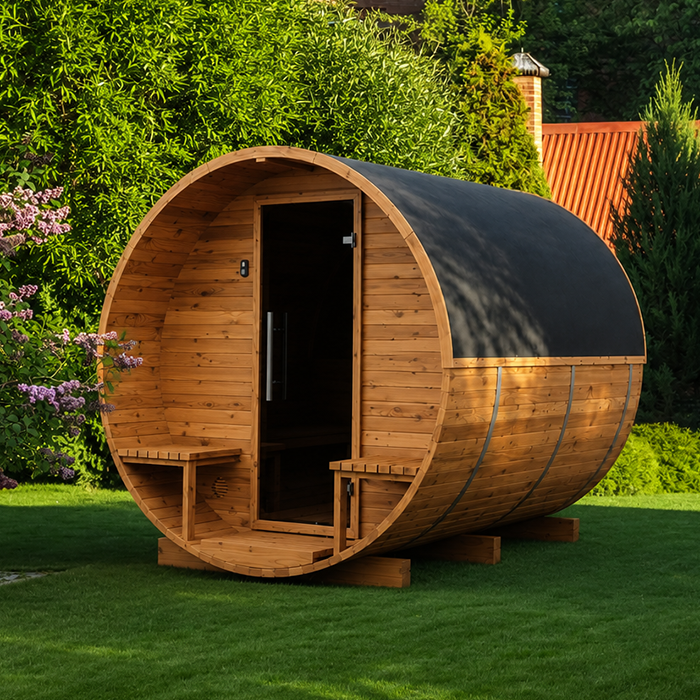
Build the routine around the weekend visit
Map a realistic weekend from arrival to departure before comparing products. Record typical arrival and leaving times, likely number of sessions, who will be at the property, and whether a trip may be shortened by weather, work or a late drive. Include unloading, changing, setup and closing the cottage; a schedule that works only when everyone arrives early is not dependable. If a session matters on the first evening, count backwards and ask whether the preparation still feels manageable after the drive. Sketch a late-arrival version too, so the sauna does not turn a delayed trip into a rushed one.
Assign responsibilities for checking the unit before start-up, operating it, completing the close-down and responding to a problem. In a shared cottage, “someone will take care of it” can mean no one is in charge. Keep the instructions for the exact model accessible and make sure regular users know which version applies. Decide what happens if a visit is cancelled or shortened: leave the sauna in the manufacturer-prescribed vacant state, and do not assume another person has checked it. A written routine also gives a caretaker or family member a clear handover instead of relying on an informal text.
Check access and siting at the cottage
Location is part of the weekend routine. Consider whether household members can reach the sauna in daylight and after dark without carrying supplies along an awkward route. Rain, snow, uneven ground, gates, stairs and changes in level can all affect how practical the walk feels. Think about where wet outerwear and towels will wait, whether the route can be kept clear, and how people will return to the cottage after use. A secluded spot may offer privacy but can be harder to inspect, reach for servicing or use when the weather turns. Consider sightlines from the cottage and neighbouring spaces as part of the location decision.
Before selecting a base or fixing the location, have a qualified installer review the manufacturer’s siting requirements, clearances, base, drainage and service route for the exact configuration. Use the dimensioned plan; a catalogue area is not the external dimensions or the space needed for assembly and access. For example, Sauna HC-150 is listed at 2.97 m², but that figure cannot confirm whether the route, door clearance or service access works. Compare the drawing with the site itself, including where a person must stand to enter and maintain the unit. Confirm practical access for installation and later servicing before choosing a remote corner.
Match the layout to the people who will use it
Choose the interior for the number of people who will genuinely use the sauna at once, rather than the largest group you can imagine visiting on a holiday. Check the manufacturer’s stated capacity, bench layout, dimensions and usable seating in a drawing for the exact model. Guests may need room to enter and settle without blocking one another; households that prefer separate turns may want a different arrangement from a group that expects to sit together. A plan view can also show whether the layout competes with a door, window or approach to controls. The listing’s area alone cannot answer these questions.
The Sauna S-140 listing states 1.93 m², which provides a size reference for your shortlist rather than a people count. It does not establish bench length, interior clearances or the manufacturer’s stated capacity. Compare the layout and capacity guidance with the group that usually travels to the cottage. If everyone expects to use the sauna together, that is a different requirement from a household that prefers separate turns. Plan space outside for shoes, coats, changing and towels so these items do not compete with seating or access. If anyone finds steps, thresholds or tight spaces difficult, assess both the approach and the interior before ordering.
Confirm heating and site services before buying
Confirm what provides heat and what services the exact configuration needs. A weekend property may have constraints that are easy to overlook: its electrical supply may be limited, utilities may be shut down seasonally, or fuel storage and replenishment may need planning. Treat these as questions to investigate, not assumptions about the cottage. Ask the retailer or manufacturer for the selected heater’s compatibility, required supply, controls, included components and installation instructions. Then have the appropriate qualified installer or electrician assess the site. Do not estimate capacity, adapt components or plan wiring from a product name or another model’s instructions.
When comparing packages, separate the sauna structure from the heating equipment and installation work. The Sauna N-210 listing gives an area of 4.43 m², but does not identify the heater, electrical load, fuel type, included components or installation requirements. Get the selected configuration in writing so you can distinguish what is included from what must be arranged separately. Match its documentation to the equipment that will actually be installed rather than inferring details from the model code. For a fuel-burning arrangement, ask the supplier and qualified installer to explain the applicable siting, ventilation and exhaust requirements using the specific instructions and local requirements.
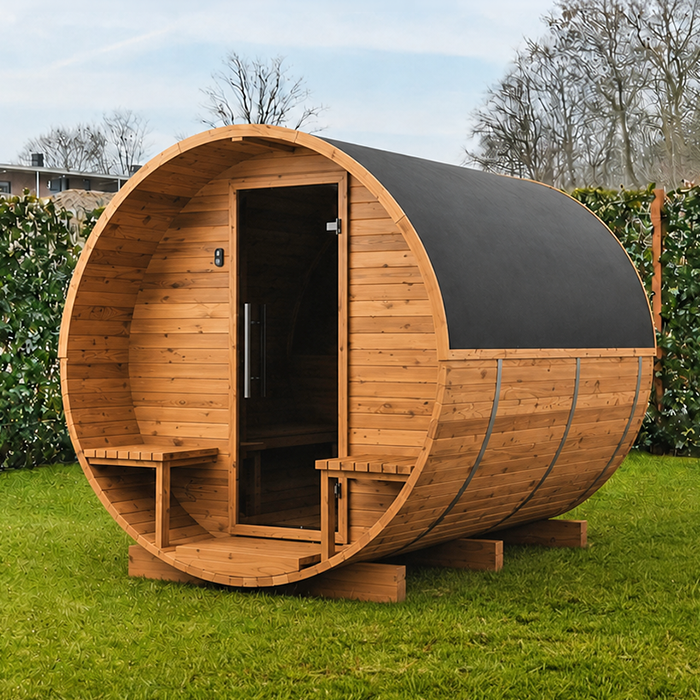
Allow time for arrival and warm-up
Build arrival time around the required checks and the instructions for the selected heater, not a general online estimate. Once at the cottage, unload, check the sauna and follow the exact start-up procedure before anyone expects a session. A model’s size is useful when comparing layouts, but not for setting the evening’s schedule: the Sauna N-250 listing shows 5.27 m² without establishing a warm-up time. Use the manufacturer’s guidance for the actual configuration, allowing for the starting conditions and site. Leave a buffer between arrival and the planned session, and change the plan if the sauna is not ready rather than trying to speed things up or skip a step.
Treat the first visit after a long gap as a chance to work through the arrival routine without a deadline. Notice which preparations can be completed easily and which require more time than expected. If the controls or site look different from what you remember, leave room to get advice rather than trying to recover a planned start time. Regular users should be able to follow the same operating instructions without depending on one person’s memory. Use what you learn to make the next visit’s schedule more realistic. A late arrival can then mean postponing a session, rather than rushing through unfamiliar steps to keep an optimistic timetable.
Check the sauna before each start
After a period of non-use, carry out the pre-use checks in the current manufacturer’s instructions. Include a general visual check for obvious damage, water entry, debris or signs of animal intrusion where accessible, then make sure the area is ready for normal use. Do not open electrical enclosures or investigate a fault yourself. If you notice exposed wiring, damage, an unusual smell or an unfamiliar fault, do not operate the unit; contact the installer or an appropriate service professional. Keep the inspection within the scope of the manual rather than inventing a technical procedure.
Keep a short pre-start checklist with the operating instructions, especially when different people use the cottage. Record the exact model and configuration, required checks, correct controls, conditions that mean stopping, and service contact details. For a shortlisted model such as Sauna LC-260, the listed 5.12 m² area helps identify the size being compared, but provides no information about its controls or check procedure. The checklist must come from the instructions for the actual unit. Make it clear where a user should stop and seek advice, rather than leaving them to interpret an unfamiliar alarm or assume that resetting it is the appropriate response.
Allow time for use and cleanup
On a short weekend, consider the whole use window, not only the time spent inside the sauna. People need time to get ready, take turns if the layout calls for it, gather personal items and follow the instructions after use. Avoid setting a departure time so tightly that someone is tempted to skip the close-down or leave belongings behind. If people will move between the cottage and sauna, decide where coats, footwear and towels go and keep the entry route usable. These small logistics reduce trips back and forth and make the end of the visit easier to manage.
Use the layout to work out where belongings will go during a session and how people will collect them afterwards. The Sauna HCF-300 listing states 6.89 m², but that figure does not show how its entry and benches will fit your routine or where nearby changing and storage space is needed. Review the drawings alongside the proposed location of towels and personal items, keeping access clear. Agree who will gather belongings and leave the space in the condition required by the operating instructions. This makes cleanup a defined part of the visit rather than a task passed between people as everyone prepares to leave. Check capacity separately from these practical arrangements.
Follow a written shutdown routine
Write the departure sequence from the operating instructions and any installer handover. Distinguish the end-of-use directions from what to do when the sauna will be vacant for several days or months; the instructions may differ. Confirm what the manual says about the heater, fuel if applicable, ventilation, doors and windows, water, accessories and power. Do not assume there is one universal setting for leaving these things. If the instructions are unclear for the installed configuration, ask the manufacturer or installer before relying on a guess.
Make the final check a physical part of closing the cottage. Remove personal belongings and towels as directed, complete each specified shutdown step, and note any issue that needs follow-up. Keep the checklist with the instructions for the installed model so there is no confusion with another unit’s procedure. If you are comparing Sauna LCF-300, its listed area of 6.89 m² belongs in the size comparison, not in the operating plan; shutdown guidance must come from the relevant instructions. Allow time to confirm that active operation has ended as prescribed and to resolve a problem before the property is empty.
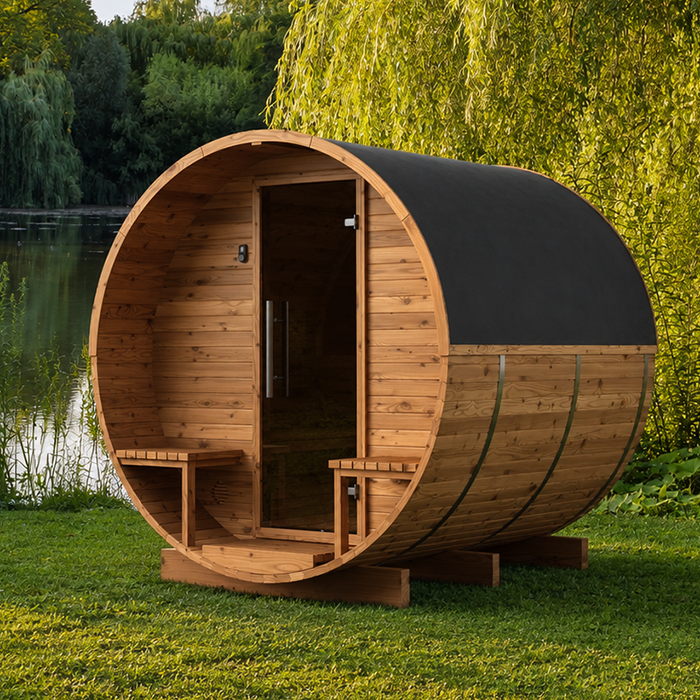
Arrange checks while the cottage is empty
Treat monitoring as an agreed response plan, not a reason to heat an empty property. Set the routine on the assumption that the sauna will not be operating while nobody is there. A timer, app or remote control does not show the condition of the whole property or confirm that the equipment has been set up safely. Do not treat remote operation as permission for unattended heating or preheating; plan to start the sauna after arrival, while someone is present, and follow the exact instructions.
Choose in advance who can attend if a message, outage or other concern arises, and how that person should get advice before touching or restarting equipment. During product comparisons, keep questions about monitoring separate from size: Sauna HC-225 is listed at 4.4 m², which says nothing about remote capability or unattended operation. Request the control instructions for the actual model and setup. If you use monitoring equipment, establish what it reports, who will review that information and who can respond at the property. A notification is useful only within that agreed response plan; it cannot replace a person who knows their role and can attend when needed.
Plan for seasonal closure and reopening
A long seasonal pause is different from a normal gap between weekends. Ask the manufacturer or installer how the exact sauna, connected services and any water-bearing parts should be left when the cottage will be closed for an extended period. A property may have its utilities shut down or winterized, but there is no one instruction that applies to every setup. Confirm who is responsible for any seasonal preparation, what to do before reopening and whether a qualified professional needs to assess the installation after a change or repair.
Keep a simple record of visits, checks, service, unusual events and unresolved issues. After a storm, extended closure, power interruption or work on the property, consult the instructions before starting the sauna and get professional advice if anything may have been affected. Use a calendar to prompt suitable checks, but let the manufacturer’s guidance and site conditions determine the timing. If the cottage is inaccessible for a period, do not treat a remote status message as a substitute for any in-person inspection the instructions or situation require.
Frequently asked questions
Can I start the sauna before leaving home so it is warm when I arrive?
Plan to start it after you arrive, while someone is present, and follow the instructions for the exact system. A timer or remote control is not, by itself, confirmation that unattended heating is permitted or safe. Ask the manufacturer or installer about any controls you are considering.
How long should I allow before the first session?
Use the instructions for the selected heater and configuration rather than a general estimate or a catalogue area figure. Allow time to arrive, check the sauna and follow the start-up procedure. If the schedule is tight, make the first session optional instead of rushing or skipping checks.
What should I check after the sauna has been idle?
Follow the manufacturer’s pre-use instructions. A general visual check can help you notice obvious damage, water entry, debris or signs of animal intrusion, but do not investigate a fault yourself. If something looks wrong or unfamiliar, do not operate the unit until you have appropriate advice.
Does a listed area tell me how many people can use a sauna?
No. An area figure does not establish seating, clearances or the manufacturer’s stated capacity. Ask for a dimensioned drawing and capacity guidance for the exact model and configuration, then compare that information with how many people will realistically use it at once.
How often should someone check the sauna between visits?
There is no universal interval for every property and setup. Follow the manufacturer’s instructions and account for site access, seasonal conditions and the cottage’s own closure routine. Name a person who can attend and respond if needed; remote status information is not a substitute for an agreed in-person check.
A suitable sauna for a weekend cottage fits both the site and the way people actually spend their time there. Compare models against your household’s needs, the documented layout and service requirements, and the time available for arrival, use and shutdown. Build the operating instructions into a clear routine, with a named person responsible during each visit and an agreed response plan while the cottage is empty. The practical choice is a sauna you can prepare, use and shut down without rushing—not one that depends on an assumption of unattended heating.
