
Choosing a Sauna for a Small Hotel or Guesthouse: Use and Commercial Suitability
Hospitality sauna planning
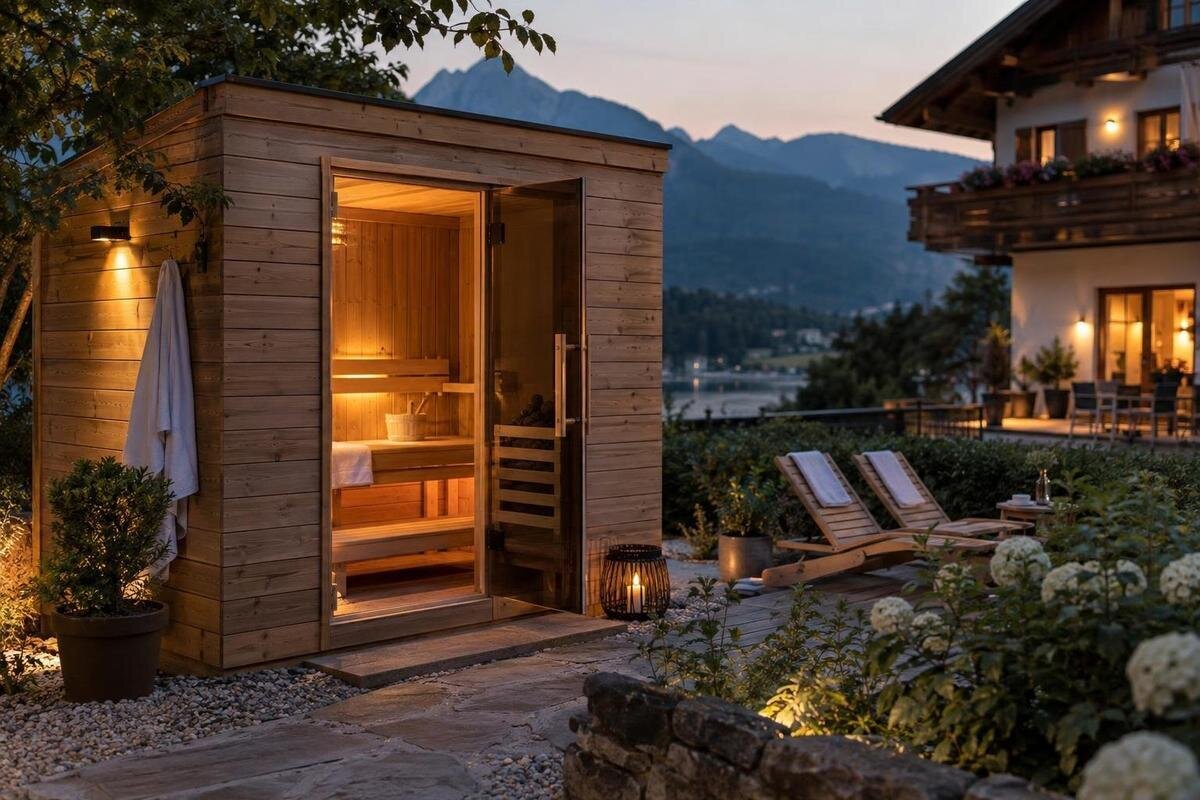
Adding a sauna to a small hotel or guesthouse is not simply a matter of choosing a model that fits the site. Guest bookings can create repeated starts, longer opening windows and reliance on staff; a unit described for household use may not be approved for that pattern. A sound plan ties the expected operating schedule to written manufacturer approval, site and utility requirements, a realistic supervision arrangement and a servicing plan. This guide focuses on that commercial-use decision. Catalogue names and listed areas can help identify models for comparison, but they do not establish duty-cycle ratings, guest capacity, configuration, warranty coverage or suitability for paid accommodation. Get those points confirmed for the exact model and installation before making a purchase commitment.
Why hospitality use needs its own operating brief
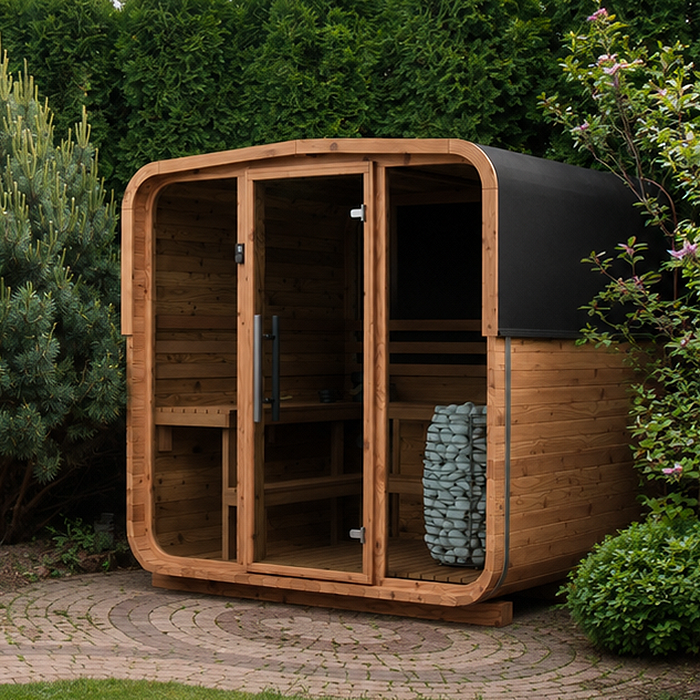
A home sauna may be used by a household on a limited, familiar schedule; a guest facility can be used by different people and staff across changing occupancy and opening hours. The key distinction is not simply whether the property is a hotel, but how the sauna will operate: how many operating days, daily opening hours, expected heating starts, intervals between bookings, periods of high demand, and whether the sauna remains available during colder months. Assess a model against that pattern rather than assuming it can cope because it is physically large or described as an outdoor sauna.
Before comparing equipment, record the intended service in plain terms: private booking or shared access, reservation windows, who switches it on and off, what happens between uses, and which hours staff are available. Note whether access is included for every guest or offered by appointment; that promise affects how much scheduling flexibility you have. Separate confirmed plans from peak-demand assumptions, then decide what availability you can support through busy dates and planned downtime. The S-140 product details give a listed area of 1.93 m², but a catalogue area is only a comparison detail; it does not establish usable seating, circulation, customer throughput or approval for a hotel duty cycle. Those require model drawings and manufacturer answers.
Describe the sauna duty cycle in practical terms
Occasional use is too vague for a commercial-use enquiry. Outline likely operating days and hours, the number and timing of heating starts, the longest planned run, intervals between guest bookings, and whether bookings may be back-to-back. Include ordinary weeks and peak periods, plus seasonal changes that affect when the sauna is offered. You do not need to predict exact attendance to ask a useful question; provide a realistic operating range and identify what is uncertain. Include what initiates each heating cycle, who may change settings, and whether another booking could follow immediately. This operating profile is information to submit, not proof that a model meets it.
Ask the manufacturer to define any duty-cycle limits for the exact heater and control configuration, including restrictions on consecutive use, daily hours, restart frequency or unattended operation. Ask whether warm-up, standby and shutdown periods count, and whether guidance changes with ambient conditions or installation details. When enquiring about a model such as the LC-260 barrel sauna, include the proposed schedule and ask the supplier to identify the configuration covered by its answer. If guidance refers to domestic use, ask whether that includes guest accommodation. Record the response in writing rather than relying on a verbal assurance, and note any conditions that would require you to reduce opening hours or change the booking schedule.
Get written commercial-use confirmation for the exact configuration
Ask the manufacturer, or an authorized supplier who can obtain its response, to address the proposed use explicitly: a small hotel or guesthouse, paying guests, the intended booking pattern, the planned location, and the exact sauna, heater and control configuration. A response about a similar-looking model, a private residence or occasional personal use may not answer that question. Ask which documents support the answer and whether it depends on specified installation, ventilation, control or supervision arrangements. If a component changes from the documented configuration, request confirmation again rather than assuming the earlier response still applies.
Have the written response clarify relevant warranty conditions, any exclusions for business or guest use, maintenance requirements, and who handles service enquiries. A catalogue listing identifies a product; it does not establish the terms under which it may operate in a hospitality business. If you are considering the HCF-300 model, use that exact identifier in your enquiry and ask the supplier to distinguish the sauna enclosure from any heater or control options in the proposal. Keep the final response, drawings, manuals and supplier clarifications together. If final confirmation is not yet available, keep the purchase decision open rather than treating general reassurance as approval.
Match guest access and capacity to the layout
Capacity is more than a floor-area number. Confirm the intended number of users from an official drawing and the manufacturer’s occupancy guidance, then check whether the benches, entrance, internal circulation and required clearances suit the approved arrangement. Ask which measurements are internal and which include exterior elements; if a catalogue gives only an area, do not convert it into a seat count. Consider how the layout works when guests arrive together, need assistance entering or have to pass one another. Make the booking policy and guest information consistent with the manufacturer’s guidance.
Decide how access will work: reservations, staff-managed entry, a posted schedule or another method supported by the approved controls. Plan how arrivals and departures avoid congestion, how guests receive instructions, and whether the facility suits its intended users; seek professional advice on any accessibility or building changes. The LCF-300 product listing gives an area of 6.89 m², matching the HCF-300 figure in the catalogue, but equal listed areas do not prove that models share a layout or usable capacity. Compare drawings and occupancy guidance, not a single number. Ask how any differences in the entrance or bench arrangement would affect your proposed guest access plan.
Confirm the site and installation requirements before ordering
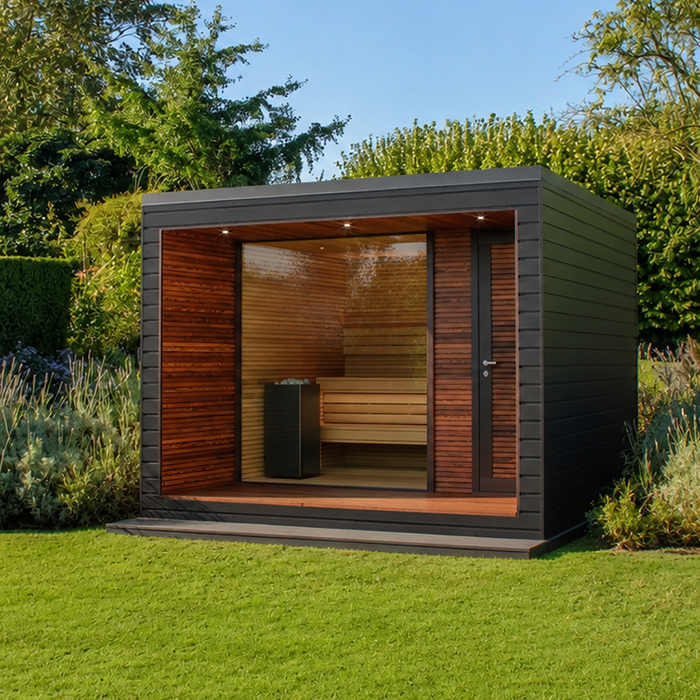
Check that the manufacturer approves the proposed location for the exact sauna, and that the site plan allows for delivery, assembly, guest access and future service. Have the base or supporting structure, water management, clearances and weather exposure reviewed against the manufacturer’s drawings by appropriately qualified people. A product photograph or category label cannot establish what is included, how the unit must be supported or whether the chosen location is suitable. If the plan involves a deck, roof or another structure, get a professional assessment rather than assuming a garden sauna is designed for that placement. Ask the local authority and qualified building professionals what approvals or inspections apply to the property.
Treat electrical supply and heater installation as a coordinated part of the site plan. Request the exact electrical requirements and have a qualified electrician assess the proposed supply, controls and routing for the property; involve other qualified trades where building work is needed. Confirm who is responsible for each part and what must be ready before delivery. For a proposal involving the HC-225 sauna, make sure the installation information names the quoted model and equipment configuration. Ask the supplier and contractors to identify any outstanding site decisions, so the order does not proceed on conflicting assumptions. Put those details and responsibilities into the written proposal before approving the purchase.
Set a supervision plan guests and staff can follow
Supervision may involve staff being present or a controlled access process, but do not assume either arrangement is acceptable for every product. The appropriate plan depends on the manufacturer’s instructions, the site, the booking model and the property’s own risk assessment. Ask what level of oversight the exact system requires, which controls guests may use, and whether unattended operation or particular restart procedures are restricted. Consider how staff coverage changes between daytime, evening and overnight access. If the manufacturer’s response is unclear, resolve the question before setting the operating policy rather than relying on a general assumption.
Write a short procedure for opening, closing, access, handover and fault escalation. Name the role responsible for checking the facility, explaining controls, recording problems and taking the unit out of service when instructed; arrange cover for evenings and days off. Keep guest information consistent with the manual, and tell staff how to respond if a control behaves unexpectedly or a guest raises a concern. If your shortlist includes the N-210 sauna model, obtain the matching manual rather than assuming another sauna’s procedure applies. Include the procedure in staff onboarding and handovers, and make clear who takes responsibility when the usual staff member is unavailable.
Arrange servicing and keep a record of faults
Before purchase, ask who can inspect and service the unit in the property’s location, which tasks staff may perform, and which must be handled by the manufacturer or a qualified technician. Request the recommended inspection intervals, any parts or consumables the manufacturer identifies, the process for diagnosing faults, and how to make a service request. Clarify what support is available without assuming a particular response time. Do not promise guests uninterrupted access if service arrangements and possible repair visits have not been considered. A clear route for reporting problems matters when the sauna is a regular guest amenity.
Keep a simple record of operating periods, checks completed, faults, repairs and configuration changes; follow any recordkeeping instructions in the manufacturer’s documents. Logs help a manager share an accurate history with a technician, but they do not replace required inspections or authorize staff to carry out technical repairs. When requesting service information for the N-250 barrel sauna, specify the exact model and ask which manuals and parts references apply to the quoted configuration. Decide who stores the records and passes them on when staff responsibilities change. Keep service contact details with those records so that the person reporting a fault can provide the relevant information.
Schedule routine care and planned downtime
Get the care instructions before setting a cleaning routine. Ask which products and methods the manufacturer approves for benches, floors, glazing, handles and controls, and what should happen between bookings. Check whether the instructions specify areas that must be kept dry or clear. Do not assume a general hospitality cleaner or common household product is suitable for every surface. Assign the task to a role and provide a written method based on the manufacturer’s guidance. Keep cleaning separate from technical maintenance; staff should not be asked to inspect or repair components unless the manufacturer’s instructions expressly permit the task.
Plan downtime for inspections and service tasks specified by the manufacturer, and allow for an unscheduled closure if a fault needs attention. Write down who decides when the unit can return to use; a routine housekeeping check should not stand in for a required technical assessment. When reviewing the HC-150 product information, ask for the approved layout and the space needed for service and maintenance access. Keep that access clear when placing the sauna, landscaping or storage nearby, and make sure the site plan does not obstruct it. Let the front desk or booking contact know how closures will be communicated to guests and who will update existing reservations.
Compare operating costs and responsibilities
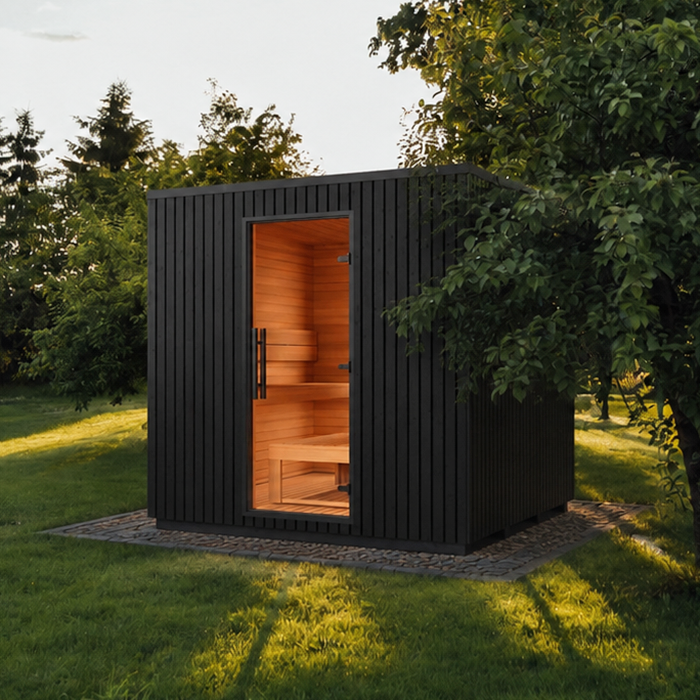
Request a written breakdown of what the proposal includes and excludes instead of comparing equipment alone. Depending on the approved configuration, the project may involve site preparation, delivery and assembly, electrical work, controls, access arrangements, inspections, replacement parts, cleaning supplies, staff time and periods when the amenity is unavailable. These items are not necessarily supplied with a sauna, so ask for explicit confirmation. Have qualified contractors estimate site and electrical work using current drawings and property conditions; generic estimates may not reflect the actual installation.
Build an operating-cost comparison around the hours you expect to offer the sauna. Request manufacturer information for the actual equipment and ask an electrician how the installed setup affects the estimate. Include the people responsible for monitoring use, scheduling, cleaning and service calls, as well as how a closure may affect guest communication or alternatives. Avoid forecasting savings, demand or revenue from square metres, model names or another property’s experience. A useful comparison separates confirmed figures from estimates and identifies who pays for each item after opening. Revisit it if the operating schedule changes.
Record the purchase decision and outstanding questions
Prepare a short decision record for the owner, manager, supplier and trades. Identify the exact model and configuration, intended hotel or guesthouse use, expected operating schedule, manufacturer’s written response, drawings and installation conditions, supervision plan, servicing route, warranty terms and unresolved questions. This record is not a substitute for manufacturer documents or professional assessments; it helps everyone see whether they are working from the same assumptions. Mark unanswered critical questions as open rather than treating general reassurance as final approval. Keep the record with the documents staff will need to operate and service the sauna.
Proceed only when commercial use, site, utilities, guest operation and maintenance arrangements align for the exact configuration. If the manufacturer limits use, the planned hours fall outside its guidance, or qualified trades identify a site issue, revisit the model, location or service plan before committing. A small property may be able to offer a simple, scheduled amenity, but its size does not remove the need to confirm how the equipment is permitted to operate. Reassess the decision if the controls, location or operating schedule change after purchase.
Frequently asked questions
Can a residential sauna be used in a small hotel?
Only if the manufacturer confirms that the exact model and configuration are suitable for the planned guest use and operating schedule. A product listing or residential-use description does not establish commercial suitability or warranty coverage.
What does sauna duty cycle mean for a guesthouse?
For planning, describe how often the sauna may be started, its intended operating hours, how close bookings may be, and how many days it will run. Ask the manufacturer how those details compare with the exact model’s documented limits.
Does a catalogue area tell me how many guests fit?
No. An area figure does not establish seating, circulation space or approved occupancy. Request a drawing for the exact model and ask the manufacturer for its occupancy guidance.
Does a guest sauna always need on-site supervision?
Do not assume that supervision is either required or unnecessary based on the product category alone. Ask what the manufacturer’s instructions require for the exact controls and installation, then set staffing and access procedures for the property.
What servicing details should I confirm before buying?
Ask who can service the sauna, which inspections and routine tasks are required, how faults are reported, what parts or support may be needed, and who is responsible for records and planned downtime.
Choosing a sauna for a small hotel or guesthouse is ultimately a question of whether its documented operating limits match the service the property intends to provide. Treat duty cycle, written approval, installation, supervision and servicing as one decision rather than separate afterthoughts. A catalogue entry can help identify a model and compare listed information, but manufacturer confirmation and qualified installation professionals are needed to resolve model-specific use and site questions. When those answers are clear and recorded, the property can decide whether it can reliably operate and maintain the proposed sauna as a guest amenity, not merely whether it fits the available space.
