
What to Check in a Sauna Warranty Before Buying
Sauna buying guide
Before buying a sauna, match the warranty documents to the exact cabin, heater and installation arrangement on your quote. Terms can assign different providers, start dates, exclusions and claim steps to different items. A product-page name or headline period cannot confirm those details. Use this checklist to obtain current written terms for the configuration you plan to buy, then note who is responsible for each component and what costs may remain outside coverage.

01
Identify the product covered by each document
Start with the quote and write down the full product name, model code, selected configuration and options. Avoid shortening similar entries to ‘the barrel sauna’: exact identity matters when a document applies to one variant. For example, keep Sauna HC-150 Thermowood Barrel Sauna exactly as named in your comparison sheet. Also note the seller and the companies identified for the cabin, heater and warranty, if they differ. List any heater, control, accessory or assembly service shown on the order separately. Mark options as included, excluded or undecided rather than copying a standard package description. A catalogue listing helps identify an item; by itself, it does not confirm which parts or services are covered.
Before paying, request current written terms that name the model or clearly state that they apply to it. Confirm whether the document covers only the cabin or also the heater, accessories and installation in the quote; if separate terms apply, obtain each one. Record each document’s title, date or version, and the company responsible. Ask whether a general brochure is only a summary and where the full wording is available. If the quote changes—a different heater, option or installation arrangement—request updated confirmation. Keep that answer with the final order so the terms match the actual configuration, not an earlier draft. If the seller says a standard policy covers all models, ask for the wording that connects it to your selection.
Separate cabin and heater coverage
Keep the cabin and heater as separate entries until the written terms connect them. A cabin warranty may identify one set of parts, while heater coverage can be issued by another company or addressed in another document; do not assume either arrangement. Ask whether the terms cover the structure and each supplied component, and whether they address parts, labour or both. List only items shown on your order, such as benches, a door, roof components, controls or a heater if supplied. The catalogue name HC-225 Thermowood Barrel Sauna can identify the cabin on your shortlist, but it cannot establish whether a heater is included or what its warranty covers. Mark optional items that are not part of the sale separately.
For the heater, record its exact make and model from the quote, then ask which manufacturer’s warranty and manual apply. If a controller, sensor or other part is listed separately, find out whether it has its own terms. Ask who receives a heater claim—the sauna retailer, heater supplier or another contact—and whether it follows a different route from a cabin claim. If an item is purchased separately, show it as its own line. A short schedule with an item, provider, document and contact prevents the broad phrase sauna warranty from obscuring which part is covered or separately handled. It also helps you spot a component mentioned in the quote but missing from the paperwork.
02
Define covered faults and available remedies
Look for the warranty’s own wording on defects, materials and workmanship; do not rely on a sales phrase such as coverage for quality. Ask what counts as a covered fault and how the terms distinguish it from ordinary wear, a cosmetic change or damage from another cause. If the document names a component, ask what condition must be present for a claim to qualify, who assesses it and whether the terms set a deadline for reporting it. Keep Sauna N-210 Thermowood Barrel Sauna beside the answer in your notes so the response stays tied to the item you are considering, not a different model or an example from another product. Clear definitions matter when a visible change and a functional fault may be treated differently.
Coverage and remedy are separate questions. Ask whether an accepted claim can result in a repair, replacement part, full replacement or another remedy, and who decides among those options; none should be assumed unless the current wording says so. Clarify whether the terms address labour as well as parts, how a repair is arranged and what happens if the same fault remains after an attempt. If only certain faults qualify, request an example tied to the written definition. The useful comparison is not simply whether a part is named, but what must happen for the provider to accept the fault and what it agrees to do next. Record any limit or condition attached to that remedy.
Confirm who is responsible for installation
Separate the product warranty from any installation service in the quote. Check whether the sauna is being sold for assembly by the buyer, by a contractor or under a separately described installation scope; do not infer an arrangement from a photograph or product listing. Ask who is responsible for assembly workmanship and whether that person or company provides a separate written warranty. Record what the installer has agreed to do, what falls outside that job and who handles a defect that appears at the boundary between a supplied part and the installation. Keep the exact model—such as Sauna N-250 Thermowood Barrel Sauna—on the same paperwork. A clear scope makes it easier to identify which company to approach if a problem arises.
Ask the seller or manufacturer which installation instructions apply and whether the product warranty sets conditions for independent or do-it-yourself assembly. Request any records the warranty requires, such as installer details, dated completion paperwork or a commissioning record, rather than guessing what will be needed later. Discuss heater electrical work with a qualified professional; ask what documentation the warranty provider requires, but do not treat a sales response as electrical design advice. If different parties are responsible for the cabin, heater and electrical connection, write down each contact and their responsibilities. Keep the required completion records with the installation agreement so you can distinguish the agreed scope from the work documented as complete.
03
Read exclusions for location, use and exposure
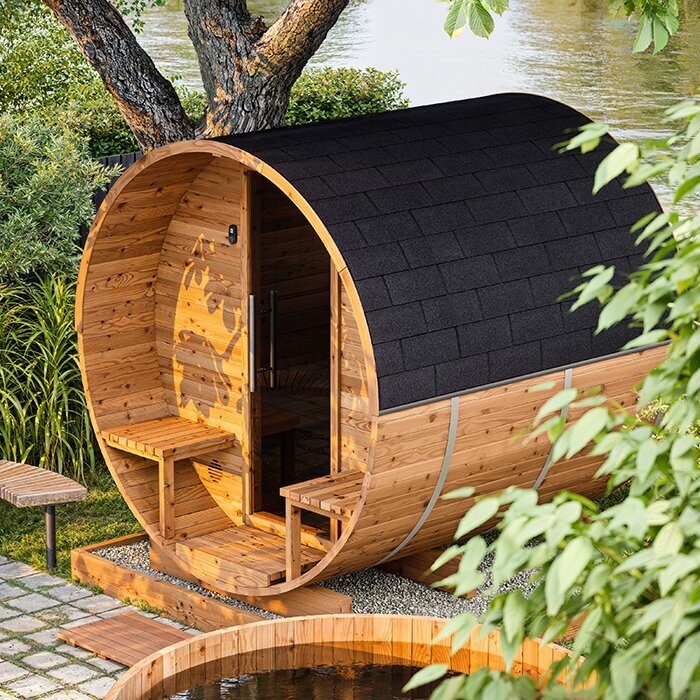
Check exclusions before treating a warranty period as meaningful. Ask whether the terms restrict the sauna’s location, intended use or exposure, and whether your proposed site fits the manufacturer’s written conditions. Do not assume a model is covered in a particular setting simply because it appears in a product category or an image shows it outdoors. For the item you are considering—for example, Sauna LC-260 Thermowood Barrel Sauna—confirm which location and use conditions apply to that exact configuration. If the site is exposed to rain, snow, sun or other weather, ask what the documents say about that exposure instead of relying on a general answer. If storage before assembly is relevant, check whether the terms address it too.
Read exclusions for normal wear, accidental damage, unauthorized changes, maintenance, transport or commercial use as questions to resolve, not terms that automatically apply. Ask the provider to define broad phrases such as improper use and explain how it assesses a claim when more than one cause is possible. Find out whether a change made by an installer or a repair by another company affects only the altered part or something broader; get the answer in writing. A useful review turns each relevant exclusion into a practical check: does it fit your plans, and can you meet the stated condition? If the terms refer to a specific manual or location requirement, request that document before deciding whether the condition works for you.
Understand care requirements and keep records
Ask for the care and operating instructions that match the cabin and heater in your order. If warranty terms require maintenance, find out exactly what work, products or intervals they specify, and whether directions differ by component. Do not substitute an online routine or instructions for a similar sauna when the provider has named a particular manual. Put Sauna HCF-300 Thermowood Barrel Sauna on the request so the seller can confirm the matching documents, and identify the heater separately. If a term makes coverage conditional on a task, ask how to demonstrate completion and whether that requirement applies throughout the stated period. Check whether a treatment or change you are considering is addressed in the written instructions.
Keep the documents with proof of purchase: final quote, invoice, warranty version, manuals and written answers about care. If a service or maintenance record is required, note the date, work performed and provider, and retain receipts; if no log is required, you need not invent a complicated schedule. Photograph the sauna and any issue before arranging work, and save correspondence. Before authorizing a modification or repair that could affect a claim, check the claim procedure first. Good records do not create coverage, but they help show which product was bought and what directions you followed. Keep records for as long as the applicable terms could make them relevant to a claim.
04
Check start dates, duration and eligibility
Compare the start date and length of each term, not just the largest number in a headline. Ask whether coverage for the cabin, heater, parts and installation begins at purchase, delivery, installation or another event, and how that date is proved. Separate documents may use different triggers, so record the stated start and end date for each item once known. The exact name Sauna LCF-300 Thermowood Barrel Sauna in your notes helps keep the dates with the right product. If registration is required, ask who completes it, by when and what confirmation you should keep; do not assume it is automatic. Check whether a replacement part or repaired component follows a separate term.
Ask who is eligible to make a claim: the original purchaser only, a later owner or another named party. Confirm whether the terms change if the sauna is moved, used in a setting different from the one stated on the order, or used for a business rather than private purposes. These are not assumptions to settle from a general summary; each document should answer for its own item. If you expect to move or sell the property, ask about transferability and any notice or paperwork needed. Save the answer with the purchase file, alongside any stated limits on territory or claim eligibility, so a future owner or service contact can find the applicable conditions.
Learn the claim steps before an issue arises
Write down the first contact for each warranty, the method for submitting a claim and the information required. Ask whether to contact the seller, manufacturer, heater supplier or installer, and whether that company arranges an inspection or asks you to do so. A claim note should identify the exact item—such as Sauna S-140 Thermowood Barrel Sauna—plus the purchase date, any serial or batch number provided, a clear description and dated photographs if requested. Ask which documents to attach and whether a form or deadline applies; do not assume a phone call alone starts the process. Confirm how the provider will acknowledge the request and how you can follow up.
Before a repair, replacement or inspection visit, ask whether the provider must authorize the work and who arranges it. Clarify how to handle an issue that needs attention before assessment and whether the provider needs to see a removed part. Ask for the stages—initial review, diagnosis, decision and repair—and the contact for status updates; request any stated time frame rather than relying on an estimate. Keep notes of dates, names and messages, including any instructions about what to do next. If a heater concern has a safety aspect, use the manufacturer’s support route or contact a qualified service professional. This keeps the claim process separate from guesswork about the equipment.
05
Clarify costs and limits on remedies
A part being named in a warranty does not answer who pays for the work around it. Ask whether an accepted claim includes labour, diagnostic fees, travel, shipping, removal, reinstallation or access costs, and whether the provider or buyer arranges each step. If an item must be returned, confirm where it goes and who pays freight; if an installer must attend, ask whether that visit is included. The terms may treat expenses separately from a replacement part, so record a yes, no or written condition for each instead of writing covered beside the entire sauna. Ask whether a cost is paid directly, reimbursed or outside the warranty, and keep the answer with the relevant document.
If an accepted claim cannot be resolved through the stated remedy, ask what the terms provide when a repair is not possible or a part is unavailable. Clarify how the provider handles a fault that returns after repair and whether a replacement component remains under the original term or receives a new one. Do not assume a refund or reimbursement for related work if the stated remedy does not address it. If the provider uses a cap, deductible or other limit, ask how it is calculated and whether it applies per claim, component or purchase. These details help you compare the practical limits of coverage and identify costs you may need to pay.
Compare written answers before committing
Use one worksheet for the cabin, heater, accessories and installation. For each line, record the item, warranty provider, document and version, start date, duration, covered failures, exclusions, care conditions, claim contact, remedy and costs not included. Mark any point that depends on an option or installer as unresolved until it is confirmed. If an answer arrives by email, save it with the quote; if a term is updated, keep the newer copy and note what it replaces. This makes side-by-side comparison possible without reducing the decision to one headline period. It also shows where one company’s terms stop and another party’s responsibilities begin.
Pause on vague answers such as the sauna is covered until the seller identifies which parts and written conditions that means. Ask the retailer to reconcile conflicting statements from a catalogue, installer and manufacturer rather than deciding which one applies yourself. A useful confirmation names the model, heater or service, responsible company and relevant document; it also explains any exception that affects your intended use. If key points remain missing, compare only what is documented and decide whether the uncertainty is acceptable before purchase. Keep the final quote, terms and correspondence together for as long as you may need to make a claim.
Frequently asked questions
Does a sauna warranty automatically cover the heater?
No. A product listing or cabin warranty does not confirm that the heater is included. Check the quote for the heater’s exact make and model, then ask which warranty document applies, who handles a claim and whether its start date, duration or exclusions differ from the cabin’s terms.
Can DIY or third-party installation affect warranty coverage?
Only the current written conditions can answer that. Ask what installation records, qualifications or approvals are required, and whether workmanship concerns go to the installer or another company. Discuss heater electrical work with a qualified professional; this warranty checklist is not an installation guide.
When does a sauna warranty start?
Check each document separately. It may name purchase, delivery, installation or another event as the start date, and different components may use different dates. Ask what evidence establishes the date, whether registration is required and how to record the end date.
What should I keep for a warranty claim?
Keep the final quote and invoice, exact model and heater details, current warranty documents, manuals, written answers and any installation paperwork. Save required maintenance records and relevant photos or correspondence. Ask the claim provider which evidence it actually needs.
Should I arrange a repair before submitting a claim?
Check the written claim steps first and ask whether the provider must authorize an assessment or repair. Do not assume related work will be covered or reimbursed. If a heater concern has a safety aspect, use the manufacturer’s support route or contact a qualified service professional.
A useful sauna warranty comparison is a map of components, providers, terms, exclusions, dates, care duties, claim steps and costs—not a single number. Once you can trace the cabin, heater and installation responsibilities back to the exact quote and current documents, you can compare the protection with how you plan to use and maintain the sauna. If an important answer is still vague or verbal, treat it as unresolved until the responsible company puts it in writing.
