
Thermowood vs. Untreated Wood for Outdoor Saunas
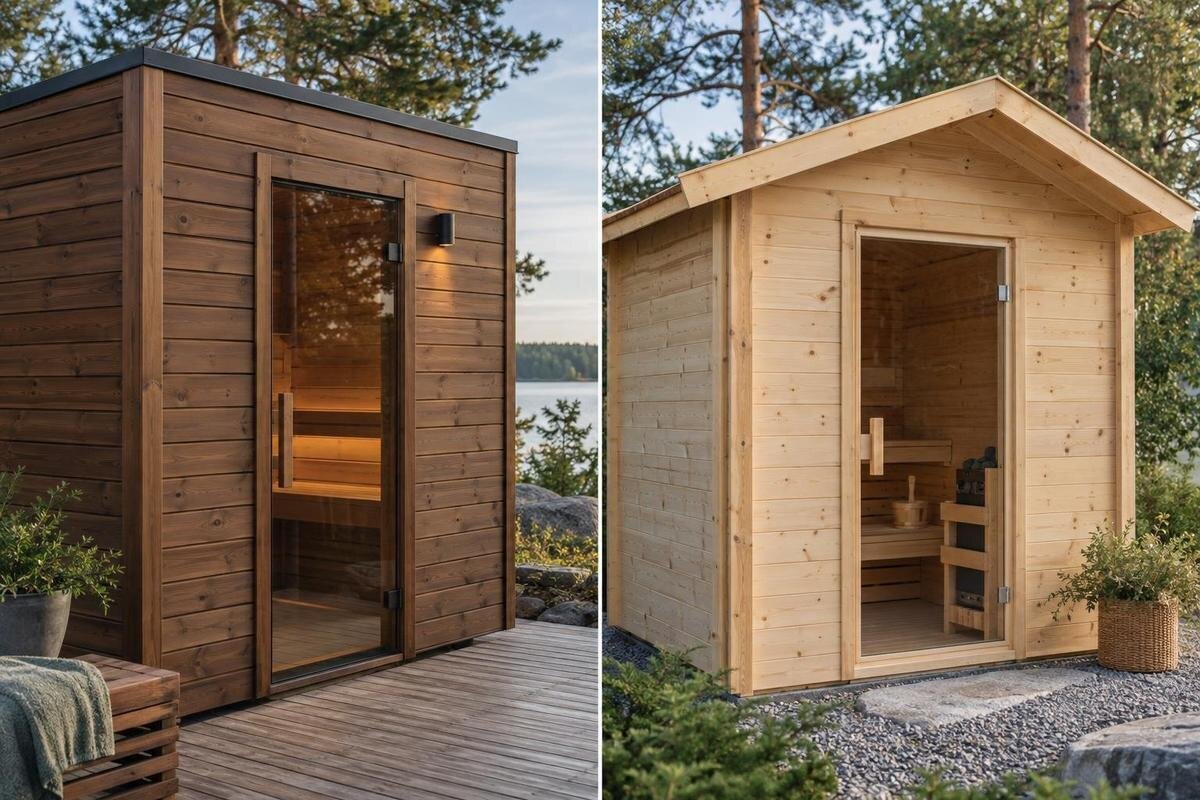
Outdoor sauna materials
An outdoor sauna’s exterior timber faces rain, snow, sunlight, splashback and repeated wetting and drying. “Thermowood” and “untreated wood” are useful labels, but neither predicts how a particular sauna will weather on your property. Thermowood generally refers to thermally modified timber; “untreated” can mean several things, from no preservative to no surface coating. The meaningful comparison is the exact species and process, where each material is used, the manufacturer’s exposure guidance and the care instructions. Those details help you judge appearance and upkeep without assuming either option is waterproof or maintenance-free.
Buyer checklist 1
What the two timber labels actually mean
Thermowood generally refers to timber modified through a controlled heat process, but the label alone does not identify the wood species, process details, grade or any additional treatment or finish. Ask the manufacturer to define what the term means for the exact sauna and identify which components use that timber. “Untreated” is equally broad: it may mean no preservative, no thermal modification, no surface coating, or some combination. The descriptions are not direct opposites until you know what has—and has not—been done to each board. A written materials schedule helps prevent comparing untreated framing with modified exterior cladding as if they were equivalent.
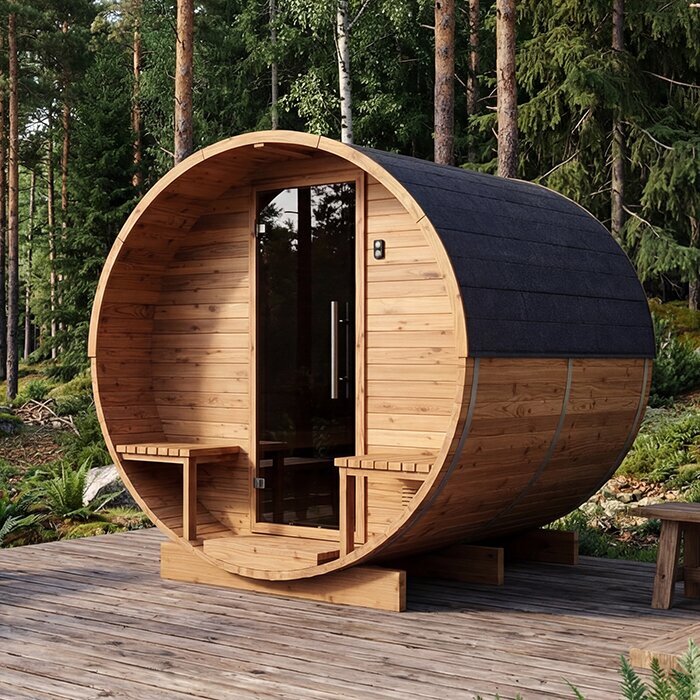
When comparing the Sauna HC-150 Thermowood Barrel Sauna listing with an untreated option, separate the material description into three questions: what wood is supplied, what processing it has undergone, and what finish is on its surface. These details belong together, but they are not interchangeable. A statement about thermal modification does not answer whether a coating is included, and an uncoated surface does not establish that the timber has had no other treatment. Ask both sellers to describe their products in the same terms so that a difference in wording does not become an assumed difference in quality. If either description uses “natural” or “chemical-free,” ask what that wording specifically covers. Keep the answer attached to the exact model and configuration, rather than treating it as a description of every sauna in the range.
What heat modification can change
Thermal modification changes some of wood’s properties, including its response to moisture; the degree depends on the species and the specific process. It can reduce moisture-related movement, but a generic claim such as “more stable” is not enough to predict how a sauna will perform. Ask whether supporting data apply to the exact material and what conditions were tested. Even when movement is reduced, wood still responds to moisture and can shrink, swell, split or check. Heat treatment does not make an exterior board waterproof, seal its joints or protect every cut end. The assembly still needs to manage water and drying.
Thermal processes can also affect strength and brittleness, so intended use matters. A visible exterior board, a trim piece and a structural member have different jobs; information for cladding is not proof that the same stock suits a frame or another load-bearing part. Use the HC-225 Thermowood Barrel Sauna product page to identify the model you are asking about, then request its drawings and materials schedule. If your question concerns support, anchoring or framing, have the proposed assembly reviewed by a qualified builder rather than turning a timber label into a structural decision.
Buyer checklist 2
Untreated wood varies by species and grade
Untreated wood is not a single material. Species, heartwood and sapwood content, grade, grain, knots, board cut and moisture condition can all influence how individual boards behave. Natural durability differs between species and can vary within a species; a common trade name or a product photo cannot establish what will be supplied. Ask for the species name, grade and intended exterior use, and check whether any finish has already been applied. If the sauna includes several timber components, find out whether they share the same material or only the visible boards do. That distinction matters when one care instruction is offered for the whole structure.
Untreated wood cannot be ranked as less durable, more natural-looking or lower-maintenance from its label alone. When comparing an untreated option with the N-210 Thermowood Barrel Sauna listing, distinguish differences in species and grade from differences in processing. If the two options use different species, you are not comparing treatment alone; if their exposed components differ, you are also comparing construction. Record those differences rather than attributing every advantage or drawback to thermal modification. Ask whether the supplied timber description applies to all exterior boards or just selected components, and whether the grade information covers the wood actually included. This helps you identify what you are choosing between without forcing a universal ranking. An untreated alternative needs its own clear material description, not an assumption that it is simply the unmodified version of the other sauna.
How rain, snow and sun reach the sauna
Exposure at the chosen location can matter more than the timber label. Consider which walls receive wind-driven rain, how much direct sun reaches each side, where roof runoff lands, and whether snow, leaves or splashback collect near the base. Vegetation close to the cladding can also slow drying. Conditions vary between properties, so a broad statement about Canadian weather cannot replace an assessment of the actual site. A sheltered wall and a wind-exposed corner experience different amounts of wetting, while repeated freezing and thawing can add to seasonal exposure.
Check the manufacturer’s instructions for placement, ground clearance, drainage, ventilation and other installation details, then compare them with the location you have in mind. Follow the approved design for directing water away; do not infer a site rating from a timber name. For a named option such as the N-250 model page, request its specific installation documentation and confirm it matches the configuration you are considering. If the ground, slope, runoff or wind exposure raises support questions, ask a qualified installer to assess the complete assembly rather than adapting a generic wood-care tip.
Buyer checklist 3
Why the whole exterior assembly matters
An outdoor sauna is an assembly, not a single exterior board. Cladding, end walls, trim, roof edges, door and window surrounds, the base and the supporting frame may use different materials or finishes. A product name may not describe every component. Ask for a drawing or materials schedule that identifies the timber used in each exposed area and what is included. Thermally modified exterior cladding does not automatically mean that the frame, trim or every other visible part is made from the same wood. Likewise, an untreated cladding description does not tell you how other parts are constructed or finished.
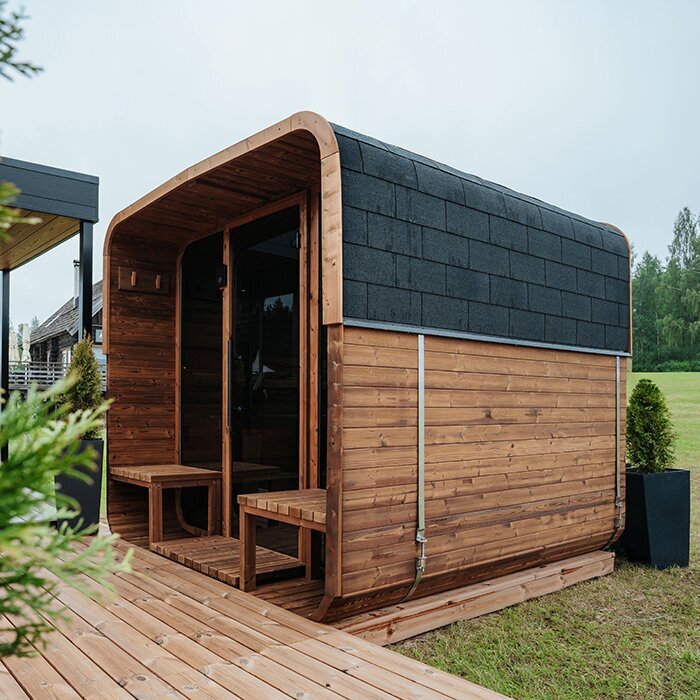
Use the installation manual to understand how the parts meet. Lower edges, corners, roof interfaces and openings are places where runoff and drying details matter. For the LC-260 Thermowood Barrel Sauna, ask which components use the named timber and which have separate material or finish specifications. Read the drawings alongside that information: a broad exterior description is less useful than knowing what is used at each exposed junction. Include door and window surrounds in the comparison rather than looking only at the largest area of cladding. If the care instructions refer to “wood surfaces,” clarify whether that means every wooden component or only particular boards. Compare the exact configurations offered by the sellers, since a drawing for a different version may not answer your question. Have uncertain structural or site-specific details reviewed by a qualified professional.
Exterior colour changes over time
Colour is a separate consideration from weather resistance. Heat modification can affect timber’s initial tone, but the result depends on species and process, so “Thermowood” does not promise one shade. Untreated wood also varies naturally from board to board. Sunlight and moisture can change exterior colour over time: exposed wood may weather towards grey, while areas beneath an overhang can change differently. A colour shift alone does not prove that timber has failed, but persistent dampness, soft areas, damaged coating or widening cracks deserve attention under the manufacturer’s care guidance.
If you want to keep a particular colour, ask whether the supplier recommends an exterior finish for that exact wood and how it should be maintained. Confirm compatibility before applying a stain, oil or coating; something suitable for another species may not suit this one. When considering the HCF-300 Thermowood Barrel Sauna page, use its photographs to discuss the appearance you prefer, not as a promise of a lasting shade. Request a sample or written finish specification, and clarify whether it represents bare timber or a finished surface. Also decide whether you would accept different amounts of weathering on sheltered and exposed sides. That preference helps frame the finish discussion: preserving a consistent appearance is a different goal from accepting natural colour change. Ask how the recommended care addresses your goal without assuming that one product can prevent every visible change.
Buyer checklist 4
What to include in a maintenance plan
Both materials need a care plan that takes the site and the manufacturer’s instructions into account. Look over exposed boards and joints periodically for standing water, debris, coating wear, loose components, persistent discolouration or other changes, and keep drainage paths clear as directed. The right inspection timing depends on exposure and product guidance, so avoid relying on a universal schedule or advice for a different sauna. Use only cleaning methods and tools the manufacturer permits; an unsuitable cleaner or overly aggressive scrubbing can damage a surface. A visual check does not replace professional review of concerns about the assembly.
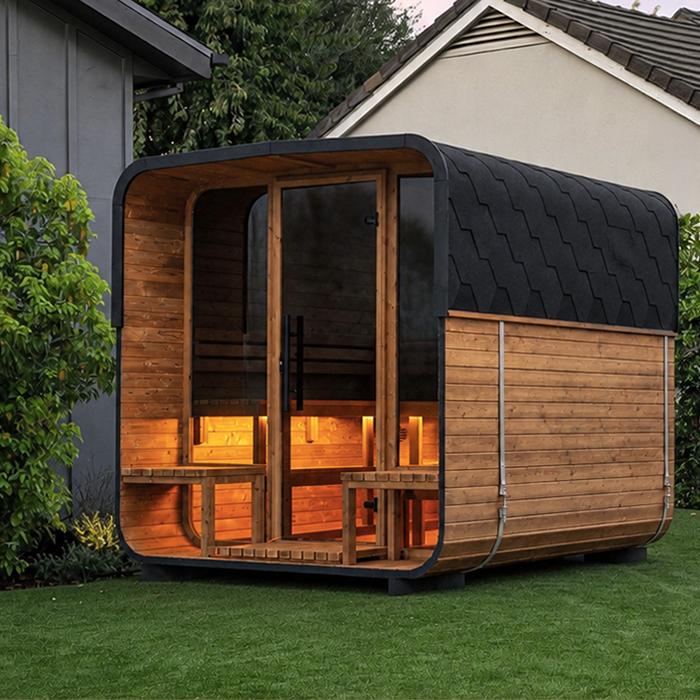
Before buying, ask whether the wood is intended to be coated or left uncoated, which cleaning products are compatible and what signs mean the finish needs attention. For the LCF-300 sauna listing, request care instructions that distinguish exterior cladding from the frame and other wooden components. Turn those instructions into a practical routine: identify the surfaces to inspect, the cleaning method allowed and the changes that warrant contacting the supplier. This is more useful than a general promise of low maintenance. Keep a simple record of cleaning, finish applications and areas needing attention so you can describe changes clearly if advice is needed later. Do not infer from Thermowood or untreated status that care is unnecessary or a finish is included. Any work beyond the stated cleaning and care routine should follow the manufacturer’s guidance.
Which manufacturer documents to compare
Ask for documents that describe the actual wood rather than relying on a sales adjective. Useful details include species, grade, component location, any thermal modification or preservative treatment, the finish if present, and the manufacturer’s intended exterior use. If a supplier makes a durability or stability claim, ask what product data support it and whether the evidence applies to the same species, grade and process. Check the conditions behind any test result; a claim without its scope cannot be compared fairly. Written installation and care instructions matter too, because a material’s intended use depends on the assembly.
Put the documents side by side and distinguish a stated specification from a general description. For the Sauna S-140 Thermowood Barrel Sauna page, organize your questions under material, construction and care so each answer has a clear purpose. A species name answers a material question; a drawing identifies where components are used; a care instruction explains what the owner is expected to do. None replaces the others. For an untreated alternative, request equivalent information rather than accepting a shorter verbal description. If a claim uses “weather-resistant,” ask which material or component it describes and what exposure is intended. If a test result is supplied, note whether it concerns the timber itself or the assembled product. Keep model names and configuration details with the records so that information for one option is not accidentally applied to another.
Buyer checklist 5
How upkeep affects ownership effort
Maintenance is also a question of time and appearance, not only the wood itself. Decide whether you are comfortable with natural colour change or want a more even, maintained finish; the latter may involve additional work if the manufacturer specifies it. Consider access to lower sides and roof edges, whether you can carry out the recommended cleaning, and who will handle coating or repairs. Workload cannot be estimated from “Thermowood” or “untreated” alone: shading, rainfall, splashback, the finish and construction all affect how the exterior is cared for. Your preferred appearance is part of the maintenance decision.
Repairs deserve a separate place in the ownership comparison. Ask how the manufacturer handles minor surface damage, whether replacement boards can be matched and which materials or products are acceptable for repairs. Distinguish routine surface care from work on a joint, support or other part of the assembly; these are not interchangeable tasks. Confirm any parts or services directly, since availability should not be assumed from a catalogue page. If maintaining a consistent colour matters to you, ask what to expect when an individual board is repaired or replaced rather than assuming it will look identical to the surrounding wood. Consider who would carry out the permitted work and how they would access the affected area. Keep the applicable instructions with the sauna’s model information, especially if someone else will maintain it. These questions help compare ownership effort without claiming that one timber is always easier to maintain.
Choosing wood for your site and care plan
Use your site and maintenance preferences to narrow the choice. Note where rain, snow, sunlight and runoff reach the sauna; decide whether visible weathering is acceptable; then compare the exact species, process, finish and installation guidance offered for each option. Give extra attention to exposed lower boards and joints if the site is difficult to keep dry, but follow the manufacturer’s design rather than inventing a fix. If your main concern is long-term appearance, focus on documented finish and reapplication guidance. If it is movement or durability, look for product-specific evidence instead of relying on a general claim.
Thermowood may suit a buyer who prefers a documented thermally modified material and is satisfied with its stated appearance and care requirements. Untreated wood may suit someone whose exact species, grade and exterior-use instructions are clear and whose maintenance expectations match the supplier’s guidance. Neither choice wins on its label alone. For your final comparison, write a short reason for choosing each option that refers to your property and preferences: acceptable weathering, a compatible finish, manageable access for care or clearly described component materials. If the reasons amount only to “treated is better” or “untreated is more natural,” the comparison is still too broad. Resolve the specific unanswered question rather than adding more general claims. Involve a qualified sauna builder where assembly or site conditions need assessment, and avoid basing the purchase on an assumed lifespan or a promise of no upkeep.
Frequently asked questions
Does Thermowood mean no chemicals were used?
The label alone cannot tell you that. Ask how the specific timber was processed and whether any preservative, coating or other treatment applies to the components used in the sauna. Rely on the manufacturer’s product information, not a broad description such as “chemical-free”.
Is untreated wood maintenance-free?
No. Untreated describes a treatment status, not how the wood will handle rain, sunlight or changes in moisture. Ask for the species, intended exterior use and manufacturer’s cleaning and care guidance. The right plan may also depend on the finish, if one is applied.
Does Thermowood need an exterior finish?
There is no single answer for every species and process. Check whether the manufacturer intends the specific exterior wood to be coated or left uncoated, which finishes are compatible and how they should be maintained. Do not assume the product includes a finish.
Will either type of wood keep its original colour?
Do not count on it. Sunlight and wetting can change the appearance of exterior timber, and the result varies with species, process, finish and exposure. If colour matters, ask for a finish specification and care instructions for the exact material.
Which is better for a rainy or snowy site?
The labels cannot settle that question. Compare the sauna’s installation instructions and material information with the rain, snow, runoff and sun exposure at your site. If the ground or assembly raises structural or installation questions, have a qualified professional assess it.
Thermowood versus untreated wood is most useful as a comparison of documented materials. Thermowood generally denotes thermal modification, while “untreated” needs clarification; neither label predicts a sauna’s lifespan, finish or maintenance on its own. Choose by matching the exact species, component use and care guidance to your site and the appearance you want to keep. If product information leaves important gaps, treat them as open questions rather than filling them with assumptions.
