
Traditional vs Infrared Sauna: Which Experience Fits?
Sauna buying guide
Choosing between a traditional sauna and an infrared sauna is mainly a choice about how warmth is produced and what the session feels like. A stone-heater sauna warms the room and, where the system permits, supports a water-on-stones ritual; infrared equipment uses radiant emitters and a different control setup. Neither label guarantees a particular temperature, warm-up time, running cost or level of comfort. This guide compares the experience, equipment and buying checks so you can decide which approach deserves a closer look. It treats wellness claims cautiously and does not assume that every type is available from one retailer.
How traditional and infrared saunas produce heat
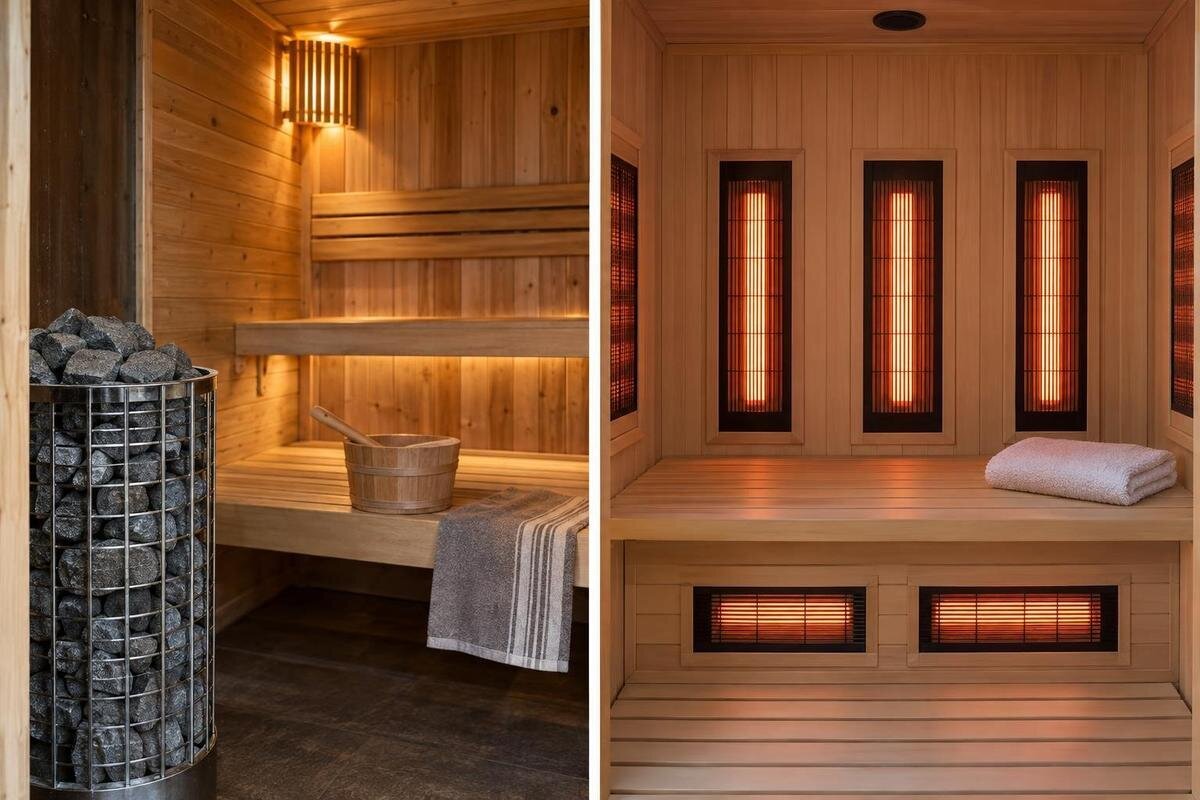
Traditional saunas—often called conventional saunas—use a heater to warm the room. Many designs also heat stones, so a session combines warm air, hot surfaces and radiant warmth near the heater. On a system whose instructions allow it, water poured over hot stones briefly raises humidity. The label does not specify fuel, equipment, room temperature or whether water use is permitted. Electric and wood-fired systems can share the stone ritual, but their controls, operating steps and installation needs differ. In this type of sauna, the heated room is central to the experience. Check the exact heater and manual rather than treating all traditional models as identical.
An infrared sauna uses emitters to deliver radiant energy into the cabin rather than relying on a stone heater as its main heat source. Cabin air can still warm, so the shorthand that infrared heats you but not the room is too absolute. Emitter type and placement, enclosure and controls affect the experience. Exterior shape does not identify the heating system: the N-210 Thermowood Barrel Sauna listing establishes a model and enclosure identity, not a particular heater. If a description uses more than one heating label, check whether it names separate systems and shows them in the specifications; the categories are not interchangeable.
How the heat feels during a session
With a traditional heater, you experience a mix of warm air, heated bench and wall surfaces, and radiant warmth from the heater area. Heat can vary across a cabin, so seating level, distance from the heater, ventilation and an open door can affect the impression. Your preferred posture and the space available to change position matter too. This can feel like a whole-room sauna experience, but it is not automatically more even, hotter or more comfortable; those qualities depend on design and operating conditions. If you have only used one sauna, remember that its particular layout may have shaped your expectations.
With infrared, the sensation depends on which emitters are active and which parts of your body face them, while the cabin air may also warm. Posture, panel placement and personal preference influence comfort, so claims such as gentler, deeper or uniformly soothing do not predict how a specific person will respond. Look at the interior layout and maker’s explanation, not only a product photograph. If you have an opportunity to try a sauna, notice what you like about the warmth and your seated position separately. Wanting more legroom is a layout preference; wanting a different heat sensation is a heating preference. Keeping those observations separate helps you avoid rejecting an entire heating category because of one uncomfortable bench arrangement. The Thermowood Barrel Sauna N-250 identifies a barrel-sauna product; its title and exterior image cannot establish heater placement or session feel. Read the model’s documentation before assuming what its interior will be like.
Water, steam and humidity
Water on stones can be part of a traditional sauna routine, but only when the exact heater is designed for it and its manual permits the practice. The water creates a temporary change in humidity and the sensation of the air; it does not turn the cabin into a steam room. If you enjoy adding water during a session, check whether it is a supported feature rather than assuming every stone heater allows it. If you prefer a dry environment and fewer in-session steps, the ritual may be irrelevant to your choice. The maker’s directions are the place to check permitted use and limits.
An infrared setup centres on emitters, not a hot-stone routine, so pouring water on panels should never be assumed appropriate. Follow the exact product and heater manuals for moisture restrictions; the absence of a stone heater is not permission to improvise. Combined heating systems exist in the wider market, but a hybrid label should be supported by specifications that describe both heat sources. The LC-260 barrel sauna listing identifies an enclosure category; that wording alone does not tell you whether water use is allowed or which heater components are included.
Warm-up time and controls
Preheating is part of the routine, but there is no dependable time figure for a category by itself. A stone-heater sauna must bring the cabin and heater components to the conditions described by its maker; how long that takes depends on the model, room size, insulation, starting conditions, ventilation and selected setting. Infrared cabins also require preparation, and emitter designs and controls vary. A lower air-temperature reading, if one is shown, does not by itself prove that a unit is ready faster or feels the same. Compare each model’s instructions rather than relying on a generic warm-up claim.
Match the control routine to how you plan to use the sauna. Check where the controls are located, whether you can set a timer or temperature, how the display reports conditions, whether a preheat function is included, and what the instructions say about unattended operation. These features are configuration-specific, not guaranteed by the heating label. Consider who will normally prepare the sauna and who will use it afterwards. In a shared household, each user should be able to understand the displayed settings and the permitted adjustments without relying on someone else’s usual routine. Distinguish controls used before entering from those intended for use during a session, and ask how the system is shut down when finished. On a product page such as the HCF-300 model page, confirm the actual control equipment and operating manual before judging whether its routine suits your household. Keep the same questions for both heating types; comparing an equipped option with a bare enclosure is not like-for-like.
Equipment included with each type
With a traditional sauna, the heater is only one part of the equipment decision. Find out whether the listed package includes a compatible heater and stones, controls and sensors, a guard or other model-specific components, or whether those must be ordered separately. If the system is wood-fired, ask which flue or related parts the manufacturer specifies; if it is electric, check the stated electrical requirements. Do not infer compatibility from cabin dimensions or a product photo. A sauna maker or qualified installer should confirm that the chosen heater and enclosure work together and explain any missing parts before purchase.
Infrared configurations need a different item-by-item check: identify the emitter or panel set, controls, sensors, power information and any optional pieces named by the manufacturer. Confirm what arrives in the package and what is required for operation, rather than assuming panels shown in a lifestyle image are included. Ask how settings are controlled and where model-specific service information is available. For a listing such as the LCF-300 Thermowood Barrel Sauna page, check the included-items section and identify the exact heater model instead of assuming it from the enclosure name. A qualified installer can help confirm compatibility and service requirements.
What affects operating cost
Running cost cannot be settled by choosing traditional or infrared as a label. Relevant inputs include the exact unit’s rated power or fuel, how long it operates, preheating, how often you use it, cabin heat loss and the local cost of electricity or wood. One sauna might be electric and another wood-fired, so even two traditional models can have different cost profiles. Claims that one type uses less energy need their assumptions attached, including the enclosure, schedule and conditions. Without model-specific information, a precise bill comparison would be guesswork.
Ask for the maker’s operating guidance and rated input for the exact heater or emitter system, then compare it against the use pattern you expect rather than an idealized short session. Include preheating in the schedule and separate fuel or electricity costs from any one-time site work, maintenance or replacement parts. Describe your likely routine in plain terms: occasional weekend use, several separate sessions, or a shared session with other household members. Apply that same routine to both candidates so that the comparison does not favour one simply because you assigned it fewer operating hours. Keep unknown inputs marked as unknown rather than filling them with a category-wide estimate. An example such as the S-140 barrel sauna listing helps identify a model to investigate, but its name alone does not reveal power draw or a monthly bill. If service requirements are unclear, ask a qualified professional instead of estimating from the heating label.
Seating capacity and personal comfort
Capacity is about usable seating, not only the advertised headcount or a single area number. Compare interior dimensions, bench length and depth, available legroom, headroom and how the seats are arranged. Think about whether you prefer to sit upright or stretch your legs, and whether people in a shared session can choose a comfortable position without crowding one another. These practical details affect the experience with either heating system. A room intended for one or two regular users may need a different seating plan than one used by a group, so use a drawing rather than a generic occupancy label. A spacious seat for one may matter more to you than an extra place.
The HC-150 model listing gives a stated area of 2.97 m², but that figure alone does not show bench dimensions, clearances or how many people can sit comfortably. Ask for a dimensioned drawing and check whether measurements refer to the outside, inside or another listed area before comparing models. Treat capacity as a layout question and confirm measurements in the manufacturer documentation, rather than assuming that a larger catalogue figure guarantees a more comfortable session. The same drawing can help you judge whether the seating arrangement suits your preferred posture.
Installation and the space around the sauna
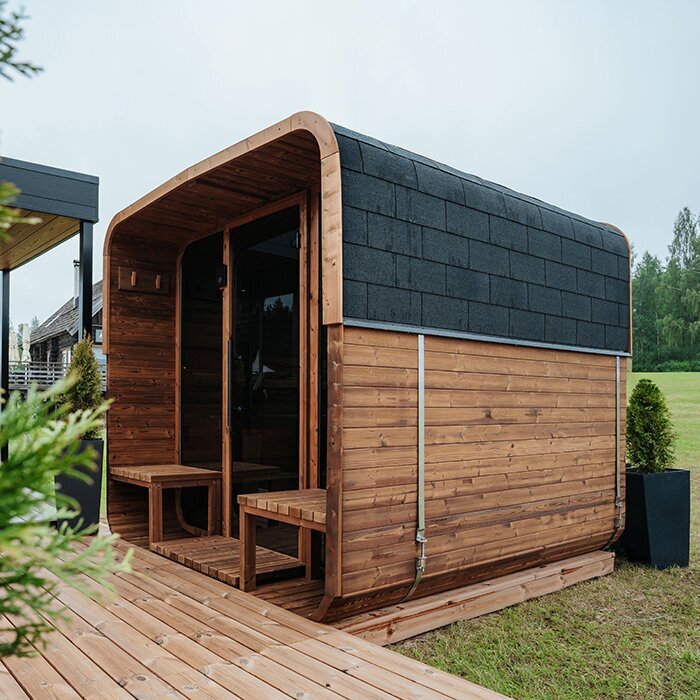
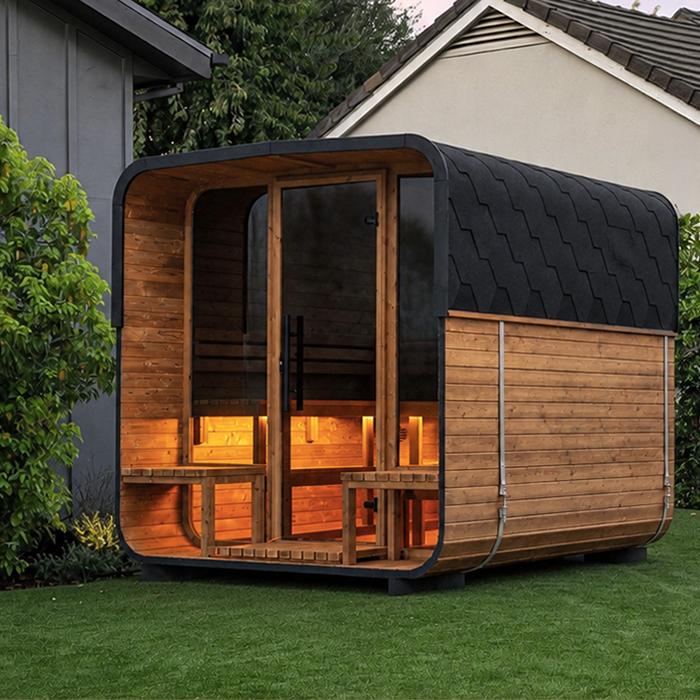
Location is separate from heating preference. Before ordering, confirm the intended installation environment in the manufacturer’s documents and measure the space needed for the cabin, entry, door movement, circulation and any stated clearances. Plan for delivery access too: a product that fits its final spot still has to reach it. Indoor and outdoor placements can raise different questions about moisture exposure, ventilation, supporting surface and access to utilities. Do not assume a product described as a barrel sauna is suitable for every garden, indoor room or exposed site; intended use needs to be stated for the exact model.
Installation requirements depend on the actual heater. A qualified electrician or sauna installer can review electrical service, clearances and ventilation for an electric or infrared system; a wood-fired option also needs its manufacturer-specified flue arrangement reviewed. Ask who supplies and connects each component, and what site preparation remains, before choosing a configuration. The HC-225 Thermowood Barrel Sauna listing identifies a model, but its title alone does not approve a location or settle service requirements. Use the manufacturer’s drawings and manual for the intended setup, with a professional confirming technical questions.
How to verify product information
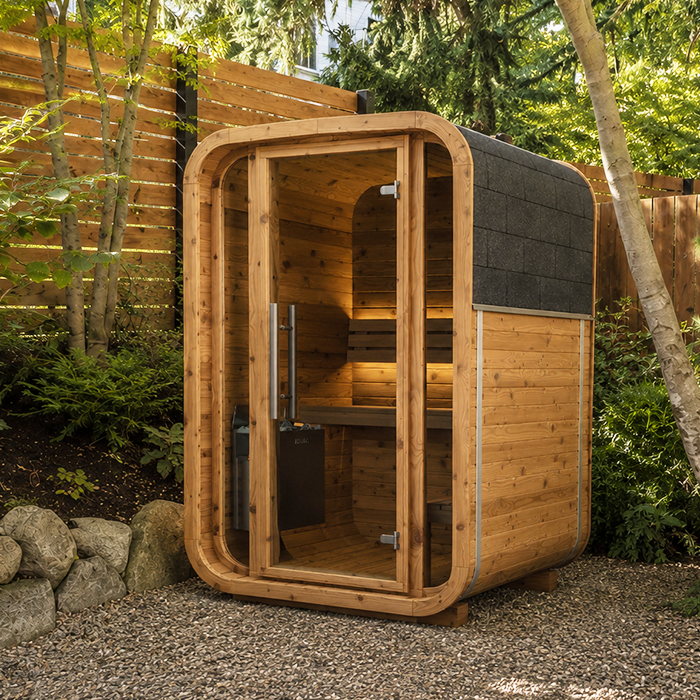
Product pages often combine a model name, a photograph and a set of options; only some of that information answers how a sauna is heated. For each candidate, record the full sauna model, exact heater or emitter model, rated input, what is included, control method and relevant operating manual. Ask for a dimensioned drawing where layout matters. A photograph can help you picture a style, but it cannot verify clearances, interior dimensions or equipment. Product details may vary by configuration, so compare the same version you would actually order, not a generic category page. Keep included equipment, selectable options and unanswered questions in separate columns. If one listing describes an enclosure and another describes a complete heating package, identify that difference before comparing them. This makes it easier to see whether a missing detail is an optional purchase, an unspecified component or simply information you still need.
Separate specifications from outcome language. Claims about being more relaxing, more effective or better for wellness are not a substitute for a heater specification and do not establish a medical benefit. If health is the main reason for considering a sauna, do not use marketing claims to answer a personal medical question; discuss it with an appropriate health-care professional. For a buying comparison, prioritize verifiable facts: heat source, controls, water compatibility, listed dimensions and included parts. Note any unanswered question before weighing the two types.
Which experience best matches your preferences?
A traditional sauna may fit if you want the feel of a warmed room, value a compatible stone-and-water ritual and are comfortable with that heater’s preheating and installation requirements. A dry session may also be possible on a stone-heater model when its instructions allow it. Infrared may fit if panel-based radiant heat and its particular control routine are what you prefer, and you do not need the stone ritual. Neither label guarantees a fixed session temperature or lower operating cost; the model, cabin and routine still matter. These are preferences, not a ranking of quality.
Make the decision with one exact configuration in mind: how many people will use it, whether water matters, where it will go, what kind of heat feels inviting and which equipment or setup tasks you want to manage. If no candidate clearly answers those questions, pause rather than choosing based on a broad wellness claim or an exterior photo. The store-linked examples in this guide are identified as Thermowood Barrel Sauna models; verify current Canadian availability and heater configuration for any specific product before treating it as an example of either heating type.
Frequently asked questions
Can I compare infrared and traditional saunas by the temperature shown?
Not reliably. Models use different heat sources, controls and temperature measurements, and air temperature does not capture radiant warmth or humidity. Compare the maker’s instructions for the specific sauna rather than treating one thermometer reading as an equivalent session.
Can I pour water on an infrared sauna’s panels?
Do not assume that water is permitted. Water-on-stones is appropriate only for a heater designed for it, while panels and controls may have different restrictions. Follow the exact product and heater manuals; if they do not expressly allow water use, treat it as unavailable.
Does infrared heat the cabin air?
The cabin air can warm, although infrared systems use emitters as a central heat source rather than relying on a stone heater to warm the room. How much the air warms varies by model and conditions, so “heats the body, not the air” is an oversimplification.
Which type costs less to operate?
There is no reliable answer based on type alone. Compare the exact model’s rated input and operating guidance, including preheating, your expected use and local electricity or fuel costs. A broad energy claim cannot replace information about the equipment and schedule you plan to use.
Do the linked barrel-sauna listings confirm an infrared heater?
No. Their product names identify Thermowood Barrel Sauna models, but that identity alone does not establish which heater is included or whether an infrared or hybrid configuration is available. Check the current Canadian product page and exact equipment list or manufacturer’s manual.
The better choice is the one whose heat source, session feel, water ritual and controls match the way you want to use a sauna. A stone-heater design may suit you if you value a warmed-room experience and a permitted water-on-stones ritual; infrared is worth considering if a panel-based radiant setup is your preference. Compare the manual, equipment list, layout and installation requirements for the exact configuration, and treat comfort as personal rather than guaranteed by a category name.
