
What Sauna Heater Stone Capacity Can Tell You
Sauna heater guide
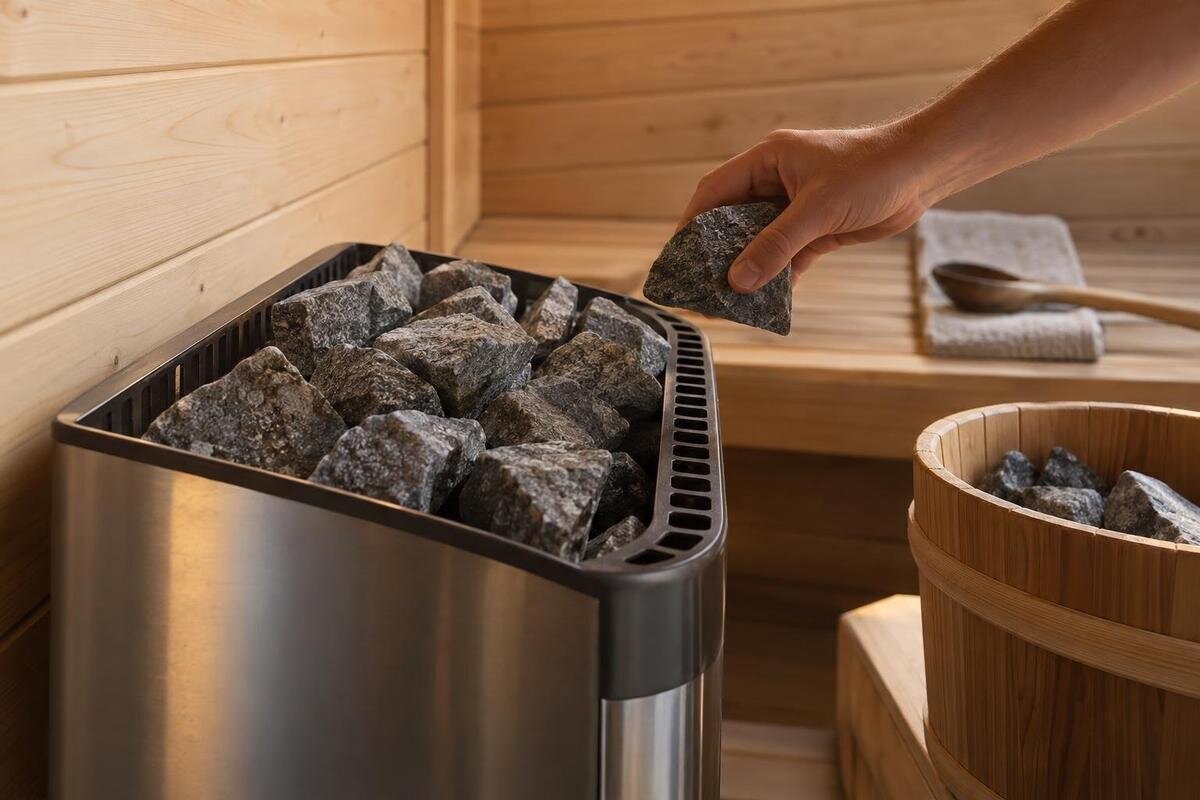
Sauna heater stone capacity can look like a straightforward comparison number, but it describes only one part of a heater’s design. The stated mass can help explain how the heater is intended to carry and use stones; it does not, on its own, tell you whether the heater suits a particular room or how a session will feel. Read it alongside the model-specific heater instructions, the documented sauna-room range and the dimensions of the sauna you plan to use.
What a sauna heater’s stone capacity describes
On a heater specification, stone capacity is the amount of stone the manufacturer says that particular model is intended to hold, expressed in the units used in its documentation. Check whether the figure is a required load, a maximum or a stated target: those descriptions are not interchangeable. It may describe the permitted stone bed rather than what arrives in a box, so check package contents separately. Capacity is not a count of individual stones, because sizes and shapes vary, and it is not the heater’s power rating. Note the original unit as well as the number. If a listing leaves the meaning unclear, consult the manual for the exact heater or ask the seller to identify the applicable document before comparing figures.
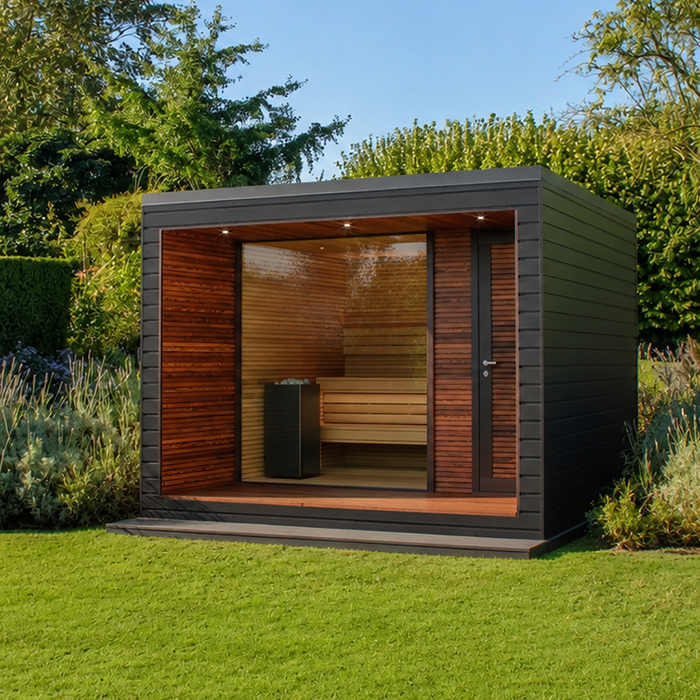
Keep the room specification separate. The page for the Sauna N-250 Thermowood Barrel Sauna lists an area of 5.27 m²; that is an enclosure measurement, not the heater’s stone load or a confirmed heater pairing. Stone capacity belongs to the heater model, while its specified sauna-room range is a separate figure. Those details answer different questions, and neither can be inferred from the other. Record the units and source beside each number. In a buying comparison, use separate columns rather than treating a larger room-area figure or stone capacity as a shortcut to an overall performance ranking. This also makes missing information easier to spot.
How stone mass affects heat storage
Stones act as thermal mass: they absorb heat from a heater and can release it as the sauna operates. A larger intended load means more stone mass for the heater to warm and more material that can store heat. Treat mass as one influence on the heater’s response, not a promise of a particular temperature, recovery time or bathing feel. Rated output, element layout, controls, stone arrangement and room conditions all contribute. Two heaters with different capacities cannot be ranked fairly on that number alone, and a higher stone figure does not automatically mean a more powerful heater. Capacity is a design characteristic, not a performance score; the actual load should also follow the model’s instructions.
Keep measurements of stone mass separate from measurements of the enclosure. The Sauna LC-260 barrel sauna is listed with 5.12 m² of area, while heater stone capacity describes a mass. The area cannot be converted into a stone load without the exact sauna and heater specifications. In a comparison, label each measurement clearly so that room size and stone mass remain separate considerations. If the heater documentation gives a capacity range rather than one figure, preserve that range instead of reducing it to a single number. The range describes the manufacturer’s loading guidance; it is not a range of heater power or a prediction of how the room will feel.
Why stone arrangement matters
The same stated mass can be arranged in different ways, so capacity alone does not show how the stones sit around the heating elements or how much stone surface is exposed. A manufacturer may specify stone size, type, loading order or gaps. Those details affect how the bed fits the heater and how air can move through it. Do not assume stones of the same total weight will work equally well, or that filling every visible gap will improve performance. The rated amount makes sense alongside the dimensions and arrangement prescribed for that model. A diagram in the manual is more useful than a photograph of a different heater with a similar-looking basket.
This is why a maximum load is not automatically the best load. A heater is a system: its structure, elements, stone compartment and controls are designed around specified loading instructions. Adding extra stones, using oversized pieces or packing the bed differently can depart from those instructions and change the intended arrangement. If the manual is missing or unclear, pause before loading or rearranging stones and get guidance for the exact model. Avoid borrowing a loading diagram from another heater just because the product names are similar. A capacity line without placement details is useful but incomplete; compare the stone amount and arrangement together.
Match the heater to the sauna’s room range
Before comparing stone capacities, check the sauna-room range the manufacturer specifies for each heater. It may be stated as a room volume or a range with conditions, so use the exact model’s documentation and keep any qualifications attached. Stone load does not replace this rating. Choosing a heater because it holds many stones while overlooking its specified room range can leave you with the wrong comparison; the largest capacity is not automatically right for a large room. Likewise, a lower capacity is not automatically appropriate for a small enclosure. Begin with the sauna dimensions and the heater’s room guidance, then compare stone capacities among plausible candidates. If the information is missing, ask for it rather than guessing from a category label.
Area can be a useful starting measurement, but it is not necessarily the volume used in heater guidance. The Sauna HCF-300 Thermowood Barrel Sauna is listed at 6.89 m²; that area alone does not provide ceiling height, interior volume or a compatible heater model. Confirm the dimensions requested by the heater documentation instead of estimating them from a product name or photograph. If the manufacturer supplies a recommended room range, compare it with the actual sauna and note any conditions attached to that range. A product’s floor area helps describe the enclosure, but it does not prove which heater or stone load is appropriate.
Account for room height and interior surfaces
Floor area is only one part of the room context. Ceiling height changes the enclosed volume, while insulation and surface materials can affect how the room responds to heat. Some heater manuals explain how to account for features such as glass or masonry; others set different criteria. Follow the adjustment method, if any, for the exact heater rather than importing a rule from another model or inventing a correction. If the sauna has an unusual shape, uninsulated surfaces or incomplete dimensions, flag those details for review with the manufacturer or a qualified sauna professional. This is a room-sizing question, not something stone capacity can settle. Square metres are not a universal substitute for the unit named in the heater specification.
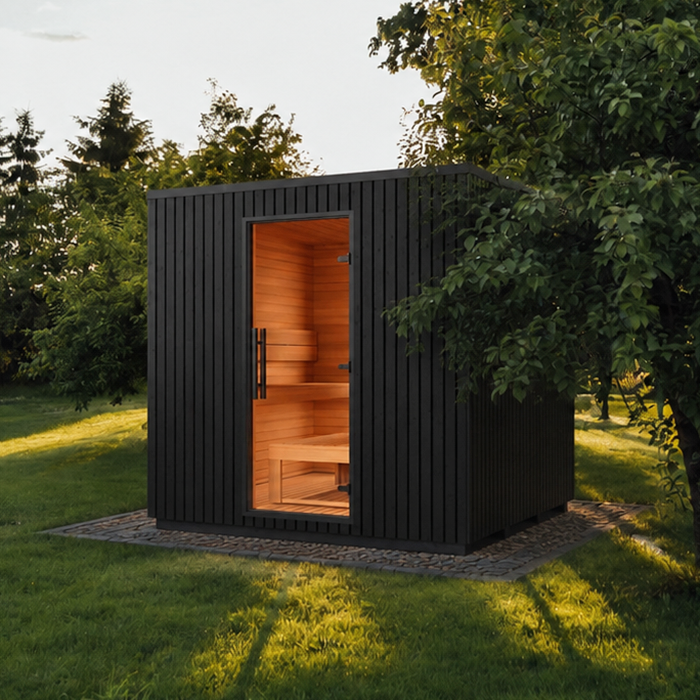
The Sauna LCF-300 is listed at 6.89 m², the same area figure supplied for the HCF-300. Matching listed areas do not establish that two enclosures have identical ceiling heights, interior volumes, construction details or heater configurations. When comparing these room specifications, look beyond the shared area figure to the features identified in the heater’s sizing guidance. Check whether you have the necessary dimensions and surface details for each enclosure, rather than carrying the assessment of one sauna over to the other. Where those details are missing, leave the room comparison incomplete. Equal floor areas alone are not a basis for treating the proposed heater configurations as interchangeable.
Read the model-specific stone instructions
The manual for the exact heater should resolve what a capacity figure means in practice. Look for the stated amount or range, permitted stone dimensions and material, loading diagram, and instructions for inspection or replacement. Confirm whether the capacity refers to the complete stone bed or another defined condition; do not assume the package contains the stated quantity. Manuals can differ between heaters, even when their names are similar, so a nearby model number or generic stone guide is not a substitute. If documents appear to conflict, ask the manufacturer which instructions apply to the exact heater and variant before purchasing stones or using the appliance. Keep any model-specific conditions with the capacity figure.
The product page for the Sauna S-140 Thermowood Barrel Sauna lists 1.93 m² as its area. That identifies an enclosure measurement, not the heater whose stone instructions you need. Establish the heater’s exact model before selecting a manual; the sauna’s name alone does not identify the applicable loading diagram or stone requirement. When reviewing the instructions, distinguish the stated capacity from the permitted stone type and size, and from any quantity included with the purchase. These details answer separate questions. If a seller provides a generic stone guide, ask which parts apply to the specified heater rather than treating that guide as a substitute for model-specific instructions.
Water use and the feel of heat
Stone mass can be relevant to the way a heater responds when water is used, but kilograms alone do not tell you how much steam will form or how it will feel. The usable hot surface, stone type, placement and heater design all matter, as do ventilation and conditions inside the sauna. A larger load means more stone mass, but it does not guarantee a proportional increase in exposed surface or a preferred result. The claim that more stones mean more steam is too broad to guide a purchase. Treat capacity as a design clue, not a promise of a particular bathing experience. The heater’s instructions also determine whether water use is permitted on that model.
Check whether the manufacturer permits water on the stones and what method it describes. Follow that heater’s procedure and limits; permission for one model or arrangement does not automatically apply to another. If you value a particular style of heat, look for documentation about how the heater is meant to be operated and compare its complete design rather than selecting the largest capacity. Ventilation, room size and heater position can influence the result as well. Plan those features as part of the sauna design and follow product guidance instead of trying to compensate for a different room by changing the stone load. These are separate specifications, not adjustments to make by guesswork.
Why capacity cannot predict warm-up time or efficiency
Capacity is not a timer. A heater loaded with more stones has more material to bring to operating conditions, but actual warm-up depends on its rated output and controls, its design, room volume, starting conditions and heat loss. The balance varies by model and installation. A stone-mass figure alone cannot support a reliable comparison of minutes, nor does it show how much energy a session will use. Avoid assuming that a larger load necessarily takes longer overall or that a smaller one is automatically quicker; other design choices can change the result. Stone capacity is not an efficiency rating either. Look for model-specific information and the conditions behind it.
The Sauna HC-150 is listed at 2.97 m², which is enclosure-area information rather than a warm-up estimate or an energy figure. If a manufacturer publishes either type of result for a proposed heater, read the conditions attached to it. Check which room dimensions, starting conditions and heater configuration the information describes, and whether these match your planned setup. Keep warm-up and energy-use comparisons separate: a stated time does not itself provide a consumption figure. Where the relevant conditions are unavailable, the comparison remains incomplete. Neither the enclosure’s area nor the heater’s stone capacity supplies the missing operating information.
Compare complete heater specifications
A useful comparison holds the sauna and assumptions constant. For each candidate heater, record the exact model and configuration, manufacturer’s room range, rated output, stone capacity and loading instructions, then note the clearance and control requirements in its documentation. Compare like with like: maximum load against maximum load, or a required load against a required load. Keep stone type and included items in separate fields because they affect what you may need to obtain. If a specification sheet gives only a headline capacity, find the manual before treating it as enough evidence. A heater with a lower stone figure may still be the documented candidate for a particular room; the number does not rank heaters by itself.
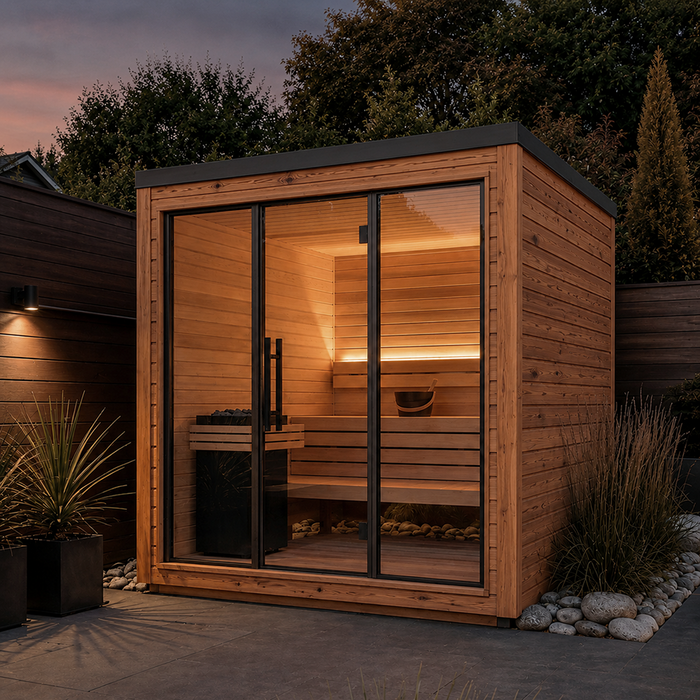
The Sauna HC-225 Thermowood Barrel Sauna is listed at 4.4 m², so it can serve as a concrete enclosure reference when you ask which heater specifications apply. Its area does not establish which heater is included or suitable. Use the same sauna dimensions and room conditions throughout the comparison, and distinguish an unresolved specification from a confirmed difference between heaters. For example, a capacity listed without its loading instructions is not yet directly comparable with a fully described stone load. This prevents missing information from making one option appear better or worse, and keeps the assessment focused on complete specifications rather than the most prominent number.
Confirm the exact heater and sauna configuration
Before ordering, confirm the full model code and any variant, not just the product-family name. Ask which heater is supplied or specified for that exact sauna, whether stones are included, what capacity applies, and which stones and loading pattern the manual calls for. Review clearance and electrical requirements in the manufacturer’s documentation with a qualified professional; this is a point for confirmation, not a DIY installation step. This matters especially if sauna and heater are quoted separately: a general category description is not compatibility evidence. If a key detail is unavailable, wait for a model-specific answer instead of buying extra stones or assuming a package contains a particular heater.
The area listed for the Sauna N-210 Thermowood Barrel Sauna is 4.43 m²; it identifies one enclosure measurement in the proposed purchase, not a stone-capacity recommendation. Review the order details against the configuration you have assessed. The sauna name, heater model, supplied stones and other included items should be clear enough to distinguish what you are buying from what the heater requires in use. If stones are listed separately, confirm that their stated type and dimensions match the applicable instructions. A capacity figure should not stand in for a description of package contents. Resolve those distinctions before ordering so that the purchase reflects the configuration you intended.
Frequently asked questions
Is a higher stone capacity always better?
No. A larger intended load may suit a particular heater design, but it does not prove that the heater fits your sauna or will produce the experience you want. Compare the heater’s room range, output, loading instructions and your sauna’s dimensions; use capacity as one factor.
Does stone capacity tell me how long the sauna will take to heat?
No. Warm-up depends on the heater’s output and controls, the sauna’s volume and construction, starting conditions and the specified stone arrangement. Use model-specific guidance, if available, rather than converting kilograms of stone into minutes.
Does a capacity figure tell me whether stones are included?
Not necessarily. The figure can describe the intended load without identifying package contents. Check the current item details and the documentation for the exact heater, and confirm what stones, if any, are included before ordering.
Can I add stones or use a different size?
Follow the amount, stone type, dimensions and loading pattern specified for that model. Extra stones or a different arrangement can depart from the manufacturer’s instructions. If the details are unclear, get guidance for the exact model before changing the load.
Does a larger stone capacity mean more steam?
Not by itself. Steam and its feel depend on permitted water use, the stones and their arrangement, heater design, ventilation and room conditions. Follow the manufacturer’s instructions; a larger stated load alone does not guarantee a particular result.
Stone capacity is most useful as a design specification, not a stand-alone score. It tells you about a heater’s intended stone load and can help explain its thermal mass, but room fit, stone arrangement, operating instructions and the exact sauna configuration complete the picture. Compare the documented heater and room requirements together, and keep unknown package or installation details open until they are confirmed. That approach leads to a more meaningful choice than selecting the largest capacity on a specification sheet.
