
Covered Sauna Porch: When Is It a Good Choice?
Sauna planning
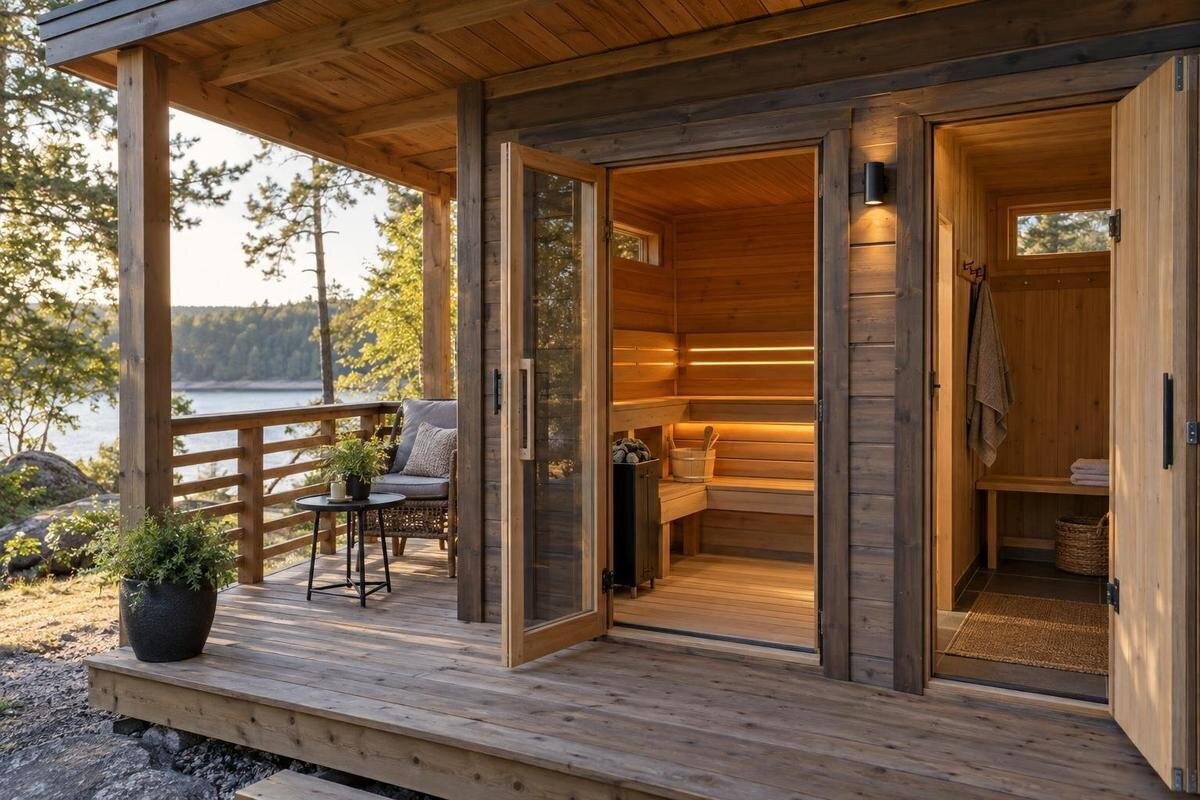
A covered sauna porch is an open-air space at the entrance, sheltered from above but exposed at the sides. It can make arriving, taking off outdoor footwear and sitting between sauna visits more comfortable without adding another enclosed room. It is a good choice when you will regularly spend time outdoors, have room for a clear entrance and seating, and value overhead shelter more than privacy or full weather protection. If you need somewhere warm and private to change, a porch is not a substitute for an enclosed changing room.
What a covered sauna porch provides
A covered sauna porch is an exterior area beside or at the entrance that has a roof or overhead cover, with some or all sides open. It is outside the heated cabin: the space can offer a place to pause, set down a robe or towel, or take off boots before going in, but it is not an extra indoor room. The exact arrangement matters. A shallow overhang above a doorway is not the same as a porch deep enough to sit on, and a photo may not make the usable floor area clear. Look at a dimensioned plan or ask the seller to confirm the intended configuration before treating the word “porch” as a promise of a particular layout.
The main value is a small, sheltered transition between the yard and sauna. Overhead cover can reduce direct exposure to rain or sun while you unlock the door, sort footwear or pause outside; open sides still let wind and precipitation reach the space. A porch may be integrated into a model, offered as an option or absent, so do not assume it comes with every outdoor sauna. When reviewing Sauna N-250, establish which entrance configuration is offered. The useful distinction is between cover over the doorway and a sheltered floor area where you can stand or sit without obstructing access.
How a porch changes the sauna routine
Think about how a typical visit begins and ends. If you tend to arrive from the yard in wet or snowy footwear, an open sheltered landing can give you a moment to remove outdoor gear before entering, provided the available area and surface suit that use. On the way out, it can be a place to sit briefly, wrap up or put footwear back on without standing in the open. The benefit is practical, not automatic: if you normally walk straight from a nearby door into the sauna and never linger outdoors, the extra area may add little. Picture your own route, including what you carry and where those items go, instead of assuming the porch will function like a mudroom.
Household routines matter too. One person may want a quiet outdoor seat while another is using the sauna, while a family visit may mean people taking turns at the entrance. A porch can make those pauses easier to organize, but it does not provide visual privacy or separate changing space. For a listing such as Sauna LC-260, consider the entrance layout in relation to how many people will use it. Picture someone sitting outside while another person enters with boots and a towel. Chairs and belongings need space of their own; an area used by the door or needed for passage should not also be counted as available seating.
A porch is not a changing room
An outdoor porch and an enclosed changing room solve different problems. A porch is open to outdoor air and views, with protection mainly from above. It may be useful for sitting outside or managing footwear, but it cannot reliably keep clothing warm, block wind-driven rain or snow, or conceal someone changing. An enclosed changing room gives visual separation and more protection from wind, although you should confirm whether it is heated, ventilated or fitted for storage rather than assuming those features. If privacy and a place to change are central to your routine, compare an enclosed room with a porch as separate requirements; one does not automatically replace the other.
That distinction affects what you need from the entrance. A porch can be enough if everyone arrives dressed for the sauna and changes inside the cabin, or if the sheltered spot is only for outdoor seating. It is a poor substitute when guests need privacy, coats must stay out of view or someone wants a protected place to change before going home. When comparing Sauna HCF-300 with other layouts, identify whether the selected configuration has an open porch, an enclosed room, both or neither. Keep those spaces separate in your comparison: outdoor seating and a private changing area serve different parts of the visit, even when both are beside the entrance.
When overhead shelter is useful
Overhead shelter is most valuable when the entrance is exposed to frequent showers, bright sun, falling leaves or other conditions that make standing at the door unpleasant. It can also give a short outdoor pause some protection. Think about the conditions where the sauna will actually sit rather than relying on a broad idea of Canadian weather: a sheltered corner may feel different from an open, windy spot, and local rain or snow patterns vary. An open porch is still open. Wind can carry precipitation underneath the cover, and a roof cannot be assumed to keep every item or surface dry. If full weather protection is essential, this feature alone may not meet the need.
Consider the approach as well as the seat. A roof over the porch does not necessarily cover the path from the house, so the last steps may remain wet, icy or snow-covered. Decide whether a short sheltered threshold is enough or whether you expect a continuous protected route. For Sauna LCF-300, use the plan for the particular configuration to understand how far the cover extends over the entrance area. Consider where you would stand to open the door and where a seat would go. Ask how precipitation drains away from that area and where snow may collect; these details help distinguish useful overhead shelter from the all-weather access you might be expecting.
Seating, privacy and outdoor views
A porch earns its space when you will use it as a place to sit, not just because outdoor seating sounds appealing. Consider whether you enjoy taking a quiet pause outside, want to watch the garden or need somewhere for a companion to wait without entering the sauna. Think through the view from nearby windows and neighbouring properties as well: an open seat can feel exposed even when it has a roof. If privacy matters, note which sightlines reach the porch before choosing a location or configuration. A cover addresses overhead exposure; it does not itself create a secluded room or screened view.
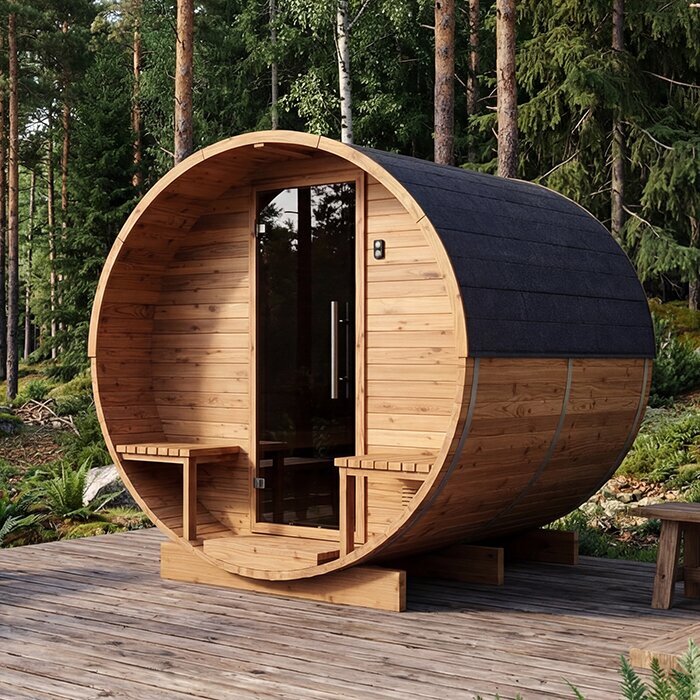
Do not assume a bench, chair, side table, hooks or lighting are included just because an image shows a furnished scene. Decide what you want to bring or add, then check that the porch plan leaves room for it without obstructing the entrance. When viewing Sauna S-140, separate any furnishings shown in photographs from the written inclusions for the configuration offered. Assess those furnishings for the conditions where they will be kept, including whether you want to move or store them when they are not in use. If you are unlikely to put out seating, a covered entrance may still help with footwear or a brief pause, but it serves a different purpose from an outdoor sitting area.
How much porch space is usable
Judge size by clear usable area, not by the word “porch” or the total footprint shown in a product title. You need to understand where a person can stand or sit while someone else opens the door, and whether footwear or a chair would narrow the passage. Check which way the door opens, the position of steps or a landing, and any rails or edges shown in the plan; these features can reduce the surface that looks available in a photograph. Ask for the manufacturer’s current drawing with the relevant porch configuration and compare the marked dimensions with the actual layout. If measurements are unclear, get the supplier or installer to explain them rather than estimating from a marketing image.
Use the plan to test one ordinary visit: arriving with a coat and boots, entering, then leaving with the items you set aside. Repeat the exercise for two people if that is common at your home. This is more helpful than choosing an arbitrary depth, because the right amount of space depends on whether you want a landing, a seat or both. For Sauna HC-150, work from the drawing that matches the configuration offered and distinguish the covered floor area from the space needed to use it. Include the approach outside the porch in your assessment, so a usable sheltered spot is not isolated behind an awkward route.
Weather, drainage and upkeep still matter
A roof reduces some exposure; it does not remove outdoor upkeep. Leaves, dust, pollen, water, snow and ice can still affect an open porch, and moisture can arrive from the sides or track in on footwear. Think about who will clear the route, where wet items will go and whether you want seating that can be moved or stored. A porch that is comfortable in mild weather may see little use during a windy spell, so judge it against the conditions you are willing to manage. Avoid treating “covered” as a maintenance-free feature or as a guarantee that the threshold will stay dry.
Before purchase, ask what the manufacturer’s instructions say about cleaning, drainage and care for the exact porch surfaces. Include the entrance and outdoor seating in your upkeep plans, rather than considering only the heated cabin. If the intended location is exposed to substantial snow or wind, have a qualified installer assess the structure and site rather than trying to calculate suitability from a photograph. When enquiring about Sauna HC-225, ask which instructions apply to the configuration under consideration and raise any questions about its porch construction or drainage. Model names and general descriptions do not establish snow capacity; use the relevant drawings, manuals and qualified advice for those questions.
What to confirm in the sauna configuration
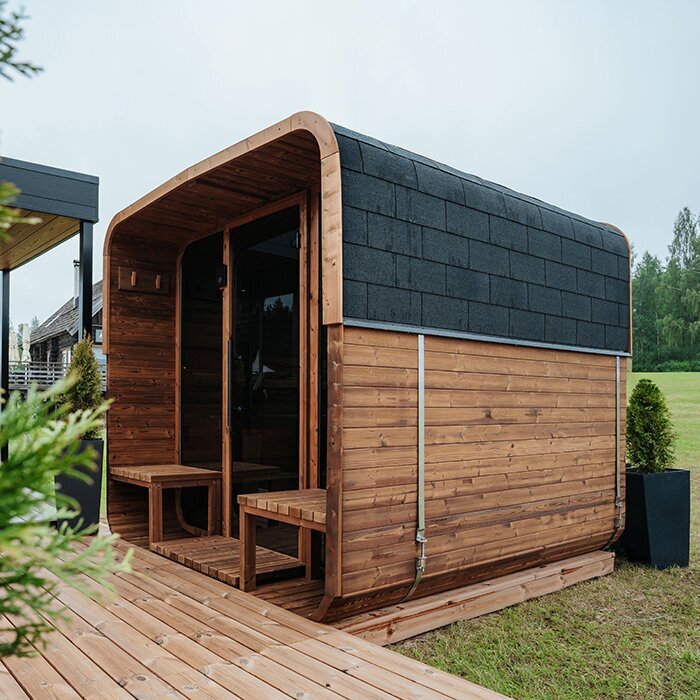
Treat the porch as a configuration question when comparing sauna listings. Find out whether it is built into the model, an available option or a separate structure; whether the displayed price includes it; which side the entrance and covered area occupy; and what surfaces, seating or accessories are actually supplied. Check dimensions for the porch itself as well as the cabin, and ask whether the plan corresponds to the exact version you can order. A product photograph can show an illustrative arrangement without establishing the kit’s contents, so written inclusions and current manufacturer documents matter more than visual inference.
When discussing Sauna N-210 with the seller, ask for the plan and manual associated with the quoted configuration, then compare them with the listing and your intended use. If a porch appears as an extra, confirm what that term covers: a roof, floor, side panels, a seat or another arrangement. Separate supplied components from optional accessories and furnishings used only to illustrate the product. Do not assume an accessory is available or compatible unless the seller or manufacturer confirms it. The purpose is to establish exactly what you would receive, rather than planning around a feature shown only in a different configuration.
The route, setting and local checks
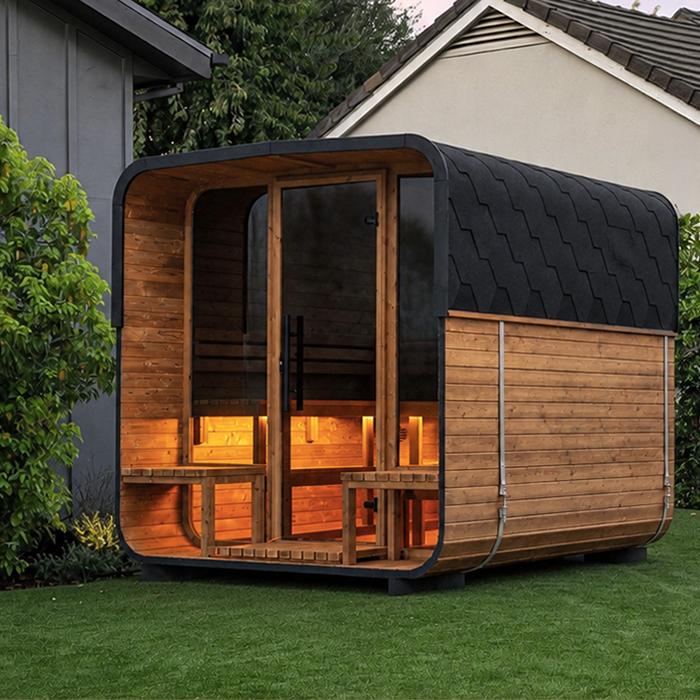
Location determines whether the porch’s shelter is useful. Check where people will approach from, whether the entry faces the route they actually use, and whether the roof gives cover at the point where boots come off or a seat would go. Look at nearby walls, fences, trees and windows for possible effects on wind, shade and privacy, without assuming any one feature guarantees protection. Consider how snow clearing, garden work or other regular movement will affect the route. The porch should connect naturally with the yard and sauna door; a comfortable seat that is difficult to reach in the season when you need it is unlikely to become part of the routine.
Site preparation and placement are separate from the porch’s advertised usefulness. A seller’s sketch may help you understand the product, but it does not confirm whether your specific location can support it or meet local requirements. Use the exact configuration when discussing placement, foundation, drainage and any applicable approvals with qualified local professionals or authorities. Keep the whole arrangement in view: the sauna, its porch and the route from the house all need to work in the chosen location. This site assessment serves a different purpose from checking the product’s contents; it addresses whether the proposed arrangement is suitable for your property.
Choosing between a porch and another layout
An open porch is a good fit when sitting or waiting outside is part of the experience you want, overhead shelter is enough, and the lack of enclosure suits your privacy needs. It can also provide a practical place to manage footwear before going indoors, as long as the actual plan leaves clear space for that use. Weigh how often you expect to use the sheltered area against the space it occupies. A porch used regularly for seating or at every arrival has a clearer purpose than one chosen simply because it looks appealing in a photograph.
Choose another arrangement if you need a private place to change, want protection from wind-driven rain or snow, have no use for outdoor seating or would rather allocate the available footprint elsewhere. A simple way to decide is to name the one job the porch must do—provide a seat, shelter the entry or give you space for outdoor gear—then check whether the drawings show it can do that without blocking access. If you cannot name a regular use beyond “it would be nice,” compare the cost and space of that configuration with a plain entrance or an enclosed room that addresses a real need. A porch is worthwhile when its specific benefits match how you will use the sauna.
Frequently asked questions
Is a covered porch the same as a sauna changing room?
No. A porch is an outdoor space, usually open at the sides, that can provide overhead shelter and room to pause or sit. It does not offer the same privacy or protection from wind as an enclosed changing room. If you need a private place to change, check that the sauna configuration includes one.
Will a covered porch keep rain and snow off?
It may block some precipitation falling directly from above, but wind can drive rain or snow underneath. The path to the porch may also remain exposed. Check the actual plan and site conditions, and do not treat the word “covered” as a guarantee that the entrance or seating area will stay dry.
Can I use a sauna porch in winter?
An open porch can be used in cold weather if it suits your routine and the route is manageable, but it is not an indoor, heated space. Consider snow and ice clearing, wind exposure and the manufacturer’s guidance for the exact configuration. Ask a qualified professional about site-specific structural questions.
How much space should I allow for the porch?
There is no single useful size for every porch. Check a drawing for the exact configuration, including the clear area, door movement and approach. Decide whether you need a landing, a seat or space for both, then see whether people can use that area without blocking the entrance.
Does a covered porch come with a bench or furniture?
Do not assume so from a product photo or the word “porch.” Check the written inclusions for the configuration you are considering, and ask whether any seating, hooks or other accessories are supplied. If you plan to add furniture, make sure it will not obstruct the entrance or passage.
A covered porch is worth considering when you can point to a regular use for it, such as sitting outdoors, sheltering the entrance or taking off footwear. Its open sides and exposure are part of the choice, not details to discover later. Compare the routine you want with the exact configuration shown in the drawings, and choose a porch only if its shelter and usable space fit the way you plan to use the sauna.
