
How to Estimate Wood-Fired Sauna Running Costs
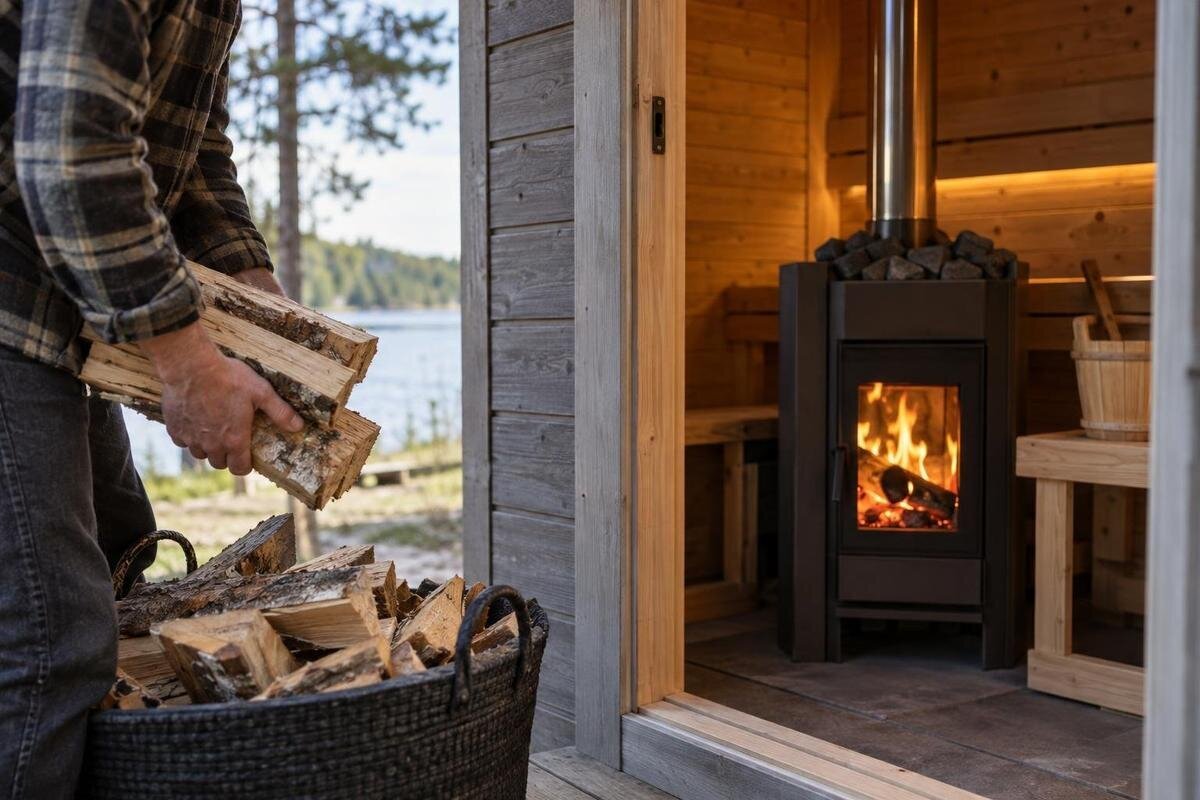
Sauna running costs
Wood-fired sauna fuel costs are easiest to estimate from recorded use, not from a generic log count or a stove’s nominal size. Measure the wood assigned to a clearly defined firing, match that quantity to the price and unit on a current local supplier invoice, and record conditions that could explain variation. The result is a cost per firing you can update when the price, wood or use pattern changes. It is a practical household estimate, not a universal rate for every sauna.
Before you buy 1
Define the running cost you want to estimate
Begin by deciding which figure you need. Fuel cost per firing is the value of the firewood and any other fuel allocated to one defined heat-up and use period. It does not include the cabin, stove or chimney purchase or installation, and it is not the full cost of owning a sauna. You might report a cost per firing, per bathing visit or per season; these are different units and should not be swapped in a comparison. Record the definition before collecting data. If one fire serves several bathing rounds, count it once as a firing unless you choose and document a consistent way to divide its cost. For fuel bought earlier, use either the amount you paid or a current replacement price, and label that choice.
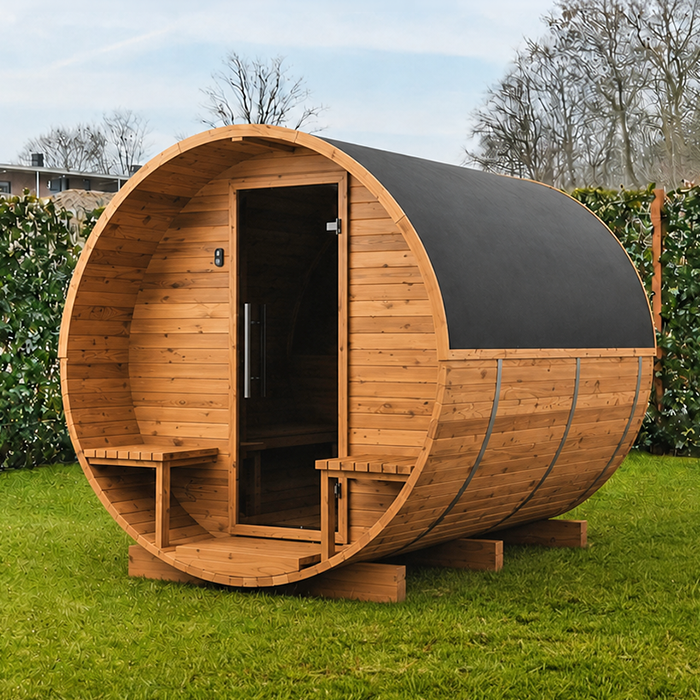
Base the estimate on the exact sauna and heater configuration you plan to use. A product listing can help identify the cabin: the HCF-300 Thermowood Barrel Sauna listing states a floor area of 6.89 m². That identifies the model entry, not how much fuel its particular heater will burn, nor whether a wood-fired heater is included in the package. Before using a catalogue example as your budget basis, confirm the supplied components and operating information for the exact configuration with the seller or manufacturer. A cabin name, category or floor area alone cannot supply measured consumption. Keep the heater make and model in its own record field.
Set a consistent boundary for each firing
Choose a clear boundary for one event. A useful record begins when the fire is lit to heat a cold sauna and covers the warm-up and bathing period served by that fire. Include every log added during warm-up, not only fuel used after someone enters; otherwise, the calculation leaves out part of the event’s real requirement. If a fire continues between several visits, note that it is a continuation rather than a cold start. Define whether you call that shared fire one event or allocate it across visits, then use the same rule in every record. A consistent boundary matters more than naming the event a session or firing, and makes later comparisons meaningful.
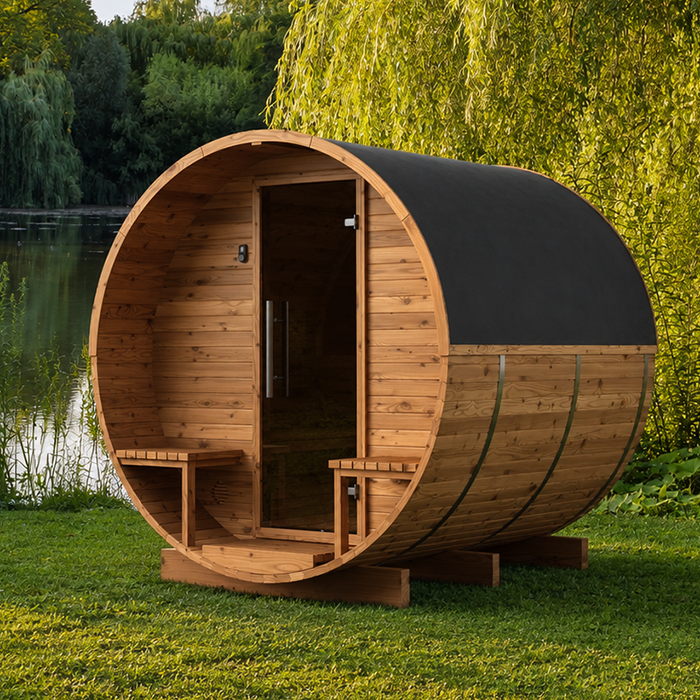
Keep a compact log for each event: date, cabin and heater, wood description, measured quantity, price basis, starting condition, outdoor conditions, heat-up length and bathing duration. Note the supplier or fuel lot when it may help explain a changed result. Identify the cabin consistently in your records. For example, the LCF-300 listing identifies a Thermowood Barrel Sauna with a floor area of 6.89 m²; record the heater separately alongside that model name. Mark whether each event was a cold start or a continuation so you can group comparable results later. If the cabin or heater changes, start a new comparison series rather than blending the results.
Before you buy 2
Measure the firewood used
Where the supplier provides a weight, weigh each batch before it goes to the stove and record every top-up. That gives the fuel loaded for the event. If unburned pieces are carried into a later firing, weigh them only once they are cool and safe to handle, then deduct them from the first event or keep a running stock ledger so they are not counted twice. Do not handle hot fuel to obtain a reading. Use the same scale and unit for every batch, and apply one rule to partly burned leftovers. If your scale cannot handle a full load, weigh smaller batches and add them. Avoid rounding each batch more than necessary, but do not mistake extra decimal places for better measurement.
If you cannot weigh the wood, choose a repeatable unit that matches the way you buy it: a bundle, a marked bag or a measured volume from a consistent container. Keep piece size and packing method as consistent as practical; loosely tossed pieces do not occupy the same volume as tightly stacked ones. Keep the fuel measurement separate from the cabin details in your log. The S-140 Thermowood Barrel Sauna page identifies a cabin with a listed floor area of 1.93 m², while the consumption entry should show the quantity of wood used. For bundles, use the same supplier-defined unit for both price and consumption. A count of individual logs is useful only when their size is reasonably consistent.
Use the price unit on your local invoice
Match the supplier’s price unit to the amount you measured. If an invoice gives a price per kilogram, divide the amount charged for the wood by the delivered kilograms to get a rate per kilogram; multiply that rate by kilograms assigned to the firing. For bundles, bags or a volume-based order, divide the wood charge by the number of matching units and multiply by the fraction used. Write the unit beside every value, such as dollars per kilogram or dollars per bundle. Keep the calculation attached to a dated quote or invoice, not a remembered price, and update it when you place a new order. If the quoted price differs from the invoiced total, use the amount you actually paid for a cash-cost calculation.
Include delivery charges or other invoice lines according to what they cover, and state your method. If the delivery fee applies to this order, adding it to the fuel bill before dividing by the delivered quantity gives a delivered unit cost. If a fee covers multiple items, allocate it transparently or list it separately. Do not convert a volume purchase into kilograms using a generic estimate: wood type, moisture and how the supplier measures volume affect the comparison. Keep supplier pricing alongside, rather than mixed into, your cabin purchase notes. For example, the HC-150 model page lists a floor area of 2.97 m²; your separate fuel quote needs a clearly stated quantity and price unit. Ask the supplier to explain any unfamiliar quantity label before comparing quotes.
Before you buy 3
Calculate fuel cost per firing
Once the price rate is clear, multiply only quantities measured on the same basis. If F is kilograms of wood allocated to one firing and R is the price per kilogram from your current bill, the firewood cost is F × R. If you use a bundle measure, use the fraction of a bundle consumed and the price per bundle instead. When you burn several kinds of wood bought at different prices, calculate each type with its own quantity and rate, then add the amounts. Keep any conversion assumption written beside the result, or avoid a conversion if it cannot be supported. The arithmetic is simple; mismatched units are what make a result misleading.
Name the outcome precisely. It is cost per firing when the figure includes the full heat-up and use period you defined; it is cost per sauna visit only when that visit is the event in your log. If a continuing fire serves more than one round, the cost belongs to the fire unless you use a disclosed allocation, such as equal shares for your own comparison. Dividing by the number of people can produce a cost per attendee, but does not reduce the amount of wood used. Keep the base firing cost visible so another person can reproduce it, and state whether the result covers firewood alone or includes starter fuel.
Account for wood, weather and setup differences
Do not expect every measured firing to use the same amount. A cold start and a continuation from a warm cabin are not equivalent; outdoor temperature, wind exposure, heat-up length, bathing time, door use and the way the fire is managed can change what the logbook shows. Fuel varies too: species, moisture and split size can make two loads of the same weight behave differently. These variables are reasons to describe a firing and compare like with like, not to apply a made-up adjustment percentage. If you change supplier or wood type, mark the date and description; a new fuel can make older readings a poor guide.
Cabin and stove are also part of the comparison. The HC-225 listing identifies a Thermowood Barrel Sauna with 4.4 m² of floor area. When considering that model, use consumption information for the intended cabin-and-heater combination where available, rather than applying a log from a different setup. Floor area alone does not establish heat loss, heater suitability or expected firewood use, so it cannot serve as a universal fuel multiplier. Once the setup is in use, measure actual consumption. If you test different operating patterns, keep their results in separate rows so you can see which conditions each result represents.
Before you buy 4
Keep kindling and other operating costs separate
Firewood may not be the only consumable in a firing. If your routine uses kindling, fire starters or another fuel, record each item separately: the amount used per event, the package quantity and the amount you paid. Convert each package to a unit cost, then multiply by the part consumed. Add those costs when you want total fuel and ignition-material expense, but retain a separate firewood-only figure. Separating the lines shows whether a change came from the wood rate, wood quantity or starting materials, and makes it easier to update only the line that changed when prices move.
Keep occasional operating expenses separate from the per-firing fuel result. A service visit, replacement part or tool may belong in a broader ownership budget, but it is not firewood consumed in that event. If you want a wider operating-cost figure, list actual expenses by year and label any per-firing allocation as an average. Use separate records for cabin expenses and stove expenses. For a cabin identified by the N-210 listing, which gives a floor area of 4.43 m², note the actual heater model on any stove service record. This keeps an expense attached to the equipment it concerns without inferring service requirements from the cabin name. Keep one-time installation costs outside the recurring fuel total.
Project a monthly or seasonal fuel budget
Build monthly or seasonal projections from your own event records. Sort firings into meaningful groups, such as cold starts, milder-weather use or visits with different lengths, and calculate an average or range from each group. Multiply the per-firing result by the number of events you actually expect in each group, then add the groups. In words, projected fuel expense is the sum of each group’s expected firings multiplied by that group’s measured average cost. State the frequency and session pattern next to the total; the formula does not supply them. If your schedule changes, update the event counts rather than changing the measured cost.
Use a range when your records vary, rather than treating the firing with the lowest consumption as typical. Update the unit rate after a new order or supplier price change, and make sure the invoice total and quantity cover the same delivery. Explain which measured conditions the low and high figures represent; avoid adding an arbitrary buffer. For a sauna not yet operated, label the estimate as provisional and state its assumed event count, fuel unit and price source. If you are considering the N-250 listing, which gives a floor area of 5.27 m², record the intended heater and use pattern alongside those assumptions. Keep uncertainty about fuel prices separate from uncertainty about how often you will use the sauna.
Before you buy 5
Compare wood heating on a like-for-like basis
Wood and another heat source can be compared only when both figures cover equivalent use. Use the same cabin, a defined heat-up and bathing period, and the same starting condition wherever possible. Compare measured wood cost, including the consumables you have chosen to count and your allocation of delivery charges, with the other source’s measured or documented variable cost. Keep one-time cabin and heater purchases separate; otherwise, an operating-cost comparison mixes capital and fuel. If the assumptions differ, show them instead of presenting a single winner. A cost per firing is not directly comparable with a bill for an entire month.
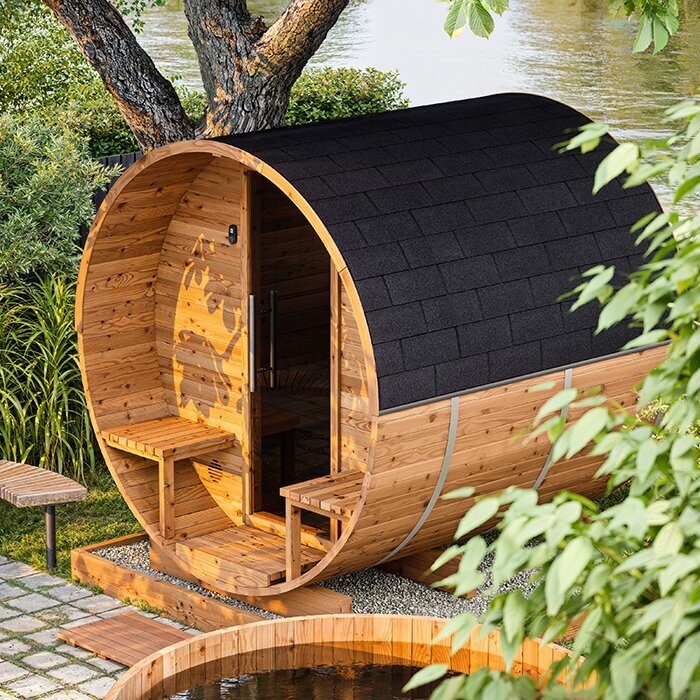
Cash cost is not the only decision factor. For a broader personal comparison, list time spent sourcing, handling and feeding wood separately from the cash total, and decide whether to assign that time a monetary value. Supply access, storage and changing local prices can affect convenience and the forecast, but they do not make wood-fired heat automatically cheaper. When comparing heating options for a shortlisted cabin, record exactly what each proposed configuration includes. The LC-260 Thermowood Barrel Sauna page identifies a model with a floor area of 5.12 m²; the comparison also needs the selected heater and its cost information. Do not assume that the cabin listing includes a particular heater.
Verify the cabin and heater before budgeting
Before committing to a wood-fired setup, confirm what the quoted or catalogue configuration actually includes and which stove is intended for that cabin. Read the manufacturer’s operating information for the exact combination; do not size a heater, assume a fuel-consumption rate or modify a chimney on the basis of this budgeting method. Where suitability, clearances, chimney design or other installation matters are uncertain, have the exact proposal reviewed by a qualified sauna installer or other appropriate professional. This calculation estimates recurring fuel expense, not technical compatibility. Avoid relying on a model name alone to settle the configuration.
Ask whether the manufacturer specifies a fuel type and whether useful consumption guidance exists for the intended cabin, heater and operating conditions. If you rely on a seller’s forecast before you have your own measurements, record the source and assumptions, then replace it with actual burn logs after use. For a current cost estimate, obtain a local quote that states the unit and amount, note the fees included, and keep the invoice. This lets you distinguish a measured result, a provisional estimate and a purchase quote instead of presenting all three as equally certain. If no consumption figure is available, say so and use your own results when possible.
Frequently asked questions
Can I estimate firewood use from the sauna’s floor area alone?
No. Floor area identifies one aspect of a cabin, but it does not measure heat loss, stove performance, starting conditions, session length or wood use. Use consumption information for the exact cabin and heater if the manufacturer provides it, then replace the estimate with measured results once the setup is in use.
What if I buy firewood by the cord, bundle or volume?
Measure your use in the same unit as the supplier’s price wherever possible. For bundles, compare the fraction used with the price per bundle; for volume, confirm exactly what quantity the supplier means. Convert to weight only with a reliable method for that wood and moisture, not a generic conversion.
Should kindling and fire starters be included?
Track them as separate lines, then add them if you want the total cost of fuel and ignition materials for a firing. Include delivery in the firewood rate only according to what you actually paid. Service, replacement parts and installation belong in a broader budget, not in the firewood calculation.
How many firings should I record?
There is no universal number. Record enough firings to reflect the use you expect, including cold starts and the variations in weather, duration and fuel that apply to your sauna. Report a typical result and a range from those records rather than treating one unusually mild or short firing as an annual average.
Is a wood-fired sauna always cheaper to run than an electric one?
No. Compare current measured or documented variable costs for the same cabin and heat-up and use period. Use local prices, include recurring consumables consistently, and keep equipment purchases, installation, maintenance and the time spent handling wood separate. The result depends on your actual setup and costs.
An estimate is useful when you can trace it from measured wood, through a clearly defined firing, to the exact rate on a supplier invoice. Keep kindling and wider upkeep as separate lines, and refresh the projection when prices, fuel or conditions change. Your own records then show what your sauna use costs without treating one product listing or one firing as a universal benchmark.
