
Growing Alpine Plants in a Cool, Airy Greenhouse
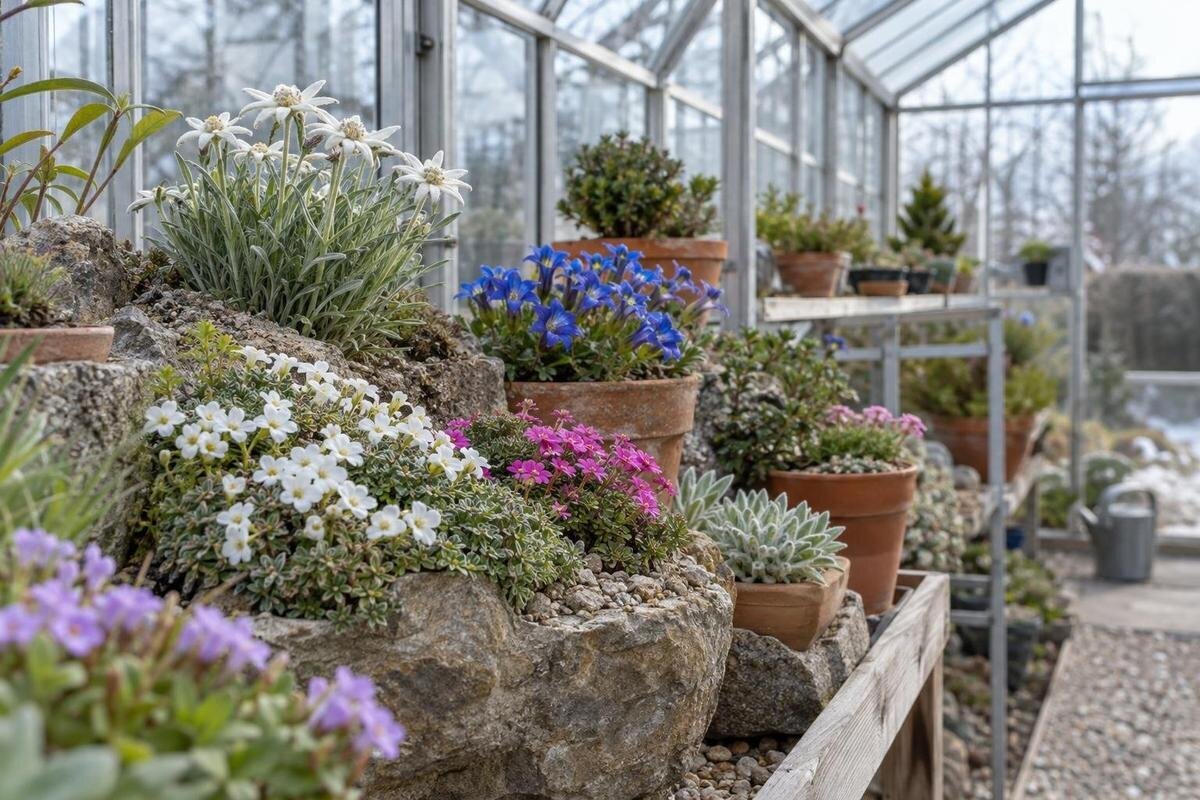
Alpine plants under glass
Alpine plants are often more troubled by long spells of wet weather and stagnant, warm air than by a lack of greenhouse heat. A useful alpine house is bright and easy to ventilate, with reliable rain shelter and pots that drain freely. Because alpine species come from different elevations and habitats, plant selection, seasonal temperature limits and watering routines still need to be matched individually.

Greenhouse planning checklist 1
Why alpine plants can suit a cool greenhouse
Alpine plants come from a range of mountain habitats and do not all need the same care. Many come from open sites where light is strong, air moves freely and water drains away quickly. Others grow in snowmelt channels, sheltered crevices or lower slopes, and need steadier moisture, shade or winter protection. A greenhouse can be useful chiefly because it limits prolonged direct rain and keeps plants accessible for inspection. It should not automatically be managed like a warm, humid crop house. Even when outdoor air is cool, sunshine on closed glazing can heat the inside quickly, so ventilation and a way to respond to changing conditions are essential.
Before building a growing plan around a greenhouse, compare what each plant actually needs and whether the garden can provide it. A few rain-sensitive pots might do well under a simple, open shelter; a larger collection with different moisture needs may benefit from an enclosed space where pots can be arranged and moved. Check the site for sun, shade, wind exposure and reliable access to doors and vents. The Limited Edition Aluminium Greenhouses range is listed at 3.77 to 28.08 m², giving you a footprint range to compare with the available site. Use the details for the selected configuration when sketching access and bench space.
Group plants by their natural growing conditions
Use species and cultivar names when researching winter tolerance, rather than relying on the word alpine. Edelweiss (Leontopodium alpinum), for example, is a bright, sun-loving, cold-tolerant plant commonly grown in sharply drained soil; a warm winter house is not its default requirement, and wet roots remain a risk. Lewisia cotyledon also needs excellent drainage and a bright position, with care taken to stop water settling around its crown. By contrast, stemless gentian (Gentiana acaulis) is usually grown in good light with moisture available in a free-draining mix. These examples show why one dry bench or one watering schedule can fail even when every label says alpine.
Make separate groups for plants that need summer water, those that prefer a drier rest, and those with different winter limits. Specialist alpine primulas such as Primula allionii are often grown cool and bright under cover to shelter them from persistent winter wet; they should not be treated like drought-tolerant cushion plants. Consult a nursery label or specialist reference for each plant’s minimum winter temperature, summer dormancy and light needs. If a source gives a temperature range, note whether it refers to the air, root zone or an acclimatised plant in open ground. Conditions around a pot in a greenhouse can differ from those in open ground, so keep plants with uncertain limits in a group you can monitor closely.
Greenhouse planning checklist 2
Give plants bright light without trapping heat
Many alpines grown for flowers and compact foliage need a bright position, but a label recommending full sun does not mean every newly bought pot should go straight beneath hot glass. A closed greenhouse can heat well above the outdoor air temperature when the sun shines. Observe the proposed site in the morning, at midday and in the afternoon, including seasonal shade from buildings and trees. A bright position with a way to temper intense summer sun is often easier to manage than a shaded house kept too warm by closed vents. Let each plant’s origin and growth guide whether it needs full exposure or some shelter from the hottest hours.
Acclimatise a newly acquired plant gradually. If it has been grown under shade cloth, begin in bright but less intense light, then increase exposure over several days or weeks while watching for bleached or scorched leaves. Place low pots where benches and neighbouring plants will not block light, and avoid crowding foliage against glazing where conditions may become hot or damp. The T-Model Orangery Greenhouse listing shows floor-area options from 16.52 to 30 m². Compare the footprint with the light available at the site, as well as room for doors, vents and any external shading; floor area alone does not show how light reaches each bench.
Plan ventilation for warm, still days
Fresh air is central to a cool greenhouse. Ventilation releases accumulated heat and helps prevent still, humid air around cushions and rosettes. Check where the openings are, how they can be operated and whether air can move through the growing space rather than only around the doorway. A high outlet may help warm air escape, while another opening can encourage through-flow, but the result depends on the structure and its site. Check the openings specified for the configuration you are considering. A product category or model name on its own does not establish that ventilation will be adequate for a sensitive collection.
On bright days, check conditions inside rather than relying on a cool outdoor forecast. Open vents or doors when conditions allow, and keep air moving during wet spells where possible without exposing rain-sensitive plants. Reduce openings when cold weather or strong winds could put particular plants at risk, then check the greenhouse again as sunshine returns. A minimum–maximum thermometer at plant height can show how quickly the space changes, but it does not replace species-specific guidance. The Pyramid Greenhouse range is listed at 5.53 to 18.9 m²; check the opening details for the selected size and whether you can reach the controls from your usual working position.

Greenhouse planning checklist 3
Shelter plants from rain while managing watering
For many alpines, the useful greenhouse function is reducing prolonged rain on crowns and pots, not shutting off all water. Persistent saturation can be harder on plants adapted to quick drainage than a thorough watering followed by free drainage. A roofed greenhouse reduces direct rainfall, but wind-driven rain can still enter through open doors or vents. Position the most rain-sensitive pots away from exposed openings, and do not assume every bench stays equally dry. Check after storms, when water may have splashed in from paths, walls or the greenhouse floor.
Keep watering under your control. Check the growing medium, pot weight and plant condition, then water the group that needs it rather than wetting every pot on a fixed timetable. Moisture-loving gentians and drier-growing edelweiss should not be forced onto the same routine. If rain shelter is the main reason for choosing an enclosed space, allow for pots, access and room to work. The Limited Edition Aluminium Greenhouses with Storage range is listed from 5.52 to 28.08 m². Check the exact footprint and opening arrangement for the option you are considering; its area alone does not show which positions stay dry when vents are open.
Use pots and growing media that drain freely
Start with a container that has unobstructed drainage holes and a growing medium matched to the species. An open, gritty mix is common for many cushion plants and edelweiss, but the right balance of moisture retention and air varies. Gentians, primulas and other moisture-needing alpines may suffer if the mix dries too far. Avoid copying a recipe without checking what ingredients are available and what the plant label recommends. The practical test is not just whether the surface looks gritty: water needs to drain away, and the root zone should not remain saturated long after watering.
Set pots level and stable, with room for water to drain without leaving containers sitting in runoff. A thin mineral top-dressing can reduce soil splash and make it easier to spot moss or seedlings, but it cannot compensate for a blocked hole or dense mix. Keep crowns at their natural level rather than burying rosettes under extra growing medium, and repot when the mix has broken down or roots have filled the pot. The Bloomcabin Prestige Greenhouse listing covers 3.77 to 28.08 m². When planning the chosen area, include a place for pots to drain and a clear route for carrying water, not just the maximum number of containers.
Greenhouse planning checklist 4
Arrange benches for access and airflow
Benches turn a greenhouse into a working collection rather than a storage shelf. Group pots by moisture and seasonal needs, leave gaps so leaves can dry and labels stay visible, and place smaller rosettes where taller plants will not shade them. A workable aisle matters: if you cannot reach the back row comfortably, inspection and watering become uneven. Set aside somewhere to put trays while repotting, with room to remove individual pots for cleaning or seasonal moves. Any raised surface should be stable and allow excess water to leave rather than collecting underneath.
Think about height as well as floor area. Low benches are easy to reach from above but may put plants in cooler or shadier positions; higher benches can improve access but bring foliage closer to glazing and potentially hotter air. Check headroom, door clearance, opening handles and the walking line against the actual greenhouse plan. The Spacious Greenhouse range is listed at 47 to 70 m², a large footprint to map carefully if you want separate benches and a working area. That range is a size comparison, not a recommendation: allow for the site, path access and your ability to ventilate every section.
Compare greenhouse footprint, height and layout
Choose a greenhouse around the mature layout of the collection, not just the number of pots you own today. Draw the footprint to scale, then add benches, an aisle, door clearance, a place for trays and space for plants to grow. A narrow route can restrict access and leave corners difficult to inspect. Include room for seasonal shifts: some alpines may sit outside in suitable weather or need to be moved under cover, and trays need space to travel. Consider whether the working height lets you inspect crowns and leaves without shifting every container. The published floor area is not all usable bench space; the structure itself takes up room.
Compare detailed drawings and opening choices, not just a model name or headline floor area. Verify the selected configuration’s length and width, eaves and ridge height, and the position of doors and vents; the usable layout depends on those details and the site. The Aluminium Greenhouses listing ranges from 3.77 to 28.08 m², giving you several published area options to compare. A smaller footprint may fit the site but constrain access, while a larger one may require more time for routine care. Decide from the exact details and the time you can give the collection, rather than assuming more area is always better.

Greenhouse planning checklist 5
Keep the collection cool through winter
Cool cultivation does not mean every plant should be left exposed to frost. Many hardy alpines tolerate winter outdoors, but roots in a pot experience colder, faster-changing conditions than roots in the ground; other species or cultivars need protection. Use each plant’s stated minimum temperature and your greenhouse’s measured low as separate pieces of information. A greenhouse may reduce wind and direct rain without guaranteeing frost-free conditions. Group plants by winter needs so that sheltering one tender specimen does not deprive cold-tolerant plants of air and light.
Before winter, remove dead leaves and weeds, check drainage holes, and stop water accumulating in saucers or beneath benches. Keep enough ventilation to limit dampness during mild, wet spells, while monitoring low temperatures before cold nights. Move plants to a warmer or more sheltered place only in line with their known tolerance, rather than treating every alpine as the same. The Lean-to Greenhouse listing spans 3.69 to 14.34 m². When considering a lean-to, assess the light at the proposed site and check the selected configuration’s opening details; a position beside a wall does not guarantee suitable winter temperatures for every pot.
Monitor plants and refine the growing conditions
Regular observation is more useful than a fixed calendar. Note minimum and maximum greenhouse temperatures, which vents were open, rainfall outside and how quickly representative pots dry. Watch new growth, leaf colour, crown condition and flowering, then compare plants with similar needs. If one pot stays wet while its neighbours dry, inspect the mix and drainage before changing the routine for the whole greenhouse. If flowers fail or stems stretch, review light and crowding as well as temperature. A brief record links a plant’s response to the conditions it actually experienced, rather than to one unusually warm or cold day.
Review the setup each season and after major changes in shade or plant size. Clear debris from openings, check that doors and vents move freely, and make sure benches still leave a clear route to every pot. Separate plants with persistent rot or pests while you work out the cause; avoid treating the whole collection before you know what is affected. Expand only when you can maintain the ventilation, distinct watering routines and access that added plants require. The aim is a bright, cool shelter, not a collection forced into uniform warmth or uniform dryness.
Frequently asked questions
Can I grow alpine plants in a greenhouse?
Yes. A greenhouse can shelter many alpines from prolonged rain and give you a convenient place to monitor pots. It should be bright and well ventilated, not automatically warm or humid. Check each species’ light, moisture and winter needs, because plants grouped as alpines do not all thrive in the same conditions.
Do alpine plants need a heated greenhouse in winter?
Many hardy alpines do not need winter heat, but there is no rule for every species or cultivar. Check a reliable plant label or specialist reference for its minimum temperature, and remember that pots can get colder than roots in the ground. Measure the greenhouse’s low temperatures before deciding whether a particular plant needs extra protection.
How do I stop a greenhouse overheating?
Check conditions inside rather than relying on the outdoor forecast. Use doors or vents to release heat when the weather allows, and consider how you will moderate strong summer sun. A minimum–maximum thermometer can show how quickly temperatures change. Confirm that the openings in your chosen greenhouse configuration are accessible and adequate for your collection.
Should all alpine plants be kept dry?
No. Many need sharp drainage and protection from prolonged saturation, but some require more consistent moisture while actively growing. Edelweiss, stemless gentian and specialist alpine primulas have different watering needs. Group pots accordingly, then check the growing medium and the plant rather than following one schedule for the whole greenhouse.
What size greenhouse is best for an alpine collection?
Choose a footprint that fits the site and leaves room for benches, an aisle, access to openings and space to move pots. The advertised floor area is not all usable growing surface. Sketch the layout, then confirm the exact dimensions, height and opening positions for the configuration you are considering.
Alpine greenhouse growing is about matching conditions to the plants, not creating one artificial mountain climate. Keep the space bright, vent it before it overheats, shelter rain-sensitive pots without drying every species, and preserve fast drainage. Use species-level guidance for winter limits, then let your own observations shape the routine. A collection with the right balance of airflow, light and moisture can stay manageable under glass.
