
Greenhouse Planning for a Cactus and Succulent Collection
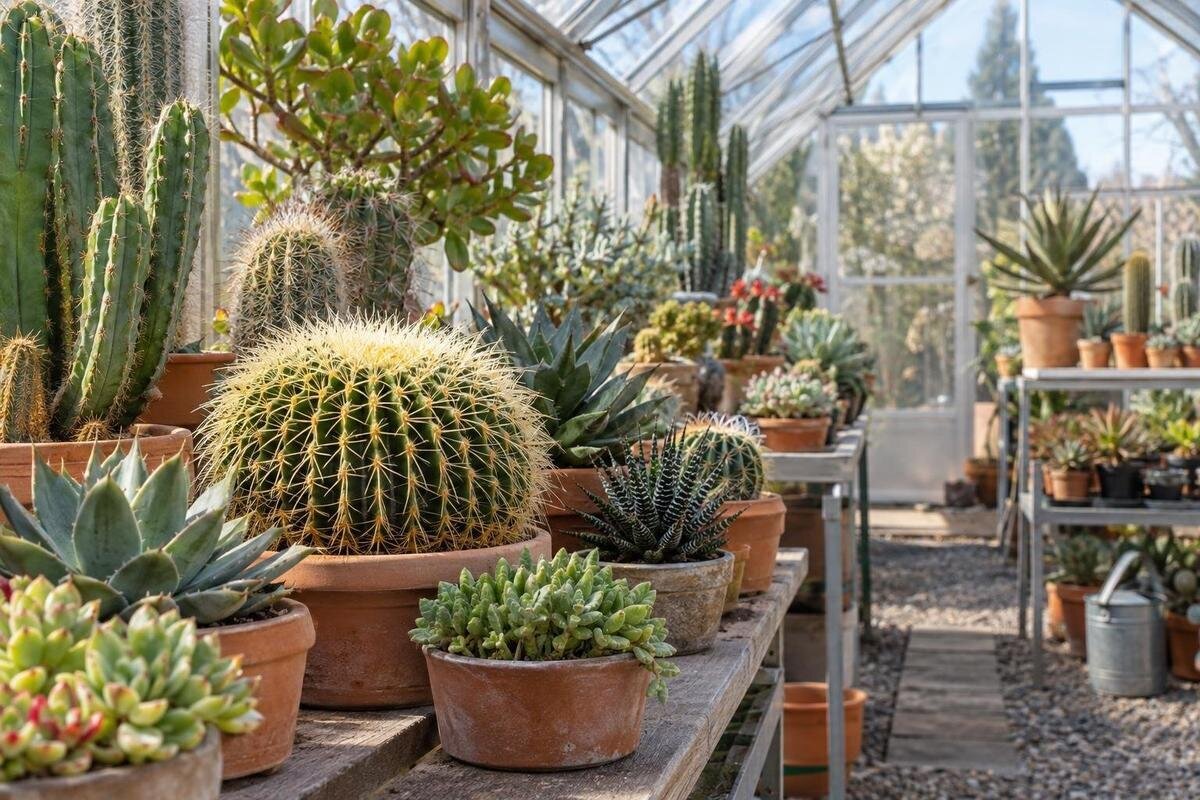
Cactus and succulent greenhouse planning
A greenhouse can protect a cactus and succulent collection from rain, but it does not make every plant equally suited to heat, strong sun or dry winter conditions. Cacti and succulents include plants with very different growth cycles, light preferences and cold limits. A sound plan starts with plant identities, then connects the collection to a site with appropriate light, reliable airflow, controlled watering and enough room to separate care groups.

Identify each plant before grouping it
A label such as succulent is not a care plan. Before choosing a greenhouse, record each plant’s botanical name where known, its growth season, preferred light, watering pattern and cold tolerance. Common names can cover several different plants, while nursery labels may omit useful detail; photograph labels and keep them with the pots. A desert cactus, a rosette-forming Echeveria and an epiphytic cactus such as Schlumbergera do not automatically share one light or moisture routine. Identify plants as precisely as you can, then consult guidance for the species or cultivar rather than relying on the broad category. For an unfamiliar plant, photographs of its form and flowers can help with later identification.
Use the list to make practical groups: bright-light plants, those needing filtered light, plants that dry between waterings, and plants needing different winter protection. The groups do not have to follow botanical families; they should make routine care easier. Note any plants whose identity or cold tolerance is uncertain, and keep their care conservative until you confirm it. Groups can change seasonally, so mark shifts in growth or rest and keep labels where the person watering can see them. Count pots and allow room for access as well as growth. The Lean-to Greenhouse options are listed from 3.69 m² to 14.34 m²; compare the listed area with your planned benches and aisle, rather than treating all of it as growing space.
Map sunlight across the day and year
Visit the proposed site at different times of day and note where direct sun falls across the area you might use. Repeat the observation as the seasons change: the sun’s angle shifts, and nearby trees, walls, fences and roof projections can cast moving shade. Foliage that is small now may also create more shade later. Compare this map with the care notes for your plants; a collection dominated by high-light species may need a different position from one with more plants that prefer filtered light. A bright view from the doorway does not tell you how much light reaches every bench or shelf.
Mark the possible greenhouse outline on the ground and check how it relates to the sunny parts of the site, the door route and space for routine access. If the best-lit position is limited, decide which plants will get the brightest areas and which can sit in more protected spots. The Aluminium Greenhouses range lists area options from 3.77 m² to 28.08 m². Use that range as a space comparison, then check the dimensions and configuration of the exact option; a listed area alone does not show how much of the interior will receive direct light.
Acclimatise plants to stronger greenhouse light
Moving a plant from a sheltered room or shaded bench straight into strong greenhouse sun can scorch its leaves, even if the species generally benefits from bright light. Increase exposure gradually and watch the plant’s newer growth and leaf surfaces. Existing damaged patches will not disappear, so assess how the plant responds after the change rather than expecting old marks to heal. Temporary, adjustable shade can help when the light is harsher than a plant is used to; reduce it as the plant acclimatises. Heavy permanent shade can leave high-light plants stretched, so use it to manage an exposure problem rather than as a default for the whole collection.
Plant examples help show why one setting will not suit everything. Many Echeveria form compact rosettes in strong light but can still be damaged by an abrupt change. Many Haworthia do better in bright filtered conditions than in prolonged intense direct sun, although needs vary by species. Keep these groups in positions you can manage separately. Limited Edition Aluminium Greenhouses are listed from 3.77 m² to 28.08 m²; when comparing area options, consider whether your layout can provide more than one light position. The listed area does not specify how your plants will be exposed, so check the exact internal arrangement before deciding.
Water according to growth and potting mix
With plants under cover, rainfall is not a dependable way to water pots, but that does not mean every plant needs water more or less often. Warmth, pot size, potting mix, airflow and the plant’s growth stage all affect drying. For many desert-adapted cacti and succulents, the usual pattern during active growth is to water the root ball thoroughly, let excess water drain, then allow the mix to dry before watering again. Frequent small splashes can leave parts of the root zone dry while other areas stay damp. Check below the surface and consider the plant’s current growth stage instead of following a fixed weekly timetable.
Seasonal timing differs too. Lithops are a useful example: their distinctive leaf-replacement cycle affects when they need water, so a generic cactus calendar is not enough. Other succulents may grow or rest at different times of year. Use pots with clear drainage holes and do not leave them standing in runoff; prolonged wetness around roots can be a problem even when the surface looks dry. If planning separate watering benches, the Pyramid Greenhouse range lists area options from 5.53 m² to 18.9 m². Compare the available area with the layout you need, then allow room to reach pots and remove runoff.

Plan ventilation for the growing area
Air exchange matters in a greenhouse for plants that prefer dry conditions. Sun can warm a closed space, while watering and damp potting mix add moisture to the enclosed air. Plan how air can move through the growing area, and keep benches or hanging plants from blocking the openings. Openings should be accessible so you can respond as conditions change. Consider how you will ventilate in different weather rather than assuming that the greenhouse’s size or shape will provide enough air movement. When comparing models, check the opening arrangement for the exact size and configuration you are considering.
Ventilation can help reduce stagnant, humid pockets and allow wet surfaces to dry, but it cannot compensate for saturated potting mix, blocked drainage or plants packed too closely together. Persistent condensation, slow-drying benches and stuffy corners are reasons to review airflow and watering together. The Prestige Greenhouse options are listed from 3.77 m² to 28.08 m²; area alone does not specify the ventilation arrangement. Verify which openings are available on the chosen option and whether shelves will obstruct them. Some plants also need a different moisture environment from desert-adapted types, so consider separating them rather than trying to create one humidity level for the entire collection.
Check each plant’s winter cold tolerance
Succulence does not predict a single winter minimum. Some Sempervivum and Sedum species are grown outdoors in cold conditions, while tender succulents and epiphytic cacti such as Schlumbergera may need different protection. Species, cultivar, acclimatisation and wetness all affect how a plant responds. Some cacti tolerate a cool winter rest when kept appropriately dry, but that does not mean every cactus can be exposed to frost. Look up the requirements for the named plant, including whether it needs protection from cold and wet conditions, and keep that information with its label. Do not transfer hardiness advice from one species to another.
An unheated greenhouse should not be assumed to be frost-free: overnight temperatures inside may approach outdoor conditions, and conditions can vary between positions. Track minimum temperatures at plant height, including in colder corners, and plan a different winter position for plants whose requirements the greenhouse cannot meet. The Spacious Greenhouse range lists area options from 47 to 70 m². A larger area may allow more room to organise a collection, but it does not by itself create separate temperature zones or guarantee winter protection.
Measure usable floor space and headroom
Measure the working arrangement, not just the available ground. Sketch the greenhouse outline, then leave space for benches, a route to every plant, the door’s opening and somewhere to handle or turn pots. Include room for repotting and future growth. Crowded leaves make inspection, watering and air movement harder, while a collection may expand over time. Separate the area listed for a model from the bench surface it can actually accommodate. A layout that leaves a practical aisle and room to lift pots may serve the collection better than one that fills the floor edge to edge.
Headroom matters if you grow columnar cacti, taller specimens or shelves above benches. Check the exact internal height, door dimensions and layout for the model and size you are considering; neither a model name nor its listed area confirms clearance. The T-Model Orangery Greenhouse options are listed from 16.52 m² to 30 m², but area does not tell you whether a tall specimen will fit. Compare the actual measurements for the chosen option with the plants, shelves and access you intend to use, including room to lift a pot without hitting the roof or another bench.
Choose the position and storage layout
Match the greenhouse position to the site rather than choosing a shape by appearance alone. A structure beside a wall can make use of an existing boundary, but the wall may shade one side and should not be assumed to keep the greenhouse warm through winter. A freestanding structure gives you different placement choices, but still needs suitable light and access. Consider where shade falls, whether doors and vents remain reachable, and how surrounding structures or wind-driven rain affect the growing area. The right position depends on the site and the collection’s care needs, not just on the structure’s style.
Keep growing benches for plants rather than using them as the only place for spare pots, labels and tools. If a dedicated storage area would help, compare that feature separately from the area available for growing: Limited Edition Aluminium Greenhouses with Storage are listed from 5.52 m² to 28.08 m². Check the plan for the selected option and how storage affects access to the growing area; the listed area is not all bench space. Keep supplies organised and avoid placing them where they block doors, openings or routine inspection.

Arrange benches around care groups
Set benches and shelves around the plants’ care needs, not just the size of their pots. Keep plants with similar light and watering requirements within reach of one another, and separate those needing different winter conditions or closer observation. Light and temperature can differ between shelf levels, so check each position rather than assuming the top and lower shelves are equivalent. Leave room to lift a pot without brushing neighbouring plants. Tall, spiny or trailing specimens should not obstruct an aisle or shade smaller plants that need brighter conditions.
Trays can catch drips, but empty runoff rather than leaving pots standing in it, and keep drainage holes clear. A plant that needs more frequent attention can be placed somewhere easy to check; convenience should not turn into one watering rule for the whole bench. When bringing in new plants, keep them separate for observation before adding them to the main collection. Check for pests such as mealybugs or scale, and look into possible root problems if a plant continues to decline. A small observation area is especially useful when a plant’s name or care history is uncertain.
Record conditions and inspect regularly
Keep a short record of factors that change the greenhouse environment: minimum and maximum temperatures, ventilation adjustments, shade changes, watering and visible growth. Recording when you watered can help explain a plant’s response; it should not become an automatic watering schedule. Note where each plant sits, because a change of shelf or position can alter its exposure. When a plant changes, compare your notes with guidance for its species and adjust one practical factor at a time. That makes it easier to understand whether light, water or temperature may be involved without changing several parts of the setup at once.
Inspect the greenhouse and collection regularly, especially when the seasons change or conditions shift. Check that openings are unobstructed, remove fallen leaves and debris, and notice areas where condensation or dampness persists. Look around leaf bases, growing points and pot rims for pests, and separate a plant with a suspected problem while you identify it. Review each care group rather than applying the same fix to every pot. If the collection expands, revisit the available space and winter plan: conditions that suit today’s plants may not suit every future addition.
Frequently asked questions
Can different cacti and succulents share one greenhouse?
Yes, if the layout lets you separate plants with different light, watering and winter needs. A single greenhouse does not mean every pot should have the same routine. Group plants by care requirements and adjust their positions as the seasons change.
Will an unheated greenhouse keep succulents frost-free?
No. Overnight temperatures inside an unheated greenhouse may approach outdoor conditions, so it cannot be assumed to prevent frost. Check the cold tolerance of each named plant and arrange a suitable winter position for those that need more protection.
How often should I water cacti in a greenhouse?
There is no reliable interval for every cactus. Consider the plant’s growth cycle, pot size and how quickly its potting mix dries. Many arid-adapted types are watered during active growth and allowed to dry before the next watering, but some need a different seasonal pattern.
Do succulents need full sun in a greenhouse?
No. Light needs vary by plant, and a sudden move into strong direct sun can scorch a plant that is not acclimatised. Many Echeveria prefer bright light, while many Haworthia do better in bright filtered conditions. Check the needs of the named species.
What should I check before choosing a greenhouse?
Compare the available area with your planned benches and aisle, then verify internal height, door clearance and the ventilation openings for the exact model and size. Check that its position suits the light available and that you have a separate plan for plants that cannot tolerate winter conditions there.
A useful cactus and succulent greenhouse is planned around the plants it will actually hold. Identify the collection, map its light needs and cold limits, then arrange benches so watering and ventilation can be managed without treating every pot alike. The structure’s listed area is only one part of the decision: access, headroom, opening positions and winter conditions all shape how well the space works. Keep plant labels and simple condition notes together, and review the layout as the collection grows or its seasonal needs change.
