
Cape Gooseberries in a New Zealand Greenhouse
GREENHOUSE GROWING GUIDE
Cape gooseberries (Physalis peruviana) need a long growing season, so they are not a quick crop for a spare greenhouse bed. Under cover, they can benefit from shelter and a longer period of warmth, but an unheated greenhouse is not automatically frost-free and cannot guarantee fruit will ripen in a cool, short summer. Support, pollination and harvest signs all matter, but the first decision is whether your site can provide enough warmth and time. In New Zealand, that depends on local frost patterns, greenhouse night temperatures and how early you establish the plant; a single national planting date would be misleading.

Is a greenhouse suitable for cape gooseberries?
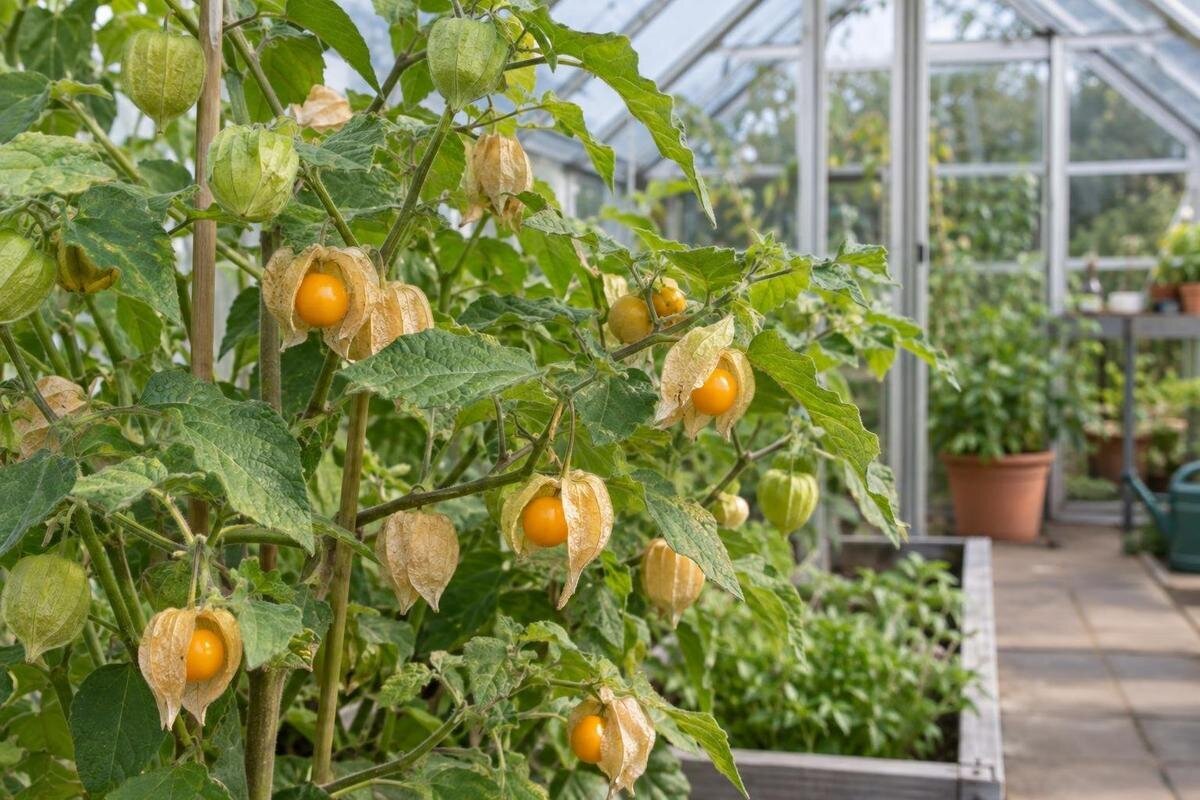
Cape gooseberry, also sold as goldenberry and botanically known as Physalis peruviana, is a warm-season crop with a long route from seed to ripe fruit. It forms a branching, bush-like plant rather than a narrow single-stemmed vine, and each fruit sits inside a papery husk. It is a tender perennial where frost is absent, but gardeners in cooler places often grow it as a seasonal crop because frost can damage it. The plant benefits from a bright, sheltered position and sustained warmth: a sunny afternoon alone does not make a full season if nights stay cool. Check that your seed packet names Physalis peruviana, as other Physalis species can have different growing and harvesting requirements.
Growing under cover can give the plant shelter from wind and heavy rain and may let you start earlier than an exposed outdoor bed. An unheated greenhouse is not a heated growing room, though: it may warm quickly by day and cool substantially overnight. Check actual night conditions and the local frost pattern instead of assuming the glazing will keep the plant safe. For scale when planning a shared growing space, the Spacious Greenhouse range is offered in sizes from 47 to 70 m². That area information does not establish heating, frost protection or a suitable climate.
Space for a mature cape gooseberry
Treat the mature plant as a branching bush whose stems need room to spread, not as a seedling that will stay within its first small footprint. Growth varies with variety and conditions, but a well-grown plant can occupy a substantial part of a bed, especially once it is supported. Allow clearance for tying stems, reaching flowers and picking fruit from inside the canopy. Keep a path open and avoid planting it where mature branches will shade shorter crops or block a door. In a compact greenhouse, one accessible plant may be easier to manage than several crowded together.
Sketch the floor plan before deciding how many plants to grow: mark the bed or pot, support, path and other crops, then leave room to reach the plant from at least one side. The Bloomcabin Prestige Greenhouse range is listed in sizes from 3.77 m² to 28.08 m², providing a range to compare with your whole growing plan. Do not treat the greenhouse’s full stated area as planting space; doors, working access and other uses affect what is practical. The crop’s need for light and airflow matters as much as the total area.
Sowing, planting and season length
In New Zealand, work back from the point at which your greenhouse can reliably keep a young plant warm overnight, rather than planting on a fixed month. If sowing from seed, begin in a warm, bright protected spot in late winter or early spring when you can provide enough light; an established seedling can save the early stage. Keep seedlings protected while they are small, then acclimatise them gradually before moving them to their final bed or container. A greenhouse cover does not remove the need to check local frost risk, especially in an unheated structure.
Allow several months from sowing to harvest. As a planning estimate, the first ripe fruit may take roughly four to six months from seed in suitable conditions; cool nights, low light or a delayed start can push that later. Buying an established seedling saves propagation time, but the plant still needs enough warm growing time to flower and fill fruit before colder weather returns. Warmer sites may have a more generous season, while exposed, high-altitude or otherwise cool locations may struggle to ripen a crop in an unheated greenhouse. Use local temperature records and past growing experience to judge the available growing season.
Growing in a bed or a container
A greenhouse bed suits cape gooseberries if the soil drains freely but does not dry out immediately. Improve compacted ground before planting and mix in well-rotted organic matter where the soil needs it; avoid leaving roots in saturated ground after watering. Container growing gives you more control over the mix and can make a young plant easier to reposition. However, a large, branching crop needs a stable, generously sized pot with drainage holes rather than a small starter pot. Use quality potting mix, and remember that containers warm and dry faster than beds, particularly on sunny days.
Choose the bed or container before installing support, because it affects where a stake or cage can sit and how you will water. Leave access around the root zone without putting the plant in the main walkway. The Aluminium Greenhouses range has listed sizes from 3.77 m² to 28.08 m². When comparing options, sketch both a bed layout and a container layout, showing where you would stand to water and reach the plant. Check the usable bed length and path position rather than judging capacity by floor area alone. A pot that fits neatly when the plant is young may leave little working room once supported branches spread.

Supporting the branching plant
Put a stake, cage or freestanding trellis in place while the plant is still small, before roots and neighbouring crops make the job awkward. As shoots lengthen, tie them loosely with soft plant ties and spread the branches so leaves and developing husks are not packed into a dense centre. Avoid tight loops around stems, and review ties during growth because stems thicken and new branches can lean. Support is especially useful once fruit-bearing branches begin to sag; it keeps fruit accessible and helps stop low branches resting on damp soil or crossing a walkway.
Keep the support within the plant’s planned footprint, but leave enough room to move around it and inspect the underside of the canopy. The Lean-to Greenhouse range is listed from 3.69 m² to 14.34 m²; use the actual layout to see how a supported plant fits beside the path and other growing space. Do not assume the greenhouse frame is a suitable anchor for a plant support. Follow the product instructions or use a stable freestanding support, and make sure ties will not rub against glazing or obstruct an opening.
Pollination under cover
Cape gooseberry flowers are generally self-fertile, so a second plant is not normally required simply to get fruit. Each flower contains both reproductive parts, but pollen still has to reach the stigma for fruit to form. Insects and gentle movement can help transfer pollen, while a greenhouse may receive fewer insect visits than an outdoor bed. Watch whether the base of a flower begins to swell after its petals fade; an open flower alone is not evidence that pollination has succeeded. If flowers repeatedly fall without fruit developing, also review warmth, watering and plant stress before treating a lack of pollinators as the only cause.
Allow pollinators access when conditions permit, and avoid leaving the greenhouse closed on warm days; follow the manufacturer’s instructions for doors and vents. If visits are scarce, gently tap the support or lightly shake a flowering branch while blossoms are open and dry, taking care not to break stems. When comparing Limited Edition Aluminium Greenhouses, check the product details for the actual door and vent arrangements. Plan the plant’s position so its supported branches will not obstruct those openings as it grows. This connects pollinator access with the layout of the crop, rather than leaving it as a problem to solve once the canopy is full.
Managing greenhouse heat, airflow and water
Place the plant where it receives plenty of bright light, while keeping an eye on how quickly the enclosed space heats up on sunny days. Cape gooseberries need warmth for steady growth, but a sealed greenhouse can become hotter than the outdoor forecast suggests; excessive heat can stress flowers and reduce fruit set. Use the structure’s designed ventilation and check conditions near the leaves rather than relying on an outdoor weather reading alone. The T-Model Orangery Greenhouse range is listed from 16.52 m² to 30 m². Compare the available layouts with the space your mature plant will occupy, including clearance around the canopy. Check ventilation specifications separately: floor area is not a measure of temperature performance.
Keep the root zone evenly moist, not constantly saturated. Check the soil or potting mix and water when it begins to dry; containers usually need closer attention than a garden bed, while frequency changes with sunshine and ventilation. Direct water to the soil where practical, and make sure surplus water can drain away. Use a fertiliser suitable for edible plants according to its label, and avoid overfeeding with nitrogen: lush leafy growth is not the same as good flowering or fruiting. A simple note of watering and feeding can help you distinguish dry-root problems from cool conditions or poor fruit set.
What changes as autumn approaches?
As summer gives way to autumn, shorter days and cooler nights can slow flowering and fruit ripening. A greenhouse may reduce exposure to wind and rain and hold some daytime warmth, but an unheated structure cannot guarantee frost-free nights or recreate summer light. Check the plant for its youngest flowers and smallest fruit as well as fruit already colouring; the latter are more likely to finish before conditions deteriorate. If the crop is still setting many flowers late in the season, do not count them as a sure harvest. Their development depends on the warmth and light that remain.
If extending the harvest is a reason for buying a greenhouse, consider the late-season crop as well as the summer layout. The Pyramid Greenhouse range offers sizes from 5.53 m² to 18.9 m²; use those options to compare space for the supported plant, with access to inspect fruit inside and beneath the canopy. Assess seasonal protection separately using product specifications and the temperatures you record at your site. Note whether colder weather arrives while most fruit is still green or after a useful harvest. That distinction helps you decide whether to establish plants earlier or grow fewer next season, rather than counting on late flowers to produce ripe fruit.

Recognising ripe cape gooseberries
Use both husk and fruit colour to judge picking time. As a cape gooseberry ripens, its green husk dries to a papery, straw-coloured or tan cover, while the fruit inside changes from green towards yellow, amber or orange. The exact shade can vary, so look for a dry husk and fully developed fruit colour rather than relying on a calendar date or one cue alone. A husk can begin to dry before the fruit is at its best; open one mature-looking example and check the fruit before harvesting the rest.
Ripening is usually spread over time, so inspect the plant regularly instead of stripping all the fruit in one go. Mature cape gooseberries often fall naturally; check beneath the foliage and pick up sound fruit before it is missed under the plant. If a fruit is still green and its husk is fresh, leave it attached to finish where possible. Handle stems gently when picking, since pulling fruit from a tight canopy can bend a branch. Note the date of the first ripe fruit and the last useful harvest to help judge when to sow next season.
Harvesting and planning for winter
Use each harvest as an opportunity to inspect the plant as well as collect fruit. Look for bending branches, damaged leaves and ripe fruit hidden near the ground, checking loose ties as you work around the canopy. Pick individual ripe fruit with its husk intact, and keep mouldy, split or badly damaged fruit apart from sound ones. Clear fallen husks from the floor and path so the base of the plant remains accessible. Alongside your first and last harvest dates, record sowing, transplanting, first flowers and any weather interruptions. These details help show whether a late harvest followed a late start or a period of poor growing conditions.
Base the decision to keep the plant after cropping on your actual winter conditions. Physalis peruviana can persist as a perennial in sufficiently mild, frost-free settings, but in colder sites it is commonly treated as an annual; a greenhouse does not automatically remove frost risk. Include any retained plant in your winter floor plan rather than assuming its space will be available for another crop. If you also need storage, the Limited Edition Aluminium Greenhouses with Storage range is listed from 5.52 m² to 28.08 m². Check how the published layout divides storage and growing space, then allow for the plant, its support and a clear path between the two areas.
Frequently asked questions
Can I grow cape gooseberries in an unheated greenhouse in New Zealand?
Yes, if your local growing season is warm and long enough for the fruit to ripen. An unheated greenhouse can offer shelter and daytime warmth, but may still get cold overnight. Check your own frost pattern and greenhouse temperatures before relying on it to protect the plant.
Do I need two plants for pollination?
Usually not. Cape gooseberries are generally self-fertile, so one plant can set fruit. Insects and gentle movement can help transfer pollen under cover; if flowers fall without fruit forming, also consider temperature, watering and general plant stress.
When should I sow cape gooseberries in New Zealand?
Late winter or early spring can suit seed sowing if you can provide warmth and enough light. Base planting out on your local frost risk and greenhouse conditions rather than a single date for the whole country. An established seedling saves some time at the start.
How do I know when cape gooseberries are ripe?
Look for a dry, papery husk that has changed from green to straw-coloured or tan, plus fruit that has developed a yellow, amber or orange colour. Some ripe fruit fall naturally. Check the plant regularly because fruit does not all ripen at once.
Do cape gooseberry plants need support?
Support is useful for the branching stems, particularly as fruit develops and branches begin to sag. Put a stake, cage or freestanding trellis in place while the plant is small, then use loose ties and check them as stems grow.
Growing cape gooseberries under glass is a question of timing as much as shelter. Give the plant a bright, warm start, leave room for its branching habit, secure stems before they bow, and make sure flowers have a way to set fruit. The husk and fruit colour give better harvest cues than a calendar date. If local nights turn cold before fruit colours up, treat that as a limit of the growing season rather than a failure of care, and plan the next crop around your greenhouse’s real temperatures and local growing window.
