
Growing Celery in a Greenhouse
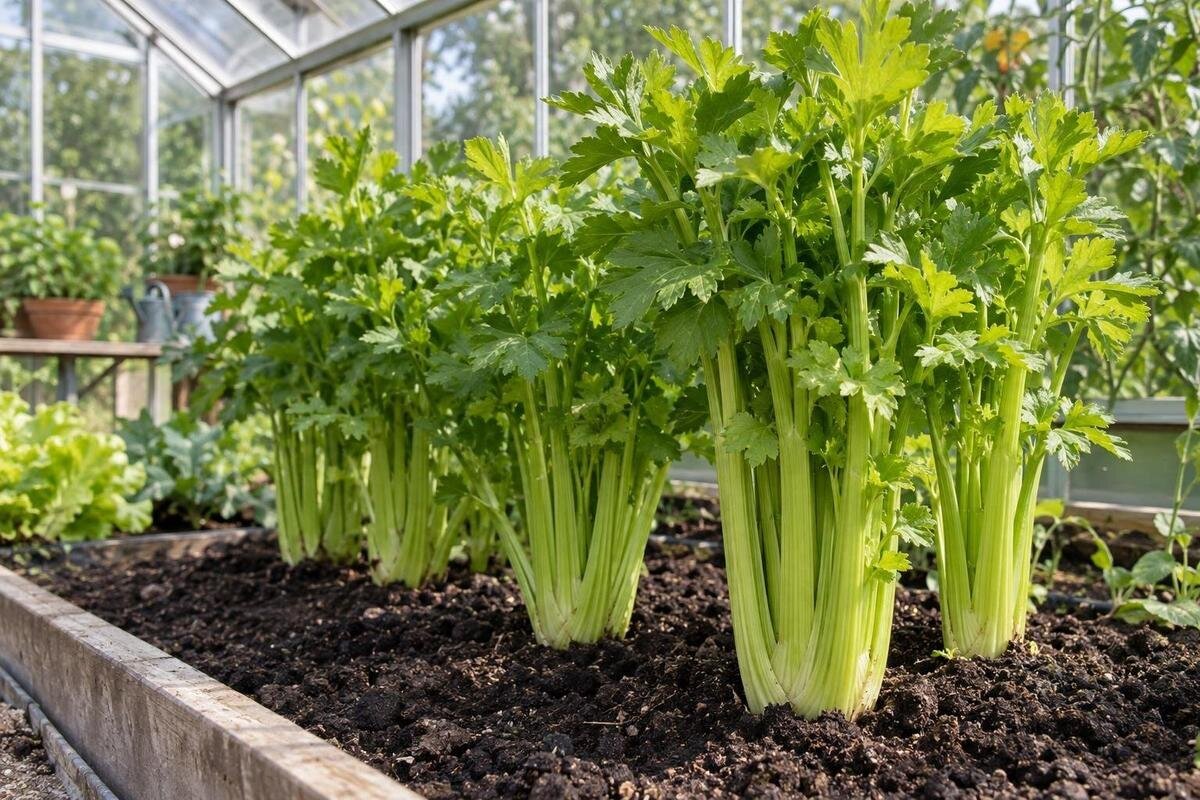
GREENHOUSE GROWING GUIDE
Celery can occupy a greenhouse bed for months, so the key decision is whether you can keep the crop steadily growing for its full season—not simply whether seedlings fit on a bench. In New Zealand, cover may shelter young plants and extend a suitable growing window, but an unheated greenhouse does not guarantee mild nights or cool summer days. Plan sowing around your local conditions, then reserve room for mature plants, access and watering before you sow.

Before choosing a greenhouse 1
Is a greenhouse the right place for celery?
Celery is a long-season crop: its edible leaf stalks develop while the plant continues to grow steadily, so a greenhouse does not turn it into a quick harvest. Where outdoor conditions suit the cultivar, celery can grow outside; cover can be useful for raising plants, sheltering them while they establish and extending a suitable growing window. The trade-off is time: one bed may be occupied for months, including when the greenhouse could hold another crop. If the outdoor season already suits the cultivar, an outside bed may be a simpler use of garden space. Try a modest greenhouse planting before committing a larger area.
Cool to mild conditions generally suit celery better than prolonged heat and dryness. An unheated greenhouse can still be cold overnight, then heat rapidly in sunshine; neither effect disappears because the crop is under glass. Chilling while plants are young can encourage premature flowering in susceptible plants, while hot, dry spells interrupt growth. Check conditions at plant height with a thermometer and ventilate before excess heat builds. The Spacious Greenhouse listing spans 47 to 70 m². Before choosing a structure of this size, consider celery alongside the other crops you intend to grow and how much protected space each will occupy during the season.
Choose a celery type and decide how much to grow
Choose stalk celery if you want the familiar edible leaf stalks; celeriac is a different celery crop grown for its swollen root. Among stalk types, read the seed packet for mature size, time to harvest and whether the cultivar is self-blanching or intended for blanching. Green stalks can be eaten without blanching; paler stalks are a preference, not a requirement for a successful crop. Give priority to cultivars recommended for your local season, and note whether the stated maturity period starts at sowing or planting out. If seed suppliers identify a cultivar as more resistant to bolting, that may also matter where conditions are variable. A packet image cannot tell you how long your bed will be occupied.
Decide how many plants you will use before sowing a whole tray. Picking outer stalks over time can make a few well-grown plants more useful than a crowded row, while a second sowing is only worthwhile if it still has enough growing season. Only sow what you can eventually plant at full spacing. Also count the room needed for trays, labels and tools. If storage forms part of your layout, the Limited Edition Aluminium Greenhouses with Storage listing includes options from 5.52 to 28.08 m²; check the drawing to distinguish storage and other fixed space from the bed area available to celery.
Before choosing a greenhouse 2
Work backwards from the harvest date
Work backwards from the harvest you want, rather than sowing on the first free weekend. Celery can be slow and uneven to germinate, then takes time to make sturdy plants and full stalks. Read the seed packet carefully: maturity may be counted from sowing or from transplanting, and that difference changes the calendar. Spring sowing is a common starting point in New Zealand, but suitable dates shift with region, elevation, site exposure and cultivar. Use local seed guidance and likely frost conditions, not a month chart written for the Northern Hemisphere. A simple calendar with sowing, potting-on, planting-out and expected harvest dates can show whether your plan allows enough time.
Allow for germination, potting on, gradual acclimatisation and establishment after planting out; these stages take calendar time even when the greenhouse feels warm by day. Avoid rushing small plants into a cold bed, because an unheated house does not prevent every cold spell and early chilling may increase bolting risk. Keep records of sowing, transplanting and first harvest dates so you can refine the timing for your own site. The Limited Edition Aluminium Greenhouses range is listed from 3.77 to 28.08 m²; when comparing footprints, include the propagation area and the bed that remains occupied during the long growing phase, not just harvest week.
Sowing and transplanting celery
Celery seed is tiny, and germination can be slow or patchy. Sow on the surface of fine seed-raising mix, press gently for contact and avoid burying it deeply; light is needed for germination. Keep the surface evenly moist without leaving the tray sodden, and water gently so seed is not washed to one edge. A fine spray or careful watering from below can help. Keep the tray in a bright, sheltered place and check the surface regularly, as it can dry before the bottom of the mix. Label the tray and be patient: resowing too soon can create an overcrowded batch when the first seed finally emerges.
Once seedlings have true leaves and are large enough to handle, prick them into individual cells or small pots. Hold each seedling by a leaf rather than squeezing its delicate stem, and keep the fine roots as intact as possible. Give plants good light and steady moisture so they do not become weak and stretched. Do not leave them stalled in small cells for too long as roots fill the space. Before planting out, acclimatise them gradually to greenhouse conditions. Set each seedling at its former depth, keeping the crown above the soil, then water around the root ball to settle it without burying the growing point.

Before choosing a greenhouse 3
Give mature celery enough room
Plan for the finished plant, not the small transplant. As a rough layout guide, allow around 20–30 cm between plants, then follow the cultivar’s instructions if they give a different spacing. Leave enough room between rows for foliage to dry and for your hand to reach each plant for watering, weeding and harvest. Crowding looks efficient at planting time but leaves mature foliage cramped, makes inspection harder and can keep the centre of the bed damp. Keep celery away from the very edge of a bed where soil may dry first and stalks can spill into the path. Planting closely does not guarantee a tidy crop of smaller stalks.
Mark positions on the bed before planting and count plants only after allowing for paths and working access. The Bloomcabin Prestige Greenhouse is listed in sizes from 3.77 to 28.08 m², but its area range does not tell you how many celery plants fit; compare the internal layout, clear bed width and access to the door. A continuous, moisture-retentive bed is usually easier to manage than tiny isolated planting pockets. If growing in containers, choose roomy containers and use the variety’s spacing guidance rather than squeezing full-size plants into small pots. In a compact greenhouse, one accessible row may be easier to tend than maximising the number of plants.
Bed layout and working access
Draw the usable floor plan before fixing beds. Mark doors, paths, benches, stored equipment, the water point and any space required to reach vents or clean the greenhouse. Celery stays in place for a long time, so access needs to remain practical throughout the crop’s growth. A path that cuts through the bed or a row reachable only from one end becomes inconvenient at every watering and harvest. Make beds narrow enough to tend from the path without stepping on the growing soil. Allow somewhere to stand while working on central plants, without blocking a door or having to lean across mature foliage.
Catalogue floor area includes space you may need for paths, shelving and storage. The Aluminium Greenhouses listing covers 3.77 to 28.08 m²; use the product plan and internal measurements to map these uses alongside the beds. If several crops will share the structure, reserve their places now and consider when each will be planted and removed. Celery’s long occupancy can otherwise block a later sowing or leave no convenient place to put trays and equipment. Include working clearance for carrying supplies, watering and removing damaged plants. A layout that fits neatly on paper may become awkward once leaves spread into the access routes.
Before choosing a greenhouse 4
Position the greenhouse for light and access
Choose a site with useful daylight and straightforward water access. Nearby trees, fences and buildings can cast shade on the bed even when the roof looks bright; check the growing area at different times of day and through the season. Celery needs light for sustained growth, but in a very hot location some afternoon protection may reduce stress. This is a balance, not a reason to put the crop in deep shade. Consider wind and the route from your tap so watering remains manageable for the whole season. The light available in spring may differ from what reaches the bed later in the year.
For a wall-adjacent greenhouse, assess how the wall and its surroundings affect shade and airflow. The Lean-to Greenhouse listing spans 3.69 to 14.34 m², giving you a range of footprints to compare with the available site. Mark the proposed wall, door, vents and water route on a sketch, then use the actual model drawing to locate the planting area. Check how much light reaches that area rather than judging the site only from the brightness around the roof. The wall’s position matters to the growing conditions; it does not automatically provide the right balance of light, shelter and airflow for celery.
Keep the root zone moist and fertile
Celery needs consistent moisture and fertile soil, but keeping soil moist is different from leaving it saturated. Prepare a bed that retains water yet drains freely, and work in mature compost if the soil needs more organic matter. Because celery is a demanding crop, check fertility rather than repeatedly adding fertiliser by habit; a soil test can help when a bed has been cropped often or growth is poor. Apply any supplementary fertiliser according to the product label and the soil’s needs. Keep soil clear of the crown so water and soil do not accumulate in the centre, where tender growth is vulnerable.
Check moisture down in the root zone, not just on the surface, and adjust watering for the weather, soil and plant size. Aim to wet the bed thoroughly while avoiding a cycle of very dry soil followed by flooding; do not wait for plants to wilt before acting. A mulch can slow evaporation once the soil has warmed, but leave space around the crown. A drip line can reduce repeated hand-watering, but check that it wets the whole bed evenly and does not leave a dry edge. The Pyramid Greenhouse listing ranges from 5.53 to 18.9 m². When comparing its footprints, include access to every part of the celery bed so you can check moisture and adjust watering throughout the season.

Before choosing a greenhouse 5
Manage heat, ventilation and leaf wetness
Watch conditions in the greenhouse when the sun comes out, not just the forecast. Open doors or vents as needed to release excess heat and humid air, then adjust as temperatures fall; a fixed opening schedule will not suit every site or day. Celery does not benefit from being kept sealed and warm. If the house becomes excessively hot, ventilation and, where appropriate, temporary shading can reduce stress, but heavy shade can restrict growth. A simple thermometer near the crop helps reveal the temperature swings it actually experiences. Winter growing may require a carefully managed heated environment; standard glazing and sunny afternoons alone do not promise suitable winter conditions.
Air movement also helps foliage dry. When practical, direct water to the soil rather than wetting leaves, remove dying foliage and inspect for spots or other damage, especially after humid weather. The T-Model Orangery Greenhouse is listed from 16.52 to 30 m². Alongside the floor plan, compare the actual door and vent details: you need to be able to reach and operate the openings while the crop is fully grown. Position beds so mature foliage will not block them. These details are more useful for planning ventilation than the model name or floor area alone.
Blanching, harvesting and crop problems
If you want paler stalks, check whether your variety benefits from blanching. The traditional method excludes light from the stalks, often by carefully banking soil or using a suitable collar. Do it only when plants are developed enough, keep soil away from the central growing point, and leave enough time for the method described on the seed packet. Blanching adds work and can make the lower stems harder to inspect, so keep the covering tidy and check the plants regularly. Green celery is usable without it, and self-blanching varieties need less intervention; choose according to taste and cultivar rather than assuming blanching is essential.
Harvest outer stalks as needed if you want the plant to continue growing, leaving its centre and enough healthy foliage intact; alternatively, cut the whole plant once it reaches the size and maturity described for the cultivar. Prolonged heat or uneven moisture can leave stalks coarse or less tender, so use quality and weather as well as a calendar date. If a central flower stalk appears, the plant has bolted; harvest usable stalks promptly, knowing the texture may be poorer. Check for slugs, aphids, leaf spots and discoloured inner leaves, remove damaged material and identify the likely cause before choosing a control. Clear crop debris afterwards and, where practical, rotate to an unrelated crop rather than planting celery straight back into the same bed.
Frequently asked questions
Can celery grow in an unheated greenhouse?
Yes, if the sowing and growing period suits your local conditions. An unheated greenhouse can shelter plants and extend a suitable season, but it can still get cold overnight and heat up quickly in sunshine. Monitor conditions, ventilate when needed and avoid assuming the structure will support year-round growing.
How often should I water greenhouse celery?
There is no reliable fixed interval: soil, weather, plant size and airflow all affect how quickly the bed dries. Check moisture in the root zone, keep it even and water before plants wilt. Avoid leaving the soil saturated, and check that the whole bed gets water rather than just the area nearest the hose.
How much space does celery need?
For full-size stalk celery, allow around 20–30 cm between plants as a rough starting point, then follow the cultivar’s instructions. Leave space between rows and paths for foliage, airflow and harvesting. Work out the plant count after accounting for paths and equipment; greenhouse floor area alone is not a planting plan.
Do I have to blanch celery?
No. Blanching is a choice that depends on the variety and the stalk colour and flavour you prefer. Many green celery plants can be harvested without it, and self-blanching types need less intervention. If you do blanch, follow the cultivar’s guidance and keep soil or coverings clear of the plant’s central growing point.
Can I harvest a few stalks and leave the rest of the plant?
Yes. Remove mature outer stalks and leave the centre and enough healthy foliage for the plant to keep growing. You can also harvest the whole plant when it reaches the size and maturity described for its cultivar. If it has bolted or suffered prolonged heat or uneven moisture, the stalks may be less tender.
Successful greenhouse celery comes from a season-long plan: choose a cultivar suited to local conditions, start it early enough without exposing young plants to cold, then leave enough room to keep the soil evenly moist and the foliage ventilated. A greenhouse can help with shelter and season management, but it cannot remove the crop’s need for steady growth or replace regular monitoring. If bed area, water access and temperature management are workable, try a modest number first and use the results to decide whether celery deserves more protected space next season.
