
Rain Shelter or Greenhouse: Choosing Crop Protection
Growing advice
Choosing between a crop rain shelter and a greenhouse comes down to the problem you are trying to solve. A roof over an open bed can keep direct rain off selected plants while leaving them exposed to the surrounding air. A greenhouse encloses the growing space, giving broader protection and more scope to influence conditions, but it also brings ventilation, watering and temperature management. Neither option suits every crop or site. Across New Zealand, rainfall, wind, frost and winter light vary from place to place, so compare your crops and garden conditions with the actual structure, not just its name.

Buyer checklist 1
The basic difference: rain shelter or greenhouse
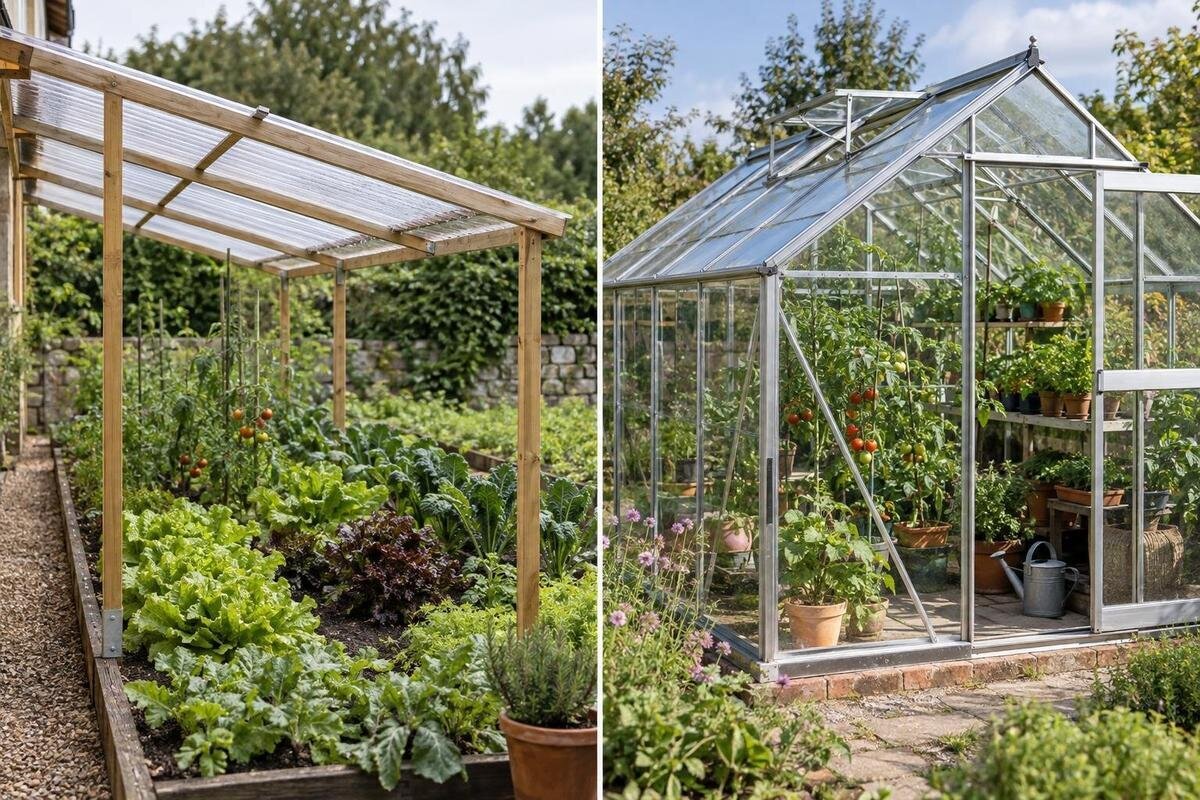
A crop rain shelter is a practical description rather than one standard design. It usually means a roof over one or more beds or growing rows, with the sides open or only partly enclosed. The roof intercepts rain falling from above, so foliage, flowers and fruit beneath it may receive less direct wetting. It does not seal the crop off: wind can drive rain under the edges, and water can splash in from nearby ground. Before treating a shelter as a solution to a wet-weather problem, check exactly which sides are covered, how far the roof extends and where runoff goes. A cover over one row protects a different area from one spanning a whole plot.
A greenhouse surrounds the growing space with a roof and enclosing sides; doors or vents provide access and may allow air exchange, depending on the model. When closed, it screens plants from more direct rain and wind and creates a distinct air space compared with an open roof. That is a change in growing conditions, not automatic climate control: an unheated greenhouse can still become cold, while sun can warm an enclosed space quickly. A label such as Pyramid Greenhouse does not tell you the floor plan, openings or suitability for a crop. Use the drawing and exact specification, rather than a shape name, to understand the protection offered.
When an open-sided shelter suits the crop
An open-sided rain shelter is worth considering when a particular crop or bed needs less direct rain but does not need a warmer, enclosed environment. Gardeners may consider one for plants whose foliage or fruit they would prefer to keep drier, such as tomatoes or soft fruit, although the benefit depends on local rain, airflow and plant arrangement. It can also be a targeted choice: cover the beds with a clear rain-related need and leave other crops in ordinary outdoor conditions. That avoids assuming every plant in the garden needs the same protection. Check that the roof will cover the crop as it grows, not only the bare bed at planting time.
Open sides let ambient air reach plants and may allow insect access, but neither airflow nor pollination is guaranteed: fences, walls and dense planting can restrict circulation, while screens change access. Plants remain exposed to outside temperatures, gusts and wind-driven rain, so a roof is not a substitute for frost protection or a wind-rated structure. If the shelter has side panels, screens or closable ends, treat it as a different level of enclosure and check what changes for ventilation and access. Some crops rely on insect visits; consider how pollination will work before enclosing them. Choose a shelter for the specific protection it provides, not for an assumption that open sides solve every wet-weather issue.
Buyer checklist 2
What an enclosed greenhouse adds
An enclosed greenhouse is a better choice when the aim goes beyond keeping rain off: it gives seedlings, potted plants and crops that benefit from shelter more separation from rain and wind. On a sunny day, the interior can warm above the surrounding open air, which may make some shoulder-season growing more practical. Its effect depends on glazing, ventilation, site shade, outside conditions and how it is used. Think of it as a place where you can influence the microclimate, not a sealed box that holds one temperature. A greenhouse offers a wider set of conditions to manage, but each crop still needs suitable light, moisture and temperatures. You do not have to move every garden crop into it; some gardeners reserve enclosed space for plants that need closer protection.
Floor area is an early consideration when comparing models. The Classic aluminium greenhouse range is listed from 3.77 m² to 28.08 m². Match the chosen size to the beds, containers, shelves and paths you plan to use, then allow room to enter and water plants. Consider which plants need enclosed protection and which can stay outdoors or under a rain shelter; this helps you allocate greenhouse space to the crops that need it most. A larger footprint is useful only if it fits your site and regular care routine, including the space needed to work around it. Compare sizes using the same planned crop layout so that extra floor area has a clear purpose.
Airflow, humidity and temperature
Airflow is one of the main trade-offs. With open sides, a rain shelter leaves more of the surrounding air movement in place, though fences, trees and neighbouring buildings can still block it. An enclosed greenhouse creates a greater barrier to moving air when shut. Doors and vents are routes for exchanging air, and their position and opening method differ by design. The word greenhouse does not tell you how much ventilation a particular model provides. Compare the drawings and specifications, and think about whether openings are easy to reach during ordinary use. A door or window alone does not guarantee enough air exchange for every crop or site.
Moisture also builds up inside covered spaces. Irrigated soil and plants release water; in a closed greenhouse, limited air exchange can leave humid air or condensation on the inside surfaces. An open roof shelter has more direct airflow, but it does not prevent dew, damp soil or wetting from wind-driven rain. Notice how conditions change through the day, especially when the sun comes out after a cool period. If a crop is sensitive to prolonged leaf wetness, weigh airflow as well as rainfall exclusion. A brief record of conditions on typical sunny and wet days can help you judge whether the setup suits your crops. Neither structure is inherently dry or humid in every situation.

Buyer checklist 3
Watering and roof runoff under cover
Both structures intercept direct rainfall, so covered beds may receive much less natural water than the surrounding garden. In a greenhouse, the roof and sides limit rain reaching the growing area; under an open shelter, the edges may admit some rain, but the amount is unpredictable. Do not rely on rain entering from the sides as a watering plan. Arrange a practical way to water, then check soil moisture and crop needs rather than following a fixed schedule. The cover can also change how quickly a bed dries compared with open ground. If several crops share the space, note that containers and beds may not need water at the same time, and make sure your chosen watering method can reach all of them.
Roof water still has to go somewhere. Consider where runoff falls, whether it lands on a path or neighbouring bed, and how it affects access around the structure. Check the manufacturer's drawings for any drainage details and ask a qualified professional if the site raises structural or drainage questions. Storage is another footprint decision: the Limited Edition greenhouse with built-in storage listing names that provision and offers areas from 5.52 m² to 28.08 m². The total area does not tell you how it is divided, so check the exact plan before counting all of it as crop-growing space or deciding where watering gear will go.
Site exposure, light and access
Walk the proposed site at more than one time of day and, if possible, after rain. Note shadows from buildings and trees, how wind reaches the plot, where water already runs, and how easily you can carry water, trays or harvested crops to the beds. A roof does not compensate for deep shade, and a very exposed position may let wind-driven rain reach a covered crop. A nearby fence might reduce exposure but also cast shade, so weigh both effects rather than assuming it solves the problem. A greenhouse needs clear access to its door and enough room for the way you plan to work. These observations are more useful than choosing a structure based only on what looks convenient from the house.
A wall greenhouse is one possible enclosed format, but the label alone cannot settle whether a particular wall and site are suitable. The Lean-to greenhouse range is identified as a wall greenhouse and lists areas from 3.69 m² to 14.34 m²; compare the stated dimensions with available space, access and light at your site. Check the product drawings for the exact configuration, and ask the supplier or a qualified professional about site-specific requirements. Do not assume that a wall location is automatically sheltered, sunny or suitable simply because it appears protected. Wind exposure is a structural consideration too, so verify the requirements for the exact design rather than relying on a generic description.
Buyer checklist 4
Seasonal growing and cold-weather limits
A greenhouse may make some crops practical over a longer part of the year, but it does not replace a crop calendar suited to your area. Day length and outside temperatures still limit growth, and nights can be cold even after a bright day. A rain shelter mainly changes exposure to rainfall; with open sides it offers little separation from ambient air. When comparing the two, ask what conditions a crop needs at the start and end of your intended season, then consider whether the structure can provide them without assuming heat or insulation that has not been specified. Local planting guidance can help you match crop choices to the conditions you can actually provide.
For seasonal growing, compare the documented glazing and ventilation details of the exact configuration you are considering. The Limited Edition Aluminium Greenhouse range is one option to include in that comparison, but its name does not indicate the temperature it maintains. Focus on the crops you want to grow during cooler months and the conditions they need, rather than assuming that all greenhouse growing can continue through winter. For frost-sensitive crops, use local horticultural guidance and make a separate plan for cold periods. If the available specifications leave an important question unanswered, seek clarification before buying. The useful comparison is how each structure supports your intended growing season, not simply whether it is sold as a greenhouse.
Plan usable growing area, not just floor area
Plan the area around working space as well as crop count. For a rain shelter, measure the beds at mature plant size and include room for a path, harvesting and access around the roofed zone. For a greenhouse, draw beds, containers, shelves and the route from the door to planting areas; circulation space and storage are not productive bed area, even though they are part of the footprint. Think about headroom where tall crops are planned, and whether you can reach plants without stepping into beds. A full-size sketch on the ground can reveal that a proposed width leaves no comfortable way to water or harvest. Allow for changes in the layout as crops rotate or containers move.
The Spacious Greenhouse range is listed from 47 m² to 70 m², which provides a reference for comparing larger published floor-area options. That range does not indicate how much clear bed space is available, where doors sit or how the interior is configured, so use the drawings for those details. A large footprint is not automatically a better answer to a small rain-protection need. Choose by the growing area you can maintain and the access your site allows, then compare the exact model size with those measurements. The time needed to water and inspect a larger growing area is part of the practical plan too.

Buyer checklist 5
Compare the exact greenhouse configuration
Once a greenhouse seems appropriate, compare specific models on a like-for-like basis. Read the plan and elevations for overall length and width, usable growing area, door position and the space needed to get in and out. Then check the listed roof and side materials, ventilation options and any foundation or drainage components. Do not infer a specification from an appearance, range name or total square metres. If the drawings show several configurations, compare the exact one you intend to buy; a broad product range may include sizes that differ in layout or available options. Also note which details are confirmed in the specification and which need clarification.
The T-Model Orangery Greenhouse is listed from 16.52 m² to 30 m². Those figures help establish the listed area span, but they do not tell you how much uninterrupted bed length or aisle space a chosen size provides. Check the actual plan before assigning crops, benches and access routes. Apply the same method to a rain shelter: compare the width and length of covered crop area, side exposure and runoff rather than assuming a shelter with a similar footprint offers equivalent protection. Matching the drawing to your growing plan turns a headline area into a useful comparison.
Upkeep and structural suitability
Ownership involves more than deciding what to grow. Both a shelter and a greenhouse need upkeep appropriate to their covering and frame; follow the maker's guidance for cleaning, inspection and replacement parts, because materials and construction differ. Consider whether you can reach the roof and sides for routine care, and whether doors, screens, gutters or other fitted parts need attention. Do not assume a simpler-looking roof will always require less work: the covering, exposure and access all matter. Before purchase, ask what maintenance is recommended and how a damaged component is replaced. A structure that is awkward to inspect or maintain may be harder to live with than its initial footprint suggests.
Structural suitability matters for either format, particularly where wind exposure or roof runoff is a concern. The Prestige greenhouse with metal foundation is a named product option, but its title does not establish that its foundation matches your prepared base or suits your site. Confirm exactly what is included and compare the manufacturer's requirements with the ground and exposure at your property; use a qualified professional where site-specific assessment is needed. Consider these requirements alongside maintenance access before settling on the size and position. Space around the structure is needed not only for daily growing tasks but also for inspection and upkeep, so include it in the site plan rather than treating the footprint as the full space requirement.
Common questions
Will a rain shelter keep plants warmer?
Not reliably. Its main purpose is to intercept direct rainfall, and an open-sided shelter leaves plants exposed to much of the surrounding air. A roof may alter shade and wind around the crop, but it is not a dependable substitute for an enclosed growing space or frost protection.
Does a greenhouse keep all rain off the plants?
Not in every situation. A roof and sides block direct rainfall when the greenhouse is closed, but rain can enter through open doors or vents, gaps or wind-driven exposure. Check the actual design rather than treating a greenhouse or rain shelter as a guaranteed sealed environment.
Is a rain shelter useful for tomatoes or soft fruit?
It may reduce direct wetting of foliage or fruit, which is one reason gardeners consider a shelter for these crops. The result depends on the crop layout and how rain reaches the site. A shelter does not prevent every wet-weather problem, so monitor plants and consider airflow as well as roof coverage.
Can an unheated greenhouse extend the growing season?
It may make some growing possible for longer by sheltering plants and warming on sunny days. However, daylight and outside temperatures still matter, and nights can be cold. Choose crops for your local conditions and do not assume an enclosed greenhouse will stay frost-free.
Do covered plants need less watering?
Not necessarily. Both a rain shelter and a greenhouse intercept direct rainfall, so beds beneath them may receive less natural water than open ground. Check soil moisture and the needs of each crop, and plan how water will reach the covered area instead of relying on rain entering from the sides.
Separate the two goals: keeping direct rain off selected crops and creating a more enclosed growing space. If rain protection is the main need, an open-sided shelter may be enough. If you want broader weather protection and more scope to influence conditions, assess a greenhouse with equal attention to ventilation, watering, night-time cold and usable area. The better choice is the one whose coverage and upkeep match both your crops and your site.
