
Cucamelons in a New Zealand Greenhouse
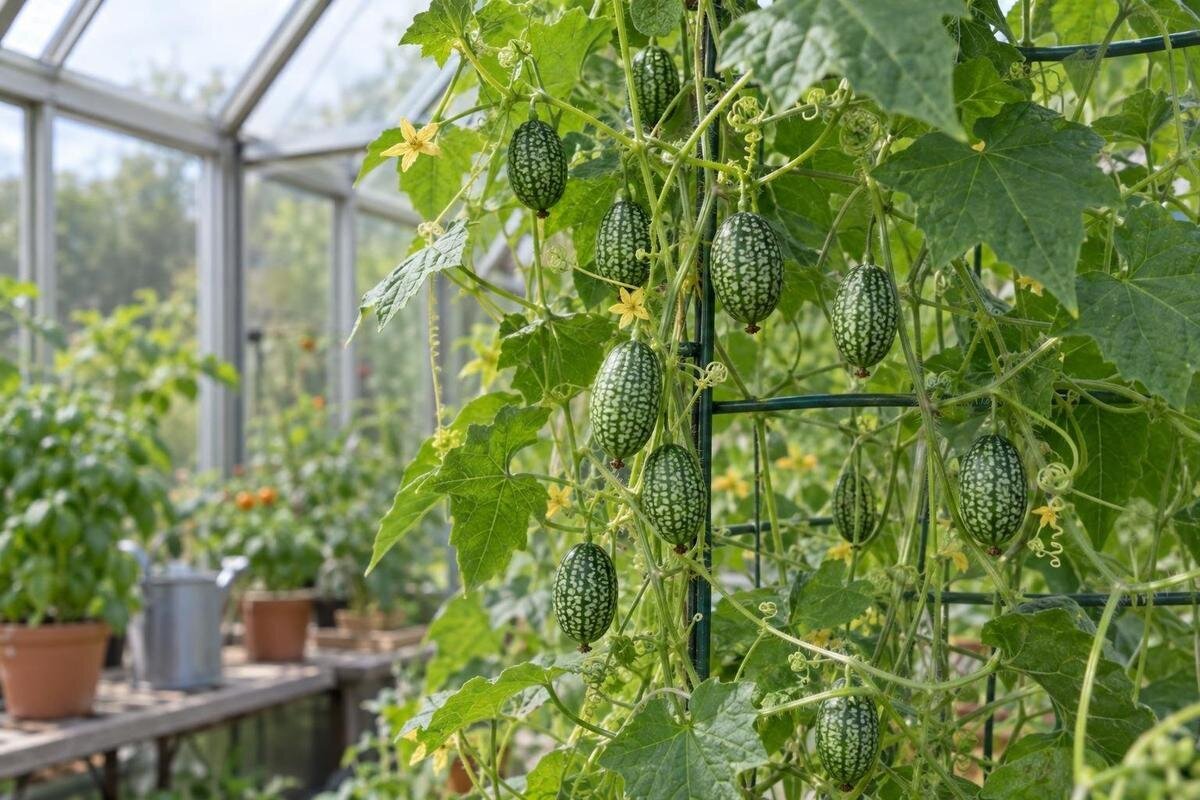
Greenhouse growing
Cucamelons put plenty of growth into a climbing vine while the fruits stay small, making them appealing when greenhouse floor space is limited but vertical room is available. In New Zealand, the main questions are whether the growing season will be warm and long enough, where the vine can climb without blocking access, and how to keep moisture steady through flowering and harvest. An unheated greenhouse can help, but it cannot promise ripe fruit in every location.

What cucamelons need from a greenhouse
Cucamelon (Melothria scabra), sometimes called a Mexican sour gherkin, is a warm-season cucurbit that grows as a climbing vine. It produces small green fruits with pale stripes rather than full-sized cucumbers. The plant needs warmth and a reasonably long spell of growth, and frost can damage or kill it. A greenhouse can shelter young plants and extend the season, but an unheated structure is not a heated growing environment: cold soil and nights can still slow growth, flowering and ripening. Treat protection as a useful head start, not a guarantee of ripe fruit.
The crop is more dependable where spring warmth arrives early enough and summer lasts long enough for fruit to mature. Growing conditions across New Zealand vary with latitude, elevation, exposure and local frost patterns, so use nearby growing experience and your own observations rather than one national sowing date. Give the vine a bright position and plan to ventilate on warm days; shelter from rain does not replace light or fresh air. If your site has a short, cool summer, try one or two plants before giving cucamelons a large bed. Keep an eye on cold nights at plant level as well as sunny daytime temperatures.
Plan the greenhouse space before sowing
Map the planting position and support before sowing. A trellis uses height, but the plant still occupies a root zone and its canopy can spread across a path or shade neighbouring crops. Sketch the bed or container, the support, doors and vents, any benches, and a route for watering and picking. Think about which side of the vine you will stand on, and keep a clear walkway as stems extend. Include the space needed to tend neighbouring plants, not just the cucamelon itself. A position that looks convenient beside an empty bed may be harder to reach once both crops have grown. Planning the working space as well as the planting space helps set a realistic number of plants.
The Spacious Greenhouse listing gives size options from 47 to 70 m². That is a stated product area range, not a cucamelon space requirement. Use the selected model’s published plan to distinguish growing beds from paths and work areas, and check the height and clearance where you want to train a vine. In a larger growing area, decide how much space cucamelons should occupy alongside your other crops rather than filling whatever appears available. Mark the proposed trellis on the plan and consider access to both the plants and the surrounding beds. If you already have a greenhouse, measure the usable area rather than planning from its outside footprint.
Sow cucamelon seed for a New Zealand spring
Use local frost and soil conditions as cues rather than a date that assumes one climate across New Zealand. Start seed in late winter or spring only if you can provide warmth and good light; the aim is to have a sturdy young plant ready once the final growing position is frost-safe and warming. With an unheated greenhouse, seed trays may need a warmer place overnight. Cold, wet seed-raising mix can delay emergence or cause seed to rot, so do not treat an enclosed greenhouse as a propagator just because it is sheltered. If spring remains cool, sow later rather than raising lanky seedlings that have to wait in their pots.
Sow into fresh, free-draining seed-raising mix, following the depth on the seed packet. Keep the mix evenly moist, not saturated, and label each pot with the sowing date. Germination can be uneven, so allow time according to the packet instructions before deciding that a pot has failed. Individual cells or small pots make it easier to move seedlings without disturbing their roots. Once they emerge, give them bright light and enough room to grow; crowded seedlings can become weak. Plan where the seedlings will stand while they wait for planting conditions, allowing space to separate the pots as growth develops. Direct sowing is an option only when the greenhouse bed is warm enough and frost risk has passed.
Raise seedlings and plant them out
Move seedlings when they are sturdy enough to handle and have developed true leaves, and wait until local frost risk has passed. Before transplanting, acclimatise them gradually to the light and airflow of their final position over several days. Protect them if a cold snap is forecast, and do not move sheltered seedlings straight into intense sun through glass. Use this transition to observe the intended planting position through the day, rather than judging it only during a mild morning. Water the pot beforehand so the root ball holds together, then transplant promptly; avoid pulling apart the roots as you plant.
Set each plant into fertile, well-drained soil at about the same depth it grew in its pot, then water it in. A container also works if it is stable, has drainage and holds enough growing medium for a climbing plant. Follow the seed supplier’s spacing advice and leave room to tend the vine, rather than crowding plants together. For a footprint comparison, the Aluminium Classic Greenhouses listing spans 3.77 to 28.08 m². Work out plant numbers from the proposed beds, paths and trellis layout, not the total area. For a container layout, include the pot’s full width and the space needed to reach it with a watering can. Position it before the vine becomes established on its support.

Give the vines a dependable climbing support
Install support before the stems become tangled. Vertical mesh or a trellis gives tendrils something to grip, while a suitable string support can work if you guide the vine as it grows. Choose a height you can manage from the path and leave access for picking. Make sure the support is secure in its own right or attached to a structure approved for that purpose. Greenhouse frames are not automatically designed to carry a crop support, so check the supplier’s guidance before attaching anything to the frame. Keep supports clear of the glazing.
Guide young stems gently through mesh or towards the support, using soft ties where necessary. Leave ties loose enough for stems to thicken, and check them as the plant grows. Decide where the stems should run before they weave through neighbouring plants; untangling them later makes routine care more awkward. Keep the part of the support used for picking within comfortable reach from the path. The Lean-to Greenhouse listing gives size options from 3.69 to 14.34 m². When comparing a model with your support plan, establish where the trellis would stand and how you would reach the vine. The listed area does not confirm suitable fixing points, so resolve the support arrangement separately from the choice of greenhouse footprint.
Water consistently and feed for balanced growth
Cucamelons benefit from steady moisture as they grow and fruit. Check the soil around the roots rather than watering by a fixed weekday: the surface can dry while deeper soil is still moist, and containers can dry more quickly than beds. Water around the base of the plant and let excess drain away. Sunny greenhouse conditions can increase water demand, while cool, cloudy weather can reduce it, so adjust as conditions change. Avoid leaving pots sitting in water, and keep foliage as dry as practical when watering.
Start with fertile, free-draining soil and use fertiliser only as needed, following its label. Avoid repeated nitrogen-heavy feeding: it can favour leafy growth without a corresponding increase in flowers and fruit. Pale leaves alone do not prove the plant needs more feed; check moisture, drainage, light and temperature first. Notice whether the issue affects the whole vine or only part of it, rather than responding with repeated applications of fertiliser. For watering access, the Limited Edition Aluminium Greenhouses listing gives size options from 3.77 to 28.08 m². Compare the chosen footprint with your route for a hose or watering can. You should be able to reach the root zone without dragging equipment through the canopy or blocking the main path.
Manage warmth, ventilation and pollination
Use a thermometer near the vine to understand conditions at canopy height; a greenhouse can warm quickly in sun, while cold nights may still slow a warm-season crop. Open vents or doors when outside conditions allow to release excess heat and moisture. No unheated house guarantees a warm root zone or a long enough season, so keep watching the weather as the plant develops. In a cool site, consider whether the crop is likely to ripen before investing in extra heating, including the running costs and requirements for suitable equipment. Get qualified advice if a permanent heating installation is being considered.
Cucamelons have separate male and female flowers on the same plant, and insects can help move pollen between them. In an enclosed greenhouse, pollinator access may be limited. When conditions permit, openings can allow insects in; keep them open only when it is appropriate for the weather and the plants. If flowers appear without fruit, check whether female flowers are present and consider temperature, moisture and pollinator access before adding fertiliser. Hand pollination with a small soft brush is an option, using fresh male and female flowers. Keep access to flowers in mind when training the vine so that you can inspect them without pulling stems away from their support. The T-Model Orangery Greenhouse listing gives size options from 16.52 to 30 m². Use the chosen model’s vent positions to plan ventilation around the crop, and leave those openings accessible as the canopy develops.
Keep the canopy open and easy to manage
As vines climb, guide stems along the support and keep them clear of doors, vents, paths and other crops. Check the canopy from both sides so you can see whether stems are becoming tangled or shading plants below. Avoid heavy pruning: healthy leaves help the plant grow, and removing too many can expose fruit and set it back. Remove damaged or diseased leaves, and clear dying plant material promptly. If growth is crowded, redirect shoots into open spaces rather than cutting indiscriminately.
In a narrow growing area, direct vines into a defined support area and leave a route to reach fruit without leaning over neighbouring plants. Consider the upper part of the canopy as well as the planting space below: stems need somewhere to go once they reach the top of the support. The Pyramid Greenhouse listing gives size options from 5.53 to 18.9 m². Use the published layout to assess the width and height available at the proposed trellis position, rather than treating the entire floor area as climbing space. Revisit your original plan as the vine grows. Redirecting shoots while they are manageable helps keep the canopy within its allotted space without relying on heavy pruning.

Pick cucamelons while they are small and firm
Look for small, firm fruits that are green with pale stripes, roughly the size of a grape. Pick them before they turn yellow or soften; overripe fruit can have a less crisp texture and larger seeds. Check behind the leaves regularly once fruit starts to form, as the foliage can hide a developing crop. Twist each fruit gently or use clean snips, taking care not to pull the vine off its support. Frequent checks make it easier to harvest at the tender stage rather than waiting for every fruit to reach the same size.
Rinse the harvest before eating. Cucamelons can be eaten fresh or used in salads and pickles, and their flavour is often tangier than a standard cucumber. They are best enjoyed while crisp, so avoid crushing them in a harvest container and use them promptly. Keep a picking container within reach so you can handle the fruit without repeatedly stepping away from the vine. The Limited Edition Aluminium Greenhouses with Storage listing gives size options from 5.52 to 28.08 m². If you are comparing that option, look at how the storage arrangement relates to your picking route. Allow somewhere to put down the harvest container without obstructing the path, and keep the route between storage and the crop clear of trailing stems.
Troubleshoot setbacks and finish the season
If few seedlings emerge, check seed freshness, warmth and moisture before sowing again; persistently wet mix can be as unhelpful as a cold one. Pale or stretched seedlings may need better light. When a vine flowers without setting fruit, consider whether female flowers are present, pollinators can reach them, and the plant is getting suitable warmth and water. Inspect leaves regularly for pests or disease, including signs beneath the leaves. Identify a problem before choosing a control, and follow the product label if you use anything on an edible crop.
At the end of the warm season, pick any sound fruit, remove spent vines and clear plant debris from the bed and support. Clean reusable pots and supports, then note when you sowed, when flowering began and when you picked the first fruit. Compare those dates with the end of useful growing weather to judge how much of the season the plants had for fruiting. Also note whether picking was awkward or the canopy crowded another crop. Those observations help you decide whether to sow earlier, reduce the number of plants or change the support plan next year. If you are considering a different greenhouse, the Bloomcabin Prestige Greenhouse listing gives size options from 3.77 to 28.08 m². Compare its published plan with the specific space or access problems you encountered; the area range alone does not indicate crop performance or suitability.
Frequently asked questions
Will an unheated greenhouse be warm enough for cucamelons?
It may be, if your local spring and summer are warm and long enough, but an unheated greenhouse does not keep every night or root zone warm. Watch conditions at plant level and wait until frost risk has passed before planting out. In a cool or short season, fruit may not ripen before autumn.
When should I sow cucamelons in New Zealand?
Sow in late winter or spring only if you can provide warmth and good light. Time it so sturdy seedlings are ready when the final bed or container is frost-safe and warming. Local frost patterns matter more than a single date for the whole country.
Can I grow a cucamelon in a container?
Yes. Choose a stable container with drainage and enough growing medium to support a climbing plant, then provide a secure support. Containers can dry out faster than greenhouse beds, so check the root zone regularly and adjust watering to the weather.
Why are my cucamelon flowers not producing fruit?
The plant produces separate male and female flowers, and pollinators may have limited access inside a greenhouse. Early flowers may also be male, so fruit may follow later. Check insect access, temperature and moisture; if needed, transfer pollen between fresh male and female flowers with a small soft brush.
How do I know when cucamelons are ready to pick?
Pick them when they are small, firm and green with pale stripes, roughly grape-sized. Harvest before they turn yellow or soften, and check the vine regularly so fruit does not become overripe.
Treat cucamelons as warm-season climbers, not guaranteed greenhouse crops. A spring start, a bright position, secure vertical support, even moisture and sensible ventilation give them a better chance, while local frost, cool nights and season length still set the limits. Begin with a manageable number of plants, watch how quickly the vines fill their space and pick fruit while it is green and firm. Your harvest and growing notes will show whether cucamelons deserve a larger place next season.
