
Direct Sow or Raise Seedlings for Greenhouse Crops?
Greenhouse growing guide
There is no single best way to establish every greenhouse crop. Direct sowing suits some plants, while others benefit from a start in a tray or pot. The choice affects whether roots are moved, when the final bed is occupied and how long seedlings need bench space. Comparing crops by their root habits, transplant tolerance and place in your growing plan makes it easier to use both methods well.

What direct sowing and raising seedlings involve
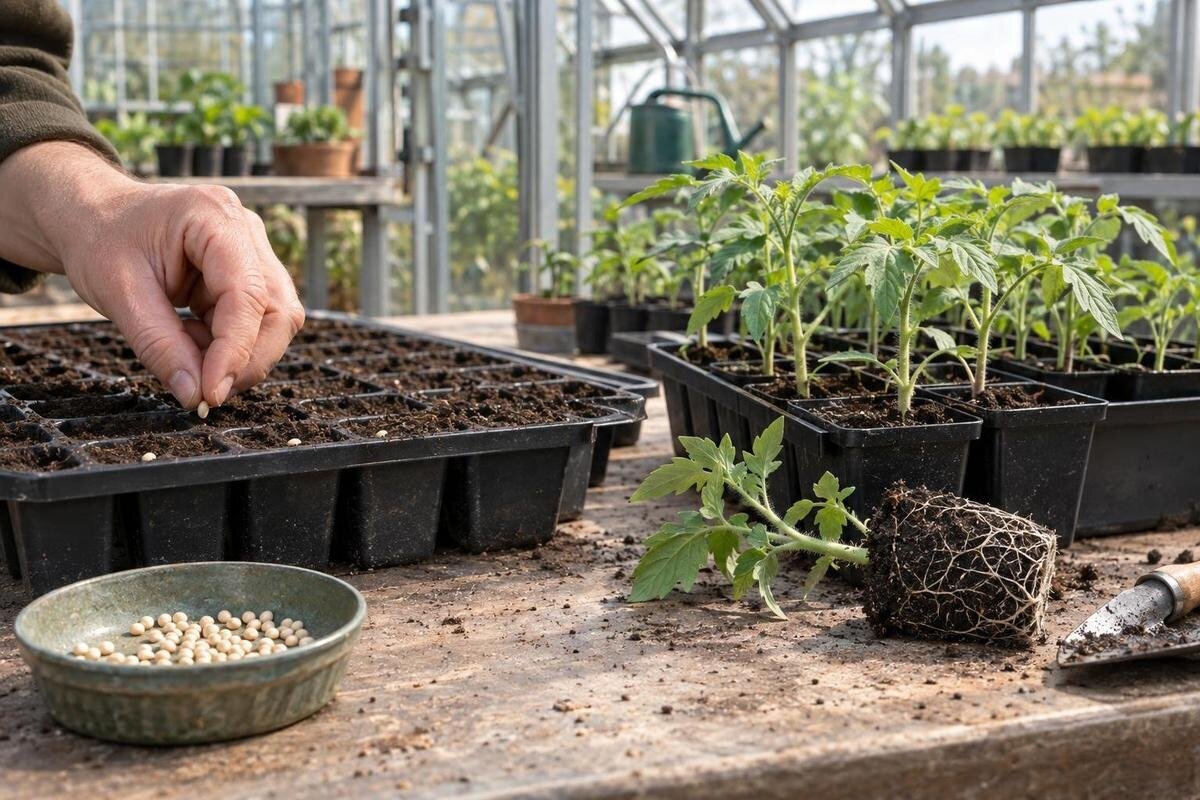
Direct sowing means placing seed in the bed or container where the crop is intended to mature. Raising seedlings means sowing in a tray, cell or pot and moving a young plant later. Either route can start under greenhouse cover; the distinction is whether the seedling is transplanted, not where the seed first germinates. A tray is temporary growing space, while a direct-sown crop uses its final position from the outset. That difference affects root handling and how you allocate the greenhouse floor, benches and beds. In either case, follow crop-specific guidance for sowing depth, spacing and moisture: shelter alone does not make conditions suitable. The same distinction applies if seedlings are started elsewhere and brought into the greenhouse for planting.
Begin with the crop’s normal growing habit, then check what is ready in your greenhouse. Is its final bed or container available when you want to sow? Does the crop cope well with being moved? Would starting in a cell give useful control over spacing or timing, or only create another task? Direct sowing can remove a transplanting stage, but it may require thinning. Tray raising can make individual plants easier to place, but seedlings need looking after and a suitable planting-out window. Potting on can add another move and more bench time, so a tray start should solve a real problem. It is common to use both methods in one season, and even for different crops in the same bed.
Root crops are usually best sown in their final position
Carrots and parsnips are generally best sown in their final position because transplanting can disturb a taproot and affect the shape or establishment of the root. Radishes are quick to sow in place, and beetroot is commonly direct-sown too. These are useful defaults rather than rules for every cultivar or situation; follow the seed packet and crop-specific advice. A packet may recommend thinning rather than transplanting, especially for roots that need to develop undisturbed. Prepare the final row before sowing, then place seed at the advised spacing so you do not need to lift young plants into a new position. Check that the growing medium suits the crop; a tray does not remove the need for a suitable final bed.
Direct sowing means caring for seedlings in the row where they emerge. Keep the surface from drying during germination, label the row and thin crowded seedlings to the spacing the crop needs. Thinning is different from transplanting: remove extras rather than trying to move them once neighbouring roots are close. Root crops occupy their bed from germination to harvest, so allow for that when allocating permanent greenhouse space and access for watering and harvesting. The Limited Edition Aluminium Greenhouses listings cover 3.77–28.08 m²; use the selected plan to distinguish total area from the bed, path and temporary staging space you can actually use.
Peas and beans often do not need a tray start
Peas and beans are commonly sown straight into their final position, which avoids a tray batch and limits disturbance to young roots. This is practical when the greenhouse bed is ready and seed can be sown under the conditions stated on its packet. A greenhouse does not guarantee that the bed is warm, dry or otherwise suitable at every point in the season, so do not bring sowing forward solely because the crop is under cover. Mark the row and its intended support or container arrangement before sowing, so later setup work does not disturb seeds. Leave enough access to pick and tend mature plants as the crop requires.
Raising them in individual cells can help if you need to wait for a bed, protect a small batch or control each plant’s eventual position. Keep the root ball intact when moving them and plant out before roots have become tightly crowded. Compare the time spent watering and handling cells with the time saved in the bed; for a straightforward sowing, the extra stage may not earn its place. Sow only as many as you can plant out promptly and label batches clearly. The T-Model Orangery Greenhouse listing shows area options from 16.52 to 30 m², but overall area is not a tray or bed-capacity figure: check the layout against the space your crop plan needs.
Cucurbits can be direct-sown or raised in individual pots
Cucumbers, courgettes, pumpkins and other cucurbits can be direct-sown or started in pots, depending on when their final growing place will be ready and whether conditions suit germination. They are often raised individually because a young plant can be set out with its root ball intact, but that advantage is lost if roots are torn during removal. A cell or small pot suits a short start; avoid holding the plant there indefinitely. Your choice also depends on the final position: one or two plants in a large container call for different planning from a row in a prepared bed. Starting in pots may make individual plants easier to identify, while direct sowing avoids the extra move.
If you direct sow, place seed in its final bed or container and follow the crop’s instructions rather than sowing into a temporary tray by habit. If you raise seedlings, plant them out while young and handle the root ball gently; a plant already stressed or overgrown may not gain much from its earlier start. Think about space for both the container stage and the mature crop, since one plant can eventually take more area than its pot. The Pyramid Greenhouse listings range from 5.53 to 18.9 m²; check the selected layout before assuming there is room for pots, the mature crop and an accessible route.

Tomatoes, capsicums and brassicas often suit tray raising
Tomatoes and capsicums are often started in trays or small pots, then planted into their final greenhouse position when the seedlings are ready and the location is available. This can help you raise a planned number of plants without tying up a bed during germination. Brassicas are also commonly raised for planting out, although some are readily sown direct; choose by crop, season and space rather than placing every seed in a tray. A cell system can make it easier to separate varieties and label them, while direct sowing an appropriate brassica crop may avoid an unnecessary stage.
Sow each type at the time and depth advised for that crop, label cells clearly and check roots and leaves before planting out. Do not assume all plants in one shared tray should be moved on the same day: crops may develop at different rates, so assess each type separately. A greenhouse model that includes storage may affect how much area remains for growing, so check its layout rather than counting every square metre as bench space. The Limited Edition Aluminium Greenhouses with Storage listings give area options from 5.52 to 28.08 m²; confirm how much space the selected configuration allocates to storage, access and cultivation.
Leafy greens and herbs vary by crop
Leafy greens and herbs are a mixed group, so decide crop by crop. Lettuce can be sown directly for a row or raised in cells for individual plants at set spacing. Spinach and many quick salad crops are commonly sown where they will grow, which avoids potting on a crop that may reach harvest quickly. Direct sowing small seed can be uneven, however, so sow thinly or plan to thin the row. For crops picked young, sowing a short section at a time can spread the work; cell-raised plants offer more regular initial spacing but use extra bench space. Follow species-specific guidance rather than treating every leaf crop as equally happy with transplanting.
Herbs also differ: coriander and dill are often sown in their final position, while other herbs may be easier to start in pots. For repeated harvests of leaves, sow modest amounts at intervals that fit your use and the crop’s guidance, rather than producing more seedlings than the bed can accept. Plan each later batch around the space it will need after planting out, not just the empty space in a seed tray. The listed areas for a Lean-to Greenhouse range from 3.69 to 14.34 m². Compare the chosen option and its actual layout with the space needed for repeated sowings and established plants; total area alone does not show how many trays fit.
Timing and greenhouse conditions affect the choice
Raising seedlings can bring forward the point at which a bed is planted, but it does not automatically bring forward a harvest. Germination and early growth still depend on the crop’s needs and the light, moisture and temperature available where the tray sits. A tray may germinate yet produce weak growth if light is inadequate, so assess the bench position rather than assuming the whole greenhouse has one set of conditions. The planting-out date also depends on the final position being ready. Across New Zealand, seasonal conditions vary; use local experience and crop-specific seed advice rather than one calendar date for every greenhouse. If a bed is occupied, a tray only helps if you have a suitable place to hold the seedlings.
Plan backwards from when a crop can occupy its final position: note when the bed is likely to clear, how long a seedling batch may need according to reliable crop guidance, and whether another batch overlaps. Direct sowing can avoid overlap on a bench, while raising seedlings can give you plants ready when the bed opens. The Bloomcabin Prestige Greenhouse listings span 3.77–28.08 m²; compare the selected plan with expected overlaps, because total area does not specify bench capacity or conditions in a particular spot. A short record of sowing, emergence and planting-out dates will show whether the timing worked. Avoid starting a batch before you know how long it can stay in its first container if the bed is delayed.
Bench space and growing beds have different demands
Trays make early plants compact, but they occupy bench space from sowing until planting out. A slow-growing batch, a delayed bed or a potting-on stage can extend that period; several batches may peak together even if they were sown on different dates. Direct-sown crops use the final bed instead, which may reduce pressure on benches but can make it harder to fit in a second crop. Think about the busiest week, not an empty greenhouse. Leave room to reach, water and inspect trays, and allow an area to handle pots rather than counting only the stationary tray footprint. A crowded route can make careful handling difficult.
Estimate peak demand by listing each batch and the weeks it will occupy a bench, then compare that with the clear working surface you actually have. Show tray space, permanent beds, pots and paths separately on your plan; greenhouse floor area cannot be converted directly into a tray count. The Spacious Greenhouse is listed in sizes from 47 to 70 m², but those figures alone do not tell you how much bench surface or usable access a particular arrangement provides. A sketch based on the selected layout can show whether trays would block access or displace a crop during the busiest weeks.

Transplanting seedlings into their final position
Transplant when a seedling is large enough to handle and the final position is ready, using crop guidance rather than waiting until it looks oversized. Moisten the tray first if needed to help the root ball hold together; lift plants by a leaf where practical or support the root ball instead of pulling on a delicate stem. Make the planting hole before removing a seedling, set it at the crop-appropriate depth and firm the medium lightly around it. Keep roots from drying or being exposed while you work, and avoid disturbing neighbouring seedlings that remain in a shared tray. Planting depth differs between crops, so do not assume every stem should be buried to the same point.
After planting, water in as appropriate for the crop and monitor the plant while it settles. A seedling moved from a sheltered bench to a brighter, warmer or more exposed position can face a real change even within the same greenhouse, so allow for gradual adjustment when conditions differ. If roots have filled the container or are circling, the planned transplant may already be late; use suitable potting-on advice rather than pulling the root mass apart. When assessing Aluminium Greenhouses for a growing setup, check the chosen layout for a practical route between propagation area and final bed. The listings range from 3.77 to 28.08 m², but stated area does not reveal that route or bench arrangement.
Choose a method crop by crop and keep records
A practical rule is to direct sow a crop when it establishes reliably in its final position and is likely to resent root handling; raise it in a tray when it tolerates planting out and the controlled start solves a real timing, spacing or bed-availability problem. Then check the final location, seed instructions and capacity for the seedling stage. If a crop could go either way, try a small labelled batch by each method where transplanting is appropriate rather than risking the whole planting on an untested routine. For a useful comparison, use the same variety, similar sowing dates and comparable care; otherwise, differences may come from conditions rather than the method.
Record what happened, not just what you sowed: note emergence, the date seedlings went into the bed, how readily they established and whether one method made better use of your space. A small trial—a short row and a few cells, for example—can show whether the difference justifies the extra tray work. Repeat the method that fits the crop and your normal workload, and revise it when the bed schedule or greenhouse conditions change. That gives you a crop-by-crop plan rather than a rule that forces every seed through the same process.
Frequently asked questions
Is direct sowing always better for root crops?
No. Carrots and parsnips are generally direct-sown because moving their roots can disturb development. Some root crops can be moved when very young, but follow crop-specific guidance and avoid transplanting simply because a tray is available.
Can I raise peas and beans in trays?
Yes, if it solves a timing or bed-access problem. Sow them in individual cells, keep the root ball intact and plant out while they are young. Direct sowing is usually simpler when the final bed is ready and conditions suit.
Does raising seedlings guarantee an earlier harvest?
No. Starting in a tray can give a seedling a head start before a bed is free, but poor light, unsuitable conditions or a late planting-out date can erase that advantage. Harvest timing depends on the crop and how it grows after planting.
Can I transplant seedlings from a greenhouse bench into a greenhouse bed?
Yes. Check that each seedling is at a suitable stage and the bed is ready. Handle the root ball carefully and allow for differences between a sheltered bench and the final position, such as changes in light or airflow.
What should I do when a crop can be grown either way?
Check crop guidance first, then consider whether direct sowing works in the final position and whether the plant tolerates being moved. If both methods are plausible, try a small, labelled comparison under similar conditions and record the outcome.
Most greenhouse growers do not need to choose one method for the whole season. Direct sowing is a practical default for crops that establish in place or are sensitive to root disturbance; trays earn their space when a crop tolerates planting out and a controlled start helps with timing. Before sowing, match the method to the crop and final position, then check bench availability and planting-out dates. A few simple records will show which approach works reliably in your greenhouse. The useful plan is a mix that follows the crop, not a fixed preference for trays or direct sowing.
