
Disinfecting Your Greenhouse Following a Serious Plant Disease Outbreak
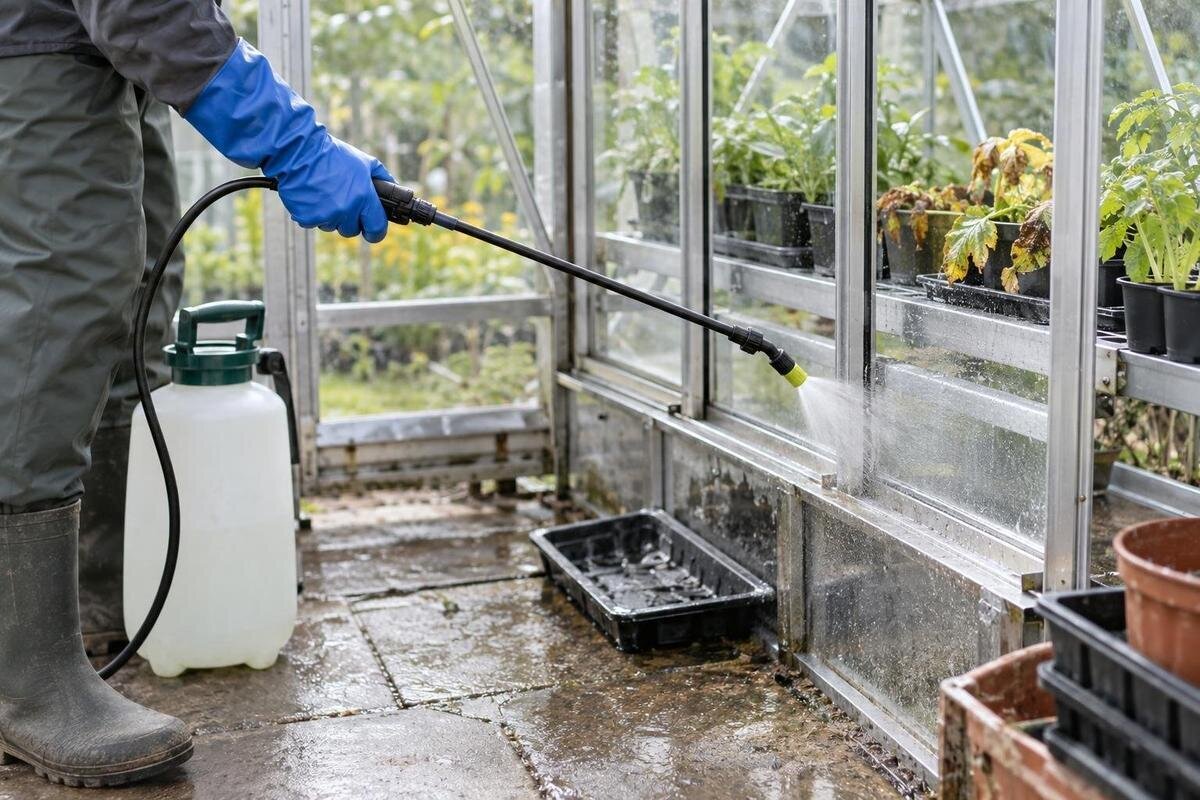
GREENHOUSE DISEASE RESPONSE
After a serious plant disease outbreak, greenhouse disinfection is not simply a more thorough seasonal clean. The pathogen determines what must be removed, which treatment can work and whether a surface or item can be reused. First limit movement, then seek a diagnosis and a plan for the particular organism. Cleaning removes soil and plant residue; disinfection targets a pathogen, and a product that combines both functions must be used exactly as labelled. A considered sequence protects unaffected plants without damaging glazing, frames, seals, benches or tools.

01
Pause plant movement and mark the affected area
Stop moving plants, trays, pots, soil, tools and waste through the affected area while you establish how the disease spreads. Some pathogens persist in debris or growing medium; others may move with splash water, hands or shared equipment. Avoid dragging hoses or trolleys across clean areas, and do not sweep, blow or pressure-wash residue before its handling is planned. Mark the affected bay or bench, restrict unnecessary access and keep to one route. If physical separation is not possible, use a clearly marked handover point and carry only essential supplies across it.
Continue essential care only in a way that does not spread contamination; seek advice before watering or moving neighbouring plants if the route is unknown. Work in unaffected areas first and leave the affected plants until last, then clean hands, footwear and protective clothing as the specific advice requires. Note any transfers already made, including plants or tools taken elsewhere. A suspected regulated or reportable organism may come with movement or reporting directions, so follow the plant-health adviser’s instructions. A short record of who entered and what moved can help trace possible cross-contamination.
Identify the pathogen before choosing a treatment
Symptoms such as spots, wilting, rotting or poor growth can have several causes, and similar signs do not prove that two crops share the same disease. A serious outbreak warrants identification by a qualified horticultural adviser or plant diagnostic service where possible, rather than choosing a disinfectant from visible symptoms alone. Provide the crop species and variety if known, the affected plant parts, when symptoms appeared and how the pattern has changed. Clear photographs and a simple map of affected benches can make the evidence easier to interpret.
Ask for a response plan that names the suspected or confirmed pathogen and its likely reservoirs in your situation. The advice should cover which plants and materials to remove, whether soil or water may be involved, what surfaces need treatment and which methods are supported for those materials. Check that the product’s stated target and instructions fit the intended use; do not infer efficacy from a broad greenhouse-cleaner description. Ask how to collect and submit a sample before sending one. If the organism remains uncertain, find out what precautions to take while waiting rather than treating everything with an unverified product.
02
Inventory the greenhouse surfaces and equipment
Use the greenhouse manual, if available, to make an inventory before wet cleaning. Include glazing, frame finish, fasteners, seals, treated timber, benches, floor covering, propagation surfaces, irrigation fittings and anything mounted on the structure. Record where plant sap, soil, condensate or splash water has reached; note cracks, joints, grooves and absorbent surfaces that may hold debris. A simple map helps show which areas need attention and where materials change. Cleaners, disinfectants and rinses can affect different surfaces in different ways, even within one greenhouse.
Record the greenhouse’s actual model and fitted components rather than relying on visual similarity. If you are comparing your unit with the Limited Edition aluminium greenhouse range, use the listing to establish the product name, then identify the glazing, coatings and seals fitted to your own structure. An older or differently configured unit may not match the current listing. Photograph labels and uncertain parts, and ask the supplier or installer to identify their materials. Add the answer beside each item in your inventory, together with the applicable care instructions. This gives you a surface-by-surface reference for choosing a compatible treatment, rather than treating the whole greenhouse as though it were made from one material.
Remove affected plants and waste carefully
Once the pathogen-specific plan says what must go, remove crop residues and affected plants without shaking, chopping or brushing loose material through the greenhouse. Keep the handling route short and avoid setting contaminated pots on a clean bench. The appropriate containment and disposal method depends on the organism and local waste advice; follow the diagnostic service’s instructions. Do not assume diseased foliage, roots or potting mix can go into a home compost heap or be left to break down beside the greenhouse. If you have already composted or moved material, include that in the information given to the adviser.
Keep removed material, tools awaiting cleaning and clean supplies in clearly separated places; do not use one bench as a temporary landing spot for both. Include any storage space in this separation plan, recording what it contains and which items have been exposed. If replacement is later necessary and you are considering a Limited Edition greenhouse with storage, ask how the proposed storage area would be used and kept separate from clean supplies. Built-in storage alone does not establish suitability for infected waste, chemicals or quarantine. Decide where each group of items will go before removal begins, so contaminated material is not put wherever space happens to be available. Keep children and pets away from contaminated material and treatment products as their instructions require.

03
Clean first, then apply the targeted treatment
Remove visible soil, plant tissue and other organic matter from hard surfaces before disinfecting, unless a labelled product specifically directs a combined process. Follow the cleaning method and manufacturer’s instructions for each material. Work into ledges, corners, joints and undersides rather than wiping only the obvious flat areas. Where rinsing is required, prevent residues and wash water from carrying contamination into clean beds or onto untreated equipment. Change cloths or brushes as the plan requires, and keep used items in the affected zone until they too have been cleaned or disposed of.
Cleaning and disinfection are not interchangeable: a clean-looking surface may still carry a pathogen, while soil or plant residue can prevent a treatment from making the required contact. Apply only a product and method supported for the identified organism and greenhouse use. Follow the label for preparation and full contact time; do not guess a stronger concentration or shorten the wait. Keep a record of which surfaces have completed each stage, particularly if work stops part-way through. If cleaning reveals damage that prompts a replacement enquiry, you can review the lean-to greenhouse listing separately while continuing the response plan for the affected area. Distinguish damage requiring repair or replacement from residue that still needs cleaning; buying another enclosure does not complete those outstanding tasks.
Check chemical compatibility with every material
Check compatibility for every material the treatment may touch. Glass or plastic glazing, bare or coated metal, timber, sealants, door seals, bench coverings and irrigation plastics may need different handling. A label that supports use against a pathogen does not automatically establish that the product is safe on every greenhouse component. Check both the product directions and the greenhouse manufacturer’s care instructions; if either is unclear, ask the product supplier or a greenhouse professional before application. Do not use a test patch unless the instructions permit it and you can check the result without risking plant contact.
Never mix disinfectants or combine them with cleaners, and do not invent a concentration from advice written for another product. Use the protective equipment, ventilation, application method and access restrictions stated on the label; keep people and animals away as directed. When reviewing the aluminium greenhouse range, ask about care requirements for the complete assembly, not just the frame. The word aluminium does not identify the finish, glazing, seals or their chemical compatibility. For each uncertain component, note the proposed product and method so the supplier can answer a specific compatibility question. Keep those answers with the surface inventory. If no suitable method is documented, seek advice rather than experimenting or assuming that guidance for one component applies to its neighbours.
04
Treat fixed surfaces and glazing with care
Work through fixed surfaces systematically so likely contact points are not missed: door handles and tracks, bench edges, shelf undersides, frame junctions, window catches, drainage channels and the floor at the base of benches. Include both sides of removable panels only if they can be handled safely and the plan says they need treatment. Avoid abrasive tools or a forceful jet unless the manufacturer’s care instructions specifically permit them; these can damage a finish or move residue into seams. Do not dismantle glazed sections just to reach a surface.
If a panel is cracked, a seal is damaged or a part cannot be reached without unsafe glass handling, stop and ask the manufacturer or a qualified installer how it should be dealt with. Give them the greenhouse model, component details and photographs, and request the correct part identifier if replacement is needed. For an enquiry concerning the Bloomcabin Prestige greenhouse, clearly distinguish that model from any other structure you own; a current product listing does not establish that parts are interchangeable. Explain whether the problem is damage, inaccessible residue or uncertainty about the material. Ask which work requires an installer and which surfaces can be treated in place. Keep the repair decision separate from the disinfection record so an unresolved component is not mistakenly marked as ready for use.
Handle pots, tools and reusable equipment separately
Treat pots, seed trays, labels, stakes, hand tools, watering cans, plant ties and reusable covers as separate items; disinfecting a bench does not treat everything stored on it. First remove adhering soil and plant matter, then use only a pathogen-appropriate method that suits the item’s material and intended reuse. Follow instructions before taking equipment apart, and do not share cleaned items until they meet the plan’s requirements for reuse. Keep dirty and clean tools in separate, clearly marked containers so the same brush or cloth is not used across both groups.
Inspect items for cracks, porous surfaces, fabric, rope, untreated wood or trapped dirt that the chosen method may not reach. If no reliable treatment is available for a low-value or damaged item, ask whether it should be discarded rather than subjected to repeated chemical exposure. Record what was cleaned, treated, replaced or removed, and identify any items still awaiting a decision. If an enclosure replacement is also being considered, such as the Pyramid greenhouse model, keep the equipment list separate from the structure enquiry. Decide which existing pots and tools are suitable for reuse before planning to transfer them. Record where cleaned items will be kept in the meantime, so they do not return to the same untreated shelf or container.

05
Assess growing media, water systems and fixed components
Growing medium, ground soil and water systems need their own plan; treating benches does not resolve a pathogen that may persist in a root zone, standing water, gutters or irrigation lines. Ask whether the organism is associated with soil or water and what action is recommended for each material. Do not assume that drying, leaving a bed unused, home composting or a general-purpose disinfectant will eliminate it. For tanks, filters, pipes and drippers, use a treatment only where the horticultural advice and product directions support that exact application.
If soil, floor covering or a fixed component cannot be treated effectively or safely, separate that finding from the condition of the rest of the structure. An adviser may recommend removal, replacement or another pathogen-specific response. Do not pour unapproved chemicals into drains, soil or irrigation. Record the affected component and why the proposed treatment is unsuitable, then check whether that part can be replaced before considering the whole enclosure. If you later compare the T-Model orangery greenhouse, use the findings to frame questions about the proposed structure’s materials and care requirements. Keep the enquiry focused on what needs replacing and why. A decision to replace the enclosure should not leave the separate soil, floor or water-system response unresolved.
Reopen only when the treatment plan is complete
Keep the treated area out of normal use until the product’s contact-time, rinse, drying, ventilation and re-entry conditions have been met and the horticultural plan says it can be used again. There is no universal number of hours or days to wait: the product, pathogen, crop and surface all matter. Reintroduce only clean, treated or new equipment, and do not bring back plants or growing medium that have not been assessed. If the plan calls for a further check before replanting, complete it rather than relying on the absence of visible symptoms.
Record the diagnosis, advice, product and label details, surfaces treated, items discarded, dates and follow-up checks. This makes it easier to identify an untreated tool or tray if symptoms return and provides a clear account of the work. Restock in manageable batches and monitor for the signs identified by the adviser; if symptoms recur, pause movement and reassess rather than repeating a treatment by guesswork. If you separately explore the spacious greenhouse option, carry the same recovery record into your planning. Identify which plants, tools and growing media would be brought into it and whether each has been assessed. A new enclosure does not settle those decisions. Use the record to distinguish completed work from outstanding checks before either the existing or replacement greenhouse returns to normal use.
Frequently asked questions
Should I clean before disinfecting the greenhouse?
Follow the advice for the identified pathogen and affected area, rather than relying on a routine cleaning list. The plan will usually account for removing infected material, cleaning off soil and residue, then applying a treatment suited to the pathogen and surface. The order may differ if a labelled product combines cleaning and disinfection. Treat benches, tools and other contact points only as the plan directs; spraying everywhere without a clear target can waste effort or damage materials.
Can I use bleach after a plant disease outbreak?
Not as a universal solution. A household bleach product may not be labelled for the pathogen, greenhouse material or intended use, and an unsuitable application can damage surfaces. Never mix it with other cleaners or disinfectants. Check whether the product is supported for the target organism and each surface, and follow its directions for use, contact time, rinsing and protective equipment.
Can infected potting mix or soil be disinfected?
There is no single method that suits every pathogen and growing medium. Ask whether the affected potting mix or soil should be removed, treated by a documented method or managed another way. Do not assume home composting, drying or leaving the material unused will eliminate the problem. Follow pathogen-specific horticultural advice and relevant local waste guidance.
Can I reuse pots and tools after treatment?
Possibly, if soil and plant residue can be removed and an appropriate treatment is available for both the item and the pathogen. Cracked plastic, fabric, untreated wood and hard-to-reach joints may be difficult to treat reliably. Follow the plan for each item, keep clean equipment separate from untreated items, and replace or discard anything for which no supported method is available.
How long should I wait before planting again?
There is no fixed interval for every product, pathogen and crop. Follow the label’s contact-time, rinsing, drying, ventilation and re-entry directions, then check the horticultural plan for any further requirements. Visible cleanliness or a dry surface alone does not establish that the area is ready. Reintroduce plants and growing media only when they have also been assessed.
A sound recovery plan connects diagnosis, safe removal, surface cleaning, a compatible treatment and a deliberate return to use. A spotless bench alone does not show that the growing medium, water system, pots or tools have been addressed. Record what was treated and what could not be treated, then follow the adviser’s checks as plants return. The aim is a response matched to the pathogen and the greenhouse materials, not maximum chemical use or automatic replacement.
