
Growing Beetroot in a Greenhouse for Early Harvests
Growing guide
Beetroot does not need a greenhouse to produce a good crop, so growing it under cover is about timing and use of space, not guaranteed bigger roots. An early sowing can produce tender baby roots while outdoor soil is still cool, then free a bed before summer crops take over. But an unheated greenhouse cannot eliminate cold nights, slow soil warming or limited spring light; on a bright day it can also become too warm. The useful question is whether the shelter gives a worthwhile head start in your garden, and whether a short beetroot row fits between other greenhouse crops. This guide compares that option with sowing outdoors and explains how to grow a small, even crop without keeping the bed occupied longer than necessary.

Is an early beetroot crop worth greenhouse space?
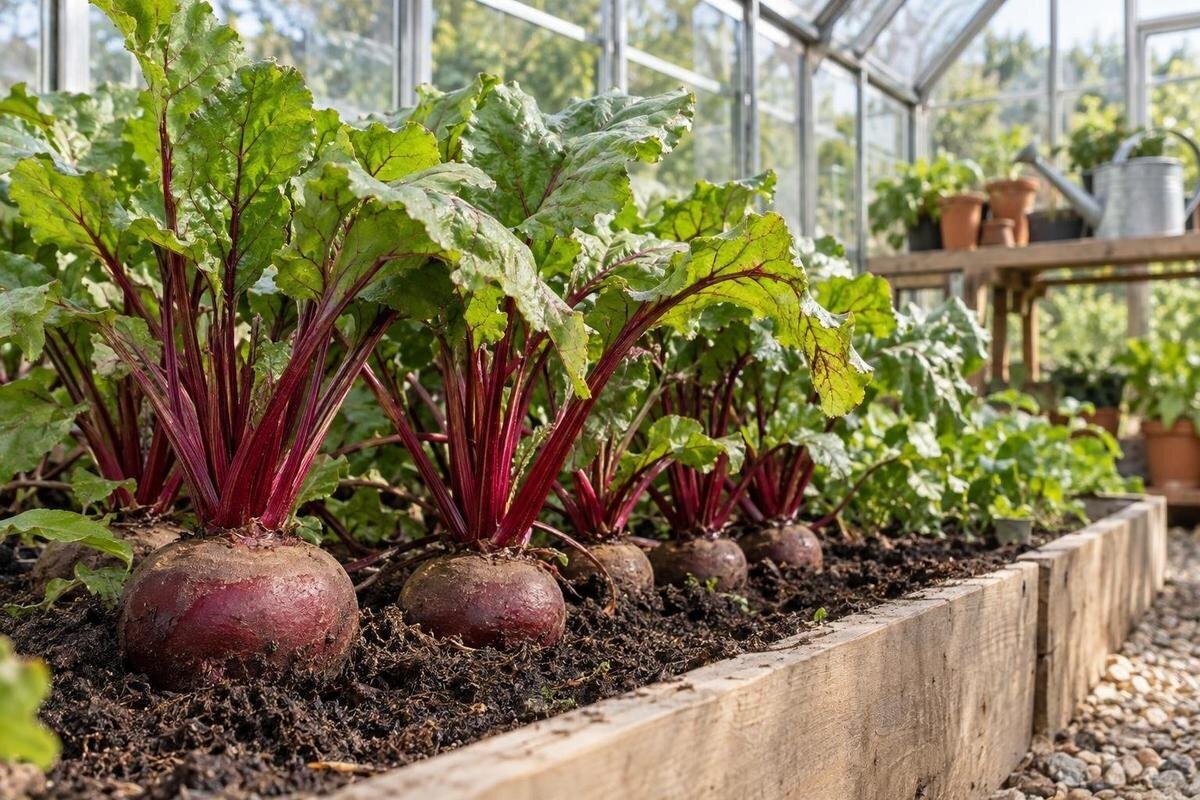
Beetroot grows well outdoors, so a greenhouse is not a prerequisite for a good crop. Its case under cover is a possible head start: a sheltered bed may be ready for sowing earlier, and young plants are less exposed to wind and heavy rain. That can bring baby roots forward if the seedbed is warm enough and the plants receive enough light and moisture to keep growing. It does not turn beetroot into a heat-loving crop, and a warm afternoon in the greenhouse does not promise fast root development. If an outdoor patch is already workable, direct sowing there may be just as productive, with no protected space tied up. The difference is mainly timing and convenience, not a guaranteed improvement in flavour or size.
The protected bed is most worthwhile when it is otherwise empty before summer crops need it. Plan to harvest a defined strip of small roots and clear it, rather than keeping a whole greenhouse area for beetroot all season. Count future planting space, paths and access before making room: the greenhouse may be busy by the time the roots are ready. For a sense of the range available, Aluminium Greenhouses are listed from 3.77 m² to 28.08 m². That footprint is not the same as your usable soil bed, so draw the actual layout before deciding how much beetroot to sow. The comparison should account for the other crops you intend to grow, not just the early harvest.
What an unheated greenhouse changes in early spring
An unheated greenhouse can warm quickly in sunshine, while air temperature may fall markedly after sunset. The soil warms more slowly than the air, especially after a cold, wet spell, so a mild afternoon reading does not prove the bed is ready. Cover also blocks rainfall: the air can feel humid while the soil is dry. Think of the greenhouse as shelter that changes exposure and daytime conditions, not as a heated room or a frost-proof box. This distinction matters for beetroot because cold soil can delay germination or cause uneven emergence, even where seedlings are sheltered above ground. Check the bed itself and avoid relying on one warm day's conditions.
Use the seedbed and local outlook rather than a single New Zealand sowing date. Wait until soil is workable, drains freely and is beginning to warm; sowing into cold, saturated ground tends to waste the advantage of cover. The right point differs between a sheltered, mild garden and a colder, more exposed site, so check conditions where you grow. A Lean-to Greenhouse is listed in sizes from 3.69 m² to 14.34 m². Those figures help compare space, but neither the footprint nor the product name tells you how warm an unheated bed will remain overnight. For particularly early sowing, check the seed packet's advice on bolting: susceptible plants exposed to prolonged cold may flower before forming a good root.
Measure the bed you can actually use
Before sowing, measure the bed you can reach, not just the greenhouse floor. Leave a clear route to the door and enough room to thin and lift roots without walking on growing soil. Benches, stored tools and future crop supports can claim floor space, while a path needs to remain usable throughout the season. The Pyramid Greenhouse is listed from 5.53 m² to 18.9 m²; that stated range is a useful comparison point, not a promise of equivalent growing area. A simple sketch with bed width, path and planned summer crops makes a more realistic sowing plan than the headline footprint. Consider the door and any awkward corners while you are measuring.
An in-ground bed is convenient if the existing soil is loose and drains well. Where there is no suitable bed, a large container can hold a modest baby-root crop, provided it is deep enough for roots to swell and has drainage. Check the seed packet and container dimensions rather than assuming a shallow tray will do. Containers also dry faster under cover and can be harder to water evenly in warm weather. Include them in your layout so they do not obstruct the working path or access to other crops. Treat a pot as a deliberate small sowing, not a workaround for poor light or unsuitable soil.
Prepare a loose, level seedbed
Beetroot forms the best-shaped roots in a fine, friable seedbed. Loosen soil through the rooting zone, remove stones and break up hard clods so the swelling roots can expand without hitting obstacles. Avoid working the bed when it is saturated, which can smear and compact the soil. Aim for steady fertility rather than a heavy application of nitrogen: excessive feeding can favour leafy growth over root development. If the soil needs improving, mix mature compost through the bed rather than using fresh manure. A level row with an even soil texture is easier to sow, water and inspect than a cloddy bed where seed depth varies.
Bed placement affects how well you can maintain that soil. Keep the row accessible for watering and harvesting, and avoid a corner where a larger crop will later shade it. A built-in storage layout can change how much floor is left for planting; Limited Edition Aluminium Greenhouses with Storage are listed in sizes from 5.52 m² to 28.08 m², but the product name alone does not show how storage sits in a chosen configuration. Check the plan for the exact model and reserve bed width and a working path before deciding that its listed floor area is all growing space. Make sure you can reach every part of the bed without compressing the soil.

Sow directly where the roots will grow
Direct sowing in the final bed is usually the simplest approach for baby beetroot. Moving seedlings can disturb their developing roots, so avoid pricking out older seedlings or repeatedly moving them from pot to bed. If an especially early start makes modules useful, choose deep individual cells, transplant while plants are very young, and handle the plug rather than tugging at the stem. Even then, sowing straight into the greenhouse bed avoids a transplanting stage and lets roots develop without a move. Use modules only when the extra control over early growing conditions is worth the work of transplanting.
Make shallow drills in a prepared, moist row and sow at the depth on the packet; for ordinary beetroot seed this is often around 2 cm, but specialist seed may differ. Cover gently, label the row and water with a fine rose so the seed is not displaced. Sow a short length first if conditions are borderline, then add another small row after the first has emerged. The Bloomcabin Prestige Greenhouse is listed in sizes from 3.77 m² to 28.08 m². When planning sowing quantities for a chosen size, mark out each batch within the available bed rather than treating the whole floor as planting space.
Thin seed clusters to suit baby roots
Beetroot seed is usually a cluster of several seeds, even though each cluster is sown as one piece; some varieties are sold as single-germ seed, so check the packet. It is normal to see several seedlings emerge at one point. Thin them rather than letting every shoot compete: crowding produces smaller, uneven roots and makes harvest awkward. Wait until seedlings are easy to handle, then leave the strongest plant at each position. For a baby crop, closer spacing than for full-size beetroot is appropriate, but each remaining plant still needs room to swell. Thin after emergence, not by guessing which seeds failed before they sprout.
About 5 cm between final plants is a useful starting point for small roots; give plants more room if you want larger beets, and follow the cultivar's packet where it differs. If several seedlings sit together, snip the extras at soil level rather than pulling hard beside the chosen one, which can disturb its roots. Young thinnings are edible if healthy and washed. Limited Edition Aluminium Greenhouses are listed from 3.77 m² to 28.08 m². When comparing layouts within that range, allow access along the beetroot row: thinning is a hands-on task, and you need to see and reach individual seedlings without treading on the bed.
Keep moisture steady as roots develop
Keep the seedbed evenly moist through germination and early growth. A covered bed gets no direct rain, so check the soil itself rather than judging by humid air or damp greenhouse paths. Water the row gently when the surface begins to dry, aiming to moisten the root zone without leaving the bed waterlogged. Once plants are established, consistency still matters: long dry spells followed by heavy watering can contribute to uneven growth or cracked roots. A simple routine of checking the bed is more useful than following a fixed watering calendar, because sun, soil and ventilation change how quickly it dries.
Do not confuse a lush canopy with a successful root crop. Beetroot needs enough nutrition to develop leaves, but excessive nitrogen can push leafy growth at the expense of roots, especially where the soil is already fertile. Avoid repeated feeding unless the bed or a soil test shows a need, and use any fertiliser according to its label. If plants look pale or growth has stalled, first check whether the soil is too cold, dry, waterlogged or shaded before adding nutrients. Correcting the growing conditions may solve the problem more effectively than an extra feed.
Manage light, warmth and ventilation
Good light is as important as shelter. A bright position supports steady leaf and root growth; a low-lit corner or a row hidden behind taller plants can make the hoped-for head start disappear. Place beetroot where it will not be shaded by established summer crops, and avoid sowing so densely that leaves form a packed, damp canopy. In spring, a greenhouse can heat quickly on sunny days, even while outdoor air feels cool. Check plants and the space during warm spells and open available vents or doors as needed to prevent prolonged overheating. If you cannot tend the space regularly, keep the early sowing small.
Ventilation should be part of the day-to-day plan, not something assumed from a greenhouse's style or footprint. When comparing structures, check how the vents and doors open and whether you can reach them on warm days. The T-Model Orangery Greenhouse is listed from 16.52 m² to 30 m², but the area range says nothing by itself about ventilation or light at your site. Consider where the sun falls, whether trees or buildings cast shade, and how you will keep air moving during warm spells. Heating a whole structure solely for beetroot is difficult to justify; match the growing plan to the features of the selected configuration.

Harvest by root size, not just by date
Harvest by the root size you want rather than waiting for a standard mature-beetroot size. For baby roots, begin checking when shoulders are visible or gently brush soil away from one plant; a small sample can tell you whether the row is ready. Around 3–5 cm across is a useful baby-beet size, but tenderness and the variety's intended size matter more than a fixed measurement. The days-to-maturity estimate on the seed packet is only a guide: an early sowing in cool, dim conditions may take longer than the same variety in warmer, brighter weather. Check a few plants at intervals if the row is uneven.
Lift a few at a time so the remaining plants can continue swelling, and water the bed afterwards if the soil has been disturbed and is dry. Loosen soil beside a root before lifting rather than yanking neighbouring plants out by their leaves. The leaves are edible too, but taking many leaves repeatedly reduces the plant's capacity to grow its root; use a few outer leaves or thinnings instead of stripping the crop. If roots are already at your preferred size, harvest them rather than leaving them in a crowded row simply because the packet's full-size harvest estimate is still ahead. Keep the remaining plants accessible as you finish the row.
Clear the bed for the next crop
Treat the greenhouse sowing as a planned gap-filler. A short first row lets you test whether your early-spring conditions actually deliver an advantage; as roots reach baby size, clear the strip for the next crop and sow any later beetroot outdoors if that is easier. Do not sow more than you can thin, harvest and use. If the bed will be needed soon for tomatoes or another space-hungry crop, harvest beets promptly rather than letting them occupy the prime position while you wait for larger roots. A second, small sowing makes sense only if there is a real gap and conditions remain suitable.
The size of a greenhouse should make sense across the whole growing year, not just for one early beetroot row. Spacious Greenhouse listings cover 47 to 70 m²; a space on that scale needs a broader growing plan than a small baby-beet sowing alone. For any structure, compare planned beds with paths, future crop height, ventilation and the time you can spend tending it. At the end of the trial, compare the harvest timing with your outdoor crop and note whether the protected row was cleared before the next planting needed its space. That gives you a useful basis for deciding whether to repeat the sowing next spring.
Frequently asked questions
Can I grow beetroot in an unheated greenhouse?
Yes. Sow it when the bed is workable and beginning to warm, rather than assuming the greenhouse will keep the soil warm overnight. An unheated structure can shelter seedlings, but cold soil may slow germination and growth.
When should I sow beetroot in a New Zealand greenhouse?
There is no single date that suits every garden. Use the condition of your seedbed and the local outlook: sow when the soil is workable, drains freely and is beginning to warm. Check the seed packet for advice on early sowing.
Should I sow beetroot in trays or directly into the bed?
Direct sowing is usually simplest because it avoids moving young plants with developing roots. If you use modules for an early start, choose deep cells and transplant seedlings while they are very young, handling the plug gently.
How far apart should baby beetroot plants be?
About 5 cm between the final plants is a useful starting point for small roots. Thin extra seedlings from each seed cluster, and allow more room if you want larger beets. Follow the seed packet if its spacing differs.
How do I know when baby beetroot is ready?
Check a sample plant rather than relying only on the packet’s harvest estimate. Roots around 3–5 cm across are a useful baby size, but variety and preference matter. Lift some at a time so the rest can keep growing.
An early greenhouse sowing is worth the protected space when it fills a genuine spring gap and can be harvested small before summer planting begins. If the bed is cold, shaded or already reserved for another crop, sowing outdoors is usually the more efficient choice. A short trial row, thinned for small roots and harvested as they reach your preferred size, gives you a practical comparison for your own garden. The reason to grow beetroot under cover is a useful head start and a timely harvest, not an assumption that every crop is better in a greenhouse.
