
First Greenhouse Purchases: What You Need Now and Later
First greenhouse guide
A first greenhouse can make a long list of benches, heaters, irrigation gadgets and propagation gear seem essential before you have planted anything. A more useful order is to decide what you will grow, check precisely what comes with the chosen greenhouse, and then buy the supplies needed for those crops. Start with a practical watering method, basic hand tools and crop-specific containers or supports. Leave other equipment until you know what problem it needs to solve. This guide separates the structure and its supplied parts from the growing equipment and upgrades you may choose later.
Before you buy 1
Decide what you want to grow first
A useful first purchase is a plan, not a trolley full of accessories. Choose a short list of crops you genuinely want to grow and note whether you will sow seed, raise seedlings for transplanting, or keep established plants in containers or beds. Those approaches call for different supplies: seed trays and seed-raising mix may be unnecessary if you are buying seedlings, while pots and growing medium matter if you are not planting into a prepared bed. Read each crop's growing instructions and use a locally appropriate sowing calendar. A defined crop list makes it easier to see which supplies are genuinely needed.
Also note how much space each plant is likely to occupy when mature, whether it needs a support, and where you will need room to water, harvest or move a pot. Sketch a simple plan showing the entrance, a clear route and the proposed beds, containers or work surface. The aim is not a detailed construction drawing; it is a way to test whether your plants and equipment can coexist without blocking everyday access. A bench that seems essential while the greenhouse is empty may take up crop space later. Mark each planned purchase as necessary for a chosen crop or optional for convenience.
Check the site and access before choosing a model
Inspect the proposed spot at more than one time of day. Note where direct sun and shade fall, how exposed the area feels, whether water drains away as expected, and how you will carry supplies to the entrance. Check the route from a tap or hose, the space needed to use the doorway, and any nearby trees, walls or paths that affect access. These are observations to inform your choice, not a substitute for the siting and preparation instructions for the model you select. Record the site's constraints rather than deciding from a product photograph, which cannot show how a particular corner works for you.
If a Lean-to Greenhouse is one of the formats you are considering, compare the precise model information with the proposed location, including the wall, access route and available clearances. For any greenhouse, check its exact footprint, entry position, stated ground-preparation requirements and the access needed for the chosen design. Keep these notes alongside your crop plan so that the site and growing requirements inform the same purchase. If you are unsure what preparation your site needs, ask the supplier or a suitably qualified professional before ordering. Resolve these questions before buying shelves or propagation gear: their placement depends on where the greenhouse can go and how you will enter it.
Before you buy 2
Plan the working layout before buying benches
Once the site looks workable, map how plants and surfaces will fit inside the chosen model. Mark the doorway and route, then set out beds or containers, any potting bench and places for taller crops. Leave enough room to reach plants for watering and harvesting without stepping over pots or shifting a row. Estimate mature plant spread using crop information rather than spacing plants as if they will stay the size of seedlings. A sketch can also show whether a shelf would be useful or would compete with the only convenient spot for a large container. Different crops and growing methods use space differently, so treat this as a practical check, not a fixed formula.
Use the dimensions and configuration details for the exact structure you might order to test your sketch. When considering the T-Model Orangery Greenhouse, for example, mark the entrance and openings on your plan before allocating space to a bench. Compare a layout with a permanent work surface against one that keeps that area available for plants. Think through an ordinary visit: entering with supplies, reaching each growing area and carrying harvested produce out. If either arrangement requires you to move several pots each time, revise it before buying furniture. Keep any unresolved questions about usable space or fittings with the sketch so you can discuss them clearly with the supplier.
Separate the greenhouse kit from growing supplies
Treat the greenhouse and the equipment for growing plants as separate lists. For the exact product and configuration, read what structural parts and fittings are supplied, what preparation is expected, and which accessories are separate options. Do not assume that a bench, shelving, pots or watering equipment comes with the greenhouse unless the selected listing says so. Equally, avoid buying an item twice if it is already identified as included. Save the order details and mark each item as included, optional, excluded or still unclear. This creates a straightforward checklist and is useful if one person is ordering the structure while another is shopping for plants and supplies.
For a model such as the Pyramid Greenhouse, use the selected configuration's written item list to complete this checklist. Put structural parts and supplied fittings in one group, separately ordered accessories in another, and your own growing supplies in a third. Where the description leaves an item unclear, ask a specific question about it rather than assuming it is included or excluded. Photographs can help you understand the appearance, but they are not an inventory of the order. Once the list is settled, use it when shopping elsewhere for pots, tools or watering equipment. You will then know which purchases fill a genuine gap and which would duplicate something already ordered.
Before you buy 3
Keep the first tool kit small
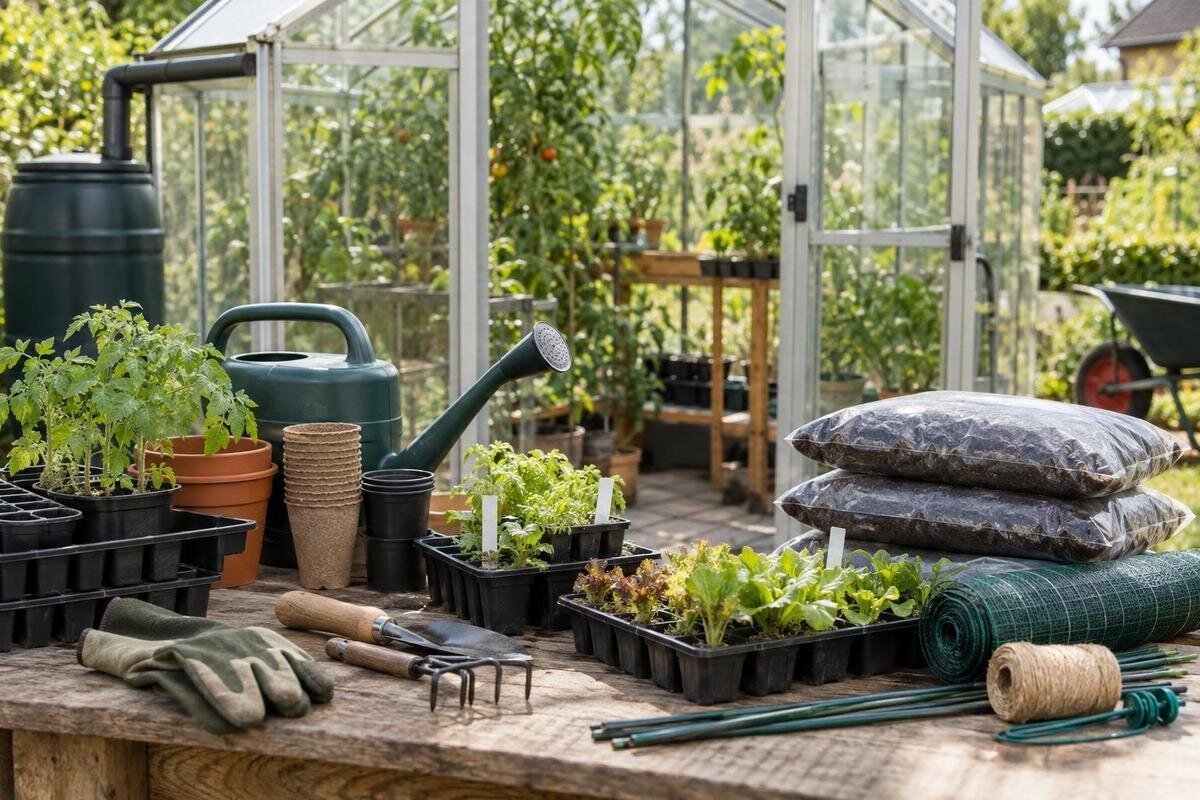
A hand trowel, clean snips or secateurs, plant labels and a marker, and gloves cover many ordinary potting and harvesting jobs. Use tools you already own before replacing them. Add seed trays, pots, a watering can or a hose attachment only when your crop plan calls for them. A clean bucket or shallow tray can hold small items while you are potting, and a simple surface may help if you regularly transplant seedlings. There is no need to equip every possible task in advance. Buy an item when you can name the job it will do, and choose a size that suits the plants and space you have planned.
Decide where tools and supplies will go before buying storage. A crate or lidded container for labels, ties and hand tools may be enough; a dedicated worktop is a separate decision from storage for growing supplies. If you are comparing the Limited Edition Aluminium Greenhouses with Storage, check what the storage option includes against the items you intend to keep there. List those items first, including anything you already own, rather than buying containers to fill an unspecified space. Keep frequently used tools easy to reach and avoid using the route through the greenhouse as an overflow area. The aim is convenient storage for a small working kit, not room for every accessory you might eventually buy.
Set up watering and basic observation
Watering is essential, but the equipment can be simple. Decide how water will reach each bed or pot: a watering can may suit a compact plan, while a hose may be more practical for a larger one if it can be routed conveniently. Check whether the route could obstruct the entrance or become awkward to use, and keep your chosen method close at hand. Observe how different containers and plants behave instead of assuming everything needs the same pattern. A timer or fixed irrigation line is not automatically a first-day purchase. First work out what the crops, layout and your normal visits actually require.
Pair watering with basic observation. A simple thermometer and a notebook can help you record conditions and notice whether a plant problem coincides with a change in the greenhouse, rather than relying on how the air feels at the doorway. Add other monitors only if they answer a specific question about your crops. When planning equipment for the Bloomcabin Prestige Greenhouse, distinguish between observing conditions and buying equipment to change them. Note the readings alongside what you see in the plants and how you watered them. Check the selected configuration's openings and fittings before considering a separate vent control or fan, so that any later purchase builds on what is already there.
Before you buy 4
Match containers and supports to your crops
Choose containers and supports for the plants you have selected. For seedlings, buy only enough trays or pots for the planned sowing. For plants going into beds, focus on preparing the growing space according to their growing instructions, rather than buying extra containers that may sit unused. Tall or spreading plants may need ties, stakes or another support, but choose them with a specific crop and its mature growth in mind. Keep plant labels so varieties and sowing dates are easy to identify. Avoid stockpiling several kinds of growing mix, fertiliser and accessories before you know which crops you will grow and what their instructions require.
When comparing the Aluminium Greenhouses, use your container and support list to refine the growing layout for the configuration you are considering. Distinguish between plants that will move from trays into beds and those that will remain in pots: you do not need to buy permanent containers for every stage of every crop. Revisit the space allocated to taller plants before adding a shelf nearby. If you only need a surface for occasional potting, a temporary tray on an existing table may cover that task without committing greenhouse space to a bench. Order permanent furniture when its role is clear and it fits around the plants, rather than treating it as part of every starter kit.
Defer controls and specialist equipment until there is a need
Several upgrades are appealing but can wait until your crop list makes their purpose clear. Automatic irrigation, vent controls, fans, heaters, shade materials, propagation mats and specialist monitors each address different needs. Which option suits you depends on the crops, local conditions, chosen greenhouse configuration and how you use the space; one device does not remove the need to observe plants. If a crop genuinely needs a controlled environment from the outset, research that requirement before planting. Otherwise, note when conditions become difficult and buy only the solution that addresses the issue you have observed. This keeps first-season equipment simple without ruling out a later improvement.
Check compatibility before ordering any upgrade for the Limited Edition Aluminium Greenhouses. Match the add-on's stated requirements to the exact model configuration, and ask the seller about any point that remains unclear. Consider the whole purchase, not just the device: does it need other components, consumables, a power or water supply, or extra upkeep? Include those requirements in your decision before placing the order. Keep a note of the problem you want to solve and how you will judge whether the upgrade helps. That gives you a practical basis for choosing between options, rather than buying a control because it sounds advanced or because it appears in a photograph of another greenhouse.

Before you buy 5
Budget in stages
Set out your budget in three groups: the structure and any site preparation, first-crop consumables and basic tools, then possible upgrades. Keep recurring supplies such as seed, growing medium and plant ties separate from one-off purchases such as a tray or hand tool, and note what you already own. This stops the greenhouse purchase from becoming the only cost you consider. Give each item a purpose and mark whether it is needed before planting or can wait. If you need to prioritise, focus first on a greenhouse that suits the site and crops, a workable way to water, and the supplies the crop plan calls for.
If you are considering the Spacious Greenhouse, base the equipment budget on the growing area you intend to use in the first season, alongside the exact configuration's dimensions and included items. You do not need to furnish every available corner immediately. Count the containers and supplies required for the first crop plan, then list any additional growing area or work surfaces as later purchases. Keep unresolved costs separate rather than treating them as zero, and distinguish essential purchases from items you would simply like to have. Once the structure and first-season supplies are accounted for, retain a short upgrade list instead of adding every option at checkout. This makes the staged budget easier to review after the first harvest.
Let the first growing cycle guide later purchases
During your first growing cycle, keep a brief record of what you bought and used. Note which crops needed trays, containers or supports; which tools you reached for; what watering method worked with the actual layout; and whether a work surface or storage was useful. If you are recording conditions, write down when and where you took readings and what was happening with the plants. A short record is enough: the aim is to make your next purchase more informed, not to create a complicated tracking system. Save product details for equipment whose compatibility you may need to check later.
At the end of the cycle, separate a recurring gap from a one-off inconvenience. Repeatedly shifting pots to reach a tap might point to a layout change; one awkward potting day may not justify a permanent bench. A crop that outgrows its support gives you a specific reason to choose a different one before the next planting, while unused gadgets are a reason not to buy them again. Where practical, make one targeted improvement at a time so you can judge what changed. Your next purchases can then reflect the crops and routines you actually have, rather than a generic starter-kit list.
Frequently asked questions
What should I have ready before planting in a greenhouse?
Have a prepared place for the plants, suitable growing medium or beds, a way to water, labels and a few basic hand tools. If you are sowing seeds, add the trays and seed-raising mix your plan requires; if you are buying seedlings, those may not be needed. Check the kit list before buying anything that might already be included.
Do I need automatic irrigation straight away?
Not necessarily. Start with a watering method that suits your layout and the crops you have chosen, then observe how it works in practice. Consider an irrigation system if you identify a recurring need, and check its requirements and compatibility with the exact greenhouse configuration before ordering.
Should I buy a heater or fan before planting?
Buy climate-control equipment at the outset only if your planned crops have a clear need for it. Otherwise, monitor conditions and learn how the greenhouse behaves before choosing an upgrade. If you do need equipment from the beginning, check its requirements and suitability for the selected greenhouse first.
Can I wait before buying benches and shelves?
Yes. Plan where beds, containers and mature plants will sit, then check how much working space remains. A bench or shelf is useful when it supports a specific task without obstructing access or taking space you need for crops. You can add one after trying the layout.
How do I avoid buying equipment that comes with the greenhouse?
Use the written list for the exact model and configuration you intend to order. Mark items as included, optional, excluded or unclear, and ask about anything that could affect your purchase. Do not rely on the product name or photographs to establish what is supplied.
The best first-season setup is the one that supports the crops you have actually chosen, without filling the greenhouse with equipment you may never use. Confirm what the structure includes, buy the essentials for planting and care, and let experience identify the next useful upgrade. That way, each later purchase answers a real need in your own greenhouse.
