
Frost Protection or a Warm Greenhouse: Choosing a Winter Target
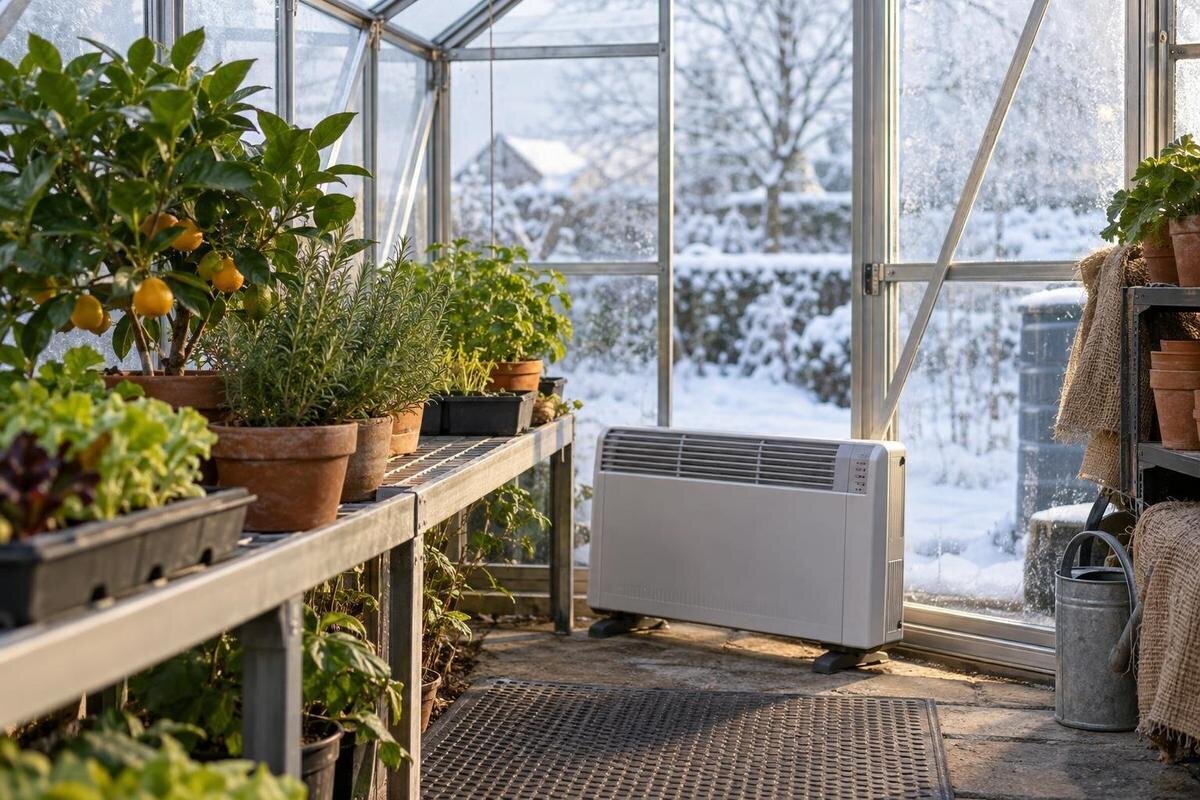
Greenhouse heating and winter energy
Before buying a greenhouse or heater, decide whether winter success means keeping plants away from damaging cold or helping them continue to grow. Frost protection and active growing are different targets; they change the temperature you maintain, the area you heat and the monitoring you need. In New Zealand, plant requirements and the coldest conditions at the actual site matter more than a single setting for the whole country. A clear target makes greenhouse and heater comparisons far more useful.

01
Frost protection is not the same as active growth
Frost protection focuses on plant survival. It aims to keep the plants you have chosen above temperatures that could cause cold damage, particularly during overnight lows; it does not promise warm growing conditions or active growth. A cool greenhouse may protect one plant while another still needs extra warmth. Nor is ‘frost-free air’ a complete specification: temperatures in the air around a pot, in the root zone and at the foliage can differ. State whether you need to avoid a damaging frost, overwinter plants while dormant or maintain growth. Note whether your target applies to a brief dip, a whole night or a longer cold spell, as the duration of exposure matters too.
Active winter growing asks a different question: can the crop continue growing at the pace and quality you need? The answer depends on its suitable temperature range as well as light, water, nutrition, airflow and stage of growth. Heating to a summer-like setting does not create summer light, so a warmer greenhouse may still produce slow growth. It can mean maintaining heat for longer or across more of the structure. Treat ‘warm greenhouse’ as an incomplete description until you have a crop-specific temperature aim, know whether it applies by day or night, and have a realistic winter-light plan.
Set plant targets from reliable growing guidance
Prepare an inventory before choosing a temperature. Record each plant’s identity or cultivar, whether it is in a pot or a bed, whether it is dormant or growing, and how long it will stay in the greenhouse. Look for reliable nursery, seed-supplier or horticultural guidance that distinguishes a brief survival minimum from a preferred growing range. Check whether a figure refers to air, roots, daytime or night-time conditions, and whether it assumes short or sustained exposure. A plant’s brief tolerance of a cold snap is not automatically a suitable temperature for weeks; a label such as ‘tender’ is not a thermostat setting. If guidance gives a range, keep that range in your plan rather than inventing a precise safe point.
Sort the collection into groups with compatible needs: plants that can remain cool, plants needing frost protection and crops that require warmth to grow. Base those groups on relevant guidance, not a guessed average across species. This may show that you need a small protected area rather than one warm setting for every pot. For a footprint reference, the Lean-to Greenhouse range is listed from 3.69 m² to 14.34 m². Use the selected area to plan plant grouping and access; it does not tell you which plants suit the structure or what temperature it will maintain.
02
Use the coldest conditions at the actual site
Use conditions at the proposed greenhouse site rather than a national or regional average as the design brief. Elevation, exposure, nearby shelter and the shape of the ground can change local cold conditions; a sheltered corner and an exposed or low-lying patch are not interchangeable. Look at overnight lows in local weather records and note which cold events matter for your plant collection. Think about the coldest likely nights while the plants will be there, not the seasonal daytime average. Regional data can show a pattern, while measurements at your site help refine it.
If a greenhouse is already in place, log its night-time minimum in the plant area during colder weather. Note what was happening at the time, including wind, cloud, door use, vents and heater operation. If you are planning a new site, use outdoor observations as a starting point, then confirm indoor readings once the structure is set up. A forecast is useful context, but it does not promise the temperature inside your greenhouse. A few mild nights cannot establish performance during the coldest conditions, so keep a contingency plan until you have useful winter records.
Choose the area that needs heat
Decide whether the target applies across the whole greenhouse or only to a group of plants. If the aim is to protect a few vulnerable pots, grouping them may be more practical than heating unused space. A covered bench or smaller enclosed zone may be an option, provided the materials and arrangement suit the plants and heater. Don’t block needed airflow or access. Keep watering and inspection practical: a space that is too cramped to reach or monitor is not a useful heated zone. Define where the target must hold, and make sure the heater sensor is placed to control conditions in that area.
Whole-space heating means the target is intended across the structure, not just at one thermostat. Doors, ventilation openings and cold corners can produce different readings, so consider how often the greenhouse is opened and where plants stand. The Spacious Greenhouse is listed in sizes from 47 to 70 m²; that footprint makes it worth stating which areas are actually to be kept warm. Decide whether the target must hold near the door and at the far end, or only within a defined growing zone. Floor area describes scale, but it is not a heater rating or heat-loss calculation.

03
Active growth also depends on winter light
For an active-growth plan, define what you want the crop to achieve through winter, then match that goal to its recommended growing range. Keeping growth going is a different aim from maintaining the pace and quality expected in production. Day and night targets may differ, and plants at different stages may not share the same requirements. Record those distinctions in the growing plan rather than reducing them to one setting for every crop and every hour. If you want a modest amount of winter growth rather than a particular level of production, write that down too; a slower pace may be acceptable through the coldest weeks.
Light must be considered alongside heat. Winter day length, shading and greenhouse orientation affect how much light reaches plants; raising the temperature cannot replace missing light. If you want seedlings, winter greens or another crop to keep producing, check that the expected light conditions match that goal before increasing the setpoint. The listed 3.77 m² to 28.08 m² range for the Limited Edition Aluminium Greenhouses helps compare footprint options. For the selected layout, assess usable bench space and shading as well; a larger floor area does not by itself mean more light for each plant.
Check insulation and ventilation together
Insulation changes heat loss, but its value depends on the actual greenhouse construction and how it is used. Before estimating demand, find the specifications for the selected model: glazing type, openings, door and panel seals, compatible insulation options and how ventilation is managed. Don’t assume that a material name or familiar appearance means a particular insulation performance. Exposed area, air leakage and planned ventilation also affect the heat required, so floor area alone is incomplete. Check whether a proposed covering can be fitted without damaging the structure or obstructing vents, and make sure any heat-loss estimate states its assumptions.
Insulation and ventilation have to be considered together. A covering may reduce heat exchange while also reducing light, and limiting ventilation without monitoring humidity can contribute to condensation. Follow guidance for the greenhouse and any insulation material, and keep a plan for managing airflow when conditions allow rather than treating a sealed greenhouse as automatically better. For the Pyramid Greenhouse, confirm the exact version’s glazing, vent arrangement and compatibility with any insulation before factoring those features into a winter plan. Don’t infer them from the product name alone.
04
Match heater controls and specifications to the target
Once the target is set, size the heater to the selected greenhouse and the cold conditions it is expected to face. A frost-protection target may require heat only when nights approach a plant’s limit; an active-growth target can demand a larger temperature lift and longer operating periods. The heater’s rated output alone does not tell you its running cost or prove it can maintain your target. Obtain an estimate based on documented heat-loss assumptions, the chosen setpoint and local outdoor conditions. Treat rules of thumb based only on floor area as a preliminary comparison, not a heater-sizing result.
Check the manufacturer’s documented output, control range, thermostat behaviour and whether the appliance is specified for the greenhouse environment. Compare expected run hours with local electricity tariffs or fuel costs rather than relying on a generic bill estimate. For fuel-burning equipment, review manufacturer instructions and authoritative guidance on ventilation, moisture and emissions; fixed electrical work or appliance installation should be assessed by a qualified professional. The Bloomcabin Prestige Greenhouse with Metal Foundation name identifies a greenhouse variant, not its heat-loss value or required heater output. Use details for the exact size when planning the heating.
Measure conditions where the plants sit
Measure near the plants, not only where the heater or thermostat sits. Put a thermometer or data-logging sensor at the height of the most vulnerable foliage and pots, away from direct sun, the heater’s immediate outlet and door openings. Those positions can produce readings that do not represent the plant area. Check more than one position if the greenhouse is long, divided into zones or has noticeably different conditions. Air temperature is a practical indicator, but it does not record every leaf or root temperature.
Use a minimum/maximum thermometer or logger to record the overnight low; a morning glance can miss the coldest period. Compare an independent sensor with the heater controller and note whether the heater responds as expected. If the layout includes storage, put monitoring in the growing area: the Limited Edition Aluminium Greenhouses with Storage title identifies a storage option, but the selected layout determines where plants and sensors can go. Keep a log after changing a control setting so you can assess the result rather than assume the new setting covers every part of the greenhouse.

05
Plan for cold snaps and heating interruptions
Make a plan for colder-than-usual weather and for a heater or power interruption. Before winter, check that the chosen controller, sensor and heater operate as specified. Decide what you will do if readings fall below the target and which plants could be moved or protected using guidance appropriate to them. Don’t improvise a heat source or block ventilation in an attempt to retain warmth. An alarm can alert you to a temperature drop, but it cannot restore heat; make sure someone can respond if you are away.
Align the contingency plan with the area you intend to protect. The T-Model Orangery Greenhouse is listed in floor areas from 16.52 m² to 30 m². For any selected size in that range, decide which plants take priority and where you would monitor conditions if part of the structure cools. The listed area helps describe scale, but it does not show how long a heater can maintain the target or what will happen during an outage. Those answers depend on the equipment, structure and site conditions you are actually using.
Compare the greenhouse and heating plan together
Bring the choices together on one comparison sheet. For each option, write down the plant group, whether the aim is survival or growth, the relevant minimum or active range, the cold conditions used for planning, the area to heat, expected light, verified greenhouse details and heater specifications. Keep heater capacity and expected energy use separate: choosing an output does not by itself predict a bill. Mark which details are documented and which remain assumptions. Comparing options on the same basis makes it easier to spot a plan that depends on a temperature, feature or cost that has not been verified.
Match the exact greenhouse size and configuration to that plan. The Classic Aluminium Greenhouse range is listed from 3.77 m² to 28.08 m²; use the specifications for the selected model rather than treating the full range as one building. Record the target and sensor location before choosing equipment, then review cold-season readings against plant guidance. If your goal is overwintering, a frost-protection plan may be sufficient. If you need active growth, account for the extra light, temperature control and monitoring that goal requires.
Frequently asked questions
What temperature should a greenhouse be in winter?
There is no single temperature that suits every greenhouse or plant. Check each plant’s minimum temperature for short-term survival and its preferred growing range, including whether the guidance refers to daytime, night-time, air or root temperatures. Choose a target for the plants you are protecting, with a margin for sensor variation and colder spots; don’t treat a damage threshold as a precise thermostat setting.
Will a frost-free greenhouse keep plants growing?
Not necessarily. Frost protection can help plants avoid cold damage while they remain dormant or grow slowly. Active growth also needs a crop-appropriate temperature, enough light, and suitable water and other conditions. A frost-free reading alone doesn’t show that a greenhouse will support winter production.
Does insulating a greenhouse mean I won’t need a heater?
No. Insulation may reduce heat loss, but it doesn’t guarantee frost protection or a particular indoor temperature. Check the selected greenhouse’s glazing, seals, compatible insulation and ventilation arrangements, then compare actual readings with local cold conditions. Insulation can also affect light and air exchange, so consider those trade-offs.
Will one thermostat keep all my plants safe?
Not always. Conditions near doors, greenhouse edges, heater outlets or in separate zones can differ from the air around a thermostat sensor. Put a separate thermometer near the most vulnerable plants, and check night-time minimums in more than one area if needed. One reading cannot confirm that every plant is above its own cold limit.
How can I estimate winter greenhouse heating costs?
Use documented heat-loss assumptions for the selected greenhouse to estimate heating demand. Keep the heater’s stated output separate from its expected energy use, and estimate operating hours against your local tariff or fuel costs. The target temperature, outdoor cold, ventilation and controls can all affect use; floor area alone cannot give a reliable bill. Log operation during cold periods to refine your estimate, without treating one mild spell as a guarantee.
The useful winter target is the one that protects the right plants, or gives a defined crop the conditions it needs to grow. Separate survival from production, account for site lows and winter light, and base the heating plan on documented specifications and measured conditions. If winter light cannot support the growth you want, a cooler overwintering plan may be more sensible than adding warmth without a clear purpose.
