
Why Are Greenhouse Capsicum Flowers Dropping?
Capsicum growing guide
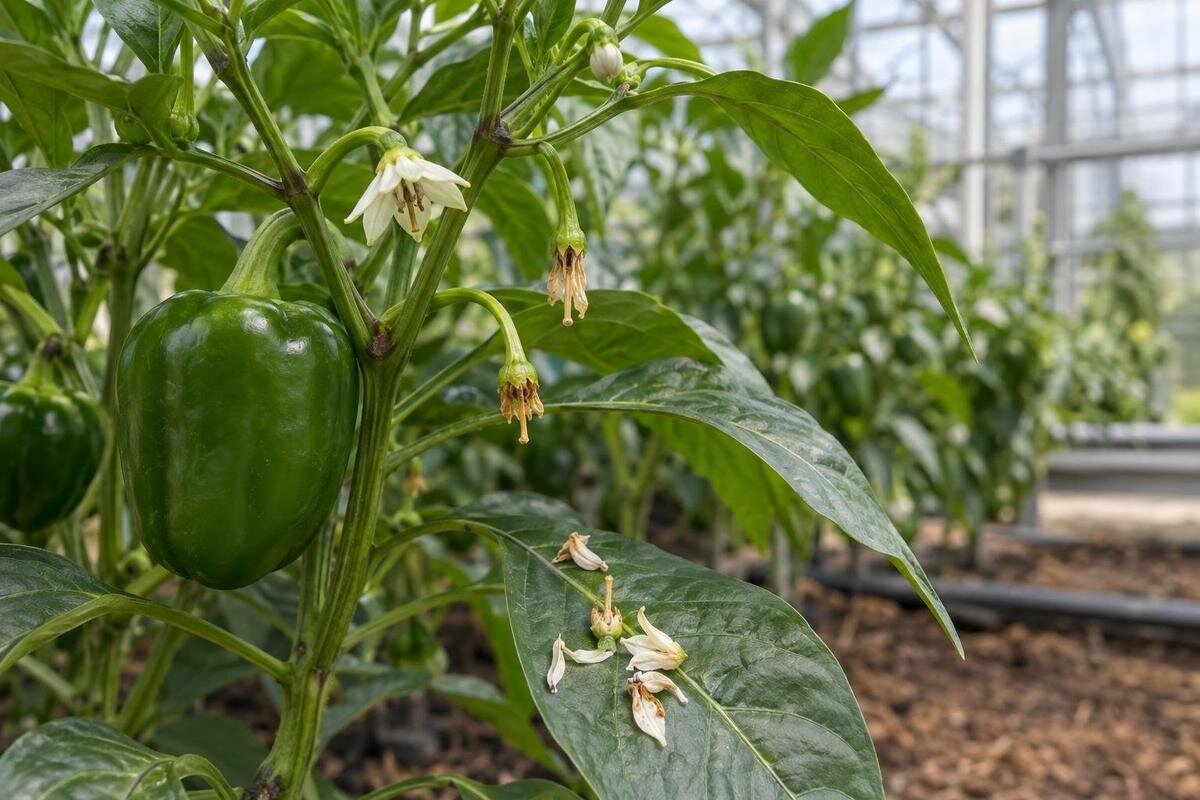
Fallen capsicum flowers can be worrying, but a flower dropping does not by itself identify a fault. Petals falling can be part of normal fruit set, while a whole flower falling without a developing ovary suggests that set failed. In a greenhouse, repeated loss can be linked to conditions around flowering, including heat or cold, uneven root moisture, pollination and the plant’s stage of growth. The useful clues are what fell, where it happened and what the plant experienced beforehand.

What to check in the greenhouse 1
First, distinguish petal fall from flower drop
Look at what remains attached to the plant. After a flower has been pollinated, its petals commonly wither and fall while the small green ovary behind them stays attached and starts to swell. That is the beginning of fruit development, not a dropped flower. If the whole flower, including its short stalk, comes away and no small fruit remains, it has not set. Check several flowers rather than relying on one: a few failures can happen on an otherwise healthy plant, while repeated loss across many branches is more useful evidence.
Note whether buds turn yellow before opening, open flowers shrivel, or the stalk breaks. Those clues help describe when the loss occurs, but none is a diagnosis by itself. A small fruit that forms and later yellows or falls is a separate problem from a flower that never sets; the causes can overlap, but the crop is at a different stage. If you can, photograph an affected flower while it is still attached and note what remains at its base after it falls. This makes it easier to compare several blooms consistently.
Look for a pattern across the plant and over time
Check whether flowers are dropping from the whole plant or mainly from one side, one height or one group of pots. Loss concentrated in a sunny spot may point you towards local heat or light conditions; flowers falling throughout the greenhouse suggest a broader issue. Compare plants of similar age and cultivar, and note whether the problem began after transplanting, a change in feeding or a stretch of different weather. A difference between nearby plants can be more informative than the total number of flowers lost.
Record when flowers opened and when you found them on the ground. Stress may affect pollen or flower development before you notice the loss, so conditions on that day may not tell the whole story. Give each plant or group of pots a simple label, then mark its position on a greenhouse sketch. This lets you distinguish a recurring problem in one location from a single plant losing flowers wherever it stands. Include the entrance, shaded areas and thermometer positions rather than drawing only the outline. For a planned wall-side growing space, the Lean-to Greenhouse size options range from 3.69 to 14.34 m². Use those dimensions as a starting point for arranging plants and observation points, then check the chosen model’s layout. For an existing greenhouse, draw the space you actually use: its planting positions are more useful to this investigation than the catalogue footprint.
What to check in the greenhouse 2
Daytime heat can interfere with fruit set
Capsicums need warmth to grow, but excessive heat around flowering can disrupt pollen and fruit set. A greenhouse can become much hotter than the outside air on a bright day, and pots or beds in the sunniest area may experience different conditions from plants near the entrance. Heat can also increase the plant’s demand for water, so flower loss may occur alongside wilting or a dry growing medium. The leaves do not have to look badly damaged for flowering to be affected.
Use a thermometer placed in shade at flower height, rather than estimating the temperature by how warm the greenhouse feels. Record the maximum on bright days and compare readings from different growing areas if possible. Note where each reading was taken, so you do not mistake a change in thermometer position for a change in conditions. Pair the readings with observations of open flowers and any wilting; this helps separate a consistently warm location from a brief hot spell affecting the whole crop. There is no single temperature cutoff that suits every cultivar, stage and growing setup. When comparing structures, the Limited Edition Aluminium Greenhouse range offers floor areas from 3.77 to 28.08 m². Use the footprint to plan where the crop and monitoring equipment will go, and check the current specifications for the features you need to manage daytime conditions. Floor area by itself is not a temperature-control rating.
Cool nights and temperature swings matter too
Capsicums are warm-season plants, and cool conditions can slow pollen activity and fruit development. A greenhouse that feels comfortable during the afternoon may cool considerably overnight. A pattern of warm days followed by chilly nights can therefore affect flowering even when daytime temperatures seem suitable. Flowers and young fruit may be affected before the whole plant shows obvious signs of cold stress, so healthy-looking leaves do not rule out a temperature issue.
Record the overnight minimum as well as the daytime maximum, and compare plants in exposed spots with those further inside the growing area. Keep the thermometer away from direct sun and glazing so that it records the air around the crop rather than a hot surface. Read it consistently and keep the location clear in your notes. A single afternoon reading cannot show whether the same plants experienced a chilly night, and moving the instrument between locations makes comparisons harder. Look for repeated differences between growing areas before attributing flower loss to their position. If you are considering a different layout, the T-Model Orangery Greenhouse floor-area options range from 16.52 to 30 m². Map likely plant positions within the chosen layout, but do not treat the footprint as evidence of overnight warmth. For an existing structure, measurements beside the flowering plants remain the useful comparison.

What to check in the greenhouse 3
Uneven root moisture can stress flowering plants
A capsicum may shed flowers after the growing medium becomes too dry, particularly when a warm day quickly increases water demand. The opposite problem can also matter: persistently saturated medium leaves roots short of air and may weaken the plant’s ability to take up water and nutrients. Wilting, yellowing leaves or slow growth can accompany root stress, but they have other possible causes too. Check moisture below the surface rather than judging only by how the top of the pot looks.
Avoid alternating between letting the root zone dry out and giving it a heavy soak, and do not rely on a fixed calendar when conditions change. Pot size, growing medium, plant size and weather all affect how quickly it dries. Compare pots individually, especially if plants differ in size or sit in different parts of the greenhouse. Record whether the medium was dry, moist or persistently wet when checked, rather than noting only that you watered. This gives you a clearer picture of what the roots experienced between watering times. For container-layout planning, the Pyramid Greenhouse footprint choices range from 5.53 to 18.9 m². Sketch the pots at their actual size and leave access to check the medium in each one, including those behind larger plants. A workable arrangement should let you inspect and water the whole crop without having to move pots each time.
Pollination may be involved, but it is not the only explanation
Capsicum flowers are generally self-fertile: pollen from a flower can reach its receptive part without a bee visiting every bloom. That does not guarantee fruit set. Pollen still needs to be viable and transferred, and temperature stress can interfere with that process. Still, a lack of insects alone does not prove that pollination is the problem. Look at what happens after flowering: a swelling green ovary suggests set, while repeated loss of whole flowers needs to be considered alongside temperature, moisture and plant condition.
In a very still greenhouse, slight movement of a flowering plant can help release pollen, but this will not correct pollen affected by heat, cold or broader plant stress. Avoid rough handling that could break stems or damage flowers. Compare flowers at similar stages rather than treating every bloom as ready to set fruit. Note whether a small green ovary remains and begins to swell after the petals fall; that observation is more informative than simply counting visits by insects. Access matters here because flowers can be difficult to inspect behind crowded pots or equipment. If you are planning storage alongside your crop, the Limited Edition greenhouse with built-in storage has listed floor-area options from 5.52 to 28.08 m². Check how the chosen layout divides storage, planting and access space, then allow room to reach flowering branches without brushing against neighbouring plants.
What to check in the greenhouse 4
Plant age, fruit load and fertiliser can change flower retention
A young capsicum may lose some early flowers while it establishes roots and new growth, especially after transplanting or another period of stress. This does not automatically mean the plant needs extra fertiliser. Check whether it is producing healthy new leaves and whether later flowers set fruit. An established plant carrying many developing fruit may also put less energy into new growth and flowering, so note the existing fruit load before deciding that every dropped flower signals a problem.
Excess nitrogen can encourage leafy growth, but a lush plant is not proof of a nutrient imbalance, and flower loss alone cannot identify a deficiency. Growing-medium condition, root health and nutrient availability all affect what a plant can take up. Before adding a corrective feed, review what you have already applied, including the product, amount and dates. Compare that history with new growth, existing fruit and the timing of flower loss. Use an appropriate test or qualified advice if an imbalance seems likely, rather than repeatedly changing the feed. Space planning is a separate consideration as young plants develop. The Bloomcabin Prestige Greenhouse size range runs from 3.77 to 28.08 m². When drawing a planting plan, allow for developed plants as well as the small pots you start with, and keep access for checking leaves, flowers and fruit. The listed area alone cannot establish whether your eventual arrangement will be crowded.
Light, humidity and airflow shape the flowering environment
Low light can limit the energy available for flowering and fruit development. Check whether plants are shaded by a dense canopy, nearby objects or a change in how the greenhouse is used. A plant with weak, stretched growth and few flowers may be experiencing a different issue from a vigorous plant that suddenly loses blossoms after a hot spell. More light is not always the answer, though: in a greenhouse, strong sun can also raise temperatures and increase water demand.
Air movement and humidity influence conditions around flowers, but neither offers a diagnosis on its own. Very still, humid air can affect pollen release and flower drying; excessive or cold airflow may create other stresses. Observe the flowering branches rather than judging the whole greenhouse from the doorway. Note which plants are sheltered by neighbouring foliage, which are close to openings, and whether flower loss follows the same pattern. These observations help you assess the growing environment without assuming that every plant experiences identical conditions. If you are planning a larger growing space, the Spacious Greenhouse area options range from 47 to 70 m². Draw the planting groups and access routes within that footprint, and identify several places to compare light and air conditions. More floor space does not guarantee uniform conditions: the useful question is how each part of the planned crop can be observed and managed.

What to check in the greenhouse 5
Check buds, leaves and roots for other clues
Flower loss can occur alongside damage from pests or disease, but fallen petals alone cannot identify either. Look closely at buds, new growth and the undersides of leaves for visible insects, scarring, distortion, unusual spots or webbing. Also check whether leaves are wilting or changing colour across the whole plant, and whether the growing medium stays wet for long periods. These signs can help narrow the questions to investigate, but similar symptoms may have different causes; avoid treating a suspected pest or disease from one clue.
Take clear photographs of the whole plant, an attached affected flower, the fallen flower and any unusual marks or distortion on leaves or buds. Include the date and growing area, and use similar lighting when comparing images over several days. Keep a wider view as well as a close-up, so the symptom’s position on the plant is not lost. Label the images with the same plant names used in your notes and sketch; otherwise, photographs from several pots can quickly become difficult to distinguish. Images from a trusted horticultural symptom guide can help you recognise patterns, but cannot confirm the cause in your plant. For a new planting plan, the Aluminium Classic Greenhouse size options range from 3.77 to 28.08 m². Use the selected footprint to number beds or pot groups. In an established greenhouse, mark symptoms on your actual layout so you can follow where they recur.
Test the most likely cause and keep a short record
Choose the explanation best supported by what you have observed. If the root zone is repeatedly drying out, address consistency first; if the thermometer records pronounced highs or lows near flowering, focus on the measured temperature pattern. Record the cultivar, plant age, flower stage, watering, recent feeding, daily maximum and minimum, and which plants are affected. Change one relevant factor at a time where practical. If you alter watering, shade and feeding together, it becomes much harder to tell which change helped.
Watch the next group of flowers rather than expecting every existing bloom to recover. If loss continues or you see significant leaf, bud or root symptoms, share your notes and photographs with a local horticultural adviser or diagnostic service. General capsicum-growing guidance from the Royal Horticultural Society or a university extension service can also provide a useful comparison, but its photographs are clues, not proof of a match. Details about your cultivar, growing medium and recent conditions are essential to a more reliable diagnosis.
Frequently asked questions
Is it normal for a capsicum to drop some flowers?
Yes. A few flowers may fail to set, particularly while a young plant is establishing. If petals fall but a small green fruit remains and grows, fruit set has begun. Repeated loss of whole flowers across the plant is a stronger reason to check growing conditions.
Can a greenhouse get too hot for capsicums?
Yes. High temperatures around flowering can affect pollen and fruit set, and a greenhouse may heat up more than the outdoor air suggests. Check a thermometer at flower height and record the daily maximum; there is no single cutoff that applies to every cultivar and growing situation.
Do greenhouse capsicums need bees to pollinate?
Usually not. Capsicum flowers are generally self-fertile, and pollen can move within a flower. However, viable pollen still needs to reach the receptive part of the flower. Temperature stress and other conditions can limit fruit set even when insects are present.
Should I add fertiliser when flowers drop?
Not on that symptom alone. Flower drop does not identify a nutrient deficiency, and excess nitrogen can encourage leafy growth without solving the cause. Check the plant’s growth, recent feeding and growing medium; use a suitable test or qualified advice before correcting a suspected imbalance.
Why are the first flowers on my young capsicum falling?
A young or recently transplanted plant may shed some early flowers while it establishes, especially if it has also experienced temperature or root-moisture stress. Check for healthy new growth and whether later flowers set fruit before making several changes at once.
The clearest diagnosis comes from combining several clues: whether petals or whole flowers fell, whether loss is local or widespread, and what the plant experienced around flowering. Record temperatures, root moisture and plant stage, then address the factor best supported by those observations. A single fallen bloom is rarely enough to tell the story.
